
Reviewed · MAASAI MARA SAFARIS
8 Days Safari to Amboseli, Great Rift Valley Lakes & Masai Mara
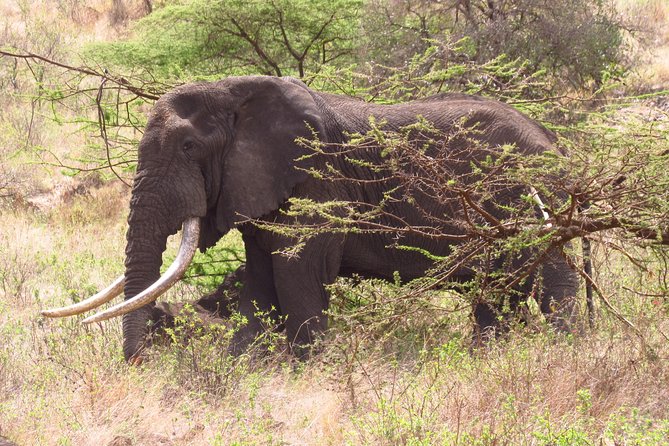
An elephant herd beneath Mount Kilimanjaro is the image that gives this eight-day Kenya safari its shape. You begin in Amboseli, continue through the Great Rift Valley lakes, and finish in the Maasai Mara, where lions, cheetahs, rhinos, and possibly the full Big Five are on the agenda.
I like the sensible route, which packs several very different parks into one trip. I also like the advertised custom safari vehicle for a small group of seven or fewer, since a window seat matters when a lion appears on the far side of the road. The main caution is the amount of driving: this is a busy eight days, not a slow stay in one reserve.
Key points
- Elephants and Kilimanjaro: Amboseli gives you some of Kenya’s most memorable wildlife photography.
- A strong variety of parks: The route covers Amboseli, Hell’s Gate, Lake Bogoria, Lake Nakuru, and Maasai Mara.
- A full Mara finale: Two game-drive days give you a solid chance to see lions, cheetahs, elephants, rhinos, and other wildlife.
- Small-group vehicle plan: The custom vehicle is intended to give everyone a window seat, though the booking information also lists a maximum of 15 people, so confirm the actual vehicle size.
- Culture included: Maasai village visits in Amboseli and near Narok add human context to the wildlife.
- Good package value: Lodging, meals, game drives, and listed activities are included according to the itinerary, at $2,800 per person.
Why this Kenya route works
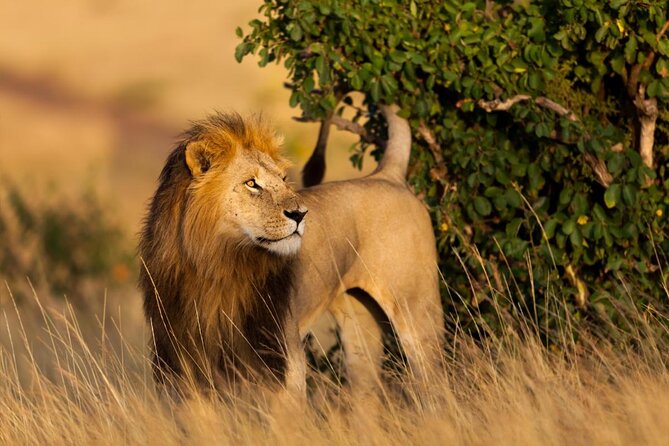
Kenya rewards a safari that changes scenery. Amboseli is dry and open, with wetlands that draw elephants. The Great Rift Valley brings steep views and unusual lakes. Lake Nakuru adds rhino country, while the Maasai Mara supplies the classic golden grassland and the best chance of seeing a broad mix of predators and large mammals.
This trip moves in a logical south-to-west arc from Nairobi. You are not simply driving to one park and back. Each stop has a different purpose, and that helps justify the long road days.
The schedule begins with an 8 a.m. pickup from a Nairobi hotel or residence, with the meeting information also listing Jomo Kenyatta International Airport as the starting point. The end point is back at the meeting point, with drop-off at a city hotel or the airport on Day 8.
At $2,800 per person, the price is not a bare-bones park transfer. It includes accommodation, meals, and activities as specified, along with the safari vehicle and guide services. The real value depends on the standard and location of the camps, which are not named here, so ask for those details before paying.
More Amboseli trips under Kilimanjaro:
- Nairobi: Day Tour to Amboseli National Park & Maasai Village
★ 4.5 · 310 reviews - Day Tour to Amboseli National Park
★ 5.0 · 222 reviews - Amboseli Day Tour from Nairobi
★ 5.0 · 84 reviews
Days 1 and 2: Amboseli beneath Kilimanjaro
The first day starts with the drive south from Nairobi to Amboseli National Park. After arrival, you check into camp, eat lunch, take a short rest, and head out for an afternoon game drive.
Amboseli has a striking mix of dry, dusty ground and green wetland. Much of the park lies on an old lake bed, while acacia woodland, palms, volcanic hills, and the Ol Kenya, Ol Tukai, and Enkongo Narok swamps add color and texture. Wildlife gathers around these wetter areas, which makes the park easier to read than a huge, uniform grassland.
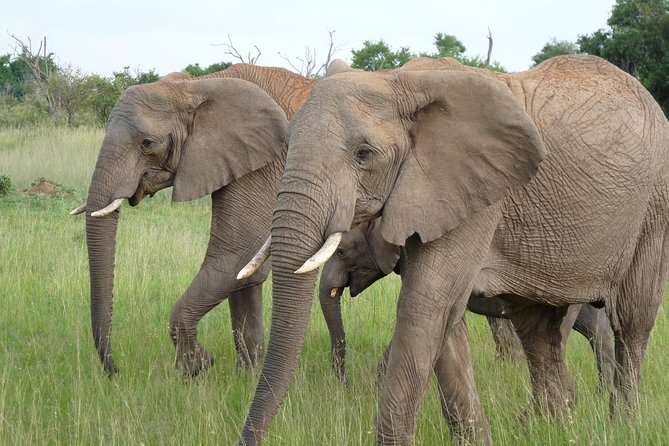
The great prize is the view of Kilimanjaro. The mountain is in Tanzania, but Amboseli provides the famous Kenyan foreground: elephants moving across open ground with Africa’s highest peak behind them. Clouds can affect the view, so treat the mountain as a bonus rather than a guarantee for every drive.
Day 2 gives you morning and afternoon game drives with a lunch break. Ten hours is a long park day, but it gives your guide time to search different habitats rather than rush you through one circuit. Amboseli is especially well known for close elephant sightings, and the chance to watch large herds near the swamps is one of the strongest reasons to start here.
A Maasai village visit is also scheduled for Day 2. This is useful when handled as a real cultural meeting rather than a quick shopping stop. You can ask about daily life, traditions, and the relationship between local communities and wildlife. The itinerary does not give the exact format or cost of any additional purchases, so ask what the visit includes.
The first two days are a good test of your safari rhythm. Mornings may begin early, the roads can be rough, and much of the day is spent seated in the vehicle. Bring patience. A safari is not a zoo timetable, and animal sightings depend on timing, weather, and the guide’s ability to read the area.
Day 3: Lake Naivasha and Hell’s Gate
After breakfast, you drive to Lake Naivasha in the Great Rift Valley. The transfer is listed as about five hours, followed by lunch, a rest at the lodge, and an afternoon visit to Hell’s Gate National Park.
Hell’s Gate is a change of pace from the vehicle-focused days in Amboseli. The schedule lists a game drive, with optional hiking, cycling, and a boat ride also available. Since these options are described as optional, confirm the price and timing before assuming they are part of the $2,800 package.
The Great Rift Valley viewpoint is another short stop. The drive itself matters here because the route shifts from Amboseli’s dry plains to the dramatic geological corridor of the Rift Valley. The stop is brief, only about 30 minutes, so expect a look and photographs rather than a long walk or guided geology lesson.
Lake Naivasha is a useful overnight break. You have lunch and rest before the afternoon activity, which prevents the entire holiday from becoming one long string of game drives. Still, the day is not light. The transfer from Amboseli and the park visit make it a full travel day.
Day 4: The long road to Lake Bogoria
Day 4 takes you from Naivasha toward Lake Bogoria, with lunch along the way. The listed driving time is about four hours, plus a stop in the Nakuru area while passing through.
Lake Bogoria is a saline and alkaline lake in a volcanic half-graben basin. Its setting on the floor of the Great Rift Valley gives it a different feel from Naivasha, and the lake is known for lesser flamingos. The flamingo numbers can vary, so keep expectations flexible. You might find a broad pink line along the shore, or a thinner scattering of birds depending on conditions.
This is one of the itinerary’s more unusual stops. Many short Kenya safaris focus only on the Mara, Amboseli, and Nakuru. Bogoria adds a less familiar lake environment and gives you a better sense of how volcanic geology, water, and wildlife shape the region.
The drawback is the transfer time. You leave one lake and reach another, then spend the night before returning to Lake Nakuru the next day. That back-and-forth can feel inefficient on a map. The payoff is variety, but you should choose this trip because you want several landscapes and habitats, not because you want the shortest possible route to the Mara.
More ways into the Maasai Mara:
- 3 Days Masai Mara Group Joining
★ 5.0 · 486 reviews - 5 Days Masai Mara, Lake Nakuru & Naivasha Budget Joining Safari
★ 5.0 · 229 reviews - 3 Days Gamedrive Safari In Masai Mara From Nairobi
★ 5.0 · 207 reviews - From Nairobi: 3 – Days Maasai Mara Group Safari by 4WD
★ 4.6 · 205 reviews
Day 5: Rhinos and water birds at Lake Nakuru
Lake Nakuru National Park receives a full-day game drive on Day 5. The park is known as a rhino sanctuary, with black and white rhinos listed among its key wildlife. It is also famous for flamingos, although the number present at any time can change.
A full day is the right amount of time for Nakuru. The park’s appeal is not only the lake edge. You are also searching for rhinos and other animals in the surrounding park, and a longer drive gives you more chances to find them without turning the visit into a hurried stop.
The black and white rhino focus makes Nakuru especially valuable for anyone who has not yet seen these animals. Their presence also adds a different type of safari experience from the elephant herds of Amboseli and the predator action associated with the Mara.
Do not book this day solely for the promise of two million flamingos. That figure describes the lake’s historic appeal, not a fixed daily count. Water levels, food supply, weather, and movement of the birds all affect what you see. The rhinos are the more dependable reason to visit.
Days 6 and 7: The Maasai Mara finale
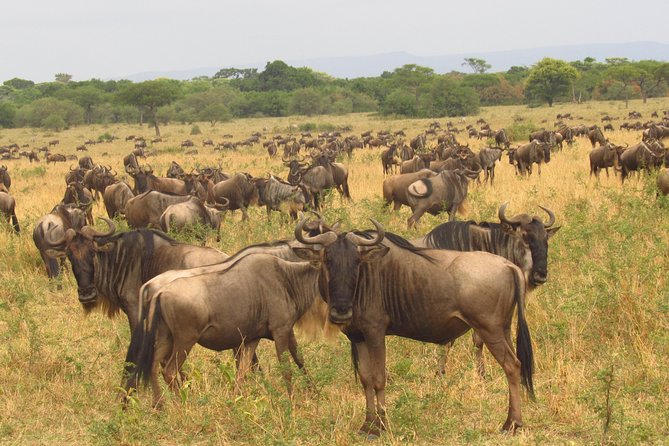
On Day 6, you leave Nakuru for the Maasai Mara National Reserve. After arriving at the lodge and eating lunch, you rest briefly before an introductory afternoon game drive.
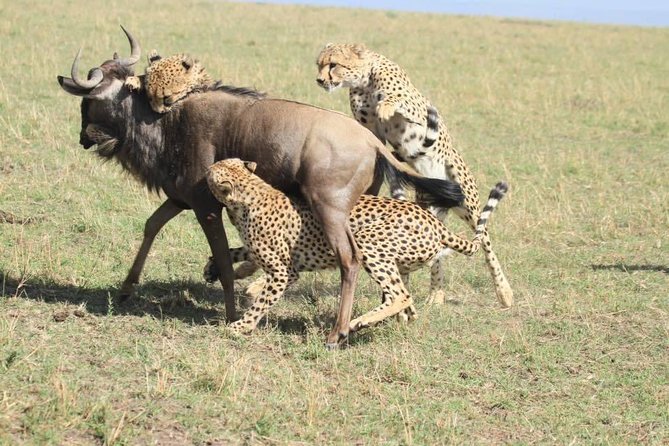
The Mara is classic safari country: broad golden grassland, grazing animals, and open views that make it easier to spot movement. It is also prime territory for cheetahs, whose hunts across open ground can be thrilling if the timing falls your way.
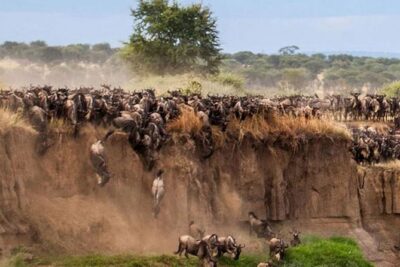
The reserve is linked to the larger Serengeti ecosystem, and from around July, the famous wildebeest movement may bring huge herds across the Mara River into Kenya. The timing is not a promise of a river crossing on your particular day. Migration conditions change, and river crossings are unpredictable. You should see the Mara as a year-round wildlife destination, not only as a migration event.
Day 7 provides a full-day game drive with a picnic lunch in the reserve. The itinerary places lunch at the Mara River crossing point, giving the day a clear focal area. You spend less time returning to the lodge and more time in the reserve, though a picnic means you should be ready for a long day away from your room.
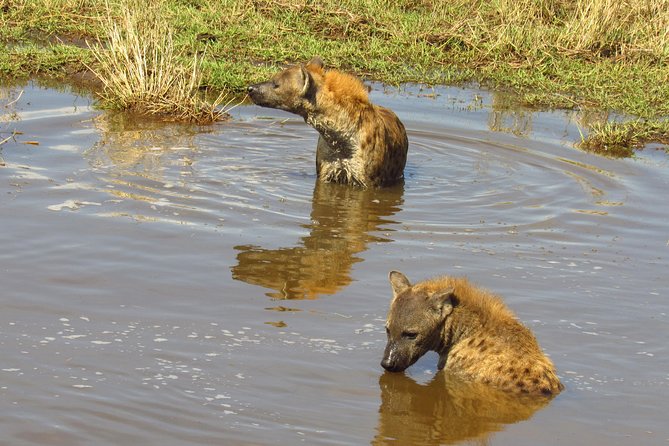
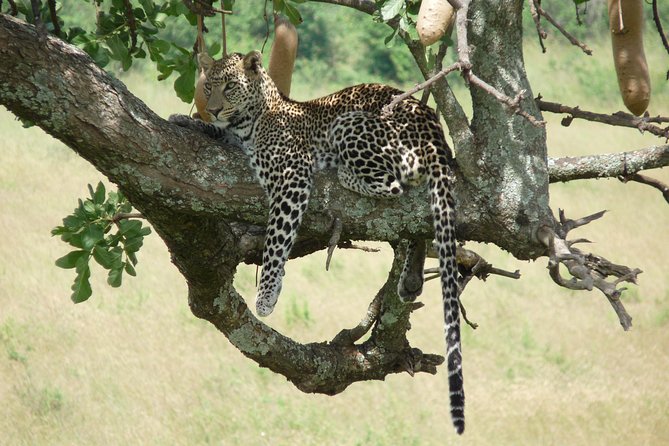
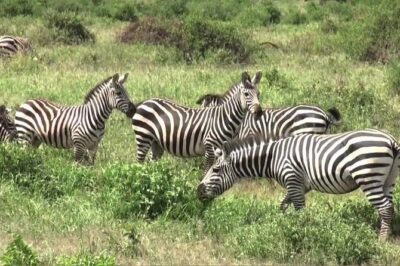
The Mara is the strongest part of the itinerary for a broad wildlife list. It is known for black-maned lions and is one of the Kenyan places where seeing the Big Five is possible in a game drive. Past safari arrangements connected with this operator have also included sightings of black rhinos, cheetahs with cubs, lions with young, crocodiles, elephants, antelopes, and even an aardvark. Those sightings are never guaranteed, but they show why two days here are more useful than a single rushed afternoon.
Your guide matters greatly in the Mara. George Oteino is specifically associated with strong animal-spotting ability, while Tom Ogilo has been praised for being friendly, flexible, and patient. Joseph and Paul have also been named in connection with successful safari arrangements. You cannot assume a particular guide is assigned, but you can request one by name when booking.
Day 8: Maasai culture and the return to Nairobi
The final morning allows time for a Maasai village visit before the drive back to Nairobi. The stop near Narok adds a cultural element at the end of the trip, rather than treating Kenya as only a collection of parks.
The return is listed at about seven hours, with drop-off at a Nairobi hotel or Jomo Kenyatta International Airport. Do not schedule a tight onward flight unless the operator confirms the timing. Road conditions and the length of the final visit can affect your arrival.
A village visit can be one of the more meaningful parts of the trip if you approach it with curiosity and respect. Ask what is included, how long you will stay, and whether there is a separate charge for activities or crafts. Those questions help you avoid confusion and give you a clearer idea of how the visit supports the local community.
Vehicle space, group size, and road time
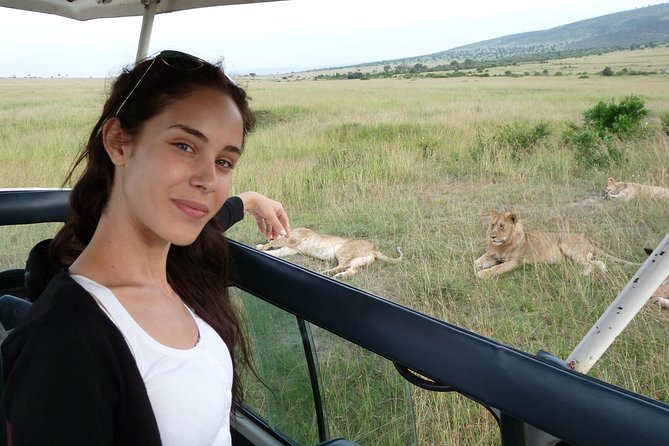
The safari uses a custom-made vehicle, with the main description promising a small group of seven people or fewer and a window seat for everyone. That is a meaningful feature. Window access gives you room for binoculars and a camera, and it prevents the awkward scramble that can happen when wildlife appears on the opposite side of a crowded vehicle.
There is one detail to clarify before booking. The additional information says the activity has a maximum of 15 participants. That does not necessarily contradict a vehicle group of seven, but it does mean you should ask exactly how your departure will be divided and what vehicle you will use.
You are allowed one suitcase and one carry-on bag per person. Oversized items such as surfboards, golf clubs, or bicycles may be restricted. For an eight-day safari, pack light. Soft-sided luggage is usually easier to manage in a safari vehicle, though the supplied information does not specify a required bag type.
The itinerary includes several long drives: Nairobi to Amboseli, Amboseli to Naivasha, Naivasha to Bogoria, Nakuru to the Mara, and the final return to Nairobi. That is the tradeoff for seeing five major areas in eight days. You gain range, but you give up spare afternoons and lazy mornings.
Meals, lodging, and practical comfort
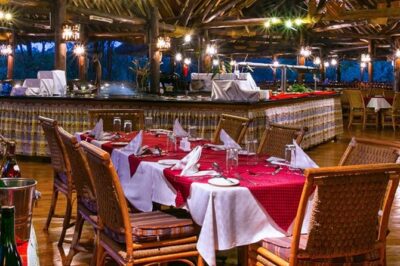
Lodging and meals are included according to the itinerary, with lunch breaks at the camps and lodges, picnic lunch on the Mara full-day drive, and vegetarian meals available if requested in advance. Specific camp and hotel names are not supplied, so ask for the property list and meal arrangements before you compare this package with another safari.
The schedule usually gives you lunch and a short rest after arrival before the afternoon drive. That is helpful, but do not mistake it for a full recovery day. Several listed days run for 10 hours, and the early starts, bumpy roads, and repeated transfers can be tiring.
The tour operates in all weather conditions, although poor weather can lead to a date change or a full refund. Wear practical clothing and bring layers. The booking notes oddly list a formal dress code, but the important instruction for a safari is to dress appropriately for changing weather and long hours outdoors.
A current passport is required on the day of travel, and passport name, number, expiry date, and country are needed for every participant at booking. Children must be accompanied by an adult, and most people can take part.
What the $2,800 price really buys
The price makes the most sense for someone who wants a ready-made, multi-park safari without arranging each transfer, park visit, camp, and meal separately. You are paying for eight days of transport, guiding, accommodation, meals, game drives, and listed park activities.
The itinerary’s range improves the value. Amboseli gives you elephants and Kilimanjaro. Bogoria adds flamingos and volcanic lake scenery. Nakuru brings rhinos. The Mara supplies the largest concentration of classic predator and Big Five possibilities.
The price is harder to judge without the camp names and exact room categories. Before you commit, ask:
- Which camps and lodges are used on each night?
- Is the actual group seven people or fewer, or could it approach the stated maximum of 15?
- Are park fees included for every listed park?
- Are the Hell’s Gate bicycle, hike, and boat options extra?
- Is the Maasai village visit included, and what does it cover?
- Can you request George, Tom, Joseph, or another named guide?
Those questions are not nitpicking. Accommodation and vehicle size can change the feel of a safari more than the headline route.
Who should book this safari?
I would choose this trip if you want a first Kenya safari with strong variety and a clear beginning and end in Nairobi. Families can benefit from the private-feeling vehicle arrangement, and the cultural visits give children more to think about than wildlife alone. The information states that most people can participate, but children still need an accompanying adult.
Photographers should find plenty to work with: elephants against Kilimanjaro, rhinos near Nakuru, flamingos at Bogoria, and open Mara scenes with lions and cheetahs. The window-seat promise is particularly useful for cameras.
I would hesitate if you dislike long road transfers or want a slow, luxury-focused stay. I would also hesitate if your main goal is a guaranteed wildebeest crossing. No safari can promise that event, and this route spends meaningful time on the road to include its many stops.
Free cancellation is available up to 24 hours before the start time for a full refund. Inside that window, changes are not accepted and the payment is not refunded, except that poor weather cancellation may lead to another date or a full refund.
Should you book it?
Book this safari if you want Kenya’s greatest hits with a few less common stops added in: Kilimanjaro, elephants, flamingos, rhinos, and the Maasai Mara all fit into one eight-day plan. Its strongest feature is variety, supported by full game-drive days in Amboseli, Nakuru, and the Mara.
Before booking, settle the group-size question and request the camp list. If the vehicle really holds seven or fewer and the accommodation suits your budget, $2,800 can be a sensible package price for such a wide route. If you prefer less driving, spend more nights in fewer parks instead.
FAQ
Where does the safari start?
The tour starts in Nairobi, with pickup offered from a city hotel or residence. The meeting information also lists Jomo Kenyatta International Airport.
Where does the safari end?
The activity ends back at the meeting point area in Nairobi. Drop-off is listed at a city hotel or Jomo Kenyatta International Airport.
How long does the safari last?
The safari lasts approximately eight days, beginning with an 8 a.m. pickup and ending in Nairobi on Day 8.
Which parks and lakes are included?
The route includes Amboseli National Park, Hell’s Gate National Park, Lake Naivasha, Lake Bogoria, Lake Nakuru National Park, and Maasai Mara National Reserve. The itinerary also includes Great Rift Valley scenery and stops near Narok.
Is accommodation included?
Yes. Lodging is included according to the itinerary, with overnight stays at camps, lodges, or hotels. The specific properties are not provided in the tour details, so request their names before booking.
Are meals included?
Yes. Meals are included as stated in the itinerary. Lunch is provided during the park days, and Day 7 includes a picnic lunch in the Maasai Mara. Vegetarian meals are available if requested at booking.
Is a Maasai village visit included?
Yes. The itinerary includes a Maasai village cultural visit in Amboseli on Day 2 and another Maasai cultural visit near Narok on Day 8.
How many people can join the tour?
The main description presents a small group of seven people or fewer in a custom safari vehicle, with a window seat for everyone. The additional information lists a maximum of 15 participants, so confirm the actual group and vehicle size for your departure.
Can I cancel for a full refund?
You can cancel at least 24 hours before the start time for a full refund. Cancellations or changes made within 24 hours are not refunded or accepted, while a cancellation caused by poor weather may be moved to another date or fully refunded.
More Safari in Nairobi
- Safari Tour; Nairobi National Park
★ 4.5 · 594 reviews - Half-Day Nairobi National Park Safari from Nairobi with Free Pickup
★ 4.5 · 264 reviews - 3 Days Maasai Mara Guided Safari from Nairobi
★ 4.5 · 195 reviews - 3 Day Masai Mara Safari
★ 5.0 · 177 reviews
Just added around Nairobi
- Visit kibera Slum the chocolate city★ 4.8 · 3 reviews
- 4 Days Safari to Lake Nakuru N/P and Maasai Mara N/R★ 5.0 · 18 reviews
- Maasai Mara Day Trip★ 5.0 · 15 reviews
- 4 Days Tour Landcruiser in Masai Mara and Lake Nakuru★ 5.0 · 10 reviews
- 3 days maasai mara migration safari★ 4.5 · 7 reviews
- Kibera Slum Tour with a Local★ 5.0 · 15 reviews
- Wildebeest Migration in Masai Mara and Sightseeing 4 Days Tour★ 4.5 · 6 reviews
- Day Tour to Nairobi national park, Elephants, and Giraffe Center★ 3.5 · 8 reviews
Maasai Mara Safaris, compared.
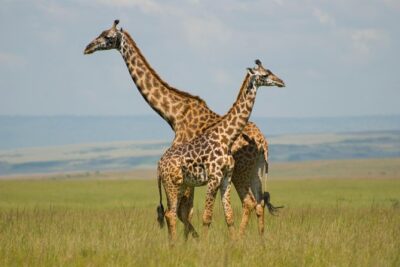
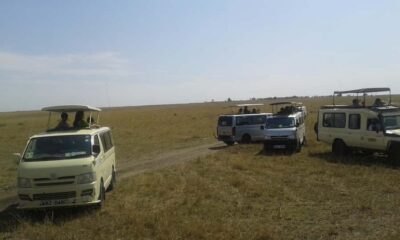
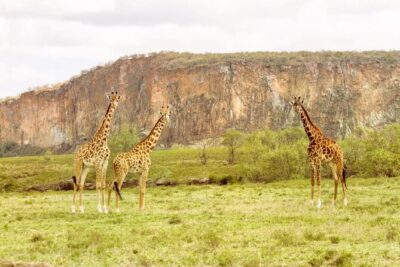
5 Days Masai Mara, Lake Nakuru & Naivasha Budget Joining Safari
Read our review →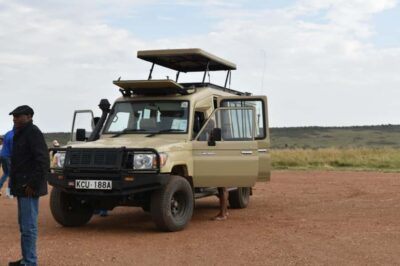
3 days group joining safari to Maasai Mara with a Land Cruiser Jeep
Read our review →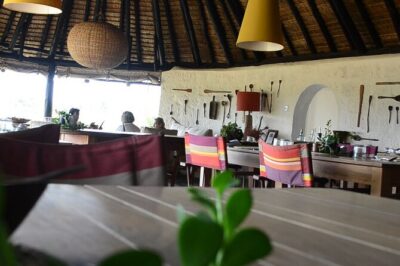
4 Days Safari Lake Nakuru NP Naivasha and Masai Mara
Read our review →Browse the lists this tour appears in