
Reviewed · GIRAFFE CENTRE & ELEPHANT ORPHANAGE TOURS
From Nairobi: David Sheldrick Elephant Orphanage Tour
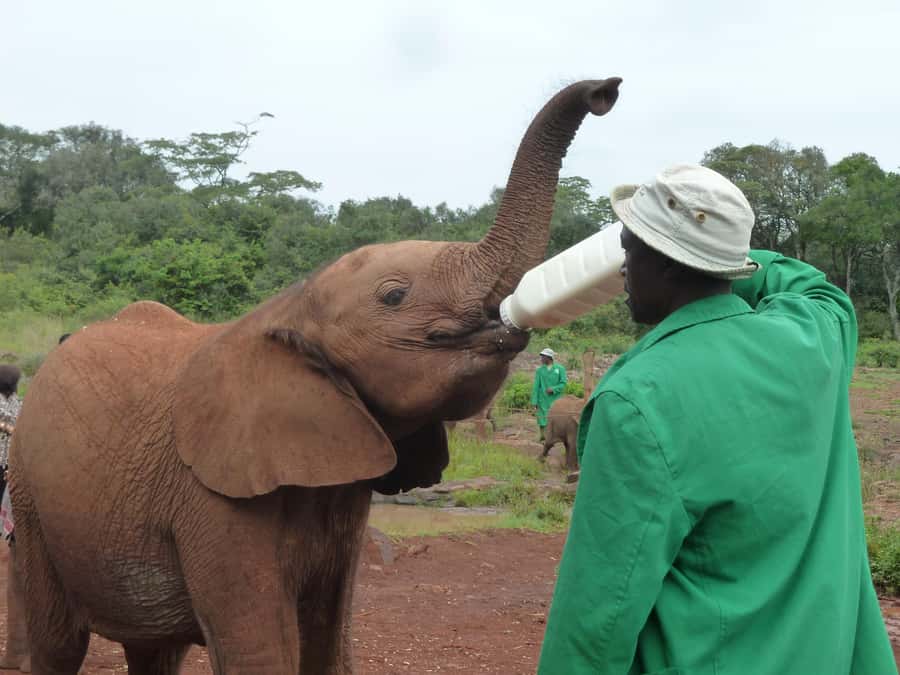
The main event is wonderfully simple: baby elephants trot from the bush, drink giant bottles of milk, then splash, nudge their keepers, and head back into the trees. I like the 11am feeding, which lets you see the orphanage at its most active, and the personal stories about how each elephant arrived, often after poaching, a fall into a well, or conflict with people.
I also like the small group of up to eight and the hotel pickup, useful in Nairobi traffic. The catch is time and cost. The ride can take two hours in total, the actual presentation lasts one hour, and you may need to pay extra for Nairobi National Park access and a conservation charge. Confirm the full price before booking.
Key points to know before you book
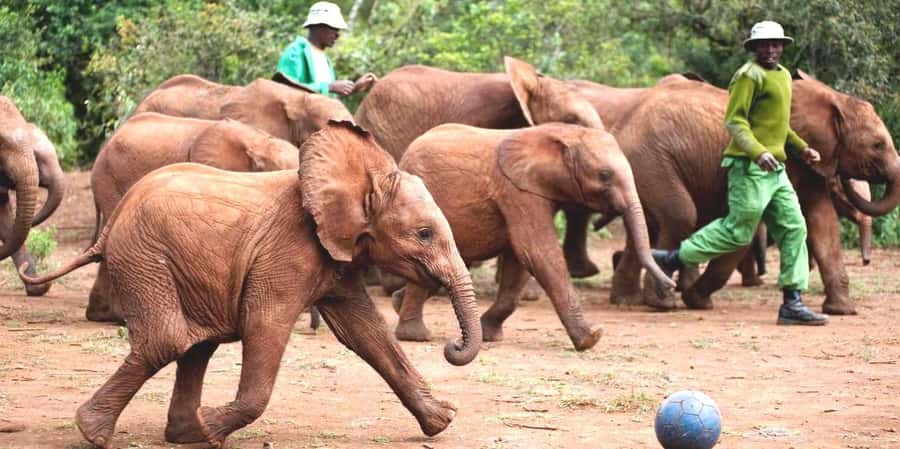
- The elephants arrive in two age groups: the youngest feed first, followed by elephants around two to three years old.
- The visit runs from 11am to noon: arriving late means missing part of the only scheduled presentation.
- You can watch milk feeding up close: some older elephants hold their own bottles with their trunks.
- Hotel pickup and drop-off are included: this saves you from arranging Nairobi transport and finding the entrance yourself.
- Extra charges matter: Nairobi National Park access is listed as an additional $85 per person, while booking information also refers to a separate cash conservation donation.
- Art and craft stops may occur: tell your driver clearly if you want a direct trip to and from the orphanage.
Why the 11am elephant feeding is worth your morning
The David Sheldrick Wildlife Trust visit is not a standard zoo stop. You watch orphaned elephants being raised for eventual rehabilitation, with keepers acting as their daily carers. The setting is an open area bordered by a rope fence, so the elephants are not displayed behind bars or in a small enclosure.
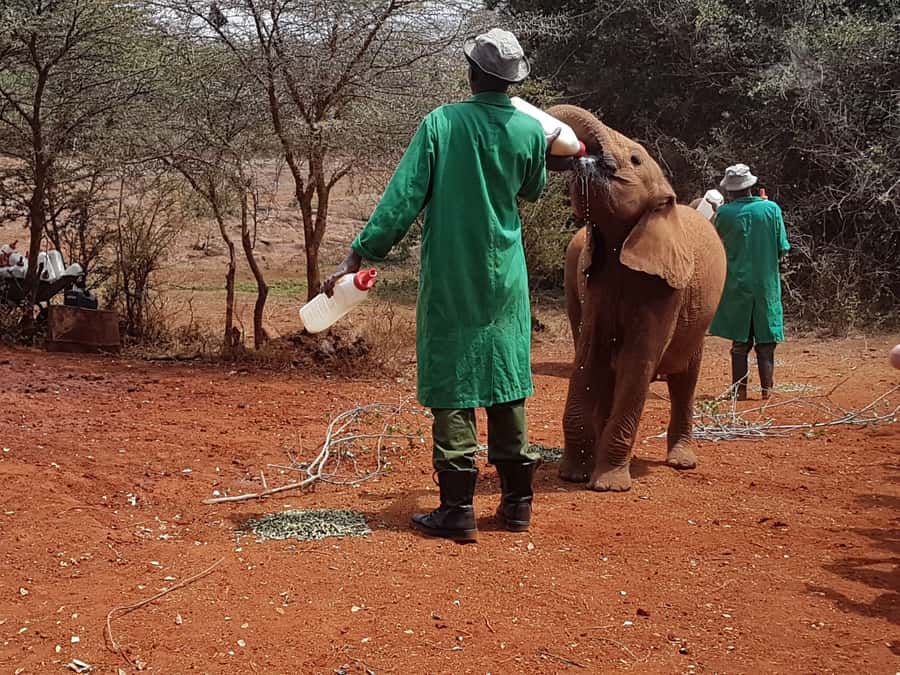
The youngest elephants come out of the bush when their keepers call. Each receives a large milk bottle, and the feeding lasts roughly 10 to 15 minutes for that group. You can watch the calves slurp, gargle, and work through their bottles while a keeper explains their age, rescue story, and progress.
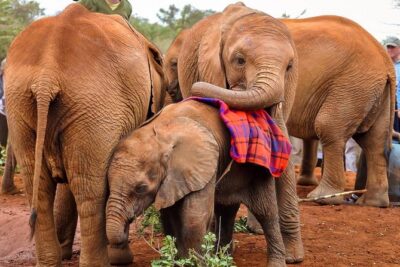
After the milk, the mood changes. The elephants play with water, push against the keepers, and seek contact. You may see them nudge a keeper for attention or receive a gentle touch when they come close to the rope. You can take photographs, but the real value is watching the relationship between each animal and the person responsible for its care.
The youngest elephants then return to the bush. The two to three year olds come out next, and this group has a different rhythm. Some can hold their bottles in their trunks and feed themselves. Others still need help from the keepers. Their concentration is comic and touching, especially when they close their eyes while drinking several gallons of milk.
The presentation also includes information about the orphanage’s work. You learn why an elephant was rescued when that is known, what condition it was in, and how it is developing. The most common causes of orphaning are the killing of a mother by poachers, an elephant falling into a well, and conflict between people and wildlife.
That information gives the cute moments some weight. You are not simply watching baby animals play. You are seeing the early stage of a long rehabilitation process, and you begin to understand why a milk-fed calf needs years of care before it can live independently.
More giraffe and elephant orphanage mornings:
- Nairobi: National Park & Optional Elephants & Giraffe Center
★ 4.8 · 874 reviews - Elephant Orphanage and Giraffe Center Tour with Options
★ 4.5 · 457 reviews - Nairobi National Park, Elephant Orphanage and Giraffe Centre
★ 4.6 · 365 reviews
The open rope-fence setting keeps the visit personal
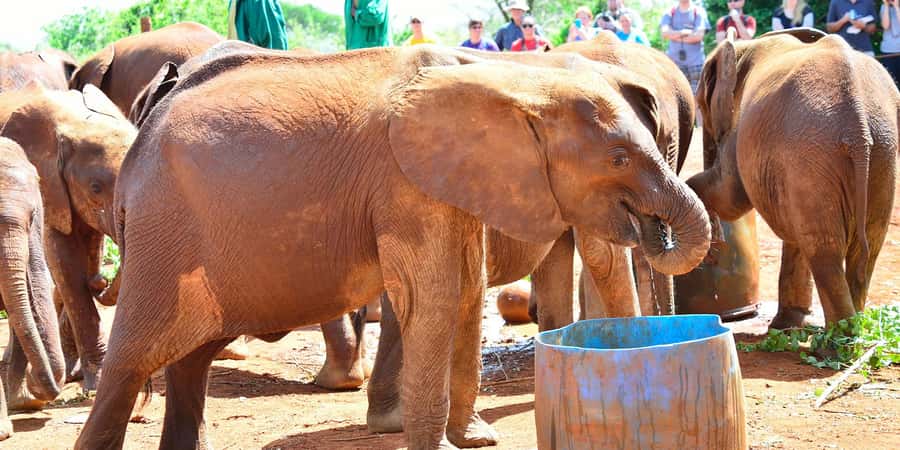
The viewing area is open, with a rope separating you from the elephants. That design gives you a clear view and makes the feeding feel close without turning the animals into performers. The keepers guide the session, introduce the elephants, and control how near the animals come.
You should expect a formal presentation rather than unlimited wandering. The main activity is concentrated around the feeding groups and the keeper talk. The one-hour schedule is fixed, so you do not have the freedom to arrive whenever you like and stay all afternoon.
That tight timing works well if you want one focused Nairobi activity. It is less suitable if you prefer a slow wildlife visit with plenty of time to wait for animals. You get the daily feeding, the explanations, and the chance to photograph the elephants, then the session ends.
The rope fence also means that you should not expect to cuddle or handle the elephants freely. The keepers decide the contact. When an elephant comes near, you may be able to give it a brief pet, but this is not guaranteed for every person in the group.
From a Nairobi hotel to the 11am start
Pickup begins at about 9:30am from a hotel or home within Nairobi. The drive is listed as roughly two hours, which reflects the city traffic and the route through Nairobi National Park access. You need to allow plenty of time because the feeding begins at 11am and the presentation does not wait for late arrivals.
A good driver makes a real difference here. Guide Stephen is specifically associated with this tour and has been praised for being prompt, polite, patient, and careful on the road. Martin is another driver named in connection with the experience. If you have a preferred guide or need a direct ride, ask when booking, but do not assume a particular person is guaranteed.
The pickup is one of the tour’s strongest practical features. Nairobi can be hard to navigate when you do not know the city, and the orphanage access involves more than simply showing up at a hotel attraction. Having the driver collect you, take you through the access process, and return you to your accommodation removes several small tasks.
That convenience comes with a tradeoff. The drive can feel long for a one-hour visit, especially if traffic is heavy. Some departures have included stops at art and craft centers on the way to or from the orphanage. These stops are not clearly included in the advertised description, and they have taken time away from the main activity.
If shopping is not part of your plan, say so at pickup. Be polite but direct: you want to go straight to the elephant feeding and return directly afterward. One booking also included a quick coffee or souvenir stop by request, so a short personal stop may be possible if the schedule allows. Do not let an optional stop make you late for 11am.
What the two elephant groups show you
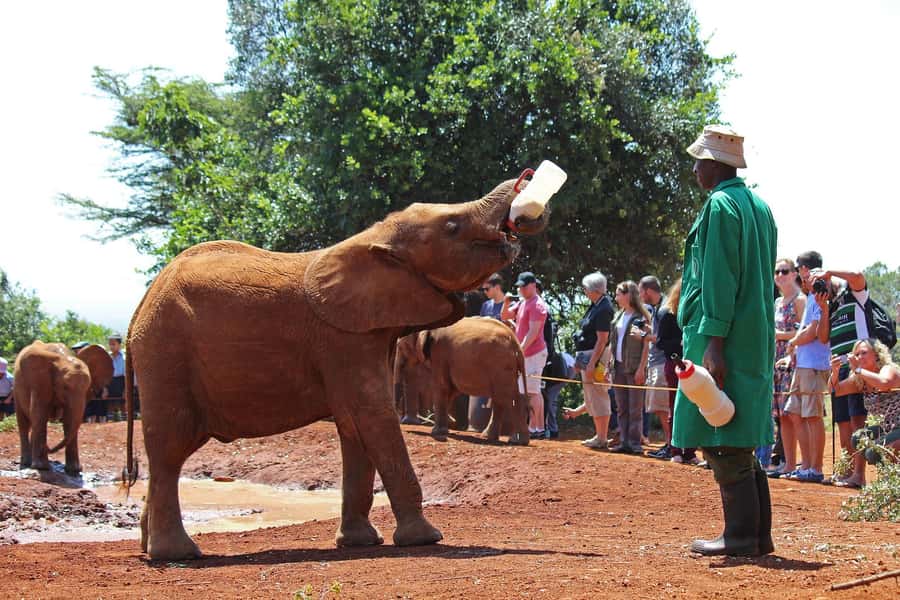
The first group, made up of the youngest calves, needs the most help. Their bottles are large, and their keepers remain close while they drink. The feeding is fast, so have your camera ready before the elephants come out, but keep your attention on the talk as well.
The keeper explanations are an important part of the visit. You hear when each orphan arrived, how it was found, and what happened to its mother when that information is known. A calf rescued from a well has a different story from one left after poaching or a conflict incident, but each needs the same steady care.
The older group shows progress. At two or three years old, some elephants can control a bottle with their trunks, while others still rely on a keeper. That small detail helps you see rehabilitation as a gradual process rather than a quick rescue followed by release.
You also see how much food and attention young elephants require. The bottles are not a prop for photographs. They are part of the daily care routine, and the amount of milk consumed explains why orphan rearing is expensive and long term.
The chance to touch an elephant is a bonus, not the point of the visit. If an elephant comes close, you may get a brief pet while the keepers supervise. The best approach is to watch the animals’ behavior and let the keepers set the pace.
A few more Nairobi days to weigh up
- Nairobi National Park Half-Day Tour; Free Wi-Fi connection
★ 5.0 · 878 reviews - NAI NAMI: Nairobi Storytelling Tour with Street Children
★ 5.0 · 792 reviews - Nairobi National Park Half-Day Game Drive
★ 4.5 · 738 reviews - Nairobi: Historic and Modern Highlights Walking Tour
★ 4.8 · 703 reviews
The real price is higher than $69
The advertised tour price is $69 per person. That covers pickup and drop-off within Nairobi, the orphanage entry ticket, and the English-speaking guide. For a small group, private transport arrangements, and help with access, that can be a fair price.
But you need to calculate the extra charges before deciding. The booking information says Nairobi National Park access is mandatory and costs an additional $85 per person. Other information connected with the same experience refers to a $45 cash conservation donation, while another price reference gives the park or entry charge as $43.
Those figures do not match. I would not book this tour without asking the provider for the current total, exactly what is included, and whether the extra payment is a park fee, a conservation donation, or both. Bring cash if the operator confirms that the conservation charge must be paid in cash.
If the $85 charge applies, the total is much higher than the headline price. At that point, the tour is paying for convenience and transport rather than cheap admission. One booking noted that people who know how to reserve their own tickets may pay less by arranging entry directly, but that option also leaves you responsible for transport, timing, and access details.
The visit itself is special, but you should compare the full cost against your budget. Families paying for several people need to be especially careful, since the mandatory extra charge is per person. The optional Giraffe Center visit costs another $25 per person, and lunch is not included, though food is available to buy.
Should you add the Giraffe Center?
The Giraffe Center is offered as an optional extra for $25 per person. It is not part of the core elephant visit, so you should treat it as a separate add-on rather than an automatic second stop.
Adding it may make sense if you want to combine two well-known Nairobi animal attractions in one outing. It may be less appealing if your main goal is the full elephant feeding and you are already concerned about traffic, shopping stops, or the additional park charge.
Ask how the extra stop affects the return time and whether it changes the route. The supplied details do not give a fixed schedule for the Giraffe Center, so the operator needs to confirm the timing before you pay for it.
Who will get the most from this experience?
I would choose this tour if you have one morning in Nairobi and want a clear, guided introduction to elephant conservation. It suits families, first-time visitors, and anyone who values hotel transport more than the lowest possible price.
It is also a good match for photographers who want a predictable animal presentation. The elephants come out at a set time, the keepers explain what is happening, and the open viewing area gives you a reasonable chance to take photographs.
Parents should know that the feeding is short and structured. Children may love the bottles, splashing, and young elephants holding milk with their trunks, but the full experience also depends on listening to the conservation talk.
I would think twice if you dislike shopping stops, have a tight airport schedule, or want several hours of wildlife viewing. The one-hour orphanage session is the heart of the tour, but the driving can take much longer than the time spent at the center.
The experience is wheelchair accessible, and the group is limited to eight people. English is the stated tour language. Free cancellation is available up to 24 hours before departure, and you can reserve now and pay later, which helps if your Nairobi schedule is still changing.
Practical tips for getting the best visit
Arrive ready for the 11am start. A late pickup or an unplanned stop can cost you part of the youngest elephants’ feeding, and that group is often the most energetic.
Keep your camera ready before the elephants appear. The bottle feeding moves quickly, and the calves do not pause for each photograph. After the feeding, watch for the water play and keeper contact, which can produce more natural pictures than the first rush toward the milk.
Ask your driver to confirm all fees before leaving Nairobi. The difference between $69 and a much higher final total is too large to leave unclear. If a cash conservation donation applies, you want to know before arriving at the gate.
If you want to avoid shopping stops, say so early and repeat the request if needed. The advertised highlights are the elephants and conservation talk, not art and craft shopping.
Leave room in the schedule for traffic. The listed transport time is two hours, and Nairobi traffic can make a fixed return appointment risky. If you have a flight or another timed activity, ask for the expected return window rather than relying only on the one-hour duration.
Should you book this elephant orphanage tour?
Book it if you want the easiest way to reach the 11am David Sheldrick Wildlife Trust feeding and you are willing to pay for organized transport. The elephant care, keeper stories, and close views of bottle feeding make this a memorable Nairobi morning, especially when you understand the difficult events that brought the calves there.
I would book with two conditions. First, confirm the mandatory Nairobi National Park charge and the separate conservation payment in writing. Second, request a direct route with no shopping stops if the elephant session is your priority.
The orphanage visit deserves its strong reputation, but the tour package requires careful price checking. If convenience, a small group, and hotel pickup matter most, the $69 base price can be useful. If your budget is tight and you are comfortable arranging tickets and transport yourself, compare the full totals before committing.
FAQ
Where does the tour begin?
Pickup is available from a hotel or home within Nairobi, beginning at about 9:30am.
What time is the elephant feeding?
The elephant presentation runs from 11am to noon.
How long is the actual orphanage visit?
The guided visit lasts one hour. The transport portion is listed as about two hours.
What does the $69 price include?
It includes pickup and drop-off within Nairobi, the elephant orphanage entry ticket, and orphanage entry fees.
Are there extra charges?
Yes. Nairobi National Park access is listed as an additional $85 per person. Other information also refers to a separate $45 cash conservation donation, while another entry reference lists $43, so confirm the current total with the provider.
Is lunch included?
No. Lunch is not included, but it is available for purchase.
Can I visit the Giraffe Center too?
Yes, an optional Giraffe Center visit is available for $25 per person. Its timing should be confirmed before adding it to your booking.
Just added around Nairobi
- Visit kibera Slum the chocolate city★ 4.8 · 3 reviews
- 4 Days Safari to Lake Nakuru N/P and Maasai Mara N/R★ 5.0 · 18 reviews
- Maasai Mara Day Trip★ 5.0 · 15 reviews
- 4 Days Tour Landcruiser in Masai Mara and Lake Nakuru★ 5.0 · 10 reviews
- 3 days maasai mara migration safari★ 4.5 · 7 reviews
- Kibera Slum Tour with a Local★ 5.0 · 15 reviews
- Wildebeest Migration in Masai Mara and Sightseeing 4 Days Tour★ 4.5 · 6 reviews
- Day Tour to Nairobi national park, Elephants, and Giraffe Center★ 3.5 · 8 reviews
Giraffe Centre & Elephant Orphanage Tours, compared.

National Park & Optional Elephants & Giraffe Center
Read our review →
Elephant Orphanage and Giraffe Center Tour with Options
Read our review →
Nairobi National Park, Elephant Orphanage and Giraffe Centre
Read our review →
Tour: Giraffe Center and Nairobi National Park
Read our review →


Day tour to Giraffe Center and Karen Blixen Museum
Read our review →Browse the lists this tour appears in