
Reviewed · MALINDI TOURS
Gede Ruins & Malindi Tour
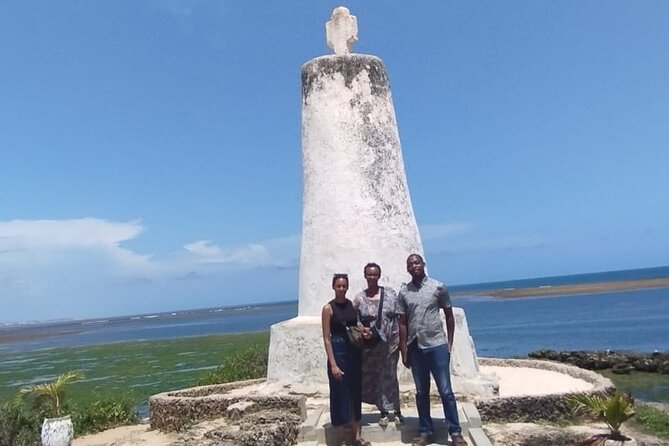
The most striking part of this outing is the setting of Gede Ruins, where old coral-stone mosques, palaces, and homes sit among thick tropical growth. You are not looking at a single monument, but the remains of a once-active Swahili town shaped by Arab and Bantu communities and long-distance trade.
I like the private format, which gives your group a vehicle and guide rather than placing you in a large bus. I also like the contrast between the quiet ruins and the more active streets of Malindi, including historic sites, neighborhoods, and a market walk associated with guide Juma.
The main consideration is time. With roughly six hours, two hours at Gede, three hours in Malindi, and travel between stops, you get a useful overview rather than a slow, specialist study of either place. Some admission fees and taxes are not included, so confirm the final cost before setting out.
Key points to know before booking

- 13th to 17th-century coral ruins: Gede includes mosques, palaces, and town houses spread through a green setting.
- Private transport for up to four people: The $159 group price can offer solid value when shared by two to four guests.
- Two very different stops: Gede is quiet and archaeological, while Malindi brings streets, markets, and coastal history.
- Guide Juma may lead the outing: His route has included historic places, local neighborhoods, and a market walk.
- Six hours from an 8:00 am start: Pickup is offered, with the listed meeting point at Turtle Bay Villas in Watamu.
- Flexible cancellation: Cancel at least 24 hours before departure for a full refund, unless the provider changes the plan because of weather.
Why Gede Ruins deserves the first two hours
Gede is the heart of this tour. The remains date from the 13th through the 17th centuries, a period when Swahili settlements along the Kenyan coast linked local communities with Arab traders and wider Indian Ocean commerce.
That background matters because the site is more than a collection of broken walls. The coral structures show how people lived, worshipped, traded, and organized a town. Excavation has revealed mosques, palaces, and houses, along with artifacts connected to trade and daily life.
I find the coral construction especially interesting. Coral was a practical local building material, and at Gede it appears in forms that once served both ordinary households and important public or religious buildings. Time and vegetation have softened the outlines, but the remaining walls still give you a sense of the settlement’s size.
The setting adds much of the atmosphere. The ruins lie among thick greenery, so you move between exposed coral masonry and shaded paths. That makes the site appealing to photographers, though the plants can also make it harder to understand the full shape of the town without a guide’s help.
Plan to spend about two hours here. That is enough time for a broad look at the major structures and the on-site museum. If you enjoy archaeology, you may wish for longer, but the scheduled visit should work well for a first introduction, especially when paired with Malindi later in the day.
A few more Malindi days to weigh up
- Safari Kenya with Patrick
★ 4.0 · 45 reviews - Kisite Marine Park Private Boat Snorkeling with breakfast & Lunch
★ 5.0 · 32 reviews - Safari blue
★ 4.5 · 27 reviews
What the museum adds to the ancient walls
The museum helps turn scattered stones into a more readable story. The ruins show the physical remains, while the displays provide context about the people who occupied the town, the goods that moved through the coast, and the objects used in daily life.
This is where a guide can make a real difference. Rather than simply pointing out a wall, your guide can help explain why a structure mattered and how the settlement fit into Swahili coastal society. The tour description places strong emphasis on artifacts and trade, so ask about those details if they interest you.
You should also allow time for photographs. The combination of coral architecture and jungle growth gives Gede a look unlike the more open historic sites in Malindi. A camera is useful, but comfortable shoes and a willingness to walk at an easy pace matter more.
The site is not presented as a modern entertainment attraction. Its appeal comes from quiet observation, old masonry, and the chance to picture a town that once had residents, religious buildings, and commercial links. If you prefer highly polished exhibits or constant activity, Gede may feel subdued. If you like places that reward patience, it is the strongest part of the day.
From ancient settlement to coastal Malindi

After Gede, the tour moves to Malindi for about three hours. This creates a useful change of pace. Gede asks you to read the past through ruins, while Malindi shows how history remains part of a functioning coastal town.
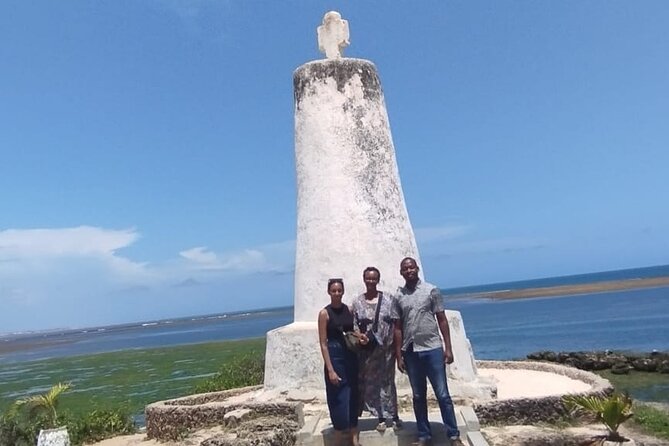
Malindi has drawn visitors and fortune seekers for centuries. Vasco da Gama’s fleet landed here in 1498, giving the town a clear place in the wider story of Portuguese voyages and Indian Ocean trade. That date is not just a detail for a guidebook. It helps explain why Malindi has long brought together local cultures and outside visitors.
The Malindi portion is flexible in feel, with historic places, city streets, local neighborhoods, and a market walk included in the route described for guide Juma. You should expect a broader town visit rather than a single enclosed attraction.
That variety is useful for families and mixed-interest groups. One person can focus on history, another on local life, and another on photography. At the same time, a town walk can feel less structured than a formal museum visit. If you want to see a particular Malindi site, ask about it at the start of the day so the guide can explain what fits within the available time.
The market is likely to be the most social part of the outing. It gives you a look at ordinary commerce rather than only grand historical markers. Keep your attention on the guide and your belongings, and treat the market as a place to observe local routines, not just a shopping stop.
A private tour that makes sense for small groups

The price is $159 per group of up to four people, not per person. That changes the value calculation considerably.
For four people, the base cost works out to about $39.75 each. For two people, it is about $79.50 each. A solo booking carries the full group price, so this option makes the most financial sense for a family, two couples, or a small group of friends.
Private transport is included, and that matters for a six-hour route covering Gede and Malindi. You avoid the stop-and-go pattern of a large coach and can speak directly with your guide about the sites. The group-only format also makes the outing easier for people who want a quieter day or need to move at a family-friendly pace.
The price does not include tips or all fees and taxes. Gede’s admission ticket is included in the planned visit, while Malindi has no admission ticket listed. Even so, I would ask the provider to clarify any local charges before departure. A clear question at booking can prevent a small cost from becoming an awkward surprise.
Pickup is offered, with the listed meeting point at Turtle Bay Villas Watamu on Turtle Road near Temple Point. The advertised start time is 8:00 am. If you are staying elsewhere, confirm the pickup arrangement rather than assuming every accommodation is covered.
Same departure point, a completely different day out:
- ROBINSON ISLAND/MARAFA HELL’s KITCHEN
★ 5.0 · 15 reviews - Tour Malindi & Robinson Island & Marafa Hell’s Kitchen
★ 5.0 · 11 reviews - WATAMU: MALINDI: SARDEGNA ISLAND & MALINDI MARINE PARK
★ 4.5 · 9 reviews - Safari-Tsavo east national park -2 days 1 night
★ 5.0 · 8 reviews
How the six-hour schedule works
The timing is straightforward:
- Start at 8:00 am from the listed Watamu meeting point.
- Allow about two hours for Gede Ruins and the museum.
- Spend about three hours seeing Malindi’s historic places and local areas.
- Use the remaining time for transport between the stops and the return journey.
The exact time on the road is not provided, so do not treat the stop durations as the full door-to-door schedule. The route covers two areas, and the transport portion will shape how much free time you have.
I like the order. Gede is best approached earlier, when you can give the ruins your full attention. Malindi then provides a change of scenery and a less formal finish. Starting at 8:00 am also gives you a reasonable chance to see both places without turning the experience into an exhausting late-day outing.
Still, six hours moves quickly. You will not have unlimited time at the museum, the market, or each historic point in town. Tell the guide what matters most to you. A history-focused group may want more explanation at Gede, while a family may prefer a shorter archaeological visit and more time in Malindi.
The guide can shape the whole experience
The guide is important here because neither stop is simply a single attraction with one obvious path. Gede is spread across an archaeological site, and Malindi works as a town visit with several possible points of interest.
Guide Juma is associated with this excursion and has led a route covering Gede, historic Malindi, local neighborhoods, and the market. If Juma is your guide, ask him to connect the ruins to the coastal trade story rather than giving you only dates and building names.
You should also say what kind of explanation you want. Families may appreciate short stories and clear highlights. History fans may want more detail about the Swahili people, Arab trading links, coral construction, and the artifacts in the museum.
The private format makes these conversations easier. You can ask a question when it occurs to you, stop briefly for a photograph, or signal that your group needs a slower pace. That personal contact is one of the best reasons to choose this tour instead of arranging only a taxi between the two places.
Who will enjoy this outing most
This tour fits several types of visitors:
- History fans who want both archaeological remains and the later story of Malindi.
- Families looking for a private day with transport and a manageable six-hour schedule.
- Small groups that can split the $159 cost.
- Culture-focused visitors who prefer neighborhoods and a market alongside formal historic sites.
- Photographers drawn to coral walls, jungle growth, and old coastal architecture.
- First-time visitors to the area who want a compact introduction to Gede and Malindi.
It may be less suitable if you want a full-day archaeological investigation or a highly specialized architectural tour. Two hours at Gede gives you the main story, but not every possible detail. Likewise, three hours in Malindi gives you a strong orientation, not an exhaustive town tour.
Most people can participate, and service animals are allowed. The tour is near public transportation, though private transport is part of the experience. The booking information does not specify exact walking distances or surface conditions, so ask if anyone in your group has mobility concerns.
Weather, cancellation, and simple planning tips
The tour requires good weather. If poor weather forces a cancellation, you are offered another date or a full refund. You can also cancel for a full refund if you do so at least 24 hours before the 8:00 am start.
Inside the 24-hour window, the payment is not refunded, and changes are not accepted. The cut-off uses local time, so check the clock in Kenya when making changes.
For the day itself, I would keep your plan simple. Wear comfortable clothing for walking among the ruins, bring water, and leave room in your schedule for transport. Since the tour combines outdoor archaeology with town streets and a market, a light, practical day bag is more useful than formal luggage.
The provider confirms the booking at the time of purchase. That is helpful for a private outing, but you should still confirm the pickup point and any extra fees before departure.
Is the $159 price good value?
For a group of four, yes, the value looks strong. You receive private transportation, a guide, a visit to one of Kenya’s important Swahili archaeological sites, and a substantial town tour in Malindi. The combination would be difficult to reproduce with separate short visits unless you already had transport and knew the area well.
For two people, the value depends on how much you care about having a private guide. If you want context at Gede and a local introduction to Malindi, the cost is reasonable. If you only want transport and quick photographs, a private tour may feel expensive.
The experience earns its price through interpretation and convenience, not through a long list of included extras. The private vehicle saves planning time, and the guide helps connect coral buildings, trade, religion, and modern Malindi. Just remember that tips and some fees or taxes are outside the listed price.
Should you book the Gede Ruins and Malindi Tour?
Book it if you want a compact, private introduction to the Kenyan coast’s Swahili past and present. The best feature is the pairing of quiet Gede with a more personal walk through Malindi, including the possibility of historic sites, neighborhoods, and a market.
I would especially recommend it for two to four people who value a guide and want transport handled for them. Ask about the guide, confirm pickup from your accommodation, and clarify extra charges before paying.
Skip it if you need a slow archaeological study, a full-day schedule, or a tour built around one narrow subject. For everyone else, this is a practical way to connect the old coral town of Gede with the long coastal story still visible in Malindi.
FAQ
How long does the Gede Ruins and Malindi Tour last?
The tour lasts approximately six hours.
What time does the tour start?
The listed start time is 8:00 am.
Where is the meeting point?
The ticket redemption point is Turtle Bay Villas Watamu, Turtle Road, Temple Point Road, Watamu, Kenya.
Is pickup available?
Yes, pickup is offered. Confirm the exact pickup arrangement when booking.
Is this a private tour?
Yes. Only your group participates, with a maximum of four people per booking.
What transportation is included?
Private transportation is included.
Are admission fees included?
The admission ticket for Gede Ruins is included. Malindi has no admission ticket listed. Tips and all fees and taxes are not included.
What happens if the weather is poor?
The experience requires good weather. If it is canceled because of poor weather, you can choose a different date or receive a full refund.
Just added around Malindi
- Safari-Tsavo east national park -2 days 1 night★ 5.0 · 8 reviews
- Tour Malindi & Robinson Island & Marafa Hell’s Kitchen★ 5.0 · 11 reviews
- Airport transfer★ 5.0 · 6 reviews
- MIA – Airport Transfer from Mombasa to Watamu or Malindi★ 4.5 · 3 reviews
- Magical Storytelling Swahili Dinner in the Bushbaby Treehouse★ 5.0 · 3 reviews
- Tsavo East Amboseli and Tsavo West Safari 4 Days starting Malindi★ 5.0 · 3 reviews
- Private 3 Day Tsavo East Safari from Mombasa★ 5.0 · 3 reviews
- 3 Days Tsavo East & Tsavo West Safari★ 5.0 · 4 reviews
Malindi Tours, compared.

Kisite Marine Park Private Boat Snorkeling with breakfast & Lunch
Read our review →

Tour Malindi & Robinson Island & Marafa Hell’s Kitchen
Read our review →

Browse the lists this tour appears in