
Reviewed · SHOW
Diani: Giriama Cultural Dance Show and Local Village Tour
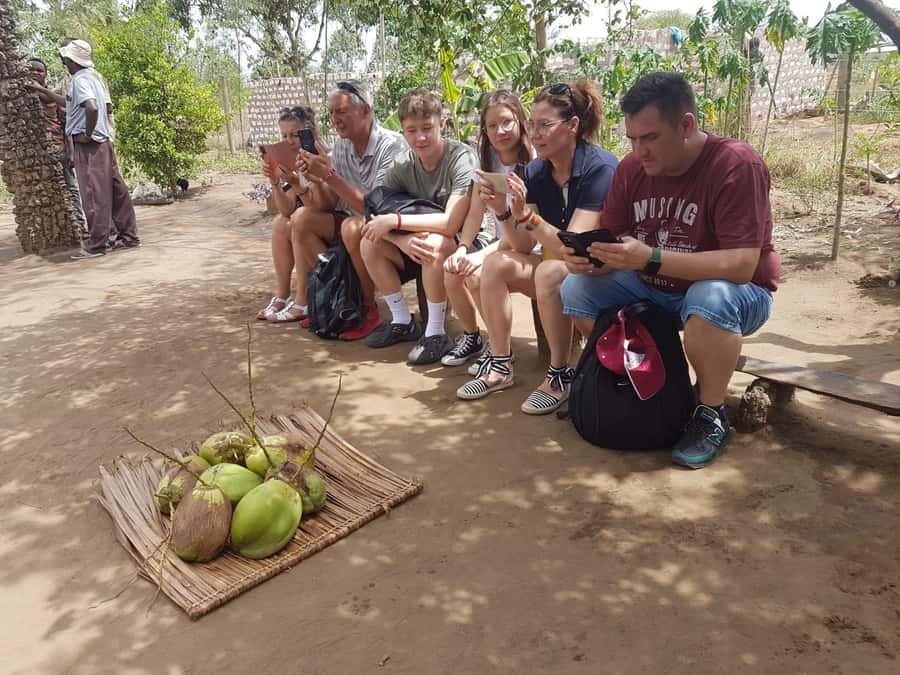
The best part of this Diani outing is that it takes you beyond the beach resorts and into everyday Giriama life. You move from Ibiza Market to a local school, a family homestead, a traditional healer, and finally a dance arena where 12 performers invite you to join them.
I like the hands-on cooking and coconut demonstrations, and I like the chance to meet people in their homes rather than watch a polished stage show. Guide Samson has earned special praise for his warmth and clear explanations. The main consideration is transport: the $35 tour price does not include the vehicle needed to reach and leave the village, and the dance portion may feel less developed than the other stops.
Key points to know before booking
- Four different views of village life: Market stalls, school routines, food preparation, traditional medicine, and dance all fit into three hours.
- Samson is a strong guide choice: His friendly, helpful approach adds context to the visit and helps conversations flow.
- Bring useful small gifts: Pencils, notebooks, crayons, balls, toys, sweets, and similar school supplies are welcomed for the children.
- Transport costs extra: A sedan can be arranged for $40 or a tuk-tuk for $25, though the final cost can vary by hotel location.
- The visit is participatory: You can help with cooking, try madafu and palm wine, wear traditional attire, and join the dancing.
- Expect a real village visit, not a resort performance: That brings warmth and spontaneity, but also means conditions may be simple and less polished.
Leaving Diani’s resorts for Giriama country
Diani is famous for its sand, warm water, and hotel life. This excursion gives you a useful counterpoint. The Giriama are one of the nine sub-groups of the Mijikenda people, who live along Kenya’s coast, and the visit focuses on how local families work, eat, learn, trade, and celebrate.
You are not simply driven to a performance and returned to your hotel. The route moves through several settings, each offering a different piece of the community. That makes the $35 activity more worthwhile than a short dance show alone.
At the same time, I would not book this expecting a carefully timed museum tour. The experience is presented as natural and locally led. Conversations, school access, cooking time, and the energy of the dance group can affect the exact pace. That flexibility is part of its appeal, but it may frustrate anyone who wants a tightly scripted program.
The activity lasts three hours. English and German guiding are available, and Samson is the guide name most closely linked with the strongest personal service. If you want the best chance of a smooth visit, confirm the guide and vehicle arrangements when you book.
A few more Diani Beach days to weigh up
- PILLI PIPA DHOW, the genuine product, snorkeling tour to Kisite Marine Park
★ 4.5 · 217 reviews - Full-Day Special Wasini Island Tour with Snorkeling and Lunch
★ 4.5 · 184 reviews - Full Day Dolphin Watching with Snorkeling in Wasini
★ 5.0 · 88 reviews
Starting at Ibiza Market
The first stop is Ibiza Market, an open-air place where people trade fish, food, clothing, and other daily goods. It is a sensible opening because you see local commerce before entering the village itself.
I like market stops when they have a clear purpose, and this one helps you understand that the tour is about ordinary life, not just ceremonial culture. You can watch how people buy and sell, notice the range of goods, and get your bearings before the quieter village sections begin.
Keep your camera ready, but use it with care. The activity includes professional photos taken with your own equipment, which means you should bring a phone or camera if you want those images. Ask before photographing people, particularly at the school and inside homes.
The market can also be the place where you first notice the difference between a beach holiday and coastal life away from the hotel strip. It may feel busy and informal, with people focused on their work. That is useful context, but it is not designed as a shopping tour.
Meeting children beneath the baobab tree

The next stop is a community school shaded by a large baobab tree. Depending on the time of day, you may meet cheerful pupils and have a short interaction with them.
This is one of the most meaningful parts of the outing, but it calls for good judgment. Small practical items such as pencils, notebooks, crayons, stickers, toys, balls, sweets, and clothes are suggested. You do not need to arrive with a large donation. A modest, thoughtful contribution is enough if you choose to bring one.
I would pack school supplies before leaving home rather than handing out random items from your luggage. It keeps the gesture simple and useful. Some visitors also choose to give money toward the school or buy local souvenirs, but these are optional choices, not requirements of the tour.
The school visit may be brief, and access depends on the time of day. You should not expect a formal lesson or a long classroom tour. Its value lies in meeting children and seeing the setting in which local education takes place.
Be warm, polite, and aware of the power difference between an overseas visitor and a local child. Let your guide set the tone for gifts and photographs. A smile, a shared game, and respectful conversation matter as much as what you carry.
Coconut water, palm wine, and a local kitchen

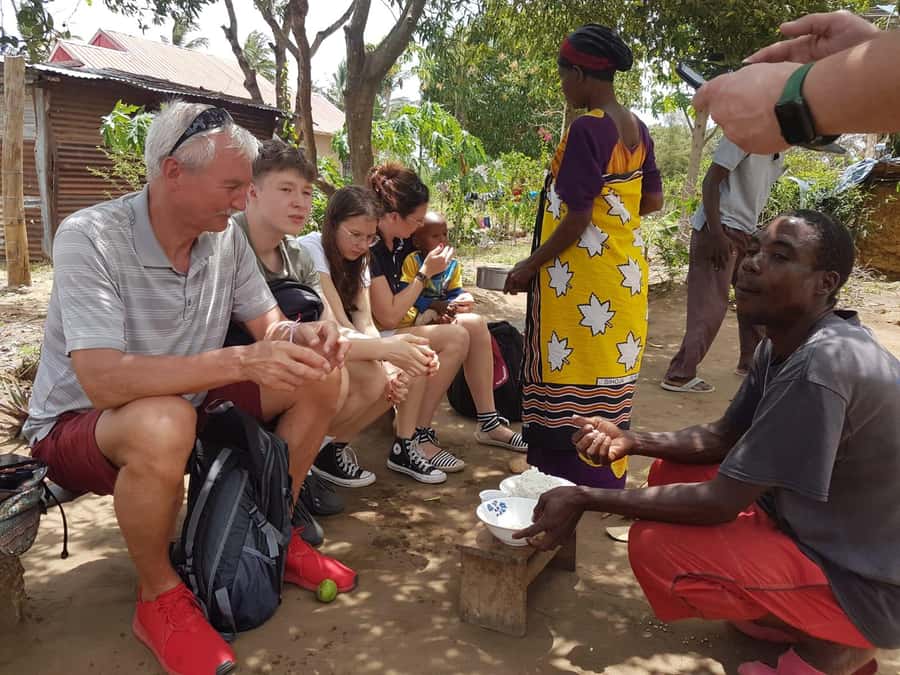
At a family homestead, you can drink madafu, fresh coconut water, and learn about its place in local life. A host demonstrates how coconuts are harvested, including the technique used for tapping palm wine.
The coconut demonstration gives the visit a practical edge. Instead of only hearing about coastal food and drink, you see how a common product is gathered and prepared. If time allows, you may also help prepare cashew nuts or ugali, a staple made from maize flour.
This is the stop I would value most if you want to understand food as part of culture. Cooking offers an easy way to talk with your hosts, and the activity lets you take part rather than stand at a distance. You may eat food prepared with the family, but food and drinks are not formally included in the price, so ask ahead about what will be available and carry money if needed.
There is a small point to clarify before booking. Palm wine tasting is listed as included, while alcohol and drugs are not allowed. If you avoid alcohol or are unsure how the tasting is handled, ask Kaaribu Experiences for details before the visit. Madafu, the coconut water, is the straightforward non-alcoholic part of this stop.
Expect a simple homestead rather than a restaurant kitchen. That is the point, but it also means the setting may not suit someone who wants a polished meal or a broad menu.
Same departure point, a completely different day out:
- Diani Beach: Glass Boat Cruise to Robinson Island
★ 4.6 · 69 reviews - Diani: Sunset Canoe Tour along the River with Mangroves
★ 4.8 · 65 reviews - Day Trip – Tsavo East National Park ( Man Eater Lions of Tsavo & Other Big Five)
★ 4.5 · 55 reviews - Diani Beach: Private African Pool Map Guided Tour
★ 4.7 · 52 reviews
Learning from the traditional healer
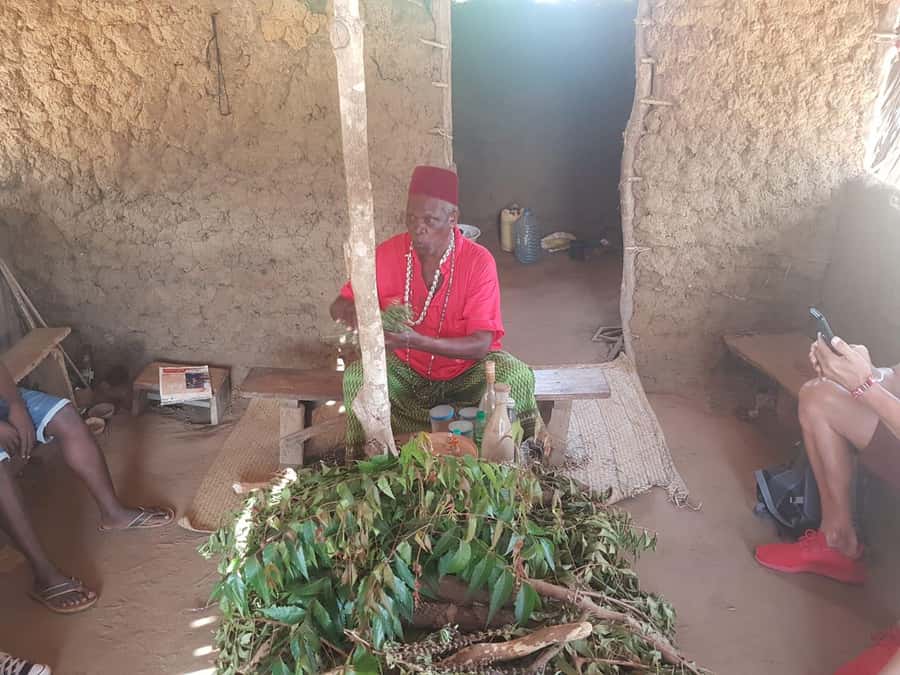
The visit to the traditional healer, or mganga, gives the tour its most distinctive cultural stop. You learn how indigenous herbs are used to treat ailments and how this knowledge passes from one generation to the next.
I would approach this section with curiosity and respect. The guide can explain the plants and preparation methods, but the experience should not be treated as medical advice or as a replacement for a trained doctor. The value here is cultural: you are seeing a body of local knowledge and the role it can play within a community.
This stop also helps prevent the village visit from becoming only entertainment. Dance is memorable, but healing traditions reveal how people understand health, family care, and inherited knowledge. Ask questions through the guide rather than making assumptions about the remedies.
The activity calls this a visit to a respected healer, not a medical consultation. If you have a serious health concern, stick to professional medical care. For most people, this will be an educational meeting lasting only part of the three-hour route.
The Giriama dance arena
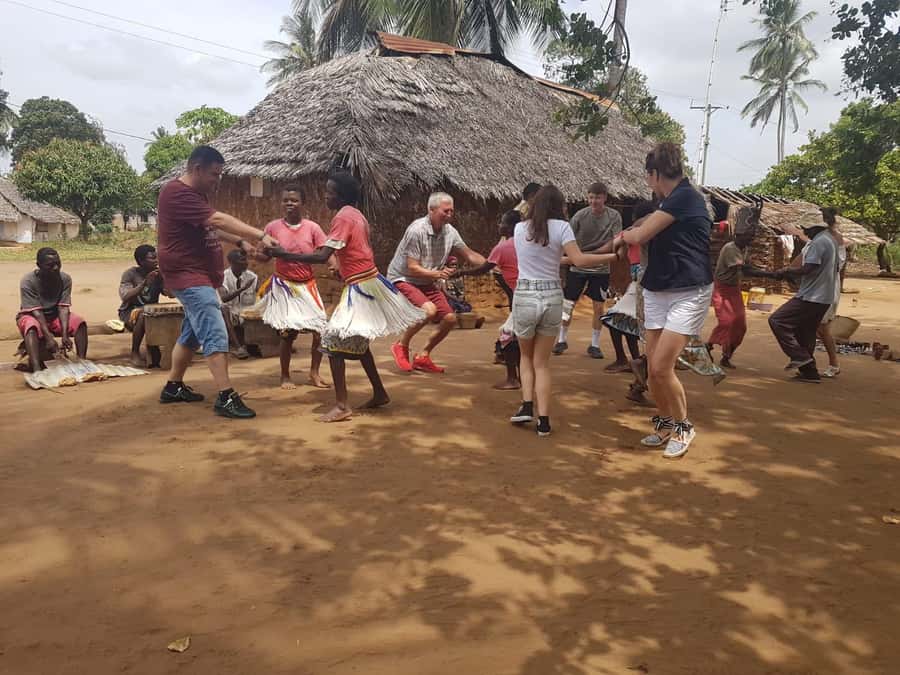
The final stop takes you through narrow village lanes to a dance area, where 12 local dancers perform in harmony. Traditional clothing, group movement, rhythm, and storytelling bring the visit to a lively close.
The dances are linked to events such as weddings, celebrations, and farewells. That context matters because you are not only watching steps. You are seeing how performance can carry a community story and mark important moments.
You are invited to join in, and I think that is the right way to approach it. You do not need dance skills. A willingness to laugh at yourself and follow the rhythm will matter more than getting every movement right. Villagers may also welcome you into their homes, giving you another look at daily routines.
This is the one area where expectations should be measured. The performance is described as natural and local rather than as a professional theater production, and one visitor specifically felt the dance section could be improved. If your main goal is a polished cultural show with elaborate staging, this may not satisfy you. If you prefer an informal exchange where the audience can take part, it will likely be more rewarding.
Traditional attire is included, and the provider can take photos using your equipment. Wear comfortable shoes, since the route includes walking through market streets and village lanes.
What the $35 price really covers
At $35 per person, the core activity offers good value if you want several short cultural encounters in one outing. You receive a village tour, traditional healer visit, palm wine tasting, local dances, traditional attire, and photo help using your own camera or phone.
The cost does not include food and drinks, despite the chance to sample local items and eat with a family. Ask exactly what is offered so you are not surprised by extra spending.
Transport is the bigger issue. You must have a vehicle to collect you from your hotel, take you through the village, and return you afterward. A sedan can be arranged for an extra $40, or a tuk-tuk for $25. The final transfer cost may vary with your hotel location, so calculate the full price for your group rather than judging the excursion by the $35 headline figure alone.
For two people, the listed tour price is $70 before transport. Add the vehicle cost, possible food or drinks, souvenirs, and any gifts, and the total becomes notably higher. Even so, the range of stops can make it a fair purchase for people who would otherwise spend the whole holiday inside a resort.
The provider also offers a free walking tour on Tuesdays and Thursdays. You need to contact Kaaribu Experiences about that option, since it is separate from the main village outing.
Practical planning for a respectful visit
Pack comfortable shoes, a phone or camera, and a small amount of cash. Cash may be useful for souvenirs, optional support for the school, or items connected with the village visit.
If you want to bring gifts, choose light and useful supplies. Pencils, crayons, notebooks, stickers, small toys, balls, sweets, and clothes are all specifically suggested. Do not feel pressured to buy expensive items. A small pack shared through the guide is easier to manage than handing things out randomly.
Arrive in your hotel lobby 10 minutes before the agreed pickup time if transport has been arranged. Since pickup is not included in the base price, confirm who is driving, where you will meet, and the return plan before the day begins.
The activity is listed as wheelchair accessible in one section, but it is also specifically marked as not suitable for wheelchair users. Treat the more cautious instruction as the practical one. Narrow village lanes, walking, homestead access, and the need to travel by car or tuk-tuk may create problems. Contact the provider directly before booking if mobility is a concern.
Free cancellation is available up to 24 hours before the start time, and you can reserve now and pay later. Those policies help if your Diani plans are still shifting, but they do not remove the need to settle transport details after booking.
Who will enjoy this Diani village tour
I would recommend it to you if you want to meet local people, learn about Giriama customs, and take part in simple daily activities. Families, curious first-time visitors to Kenya, and anyone tired of resort-only sightseeing should find plenty to hold their attention.
It also suits people who enjoy variety. In three hours, you may see a market, a school, a family kitchen, a healer, and a dance group. The route gives you more context than a single performance and keeps the pace moving.
You should think twice if you dislike informal visits, walking on uneven village routes, or discussing money and gifts. The experience asks you to be flexible and socially open. It is not a luxury excursion, and some parts may feel less polished than the advertised highlights suggest.
I would also avoid booking it solely for a dramatic dance show. The strongest parts are the conversations, cooking, school, healer, and guide explanations. The dance is an important finish, but it is only one piece of the visit.
Should you book the Giriama experience?
Book this tour if you want a direct look at coastal Kenyan life and are willing to meet people on their own terms. The market, school, madafu demonstration, family cooking, traditional healer, and dance give you a fuller picture than a hotel-based cultural evening.
Before paying, confirm the vehicle price, what food is available, the exact meeting time, and how the school visit handles gifts. Ask about the dance format if that is your top priority. With those details settled, the $35 base price can be a sensible way to spend three hours in Diani, especially with a warm guide such as Samson leading the way.
FAQ
How long does the Giriama cultural tour last?
The activity lasts three hours.
How much does the tour cost?
The listed price is $35 per person.
Is hotel pickup included?
The vehicle needed for pickup, village transport, and return is not included in the $35 price. A sedan can be arranged for $40 or a tuk-tuk for $25, with the final amount depending on your hotel location.
Which languages are available?
The tour is offered with a live guide in English or German.
What stops are included?
The route includes Ibiza Market, a local school, a family homestead for madafu and food preparation, a traditional healer, and a Giriama dance arena.
Can I bring gifts for the children?
Yes. Small items such as pencils, notebooks, crayons, stickers, toys, balls, sweets, and clothes are suggested for the school and village visit.
Is food included?
Food and drinks are not included. The activity includes palm wine tasting, and you may have opportunities to try local food during the homestead visit.
What should I bring?
Bring comfortable shoes. A phone or camera is also useful because the provider can take professional photos using your equipment.
Can wheelchair users join?
The information is contradictory, with one section saying the activity is wheelchair accessible and another saying it is not suitable for wheelchair users. Contact Kaaribu Experiences before booking if you use a wheelchair.
Just added around Diani Beach
- Sunset Canoe Tour on a River within the Mangroves★ 4.5 · 12 reviews
- (2 Days, 1 Night) Day & Night Game Drive Tsavo East National Park★ 5.0 · 3 reviews
- Tsavo East 1 Day Safari, Beach To Beach In 4wd Jeep★ 5.0 · 14 reviews
- Mombasa City Tour – Fort Jesus, Old Town, Spice Town & Craft★ 5.0 · 3 reviews
- Wasini Dolphin Day Trip★ 4.5 · 9 reviews
- Elky Tours 2 Days Tsavo East Tour★ 5.0 · 4 reviews
- Overnight Safari to Tsavo East with Pick Up From Mombasa★ 5.0 · 3 reviews
- Kongo River Sunset Experience in Canoe★ 4.0 · 6 reviews
Show, compared.


Maasai Village Visit with Traditional Dance Show
Read our review →



Nairobi Bomas Cultural Dance Show & Dinner Carnivore Restaurant
Read our review →
Safari Park Hotel Show & Dinner Experience In Nairobi Tour
Read our review →Browse the lists this tour appears in