
Reviewed · MAASAI VILLAGE VISITS
From Nairobi: Maasai Village Experience Day Tour
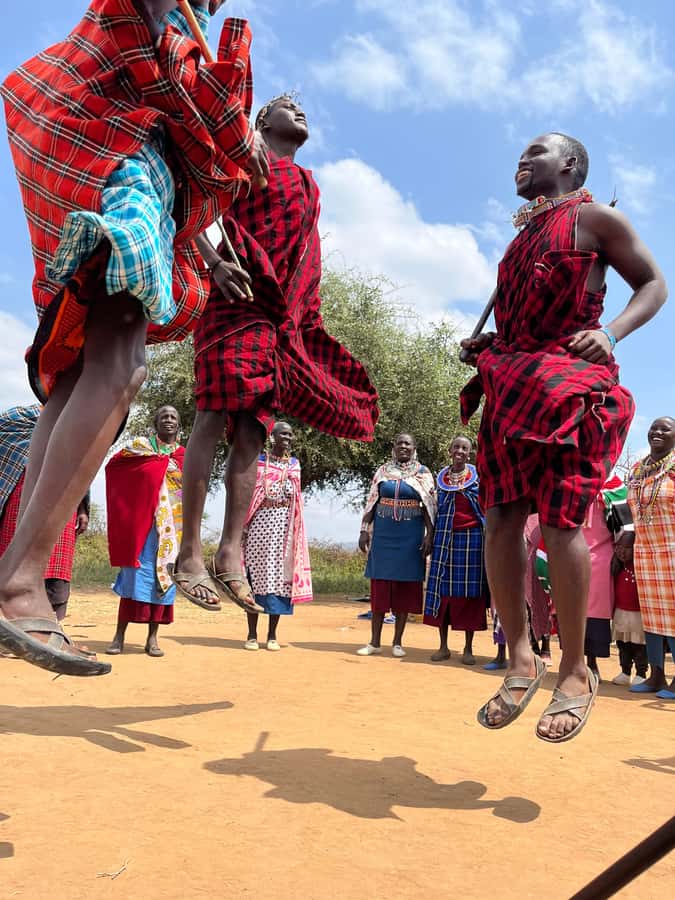
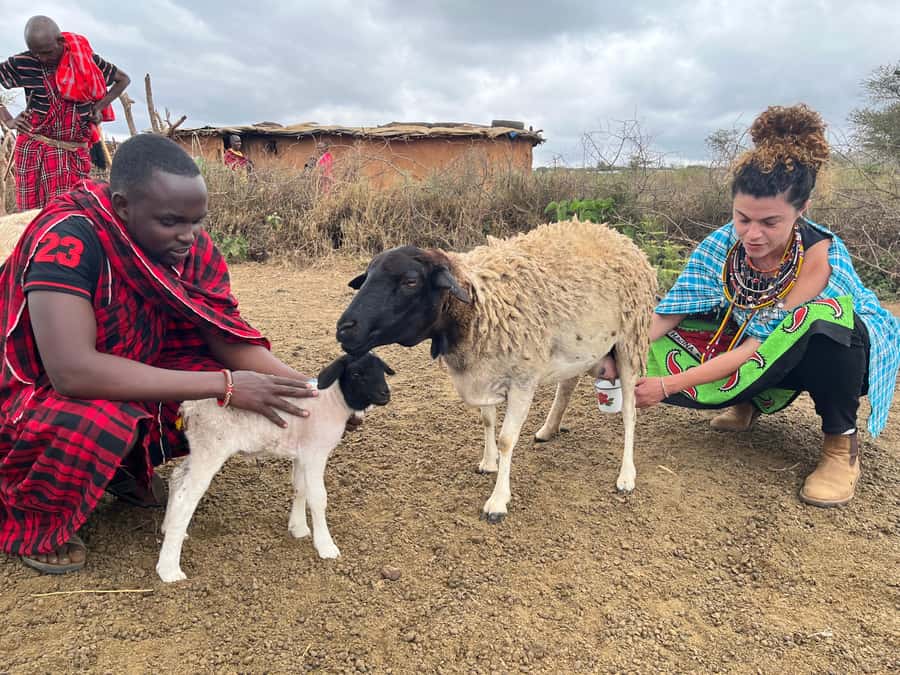
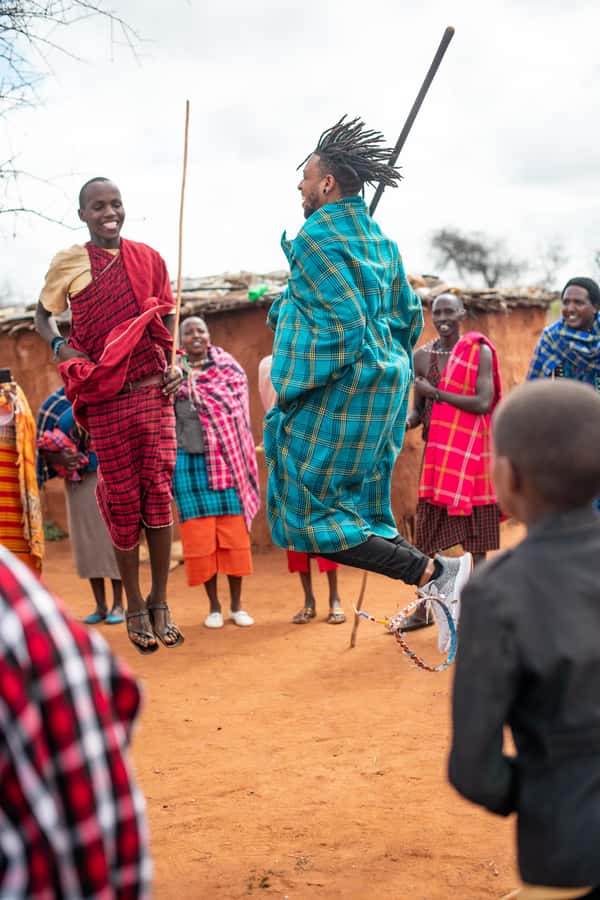
The most worthwhile part of this day is its hands-on village visit. You do not simply walk past huts while someone recites a prepared speech. You cook ugali, try traditional fire-making, make beadwork, milk a goat, help with livestock, and join songs, dancing, and jumping. Guides including Simon, Dennis, Sharon, Jacqii, and others keep the day moving and explain what you are seeing.
I like the limited visits to this particular community, and I like the effort to record which villagers take part so payment can be sent to each person through M-Pesa. The livestock market on Monday or Friday is another fine touch. The catch is simple: the drive takes about 2.5 hours each way, so this is a long day in a vehicle for roughly two hours in the village.
Key points at a glance
- Cook ugali in a manyatta: You help prepare a staple food rather than only watching a demonstration.
- Try daily Maasai tasks: Make beads, light a fire, milk a goat, tend livestock, and take part in song and dance.
- Visit on market day: Monday and Friday departures include Bissil’s major livestock market, with animals arriving from as far as Tanzania.
- Meet a local community: The visit is limited to booked groups, rather than running on an hourly tourist schedule.
- Add a school visit: A local primary school can be included on request, giving you a chance to meet learners.
- Plan for a long road day: Pickup and drop-off within three miles of Nairobi City are included, as are water and Wi-Fi.
Why this Maasai visit feels different
Kenya offers many chances to meet Maasai people, especially around Maasai Mara and Amboseli. Some village stops are built for a steady flow of safari vehicles. More huts may be added, people may be assigned fixed roles, and the visit can feel like a performance repeated all day.
This experience takes a different approach. The village is well away from Nairobi, and the company says it is the only operator visiting this particular community. Visits are limited to the people who book, which helps keep the encounter smaller and less tied to a constant stream of tourists.
That does not make the visit magically untouched by modern life. No community should be expected to remain frozen in the past for an outsider’s benefit. The useful question is how the meeting is arranged, how much choice local people have, and who receives the money. Here, the guide explains the payment system and records the villagers who participate. Payment is then made to individuals through M-Pesa.
I appreciate that the tour invites you to ask hard questions about tourism and local income. You are not asked to accept a polished story without thought. You can ask how the activity works, who is involved, and how the community benefits.
Still, approach the word authentic with care. You are visiting during a planned tour, and the activities are selected for visitors to join. The value is not in pretending you have discovered a life untouched by tourism. It is in meeting people directly, taking part respectfully, and learning how traditional practices fit into daily life today.
More Maasai village visits:
- Nairobi: Day Tour to Amboseli National Park & Maasai Village
★ 4.5 · 310 reviews - Masai village Day Tour Experience
★ 5.0 · 284 reviews - Maasai Village Experience Day Tour
★ 5.0 · 72 reviews
The long road from Nairobi to Bissil
Pickup is available from hotels and other locations within a three-mile radius of Nairobi City. You wait in your hotel lobby, keep your internet connection active, and receive a message when the driver-guide arrives. The day lasts about eight hours, though the exact pickup time can vary.
The drive to the village takes about 2.5 hours. That is the main practical issue, but it is also part of the lesson. As you leave Nairobi, you see changes in climate, work, settlement patterns, and daily life. The road gives you time to ask your guide about Kenya and the Maasai before you arrive.
Guides such as Simon, Dennis, Sharon, and Jacqii have been praised for answering questions and explaining the country along the way. Some solo bookers have ended up with a private outing because no other participants were scheduled. That can make the ride more personal, though it also means you should be comfortable spending a lot of time with your guide.
Two optional stops can be arranged on the route. They work as bathroom breaks, which matters because the village itself has no toilets. You can also stop for lunch or another bathroom break on the return journey when needed. Food is not included, so carry money and allow for that extra cost.
Sunday departures begin early, around 7 a.m. Other days may have different starting times, so check availability before booking. Wear shoes that can handle uneven ground and clothes that may get dusty, smoky, or dirty.
Bissil livestock market on Mondays and Fridays
If you book for Monday or Friday, the route includes a stop at a large livestock market in Bissil. It is described as the second-biggest livestock market in Kenya, with animals coming from as far away as Tanzania.
This adds a useful slice of working life to the day. Instead of seeing Maasai culture only through the village visit, you see livestock as part of a wider trade system. The market is not a decorative stop for photographs. It is a place where traders, animals, and local business come together.
You also go into one of the makeshift food kiosks operated by women who serve the livestock traders. This is an opportunity to see how a market supports more than the people buying and selling animals. It also offers a chance to purchase food, though meals and drinks remain your responsibility.
Market conditions can be active and dusty, and the stop may not suit someone who wants a quiet, neatly arranged attraction. That is part of its value. You are seeing an ordinary economic activity, not a set designed for sightseeing.
If the market matters to you, book for Monday or Friday and confirm that the stop is included in the day’s plan. On other days, the central focus is the village.
Two hours inside a Maasai manyatta
Before entering the village, your guide explains the activities and what to expect. The guide stays with you during the visit, helping with communication and giving context when a practice needs explanation.
The village portion lasts about two hours. That is enough time for a series of activities, but not enough for an unhurried study of every part of village life. You should expect a structured introduction with room for questions, not a full day living as a community member.
A manyatta is a traditional Maasai settlement. You may enter a hut and see how the living space is arranged. The setting is modest, and there are no toilets at the village. Bring patience, respect, and a willingness to follow instructions.
One of the strongest parts of the visit is the chance to help prepare ugali. This firm maize meal is a familiar staple in Kenya, and cooking it gives you a more practical connection to food than simply eating it at a restaurant. You take part in the work, then have the chance to eat what you helped prepare.
You can also try making a fire by traditional methods. It takes more effort than striking a match, and that is exactly the point. A short activity turns a familiar object, fire, into a reminder of the skill and time involved in daily household tasks.
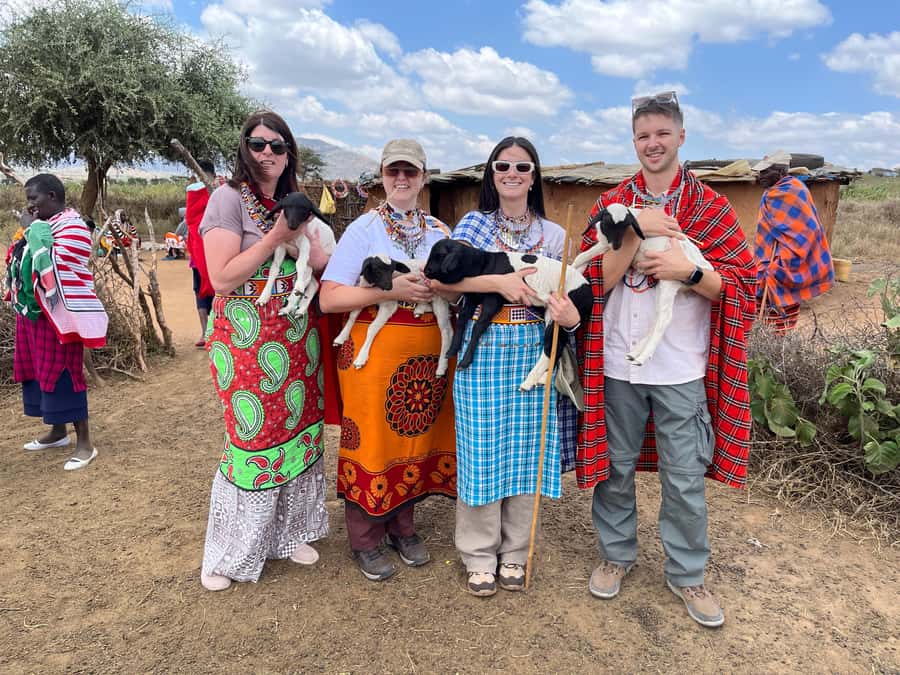
Goat milking offers another direct activity. You may help tend goats or sheep as well, depending on what is happening that day. This is a good moment to remember that the village is a working home, not a petting zoo. Follow the instructions, handle animals gently, and do not rush for a photograph.
A few more Nairobi days to weigh up
- Nairobi National Park Half-Day Tour; Free Wi-Fi connection
★ 5.0 · 878 reviews - Nairobi: National Park & Optional Elephants & Giraffe Center
★ 4.8 · 874 reviews - NAI NAMI: Nairobi Storytelling Tour with Street Children
★ 5.0 · 792 reviews - Nairobi National Park Half-Day Game Drive
★ 4.5 · 738 reviews
Beads, clothing, dancing, and jumping
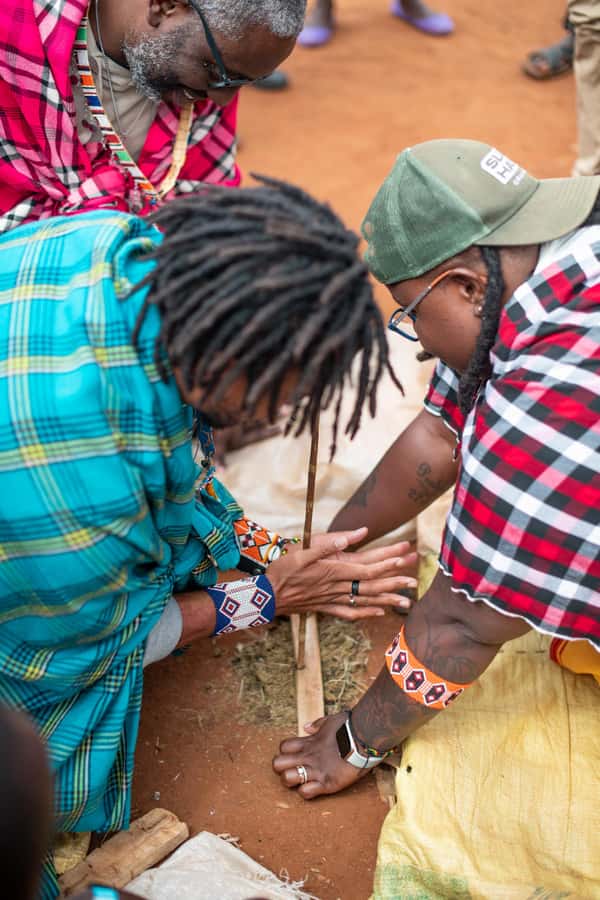
Beadwork is one of the more relaxed activities. Maasai women show you how traditional jewelry is made, and you can create a small item such as a ring. The work provides a chance to sit, watch, and ask questions about color, design, and the role of jewelry in Maasai life.
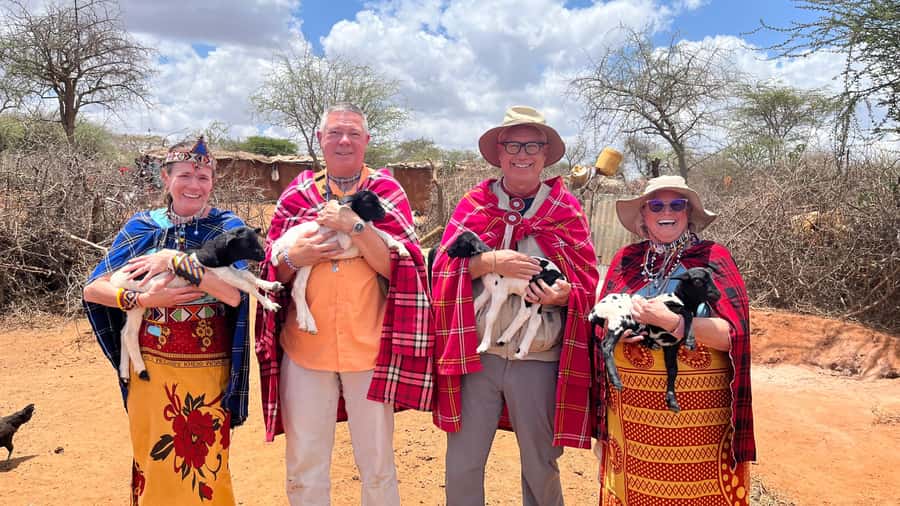
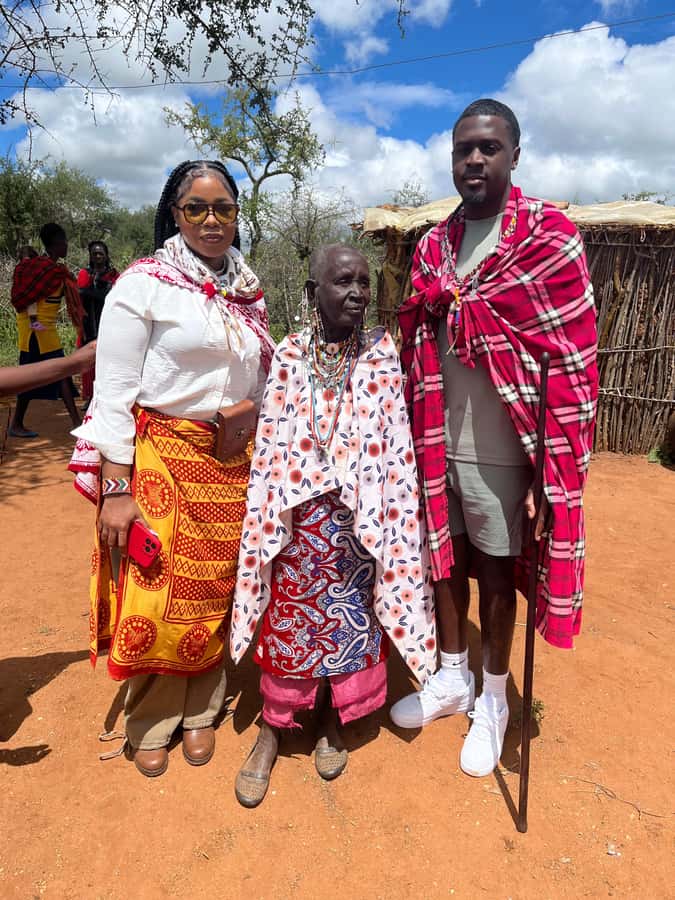
You may also be dressed in traditional clothing for part of the visit. Treat this as a privilege rather than a costume opportunity. Ask before handling items, listen to the person helping you, and keep your behavior respectful.
Music and dance bring the visit to a lively close. You join singing, jumping, and dancing with the community. Men may demonstrate traditional skills such as spear throwing, while other activities focus on household work and craft.
The physical side of the visit is manageable for many people, but it is not designed for everyone. The tour is not suitable for wheelchair users, people with visual impairments, people prone to motion sickness, or babies under one year. Comfortable shoes, a sun hat, sunscreen, and clothes that can get dirty are sensible choices.
Professional cameras and drones are not allowed. The stated reason is to avoid turning the community into a commercial backdrop. A phone may be more appropriate, but ask before taking pictures and let your guide help you understand local boundaries.
The school visit and the question of donations
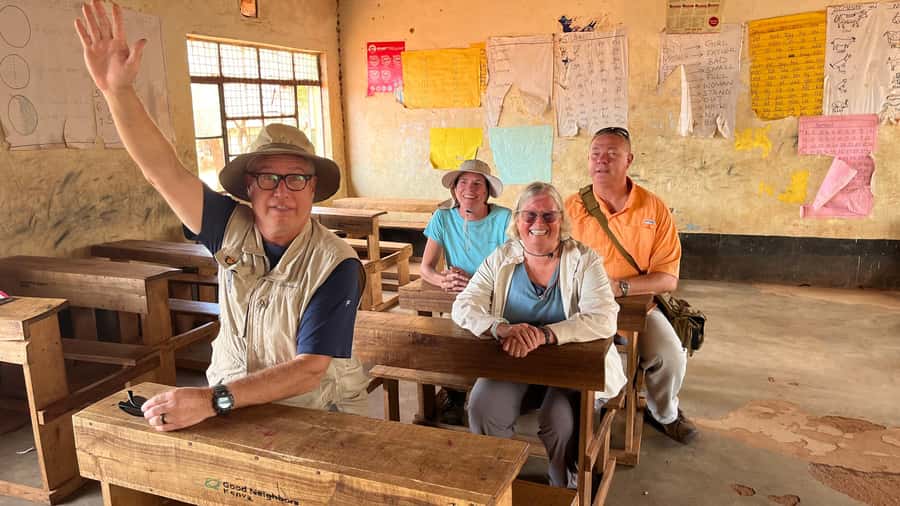
A local primary school can be visited on request. This gives you a chance to meet learners and offer encouragement. The activity is presented as a way for you to become an inspiration to the children, but remember that a school is a place of learning first. Keep the visit brief, polite, and guided by the teacher or tour staff.
Donations are optional. You may bring items or cash if you want to support the community, but there is no pressure to give. The same applies to the handmade jewelry and other items displayed after the activities. Buying is optional, and it is sensible to decide your budget before you arrive.
The payment structure is worth discussing with your guide. The company says it pays the villagers who attend individually rather than giving one broad payment to an unnamed group. An online attendance register records who takes part, and money is sent later through M-Pesa.
That arrangement does not answer every question about fair tourism, but it gives you something concrete to examine. Ask how many people participate, how rates are set, and how often visits occur. A respectful cultural experience includes transparency about money, not just friendly welcomes.
What the $117 price really covers
At $117 per person, this is not a cheap quick stop. The price covers hotel pickup and drop-off, transport, village entry, bottled water, Wi-Fi, and an English- or Swahili-speaking guide. Food, drinks, purchases, and donations are extra.
The value depends on what you want from a day in Kenya. If you want the shortest possible cultural visit, the long drive may feel inefficient. You spend around five hours on the road for a two-hour village program, plus the market or school if added.
If you want a small-scale meeting with time for questions and practical activities, the price is easier to justify. You are paying for transport into a rural area, a guide for the entire day, and access to a community that is not receiving visitors every hour. Solo bookers may also find the value stronger when the trip operates as a private outing without a large group.
The free pickup radius helps if you are staying in central Nairobi. Confirm your location before booking, since the included pickup and drop-off area is limited to three miles from Nairobi City.
Free cancellation up to 24 hours before departure and a reserve-now, pay-later option make the booking less rigid. Those terms are useful when your Nairobi schedule may shift.
How to make the most of the day
Start with the right expectations. You are not going on safari, and wildlife viewing is not part of this activity. The focus is people, work, food, craft, livestock, and conversation.
Bring sunscreen, a hat, comfortable shoes, and clothes that can take dust, smoke, and outdoor activity. Keep some cash for food, beadwork, or a donation, but do not assume you need to buy or give anything.
Ask your guide to explain words in Maasai and Swahili. The tour is conducted in English or Swahili, and learning even a few local terms can make the exchange more personal. Guides including Dennis and Simon have helped visitors understand not only the village but also wider Kenyan customs and history.
Give yourself room to be a learner. You may be clumsy at fire-making, beadwork, or milking. That is fine. The best moments often come when you stop trying to create a perfect photograph and pay attention to the person showing you how the task works.
If you are bringing children, note that one family group was accommodated with a car seat and booster seats. Even so, the long drive and active village visit may be tiring for very young children. Babies under one year are not suitable for this tour.
Who should book this experience
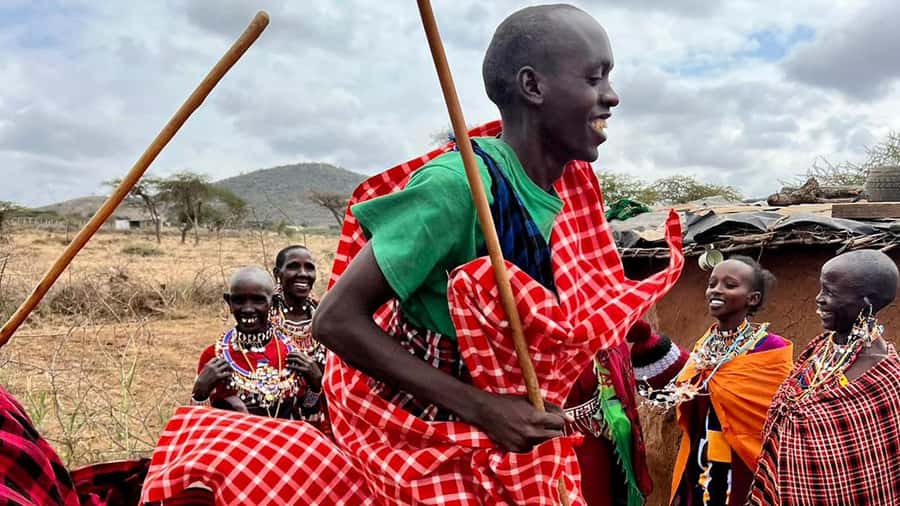
I would choose this day if you want direct contact with a Maasai community and prefer participation over a quick photo stop. It suits curious visitors, solo bookers, families with older children, and anyone willing to spend much of a day on the road.
It is especially appealing if you can visit on Monday or Friday, when the livestock market adds another layer to the outing. It is also a good fit if you care about asking how tourism income reaches local people.
I would think twice if you dislike long vehicle journeys, get motion sickness, need regular access to toilets, or want a polished attraction with a predictable schedule. The village has no toilets, food is not included, and the day can involve dust, sun, animals, smoke, and changing conditions.
The tour has received a 4.9 rating from 70 bookings, and the most consistent praise centers on the guides and the warm welcome at the village. Simon, Dennis, and Sharon are repeatedly singled out for friendly conversation, clear explanations, flexibility, and help with photographs. That matters because the drive is long and the quality of the guide shapes much of the day.
Should you book it?
Book this Maasai village day tour if you want an active cultural meeting and are happy to trade convenience for a more remote setting. The strongest reasons are the practical activities, the small number of visitors, the option of the Bissil market, and the effort to pay participating villagers directly.
Skip it if you have only a few hours in Nairobi or if the idea of five hours in a vehicle sounds worse than the cultural visit sounds appealing. For the right person, $117 buys more than transport and a village entry fee. It buys time, explanation, and a chance to take part respectfully in everyday tasks.
FAQ
How long does the tour take?
The full experience lasts about eight hours. The drive from Nairobi to the Maasai village takes roughly 2.5 hours each way, and the village visit lasts about two hours.
Where does pickup take place?
Pickup and drop-off are included from locations within a three-mile radius of Nairobi City. You should wait in your hotel lobby and keep your internet connection active until the driver-guide confirms arrival.
Which languages are available?
The live guide can conduct the tour in English or Swahili.
Is food included?
No. Food and drinks are not included. You can stop for lunch or a bathroom break on request, and on market days you may visit a makeshift kiosk serving livestock traders.
Can I visit the livestock market?
The livestock market is included when you book for Monday or Friday. It is described as the second-biggest livestock market in Kenya, with livestock arriving from as far away as Tanzania.
Is the tour suitable for everyone?
The experience is not suitable for wheelchair users, people with visual impairments, people with motion sickness, or babies under one year. Bring comfortable shoes, a sun hat, sunscreen, and clothing that can get dirty.
Just added around Nairobi
- Visit kibera Slum the chocolate city★ 4.8 · 3 reviews
- 4 Days Safari to Lake Nakuru N/P and Maasai Mara N/R★ 5.0 · 18 reviews
- Maasai Mara Day Trip★ 5.0 · 15 reviews
- 4 Days Tour Landcruiser in Masai Mara and Lake Nakuru★ 5.0 · 10 reviews
- 3 days maasai mara migration safari★ 4.5 · 7 reviews
- Kibera Slum Tour with a Local★ 5.0 · 15 reviews
- Wildebeest Migration in Masai Mara and Sightseeing 4 Days Tour★ 4.5 · 6 reviews
- Day Tour to Nairobi national park, Elephants, and Giraffe Center★ 3.5 · 8 reviews
Maasai Village Visits, compared.

Day Tour to Amboseli National Park & Maasai Village
Read our review →

Day Trip: Amboseli National Park & Maasai Village – Nairobi
Read our review →
Day Trip to Maasai Mara Reserve & Maasai village
Read our review →
3days/2nights group joining Masai Mara with Masai Village Visit
Read our review →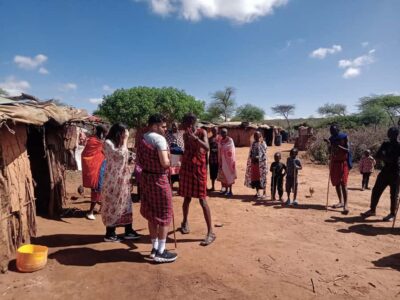
Maasai Village Visit with Traditional Dance Show
Read our review →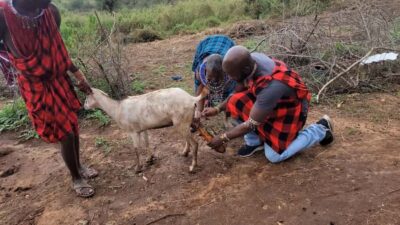
Browse the lists this tour appears in