
Reviewed · TOURS
Mathare Community Slum Tour
Mathare is not a backdrop for sightseeing. It is a living community, and this private, community-led walk puts local people at the center. You can meet residents, hear personal stories, step inside the homes of local mothers, and gain a clearer view of daily life in one of Kenya’s oldest informal settlements.
I like the small-group format, which allows more room for questions and conversation. I also like that the tour connects social issues with practical local enterprise through its discussion of HIV, public health, and handmade crafts. The main concern is reliability: one booking went unanswered by WhatsApp both before and on the tour day, so confirm your arrangements carefully before setting out.
Key points
- Community-led access: Meet local residents and hear about Mathare from people connected to the area.
- Home visits included: The tour may take you inside the homes of local mothers, an unusual and personal part of the experience.
- Public health focus: Learn about the effects of HIV and other health crises on the community.
- Handmade crafts: Stop at local craft shops and shop for beadwork and other locally made items.
- Private two-hour format: Your group participates on its own, with the full activity lasting about two to three hours.
- Simple practical support: Bottled water is included, and the tour begins and ends at Ushindi East Avenue.
Meeting Mathare through a local guide

The most important feature here is not a landmark. It is the chance to listen.
Mathare is described as Kenya’s oldest informal settlement and as the country’s largest informal settlement. The tour is designed to show you the community through direct contact with people who live there. Instead of only walking past buildings, you are given an introduction to residents, local concerns, and the pressures that shape everyday life.
That distinction matters. A short visit to an informal settlement can easily become a quick look from the outside. This experience aims for something more personal, with community members explaining their own surroundings and challenges. You should arrive ready to listen, ask respectful questions, and accept that the most valuable parts may not be the easiest to photograph or summarize.
The tour is private, so only your group takes part. That is a useful feature in a setting where questions can be sensitive. You do not have to compete with a large crowd, and the pace can potentially suit your group more closely. The exact guide names are not provided, so you should not expect to choose a particular guide when booking.
A few more Nairobi days to weigh up
- Nairobi National Park Half-Day Tour; Free Wi-Fi connection
★ 5.0 · 878 reviews - Nairobi: National Park & Optional Elephants & Giraffe Center
★ 4.8 · 874 reviews - NAI NAMI: Nairobi Storytelling Tour with Street Children
★ 5.0 · 792 reviews
What the two to three hours include
The activity is advertised as lasting about two hours, with the overall duration listed as two to three hours. That extra hour gives some flexibility for walking, conversation, shopping, and the time needed for home visits.
The basic plan has three parts:
- A walk through the community
- Conversations and visits with local residents
- A stop for handmade crafts and beadwork
The order may vary. Start at Ushindi East Avenue in Nairobi, then return to the same meeting point at the end. Since the tour stays focused on one community, you spend your time learning about Mathare rather than crossing the city between attractions.
I appreciate this compact format for a Nairobi visit. It fits into a morning or afternoon and leaves room for other plans. At the same time, two hours is not enough for a full study of Mathare. You will receive an introduction, not a complete account of the settlement or every issue facing its residents.
Visiting the homes of local mothers

A home visit is one of the most personal parts of the experience. You may enter the homes of local mothers and hear about life from a family point of view rather than from a general city guide.
This can give the tour a human scale. Public health figures and descriptions of poverty often feel distant. A conversation inside someone’s home can help you understand how those pressures affect real households. It also creates a responsibility for you as a visitor.
Ask before taking photographs, and do not treat a home as a display. Keep questions polite and let the resident decide what to share. A little restraint goes a long way. You are entering someone’s private space, not simply ticking off another stop.
The information provided does not specify how many homes you visit, how long you stay, or which families take part. Keep that in mind when planning your expectations. The visit is an advertised possibility, but the exact experience may depend on the day, the community schedule, and the people available to meet you.
Learning about HIV and public health
The tour also addresses HIV and other public health crises. This gives the walk more substance than a simple neighborhood orientation.
Health issues in an informal settlement are tied to daily life, income, housing, and access to services. The experience does not promise a formal medical briefing, and no detailed syllabus is provided. Instead, expect local stories and a community view of how health problems affect people.
This subject may feel heavy, but it is an important reason to choose this tour. You are not only looking at where people live. You are learning about the conditions that shape their choices and opportunities.
Keep your questions open rather than judgmental. Ask what local people want visitors to understand, and listen to the answers. The guide or community members may offer a more useful perspective than a string of statistics.
Same departure point, a completely different day out:
- Nairobi National Park Half-Day Game Drive
★ 4.5 · 738 reviews - Nairobi: Historic and Modern Highlights Walking Tour
★ 4.8 · 703 reviews - Safari Tour; Nairobi National Park
★ 4.5 · 594 reviews - 3 Days Masai Mara Group Joining
★ 5.0 · 486 reviews
Shopping for beadwork and local crafts
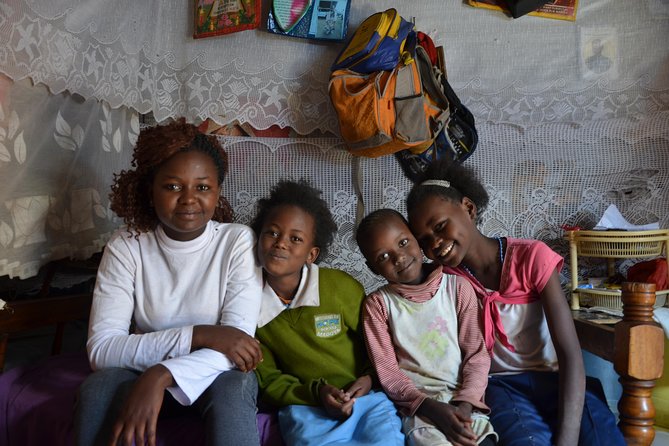
The craft stop adds a practical element to the visit. You can browse handmade beadwork and other crafts at local shops, and buying something gives you a direct way to support local sellers.
This is not just a souvenir break. In a community tour, shopping can connect your spending with the people and businesses you have met. You can look for a small item that is easy to carry and meaningful because you bought it in the place where it was made or sold.
The price of the beadwork is not provided, so bring enough Kenyan currency or ask in advance about accepted payment methods. Do not assume every shop takes cards. Also, remember that buying is optional. You can look, ask questions, and continue without making a purchase.
The craft stop may appeal most to people who prefer useful, locally made souvenirs over mass-produced items. It also gives the tour a change of pace after the more serious conversations about health and living conditions.
Why the private format matters

At $25.65 per person, the tour is priced as an affordable short activity, especially for a private experience. The value depends less on the number of sights and more on the access, local connection, and time spent with community members.
A private tour can be good value for a couple, family, or small group that wants to ask questions freely. If several people share the booking, the cost buys a more personal setting without the crowd of a large scheduled group.
Do not compare this price with a standard city sightseeing loop. You are not paying for a long list of monuments or transport between attractions. You are paying for a guided introduction to Mathare, local contact, community stories, and the time needed to walk and talk.
The price includes bottled water, which is a small but useful touch. Bring any other drinks or personal items you may need, since nothing else is specified as included.
Practical details before you go

The meeting point is Ushindi East Avenue, Nairobi, and the activity ends back there. The location is near public transportation, which makes it easier to reach without arranging a private vehicle, though the provided details do not name a specific bus route or station.
The tour operates Monday through Sunday, from 7:00 AM to 5:00 PM, during the stated operating period ending June 17, 2026. You should confirm your chosen start time when booking because the published hours cover a broad window rather than one fixed departure.
A mobile ticket is accepted, and booking confirmation is issued at the time of reservation. Keep the confirmation easy to access on your phone. The tour is private, but no exact group-size limit is supplied.
Most people can participate, according to the activity information. Still, this is a walking tour through an informal settlement, and the details do not specify walking distance, pavement conditions, seating, or facilities. If you have mobility needs, contact the provider before booking rather than relying only on the general participation note.
Wear practical clothing and comfortable shoes. That is ordinary advice for any walking tour, but it matters more here because the experience is built around moving through a residential community rather than visiting a formal museum or attraction.
Safety, respect, and good judgment
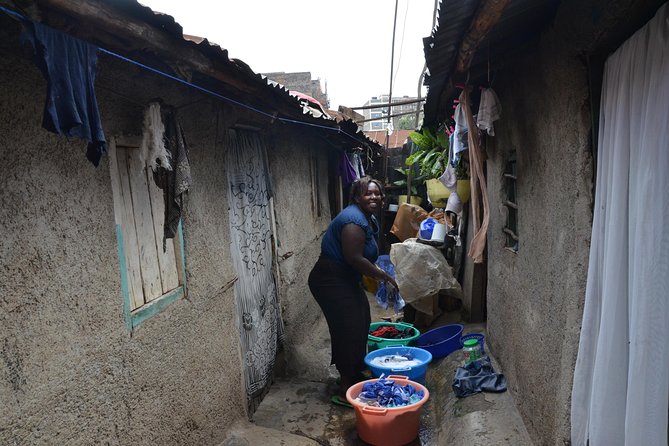
A visit to Mathare calls for awareness. The tour is community-led, which gives you a local point of contact, but you should still behave as you would in any unfamiliar part of Nairobi.
Keep valuables secure and avoid displaying expensive equipment. Ask before taking photos, especially during home visits or conversations about HIV and other health problems. If someone does not want to be photographed or interviewed, accept that without pressing.
Do not reduce Mathare to poverty. People live, work, raise families, sell goods, and build community there. The point of the tour is to understand more, not to collect dramatic images.
The information does not state specific safety rules, transport arrangements, or photography policies. Ask the provider any questions you have before arrival. A short message about where to meet, how to identify the guide, and what to do if you are delayed can prevent a great deal of confusion.
A serious booking reliability warning
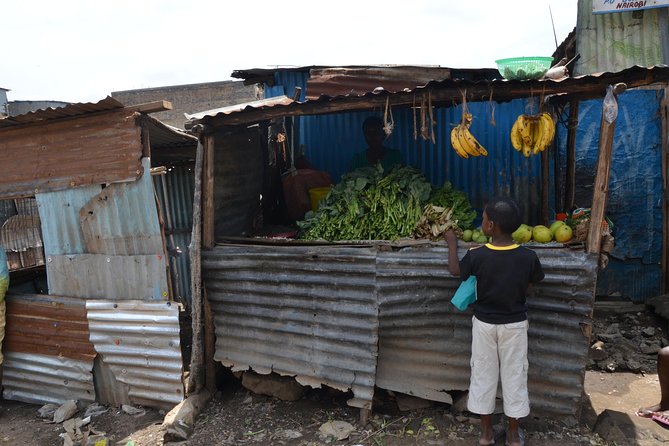
The overall rating is 4.6 from nine reviews, which suggests that the experience has generally been received well. But the small number of ratings means you should not treat that figure as a guarantee.
There is one serious complaint about communication. A customer tried to contact the organization through WhatsApp one day before the tour and again on the day itself, but received no response after paying in full. That is a real concern, particularly for an activity that depends on meeting a local guide at a specific point.
I would confirm the meeting details soon after booking and again before the tour. Save the provider’s contact information, keep your booking confirmation, and allow extra time to reach Ushindi East Avenue. If you cannot get a response, contact the booking platform before the 24-hour cancellation deadline if you need to cancel.
The experience offers free cancellation up to 24 hours before the start time for a full refund. Cancellations or changes made less than 24 hours before the start are not refunded or accepted. The tour also depends on good weather and a minimum number of participants. If the provider cancels for either reason, you are offered another date or experience, or a full refund.
Who will enjoy this Mathare tour
I would choose this tour if you want a direct, community-focused introduction to Nairobi and are comfortable with serious subject matter. It suits people who value conversation, local enterprise, and social context more than polished attractions.
It is also a good fit if you have only a few hours free. The two to three-hour schedule can fit around a wider Nairobi visit, and the start and finish at the same point keep the logistics simple.
Families may find the experience meaningful, though parents should decide if the discussion of HIV, public health crises, and poverty suits their children. The home visits also require maturity and respect from everyone in the group.
I would think twice if you want a conventional sightseeing tour, dislike walking, or prefer an activity with a detailed fixed schedule. You should also reconsider if you are uncomfortable with home visits or do not want to engage with difficult social topics.
Should you book the Mathare Community Slum Tour?
Book it if you want to meet community members, hear local stories, learn about public health challenges, and support craft sellers through a short private visit. The home visits and community-led approach give it more depth than a quick drive past an informal settlement.
Go in with realistic expectations. This is an introduction, not a complete account of Mathare, and the exact route and conversations are not fully specified. Most important, confirm communication and meeting arrangements before the cancellation deadline.
At $25.65 per person, I consider it a fair price for a private, two-hour community experience, provided you value local contact more than a packed sightseeing schedule. If that sounds like your kind of Nairobi outing, this tour is worth considering.
FAQ
How much does the Mathare Community Slum Tour cost?
The tour costs $25.65 per person.
How long does the tour last?
The tour lasts approximately two to three hours. It is generally described as a private two-hour experience.
Is the tour private?
Yes. Only your group participates in the private activity.
Where does the tour start and finish?
The tour starts at Ushindi East Avenue, Nairobi, Kenya, and ends back at the same meeting point.
Is bottled water included?
Yes. Complimentary bottled water is provided.
Can I cancel for a full refund?
Yes. You can cancel at least 24 hours before the experience start time for a full refund. Cancellations or changes made less than 24 hours before the start time are not accepted for a refund.
Just added around Nairobi
- Visit kibera Slum the chocolate city★ 4.8 · 3 reviews
- 4 Days Safari to Lake Nakuru N/P and Maasai Mara N/R★ 5.0 · 18 reviews
- Maasai Mara Day Trip★ 5.0 · 15 reviews
- 4 Days Tour Landcruiser in Masai Mara and Lake Nakuru★ 5.0 · 10 reviews
- 3 days maasai mara migration safari★ 4.5 · 7 reviews
- Kibera Slum Tour with a Local★ 5.0 · 15 reviews
- Wildebeest Migration in Masai Mara and Sightseeing 4 Days Tour★ 4.5 · 6 reviews
- Day Tour to Nairobi national park, Elephants, and Giraffe Center★ 3.5 · 8 reviews
Tours, compared.

Nairobi National Park Half-Day Tour; Free Wi-Fi connection
Read our review →
NAI NAMI: Nairobi Storytelling Tour with Street Children
Read our review →


Elephant Orphanage and Giraffe Center Tour with Options
Read our review →
Day Tour to Amboseli National Park & Maasai Village
Read our review →
Tour: Giraffe Center and Nairobi National Park
Read our review →