
Reviewed · TSAVO NATIONAL PARK SAFARIS
From Kilifi, Watamu, Malindi: Tsavo East Day Safari
Tsavo East is the star here: a huge Kenyan park where elephants coat themselves in rust-red soil and game drives unfold across open plains and acacia country. You get hotel pickup, private transport, water, and a full day aimed at wildlife rather than a quick coastal excursion. Red elephants are the signature sight, though no safari can promise a particular animal.
I like the convenience of door-to-door pickup from Kilifi, Watamu, Malindi, or Mambrui, and I like the chance to spend time with guides such as Abdul, who has impressed with sharp animal-spotting skills. The main concern is the long road transfer, often three to four hours each way, plus inconsistent guide language and vehicle quality. Confirm the guide and vehicle before paying.
Key points to know before booking
- The famous red elephants: Tsavo’s elephants take rust-coloured dust baths, creating the park’s best-known wildlife image.
- A very long day: The 12-hour schedule includes roughly three to four hours of road travel from the coast to the park.
- Extra costs matter: The $200 price excludes adult park entry of $80, child entry of $40, and lunch costing about $25 to $35.
- Private transport included: Hotel pickup, drop-off, a private vehicle, game drives, a guide, and drinking water are covered.
- Guide quality can shape the day: Abdul received especially strong praise, while some bookings had no usable German or English guide.
- Vehicle checks are worth your time: A van had trouble with its sliding doors, and one safari vehicle became stuck in sand during another outing.
Tsavo East is a wildlife day, not a quick coastal outing
From the beaches and small towns of Kenya’s Coast Province, Tsavo East offers a sharp change of scene. You leave the coast early, ride inland, and spend the day among dry plains, acacia-dotted country, and open stretches where animals can be hard to spot one minute and impossible to miss the next.
The park covers more than 13,000 square kilometres, so a one-day visit can only show you a small part of it. That is both the attraction and the limitation. You get a real taste of a large, untamed park, but you do not have the time or range of a multi-day safari.
The advertised duration is 12 hours. With the road journey usually taking three to four hours from your pickup point to Tsavo East, you should expect a demanding day with an early start and a late return. I would choose this trip for a first look at Tsavo, not for a relaxed schedule.
More days out around Watamu:
- Watamu Marine Park & Sudi Island Mangrove Forest Canoe Ride.With sea food lunch
★ 4.5 · 31 reviews - WATAMU: MALINDI: SARDEGNA ISLAND & MALINDI MARINE PARK
★ 4.5 · 9 reviews - Watamu: Sunset Mangrove Canoe Tour with Coconut Drink
★ 3.6 · 8 reviews
Early pickup from Kilifi, Watamu, Malindi, or Mambrui
Your driver collects you from your hotel in one of the listed coastal towns. You are asked to wait in the lobby 10 minutes before pickup, and the driver should carry a sign with your last name.
That small system is useful, particularly if your hotel has several entrances or a busy reception area. Have your phone charged and keep your booking details close. An early departure is necessary if you want worthwhile time inside the park, so do not plan a late breakfast at the hotel.
The first road section is mainly about getting into position. A 15-minute stop is scheduled for breakfast and a washroom break before park entry. This is a practical stop, not a full meal included in the tour, so carry cash or a card and keep expectations modest.
The long transfer is the first major trade-off. A private vehicle gives you more control than a large shared coach, but it does not shorten the road. If you are prone to stiffness or motion sickness, comfortable clothing, water, and a light breakfast will help.
Park entry opens the door to Tsavo’s red elephants
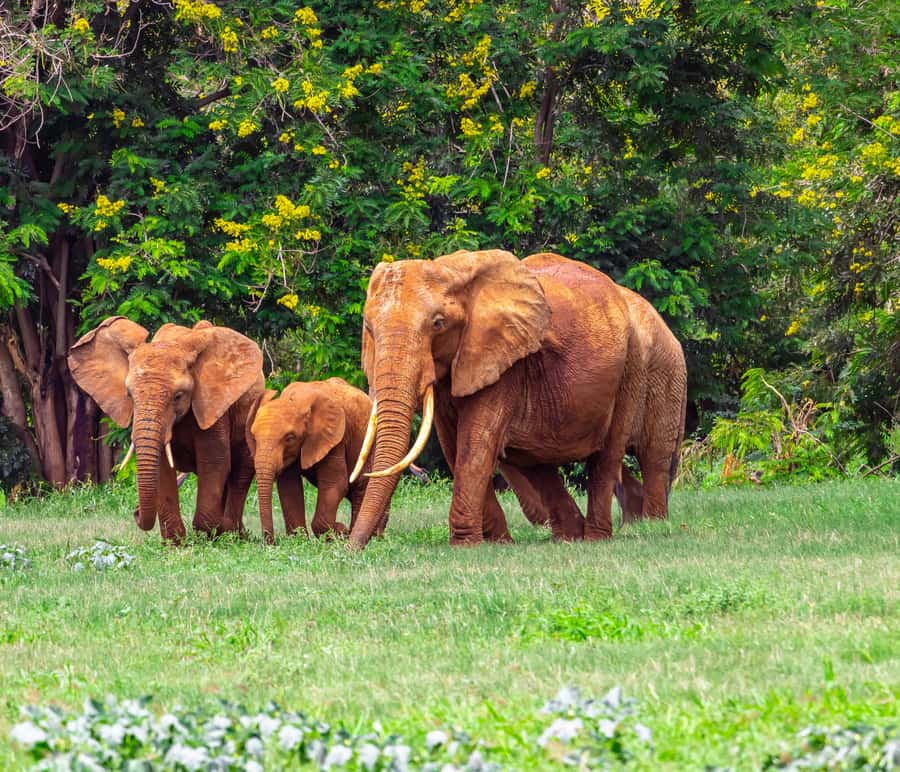
After the entrance formalities, the safari turns from road transfer to game drive. Tsavo East is especially known for elephants that cover themselves in the park’s red-brown dust. The colour comes from the soil clinging to their skin, and a herd feeding, walking, or bathing can produce the most memorable scene of the day.
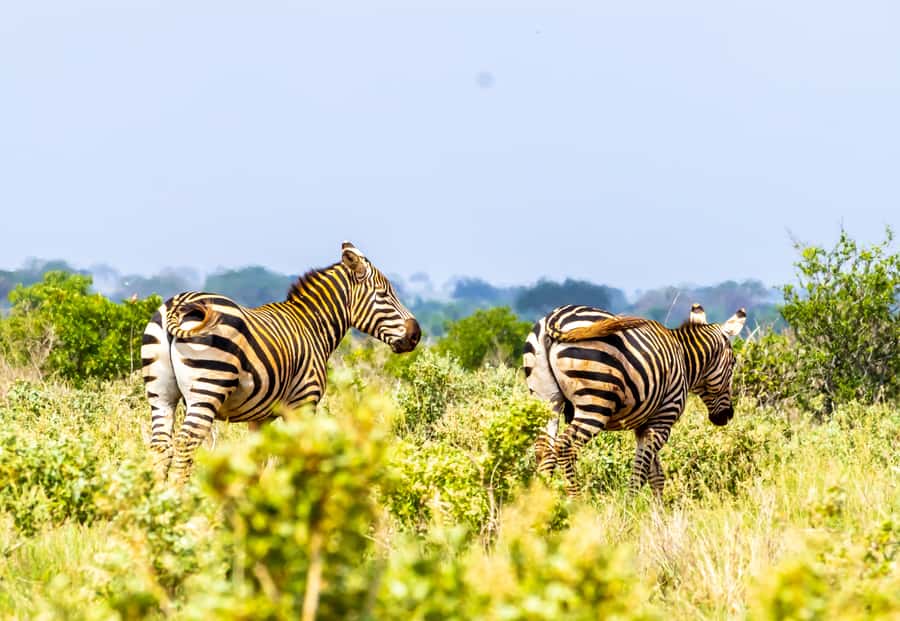
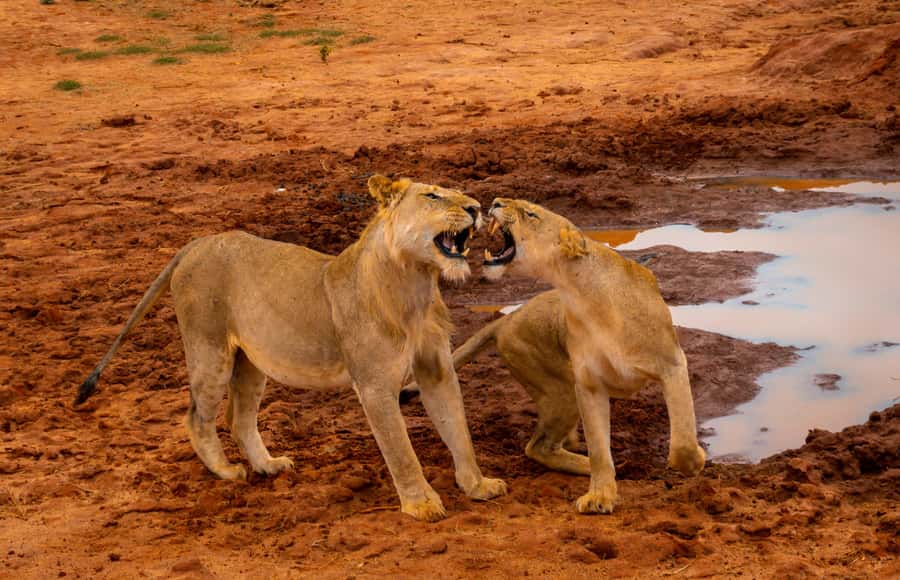
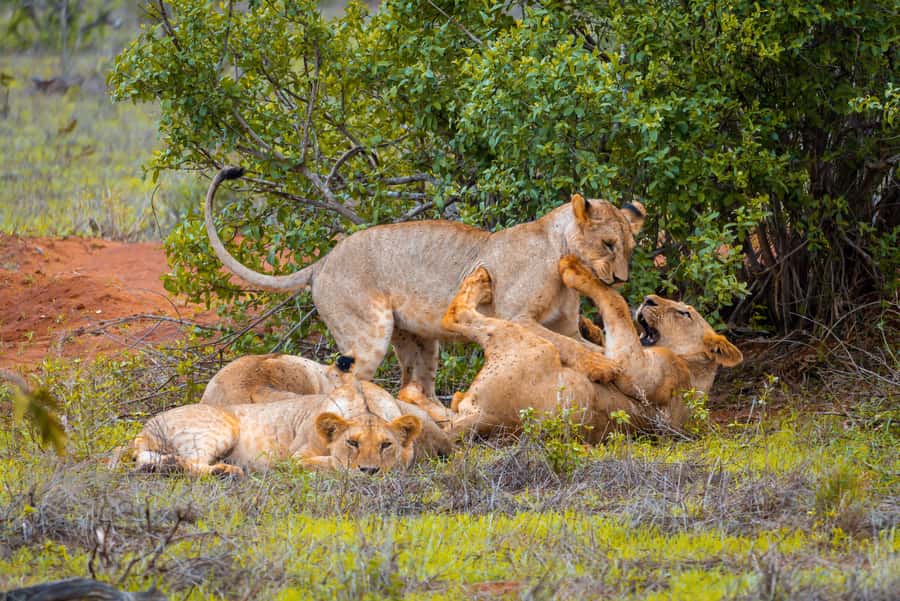
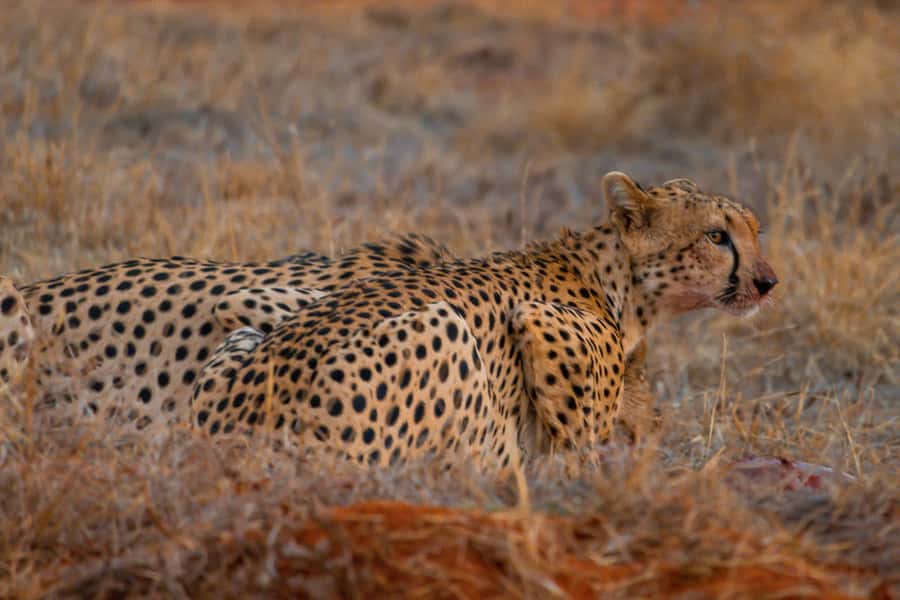
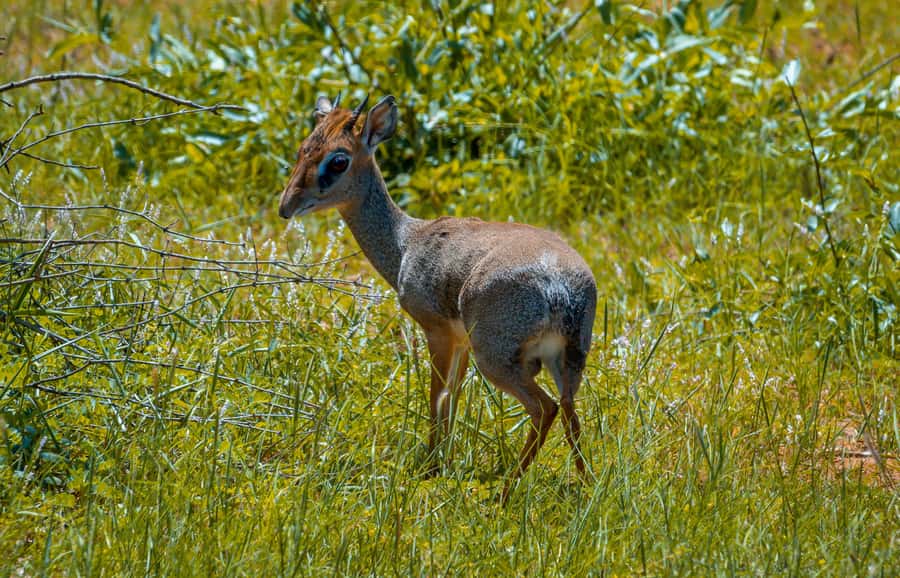
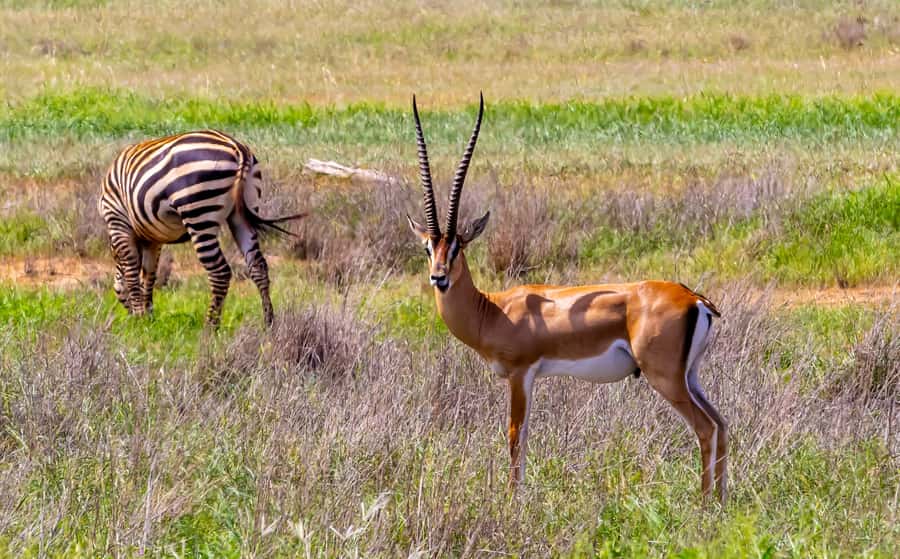
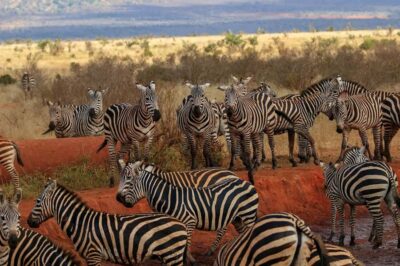
You may also search for lions, cheetahs, leopards, giraffes, zebras, buffalo, and many bird species. The wording matters: these are possible sightings, not a checklist. Wildlife moves freely, and a good guide can improve your chances without controlling the result.
The best part of a safari is often the pause. Your vehicle may stop while the guide scans a distant thicket, follows tracks, or watches an animal’s behaviour. That patience is valuable in a park this large, where the most rewarding sight may be a small movement rather than a dramatic chase.
Guide quality matters here. Abdul is singled out for finding a remarkable number of animals and for explaining what was happening in the field. A guide who can identify tracks, read animal behaviour, and point out birds gives the drive more meaning than simply ticking off species.
At the same time, do not assume the advertised language is guaranteed without checking. English, Italian, and German are offered, but two bookings had serious communication problems when the promised German or English guide was not available. A driver may still work hard and know the routes, but a language mismatch can affect safety briefings, payment instructions, and your understanding of what you are seeing.
Game drives across open plains and acacia country
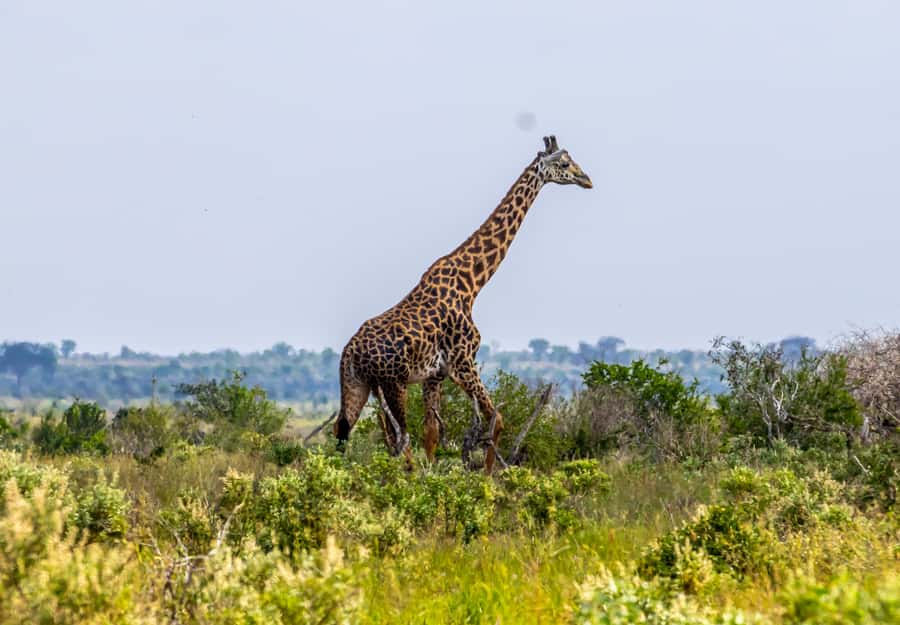
Tsavo East changes as you move through it. The planned route may include broad open plains, acacia-dotted savannah, and other dry country where the view stretches out in several directions. This variety makes the long drive inside the park worthwhile, since each area offers a different chance of finding animals.
You will want a camera, but also bring patience. In bright sun, animals may blend into the soil and brush. A sun hat and sunscreen are basic equipment, not optional extras. Comfortable shoes and loose, comfortable clothes make sense for a day spent in and around a safari vehicle.
The included drinking water is a useful touch. Still, I would bring additional water if you can, especially during a 12-hour outing. The supplied information does not specify the vehicle type or seating arrangement, so ask before booking if the condition of the car is important to you.
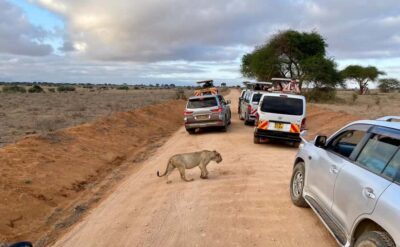
That question is justified. One outing used a van with a problem opening both sliding doors. In another, a vehicle became stuck in sand after a relatively short time in the park, and a badly handled recovery attempt left the vehicle unusable. This does not mean every departure will have trouble, but it does make a pre-trip vehicle check sensible.
Ask whether the vehicle is suitable for Tsavo’s sandy tracks, whether the doors and windows work properly, and what happens if there is a breakdown. You want clear answers before leaving the coast, not while standing beside a disabled vehicle in the park.
More Tsavo East and Tsavo West safaris:
- From Mombasa/Mtwapa/Diani/Tiwi: Tsavo East Full-Day Safari
★ 4.3 · 130 reviews - Day Trip – Tsavo East National Park ( Man Eater Lions of Tsavo & Other Big Five)
★ 4.5 · 55 reviews - 2 Days Tsavo East National Park Tour From Mombasa/Diani (1 Night)
★ 5.0 · 50 reviews - 3 days safari Tsavo East and Taita hills (Saltlick lodge)
★ 5.0 · 45 reviews
Lunch in the bush, with an important extra charge
A midday stop is planned for lunch. The setting gives you a chance to rest, eat, and take stock of the morning’s sightings rather than spend every minute scanning the horizon.
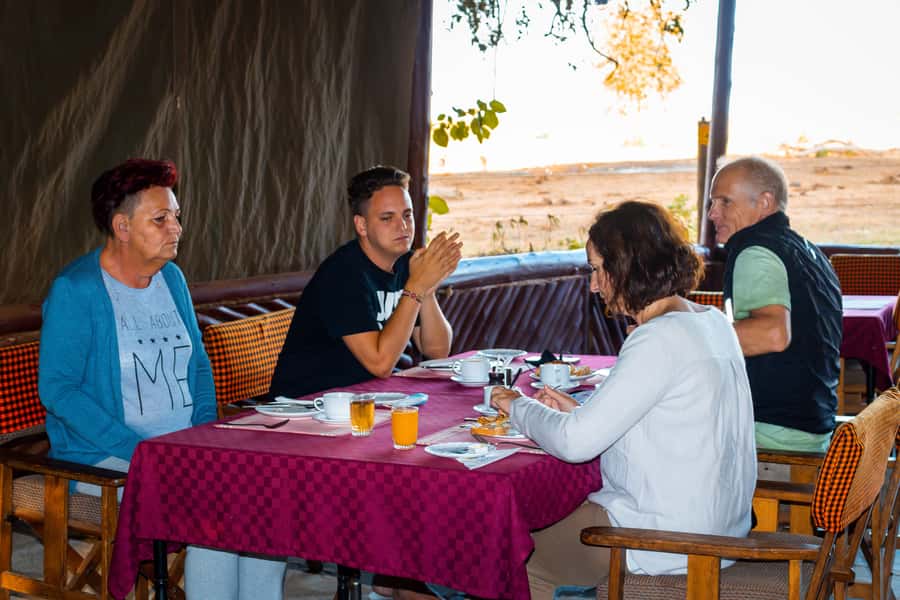
Food is not included. The stated cost is about $25 to $35, and the instructions specifically advise carrying a Mastercard or Visa card for lunch at the lodge restaurant. Bring some cash as well, since cash is listed among the recommended items and payment conditions can change.
The lunch stop is useful because the day is long, but you should budget for it from the start. For an adult, the known extra charges are $80 for park entry and approximately $25 to $35 for food. Added to the $200 tour price, that puts the practical total at about $305 to $315 per adult, before any other personal spending.
For a child aged 5 to 17, park entry is listed at $40. The tour price and food arrangements for children are not explained in the supplied details, so ask for the final child total before booking.
One serious organisational problem has occurred when entry tickets were not arranged ahead of time. The group had to complete the purchase inside the park with poor internet, losing roughly 30 to 40 minutes. Since the park fee is separate and payment by card is specifically advised, confirm exactly how entry will be handled. A short message before departure could save a frustrating chunk of your limited game-drive time.
A private safari with real value and real limits
At $200 per person, the package includes hotel pickup and drop-off, private transport, game drives, guide fees, and drinking water. For someone staying on the coast who wants a single Tsavo experience without arranging a vehicle independently, that is a useful bundle.
The value depends on how many people share the private vehicle and how smoothly the day operates. The supplied information does not state the group size, vehicle model, or seating capacity, so ask those questions. A private vehicle can mean greater flexibility, but the phrase does not by itself guarantee a high-spec safari jeep.
The excluded costs change the headline price. Adult park entry and lunch add $105 to $115, making the actual spend notably higher than $200. I would compare the full adult total, not just the tour price, with a two-day safari or a lodge-based option if wildlife is the main reason for your Kenya trip.
The short format can still make sense. If you have only a few days at the coast, a day at Tsavo gives you a genuine national park experience without changing hotels. If you are already planning a longer safari elsewhere, this may feel like too much road for too little time inside the park.
Language and guide arrangements need confirmation
The listed guide languages are English, Italian, and German. That is helpful for international visitors, but the actual guide assignment deserves confirmation because language availability has not always matched the booking.
A communication gap is more than a minor annoyance. You need to understand park-entry payments, lunch arrangements, meeting points, and any change to the vehicle plan. You also miss the guide’s explanation of animal behaviour and conservation work, which is a large part of what makes a game drive more than a simple sightseeing ride.
The strongest experience appears to come when the guide is actively involved in finding animals and explaining the park. Abdul is the clearest example provided. Alfred, another driver, was described as friendly, responsive to requests for stops, and eager to help find animals, even though the requested German guide was absent.
I would send three questions before departure:
- Who will guide the safari, and which language will they speak?
- Is the guide separate from the driver?
- What vehicle will be used, and has it been checked for the park’s sandy roads?
Those answers will tell you more about the likely experience than a glossy wildlife photograph.
Conservation insight adds meaning to the drive
The experience includes explanations of Tsavo East’s ecosystem, animal behaviour, and conservation work. That context is valuable because the park is not only a place to look for large mammals. It is a living system where water, soil, vegetation, predators, herbivores, and human protection all connect.
The red elephants provide an easy starting point. Their colour is not a separate species or painted marking. It comes from dust and soil, and watching elephants use the ground around them gives you a direct look at how animals interact with their surroundings.
Ask questions as you go. Why are the elephants dusting themselves? What signs reveal that an animal passed recently? Which birds are calling? The quality of the answers depends on the guide, but these questions can turn a quiet stretch of road into a lesson in reading the bush.
The park’s size also gives you a useful sense of scale. You are not moving through a small enclosure with guaranteed sightings. You are entering a huge protected area where empty miles are part of the experience. That honesty matters when you decide if a day safari suits you.
What to pack for this 12-hour outing
Keep your day bag simple and practical:
- Comfortable shoes and clothes
- A sun hat
- Sunscreen
- A credit or debit Mastercard or Visa
- Cash
- A camera or phone
- Extra drinking water if possible
The card is particularly important for park fees and lunch. The instructions specifically call for a Mastercard or Visa, so do not rely only on cash or assume another payment method will work.
Pregnant women should not book this activity. The supplied information lists the safari as unsuitable for them, and the long road journey plus rougher park tracks are relevant considerations.
Free cancellation is available up to 24 hours before departure, with a full refund, and you can reserve now and pay later. Those terms give you some flexibility, but they do not remove the need to check the guide language, vehicle, and total cost before committing.
Who should book the Tsavo East day safari?
I would recommend it to you if you are staying in Kilifi, Watamu, Malindi, or Mambrui and want a one-day wildlife experience without arranging every detail yourself. It is also a good fit if red elephants, big mammals, and a broad Tsavo setting appeal more than a slow beach day.
You should be comfortable with the road time. Three to four hours to the park, followed by game drives and the return trip, makes this a full and tiring day. Families with older children may manage it well, but the child entry rate and lunch total should be confirmed in advance.
I would hesitate if you need a polished, tightly managed operation or if a specific guide language is essential. The mixed record on communication, ticket handling, and vehicle condition means you should ask direct questions and keep a little flexibility in your plans.
Should you book this Tsavo East day safari?
Book it if your priority is reaching Tsavo from the coast for a single day of wildlife, and if you accept that the journey will take up a large part of the schedule. The chance to see red elephants, lions, giraffes, buffalo, zebras, and perhaps big cats is substantial value for a first taste of the park, especially with an active guide such as Abdul.
Before booking, calculate the adult cost as roughly $305 to $315, confirm the language, ask for the vehicle details, and clarify how park tickets will be purchased. If those points are settled, this can be a memorable and practical coastal safari. If not, a longer safari with more time inside the park may be the wiser use of your money.
FAQ
How long does the Tsavo East day safari last?
The activity lasts 12 hours, including hotel pickup, the journey to Tsavo East, game drives, a lunch stop, and the return to your coastal accommodation.
Where does pickup take place?
Pickup is included from hotels in Kilifi, Malindi, Watamu, and Mambrui. You should wait in the hotel lobby 10 minutes before the scheduled time, and the driver should hold a sign with your last name.
How long is the journey to Tsavo East?
Travel time from the pickup point to Tsavo East usually takes three to four hours. A 15-minute stop is scheduled for breakfast and washrooms before entering the park.
What animals might I see?
Possible sightings include elephants, lions, cheetahs, leopards, giraffes, zebras, buffalo, and many bird species. Tsavo East is especially known for elephants covered in red dust.
Are park entry fees included?
No. Adult park entry costs $80, while entry for children aged 5 to 17 costs $40. You should carry a Mastercard or Visa to pay the park fees.
Is lunch included?
No. Food and drinks are not included. Lunch at the lodge restaurant is estimated at $25 to $35, and card payment is advised.
Which languages are available for the guide?
The listed guide languages are English, Italian, and German. Because guide language has not always matched the booking, confirm your language before departure.
More Safari in Kenya
- Safari Tour; Nairobi National Park
★ 4.5 · 594 reviews - From Nairobi: 3 Days, 2 Nights Maasai Mara Group Safari
★ 4.5 · 394 reviews - Half-Day Nairobi National Park Safari from Nairobi with Free Pickup
★ 4.5 · 264 reviews - 5 Days Masai Mara, Lake Nakuru & Naivasha Budget Joining Safari
★ 5.0 · 229 reviews
Just added around Kenya
- Watamu: Sunset Mangrove Canoe Tour with Coconut Drink★ 3.6 · 8 reviews
- Visit kibera Slum the chocolate city★ 4.8 · 3 reviews
- Tsavo East and Tsavo West Sanctuary Safari★ 5.0 · 3 reviews
- Tsavo East National Park: 2-Day Tour from Mombasa★ 3.9 · 5 reviews
- Agro-Tourism Tea Workshop in Nandi Hills★ 5.0 · 3 reviews
- Lake Nakuru NP Half-Day Safari★ 4.0 · 4 reviews
- 3 days Maasai Mara safari from Nairobi★ 5.0 · 3 reviews
- Lake Nakuru Day Trip Safari – & Optional Lake Naivasha Boat★ 5.0 · 5 reviews
Tsavo National Park Safaris, compared.
From Mombasa/Mtwapa/Diani/Tiwi: Tsavo East Full-Day Safari
Read our review →
Day Trip – Tsavo East National Park ( Man Eater Lions of Tsavo & Other Big Five)
Read our review →
2 Days Tsavo East National Park Tour From Mombasa/Diani (1 Night)
Read our review →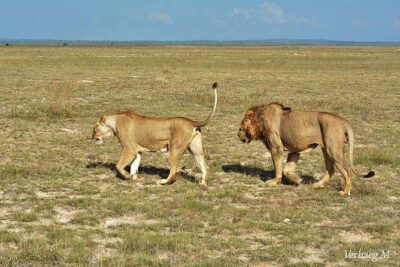
3 days safari Tsavo East and Taita hills (Saltlick lodge)
Read our review →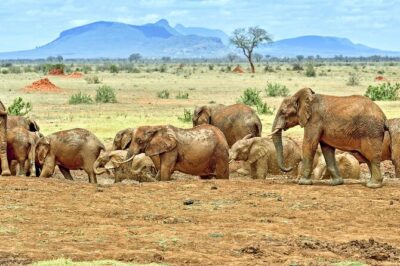
Full Day Private Tour of Tsavo East National Park from Mombasa
Read our review →
Overnight Tsavo East Safari From Mombasa/Diani (Private)
Read our review →Browse the lists this tour appears in