
Reviewed · MAASAI VILLAGE VISITS
Masai village Cultural afternoon Experience
The best part of this Maasai cultural afternoon is the chance to learn by watching and doing. You may help with food preparation, see how necklaces and wristbands are made, learn how goats are milked, enter a small mud-thatched home, and watch a traditional warrior dance. This is more than a quick photo stop.
I like the direct contact with community members, and I like that the visit includes everyday skills rather than only a staged performance. The private format also gives your group room to ask questions. The main drawback is the long road trip from Nairobi, plus the fact that the Bisil cattle market operates mostly on Fridays, so that part may not fit every departure.
Key points to know before booking
- A hands-on village visit: Learn about cooking, food preparation, beadwork, goat milking, and home life.
- A two-hour journey each way: The village is reached after roughly two hours by road from Nairobi.
- A private group experience: Only your own party takes part, with a driver and guide.
- A traditional warrior dance: Live entertainment can include a Maasai war dance and welcoming ceremony.
- A Friday market option: Bisil Cattle Market is mainly active on Fridays and adds a useful look at local trade.
- A $120 package: Hotel transport, guide service, fees, taxes, coffee and a lunch break stop are included, but your lunch and drinks are not.
What this Maasai afternoon is really about
This outing gives you a closer look at ordinary Maasai life than you get from a passing roadside encounter. The focus is on people, work, household skills, livestock, and local commerce. You are not simply driven to a viewpoint and handed a short speech.
The community visit takes place in Kajiado County, an area south of Nairobi associated with Maasai settlements and cattle keeping. The Maasai have traditionally moved with their livestock across parts of Kenya and Tanzania. Much of that former range is now occupied by national parks, making community visits an important way to see a side of Maasai life that a standard wildlife drive cannot show.
The experience also has a practical community angle. Part of the tour money goes toward supporting the community you visit. That does not replace the need for respectful behavior, but it gives the fee a purpose beyond transport and entertainment.
Expect a welcoming visit with demonstrations and conversation. The experience has been especially praised for its warmth, the warrior dance, the chance to see the inside of a mud house, and the friendly approach of the people you meet. Guide Mwose, also referred to as Moses in the tour information, is associated with the excursion and is described as accommodating and helpful.
More Maasai village visits:
- Nairobi: Day Tour to Amboseli National Park & Maasai Village
★ 4.5 · 310 reviews - Masai village Day Tour Experience
★ 5.0 · 284 reviews - Maasai Village Experience Day Tour
★ 5.0 · 72 reviews
The two-hour road to Kajiado County
Pickup is offered from your hotel, and the listed start time is 12:00 pm. The journey to the village takes about two hours, so this is not a short city add-on. You should allow roughly five to six hours for the full experience, including driving and the village program.
That travel time is both the cost and the benefit. You give up much of an afternoon, but you also leave Nairobi’s urban setting and reach a community where cattle, goats, mud homes, handmade jewelry, and local markets are part of the visit.
The schedule refers to a stop at the Kajiado County Press or Rift Valley Observer head office area before the main village activities. The timing information is not fully detailed, so ask the operator at booking how this stop fits into your pickup and route. It may be useful as a meeting or route point, but you should not assume it is a major sightseeing stop.
Because the tour begins at midday, plan for heat and road time. Wear light clothing, bring water, and choose shoes that can handle an uneven village setting. These are simple preparations, but they make a long afternoon much easier.
Cooking, beadwork, and goat milking
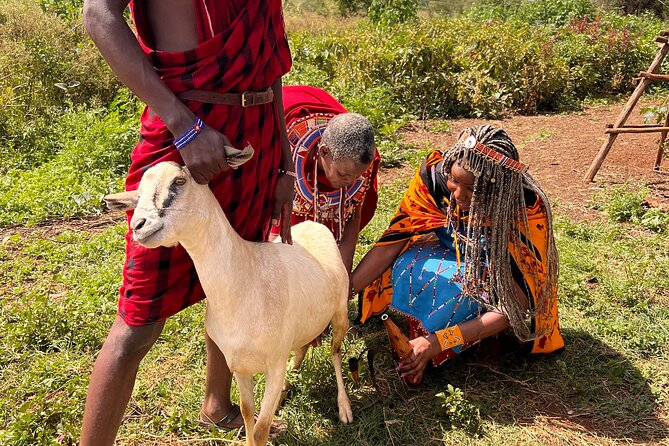
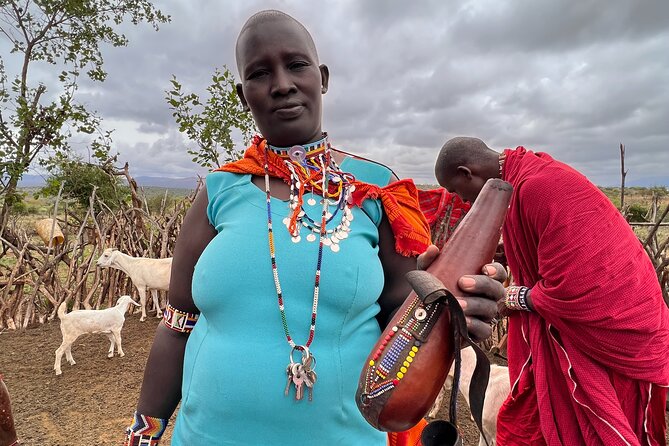
The village program is built around practical lessons. Maasai women show how food is prepared and cooked, how necklaces and wristbands are woven, and how goats are milked. These activities give you a better sense of daily work than a short cultural talk ever could.
The beadwork is likely to be one of the most engaging parts for visitors who enjoy craft traditions. You can watch the careful arrangement of beads and see how jewelry is made by hand. Necklaces and wristbands are not just souvenirs. They are also useful examples of the time, patience, and skill involved in household craft work.
The cooking lesson adds another layer. Food preparation connects directly to family life and the running of the home. Since lunch is not included, do not confuse the cooking demonstration with a provided meal. You receive a coffee and lunch break stop, but you must pay for your own lunch and drinks.
Goat milking may sound like a small activity, yet it helps explain the importance of smaller livestock in village life. The Maasai community lives with cattle and other animals, and livestock is central to work, food, movement, and local identity. You see that connection more clearly through a practical task than through a general explanation.
Your level of hands-on participation may depend on the day and on the community members hosting your group. The activity is presented as a lesson and demonstration, so go with an open attitude rather than expecting a formal class with a fixed result.
Inside a small mud-thatched home
A visit inside a traditional mud house is one of the more striking parts of the afternoon. The homes are described as tiny, with space arranged for basic living needs. Seeing the interior helps you understand how different the domestic setting can be from a Nairobi hotel or city apartment.
This is also the moment to practice cultural respect. Ask before taking photographs, listen when someone explains the space, and avoid treating the house as a display item. The value of the visit comes from being invited into a real home environment, not from collecting the most dramatic picture.
The small size may surprise you. It shows how much daily life can be organized with limited space and simple materials. You might find this part more memorable than the dance because it offers a quiet look at household life.
The tour description does not specify the construction process, room layout, or length of time inside the home. Do not expect a detailed architectural tour. Instead, see it as a brief, personal introduction to how some Maasai families live.
A few more Nairobi days to weigh up
- Nairobi National Park Half-Day Tour; Free Wi-Fi connection
★ 5.0 · 878 reviews - Nairobi: National Park & Optional Elephants & Giraffe Center
★ 4.8 · 874 reviews - NAI NAMI: Nairobi Storytelling Tour with Street Children
★ 5.0 · 792 reviews - Nairobi National Park Half-Day Game Drive
★ 4.5 · 738 reviews
The welcome and warrior dance
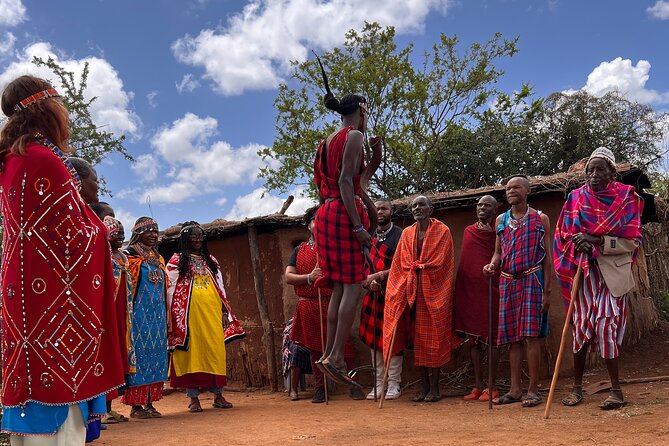
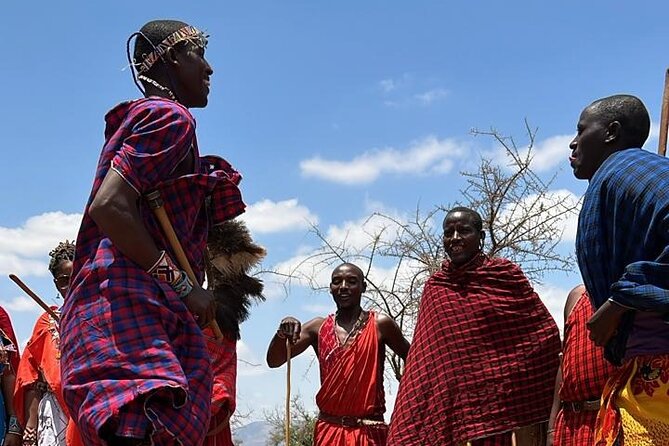
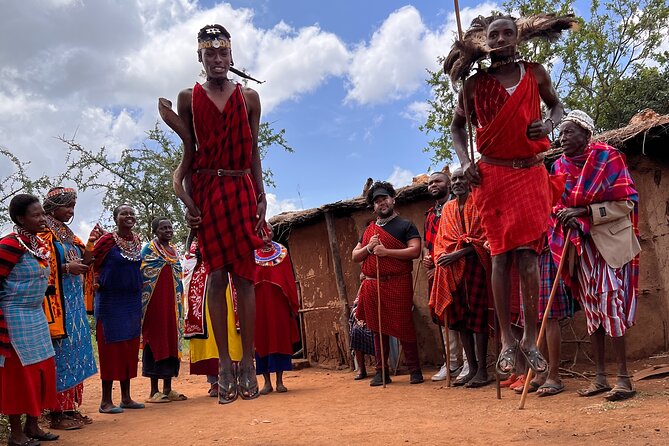
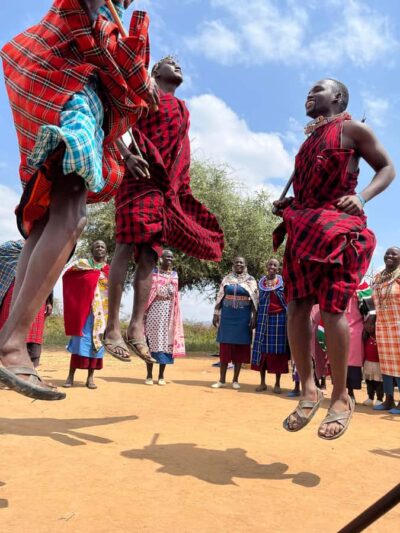
Live entertainment is included, and the experience can feature a welcome by Maasai warriors followed by a traditional war dance. This gives the afternoon a clear ceremonial moment after the quieter cooking and craft activities.
The dance is energetic and designed for visitors to watch. It is also one of the more staged parts of the visit, so keep your expectations balanced. It can be enjoyable and meaningful, but it should be understood as a presentation rather than an unplanned glimpse into private life.
I like the way this activity sits alongside the household demonstrations. If the entire visit consisted of singing, dancing, and photographs, it would offer only a narrow view of the community. Here, the dance is one part of a wider program that also includes work, food, livestock, and homes.
The welcome has been praised for making people feel comfortable quickly. That matters because cultural visits can feel awkward if you arrive, take pictures, and leave without real contact. A warm reception and a guide who helps explain what is happening can make the difference.
Bisil Cattle Market on Fridays
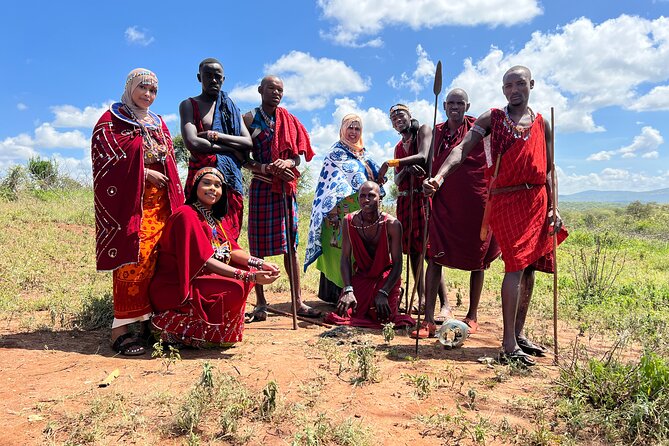
The second listed stop is Bisil Cattle Market, around 30 minutes, with no separate admission charge. The market operates mostly on Fridays, so this part of the trip depends on the day of your booking and the local schedule.
If your tour runs on a Friday, the cattle market can add useful context. You have already seen how livestock fits into village life, and the market shows the trade side of that relationship. It connects the household lessons with the wider local economy.
If your visit is not on a Friday, do not count on finding the same market activity. The supplied details do not promise a replacement stop or a full market program on other days. Ask the provider whether the stop will operate on your date.
The tour also mentions a shopping town. Exact shops and shopping time are not specified, so treat this as a possible local buying stop rather than a guaranteed retail itinerary. If you want jewelry or other handmade items, ask about prices and purchasing customs before committing to anything.
Is $120 good value?

At $120 per person, this is not the cheapest way to spend an afternoon near Nairobi. The price makes more sense if you value private transport and personal contact rather than simply wanting a low-cost sightseeing stop.
The package includes a driver and guide, hotel pickup and drop-off, a private tour, live entertainment, and all fees and taxes. It also includes a coffee and lunch break stop, though your actual lunch and drinks are extra. For a private group, the transport alone can account for a meaningful part of the cost.
The community element also matters. Part of the tour money is directed to the community you visit, giving the outing a local-support purpose. Still, you should ask what is included in the community contribution if that question matters to your booking decision.
Group discounts are offered, but no discount amount is provided. If you are traveling with family or friends, ask for the group rate before paying. A private outing can become better value when the cost is shared across several people.
The price is easier to justify for visitors who have limited time in Kenya and want a cultural experience arranged from Nairobi. It is less attractive if you are already spending several days in a Maasai area or prefer to organize a village visit independently.
Who will enjoy this experience most?
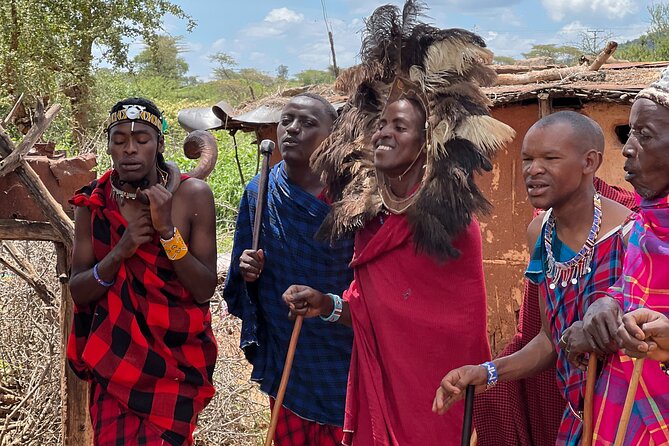
This tour suits you if you want a direct introduction to Maasai culture and prefer a planned outing with transport included. It is especially useful for first-time visitors who want to combine cultural learning with a manageable half-day trip.
Families can take part, but children must be accompanied by an adult. The tour information says most people can participate, and the private format lets your own group set the pace to some extent. Even so, remember that the afternoon includes a long drive and several cultural activities, so very young children may find the timing tiring.
It also suits photographers and craft enthusiasts, provided you follow local guidance about photography. The beadwork, village homes, livestock, and dance offer varied subjects, but respectful permission should come before close-up images.
This may not suit you if you want a wildlife safari, a luxury meal, or a fully spontaneous village encounter. No game drive is included, lunch is not included, and the program has planned demonstrations and entertainment.
Practical details that affect your day
The tour is private, which means only your group participates. That is a strong advantage for families, couples, and small parties who want to ask questions without competing with a large crowd.
Pickup and drop-off are included, but the exact pickup locations are not listed. Confirm that your hotel is covered and verify the pickup time, since the official start time is 12:00 pm and the drive takes around two hours.
Bring money for food and drinks, as those are excluded. You may also want funds for purchases in the shopping town, though the details of what is sold and how much time is allowed are not stated.
Confirmation is provided at booking, and free cancellation is available if you cancel at least 24 hours before the local start time. Cancellations or changes made inside that window are not refunded or accepted.
Should you book the Maasai Cultural Afternoon?
Book it if you want hands-on cultural contact, a private vehicle, and a structured visit that covers cooking, crafts, livestock, homes, and dance. The warm welcome, the chance to see inside a mud house, and the practical demonstrations give the afternoon more substance than a quick performance-only stop.
Think twice if your schedule cannot spare about five to six hours, or if your main goal is a Friday cattle market. The Bisil stop is mainly a Friday feature, and lunch costs extra.
For many visitors in Nairobi, this is a worthwhile choice when paired with realistic expectations. You are buying access, transport, time, and a community-hosted program, not a polished museum exhibit. Ask about the market on your date, confirm the pickup details, and leave room for the road. If those conditions suit you, the $120 price can be fair for a private cultural afternoon with genuine everyday focus.
FAQ
Where does the Maasai Cultural Afternoon Experience take place?
The experience takes place in Kajiado County, Kenya, with a visit to a Maasai community. The tour departs from Nairobi with hotel pickup and drop-off offered.
What time does the tour start?
The listed start time is 12:00 pm.
How long does the experience last?
The full experience takes approximately five to six hours. The journey to the village takes around two hours, and the main village visit is listed at four hours.
Is hotel pickup included?
Yes. Hotel pickup and drop-off are included, although you should confirm that your specific hotel is covered.
Is this a private tour?
Yes. Only your group participates in the private tour or activity.
Is lunch included?
No. Lunch, food, and drinks are not included. A coffee and lunch break stop is included in the schedule, but you pay for your own meal and beverages.
Can I visit the Bisil Cattle Market?
The itinerary includes a visit to Bisil Cattle Market, which operates mostly on Fridays. Confirm whether it will be active on your chosen date.
What is the cancellation policy?
You can cancel for a full refund up to 24 hours before the experience start time. Cancellations or changes made less than 24 hours in advance are not accepted for a refund.
Just added around Nairobi
- Visit kibera Slum the chocolate city★ 4.8 · 3 reviews
- 4 Days Safari to Lake Nakuru N/P and Maasai Mara N/R★ 5.0 · 18 reviews
- Maasai Mara Day Trip★ 5.0 · 15 reviews
- 4 Days Tour Landcruiser in Masai Mara and Lake Nakuru★ 5.0 · 10 reviews
- 3 days maasai mara migration safari★ 4.5 · 7 reviews
- Kibera Slum Tour with a Local★ 5.0 · 15 reviews
- Wildebeest Migration in Masai Mara and Sightseeing 4 Days Tour★ 4.5 · 6 reviews
- Day Tour to Nairobi national park, Elephants, and Giraffe Center★ 3.5 · 8 reviews
Maasai Village Visits, compared.

Day Tour to Amboseli National Park & Maasai Village
Read our review →


Day Trip: Amboseli National Park & Maasai Village – Nairobi
Read our review →
Day Trip to Maasai Mara Reserve & Maasai village
Read our review →
3days/2nights group joining Masai Mara with Masai Village Visit
Read our review →
Maasai Village Visit with Traditional Dance Show
Read our review →Browse the lists this tour appears in