
Reviewed · WALKING TOURS
Mombasa Old Town Walking Tour
Mombasa Old Town is best understood on foot, where narrow lanes, carved doors, market smells, and centuries of coastal trade come together block by block. This tour begins at the famous Mombasa Tusks and follows Raphael through Government Square, the Old Port, Fish Market, and Spice Market.
I like the clear route and the chance to see several sides of the city in one morning. I also like that Raphael has been praised for being professional, friendly, and able to explain both Mombasa and Kenya beyond the immediate sights. The main consideration is the heat and the walking: four hours on uneven, crowded streets may be tiring, and the tour is not suitable for people with mobility impairments or children under five.
Key points to know before you book
- Start at the Mombasa Tusks: Meet at Pembe Za Ndovu at 8am, one of the city’s best-known landmarks.
- Follow a practical Old Town route: The walk links Government Square, the Old Port, Fish Market, Spice Market, and Mombasa Market.
- Raphael leads in English: Expect historical explanation, local context, and a guide who keeps the morning moving.
- Markets are part of the experience: You can look, smell, photograph, and shop, but spices and food are not included.
- Four hours for $30: The price is fair if you want guided context rather than a quick look at Old Town on your own.
- Prepare for coastal heat: Comfortable shoes, light clothing, sun protection, and water matter here.
Why Mombasa Old Town works best on foot
Mombasa Old Town is not a place you understand from a coach window. Its appeal lies in the small details: the turns in the lanes, the old facades, the port activity, and the everyday movement around the markets.
A walking tour gives you time to notice those details. You can stop while Raphael explains what you are seeing, ask questions, and move at a pace that allows the streets to make sense. The route also offers a useful mix of landmarks and ordinary city life, rather than focusing on one monument alone.
The tour begins at 8am. That early start is helpful in Mombasa, where the sun can make a long walk feel much longer later in the day. It also gives you a full morning for Old Town, with the rest of the day available for another activity or a slower meal.
This is not a silent architecture walk. The value comes from the stories attached to the places. Raphael has been praised for explaining not only Mombasa but Kenya more broadly, so you should expect a wider conversation than a list of dates and building names.
A few more Mombasa days to weigh up
- Walking Tour Through Old Town Mombasa and Fort Jesus
★ 5.0 · 393 reviews - Mombasa: Kisite Park Private Cruise with Breakfast and Lunch
★ 4.7 · 181 reviews - Mombasa City Tour
★ 5.0 · 170 reviews
Meeting the Mombasa Tusks at Pembe Za Ndovu
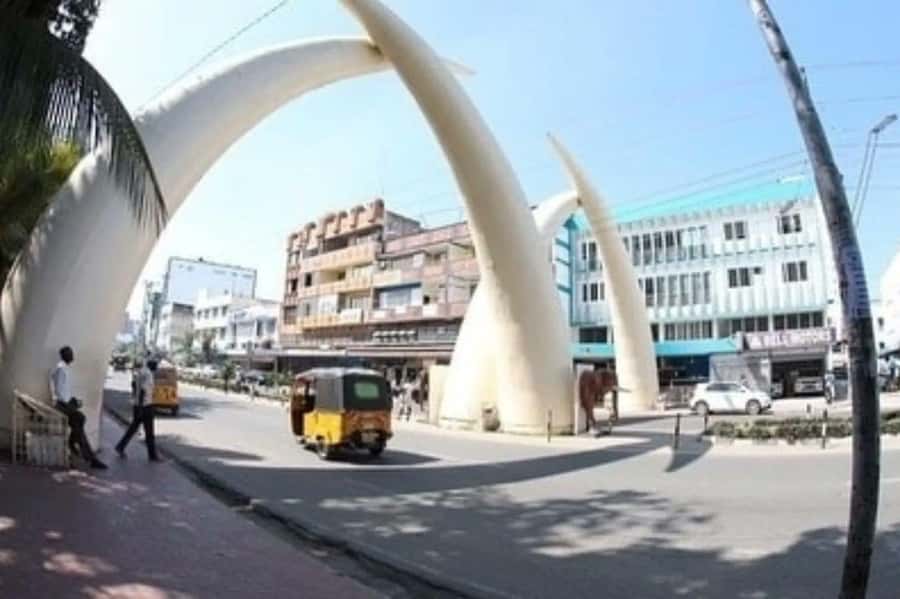
Your starting point is Pembe Za Ndovu, known in English as the Mombasa Tusks. These large tusk-shaped structures are an easy landmark and a sensible meeting place in the city.
Raphael greets you here before leading the group toward Old Town. Beginning at a recognizable location reduces the usual first-morning confusion, especially if you are new to Mombasa and still learning the city’s layout.
The Tusks also set the theme for the tour. Mombasa’s story is tied to movement, trade, and contact between different cultures along the Kenyan coast. From here, the walk shifts from a major city road into smaller streets where the character of Old Town becomes easier to see.
Bring your camera or phone, but do not let photography turn the morning into a scavenger hunt. The best use of this first stop is to get your bearings and listen to Raphael’s introduction before the walk becomes more detailed.
Old Town’s narrow lanes and old architecture
Old Town is the heart of the experience. You will walk through narrow streets where the scale changes quickly from open city space to close-set lanes and older buildings.
The architecture is one of the main reasons to choose a guided walk. Without context, you may notice carved doors, balconies, worn walls, or unusual building shapes without knowing what they reveal about the area. Raphael can connect those details to Mombasa’s past and present.
The route is also a good way to see how heritage and daily life share the same streets. This is not a preserved museum district where everything is arranged for visitors. People work, shop, pass through, and carry on with their routines. You should expect a real neighborhood as well as historic sights.
That authenticity comes with a few practical limits. Narrow streets can be crowded, and the walking surface may not always feel smooth or easy. Wear shoes with good support. Lightweight clothing is more useful than formal clothes, and a hat, sunglasses, and sunscreen will make the morning more comfortable.
Government Square and the Old Port
Government Square adds an important civic stop to the route. Here, Raphael can help you place Mombasa’s older streets within the city’s wider story, rather than treating each building as an isolated photo stop.
The Old Port then shifts the focus toward the sea and trade. Mombasa’s position on the coast shaped its growth, and the port helps explain why the city has long been connected to people, goods, languages, and customs from beyond Kenya.
I like this part of the itinerary because it gives the tour a clear thread. You start with a city landmark, walk through residential and commercial streets, then reach places linked to public power and maritime trade. The stops feel connected rather than random.
Do not expect a long museum visit at each location. This is a walking tour, so the experience depends on Raphael’s commentary and your willingness to look closely. If you prefer extended time inside major monuments, you may want to pair the walk with a separate visit to Fort Jesus. Entry to Fort Jesus is not included.
More guided walks in Mombasa:
- Mombasa: Guided Nature Walk Amongst Giraffes
★ 4.8 · 48 reviews - Mombasa walking tour
★ 4.9 · 28 reviews - Fort Jesus Museum Walking Tour in Mombasa
★ 5.0 · 25 reviews - Nature Walk with Giraffes in Mombasa
★ 5.0 · 18 reviews
Fish Market: a direct look at coastal commerce
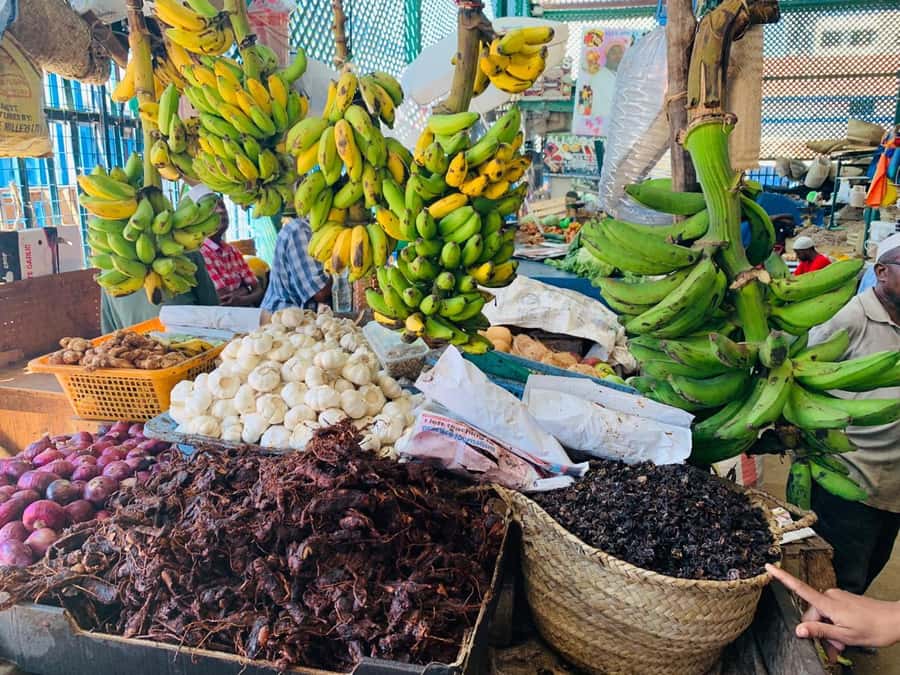
The Fish Market brings you close to one of the city’s most practical forms of trade. It is a lively stop, but it is also a working market, not a staged attraction.
You may notice strong smells, wet surfaces, close quarters, and the quick pace of buying and selling. Keep your belongings secure and follow Raphael’s lead about where to stand. A respectful attitude matters, particularly when taking photographs.
This stop gives the itinerary some texture. Old buildings and famous landmarks can tell you about the past, but a market shows how the city functions now. You are seeing food, work, and local commerce rather than only polished heritage sites.
If markets are not your favorite part of a city visit, this may be the least comfortable stop. Still, it is one of the reasons to take the walk instead of simply driving around Mombasa. You get a closer view of daily life, with a guide who can explain what you are seeing.
Spice Market and the pleasure of stopping to smell
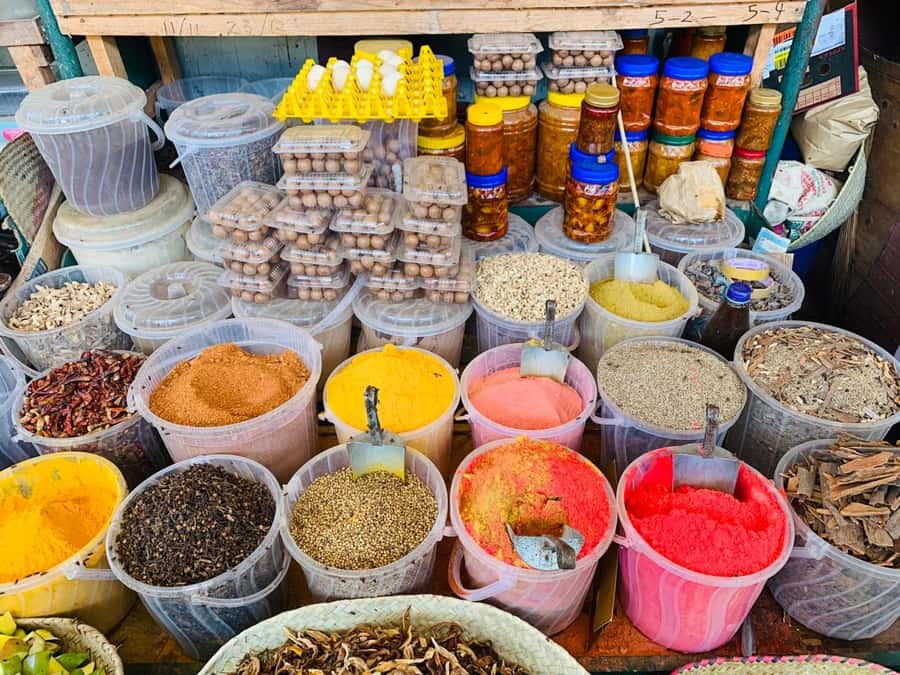
The Spice Market is likely to be one of the most enjoyable stops for your senses. Expect colorful displays and the smell of spices as the route reaches the center of Mombasa’s spice trade.
This is a place to slow down and look. You can buy spices if something catches your eye, but those purchases are extra, so carry some Kenyan shillings if you plan to shop. The tour price covers the guided walk and one liter of drinking water, not market goods or lunch.
A market visit is more useful when you know how to approach it. Ask Raphael questions about the products, the trade, and how the market fits into local life. You do not need to buy anything to enjoy the stop.
The market also brings out the difference between seeing Mombasa and merely passing through it. Smells, sounds, colors, and close-up conversation create memories that a distant view cannot provide. Just keep your expectations realistic: this is a working market, so the space may feel busy and informal.
Ending at Mombasa Market
The tour finishes at Mombasa Market. By this point, you will have crossed from major landmarks into the smaller streets and commercial areas that give Old Town its character.
Ending at a market is practical. You may want to continue browsing, buy a few spices, or stop for food afterward. Lunch is not included, so plan to arrange your own meal once the walk ends.
The finish also gives you a useful chance to decide what deserves a second look. Perhaps the Old Port caught your attention, or perhaps you want more time around the market. A guided morning can help you choose what to revisit independently.
The advertised duration is four hours, although the actual walk may take about three to four hours depending on the group’s pace and size. That flexibility is normal for a street tour. If you have a fixed appointment afterward, leave extra time rather than scheduling it too closely.
What $30 includes, and what it does not
At $30 per person, this tour offers reasonable value for a four-hour guided walk, especially if you want explanations rather than a self-guided wander. The cost includes the guide, the planned route, historical and cultural commentary, and one liter of water.
The price does not include Fort Jesus entry, spices, or lunch. Those exclusions are easy to manage, but you should know them before setting out. Bring Kenyan shillings for market purchases and optional expenses.
The strongest value here is the guide. Old Town’s streets can be interesting without explanation, but Raphael’s role is to connect the sights and provide a broader understanding of Mombasa and Kenya. If you already know the city well or prefer exploring without a set route, the price may feel less necessary.
For a first visit, I think the cost makes sense. You cover several major areas in one morning, avoid wasting time finding the route, and get a local point of view. The tour is also less expensive than many private half-day experiences, though the available information does not specify group size or private-tour arrangements.
The practical side of the walk
Pack lightly. You need comfortable walking shoes, breathable clothing, sunscreen, a hat, sunglasses, and water. One liter is provided, but carrying an additional bottle is sensible in Mombasa’s warm climate.
The tour is conducted in English, so you should be comfortable listening and asking questions in English. An open and respectful attitude is just as important as physical preparation. Old Town includes active public spaces and places of cultural importance, so ask before photographing people and follow local customs.
The tour is described as wheelchair accessible, yet it is also marked as unsuitable for people with mobility impairments and involves moderate walking for several hours. That is an important contradiction to clarify before booking. If you use a wheelchair or have limited mobility, contact the provider in advance and ask exactly which parts of the route can be managed.
Children under five are not suitable for this activity. The walk is a better fit for older children, adults, and anyone who enjoys history, markets, architecture, and city streets more than passive sightseeing.
Free cancellation is available up to 24 hours before the start time, and you can reserve now and pay later. Still, confirm your booking and meeting instructions before the tour date, especially if you are arranging your own transport to Pembe Za Ndovu.
What Raphael adds to the morning
Raphael is the clearest strength of this experience. He has been praised for being professional, fun to spend time with, and generous with information. That matters on a four-hour walk, when a dry recital of facts can make even an interesting city feel flat.
The feedback about Raphael also points to a useful benefit for first-time visitors: he can speak about Mombasa in the context of the wider country. You are not limited to one building or one market. You can use the walk to ask broader questions about Kenya, local culture, and the places you may visit next.
One person who came from a hotel in Diani particularly enjoyed seeing the ferry crossing as part of getting to Mombasa. The ferry is not listed as a feature of this walking route, and transport from Diani is not included in the tour details, but this is a helpful reminder: if you are staying outside Mombasa, allow plenty of time for your own journey to the meeting point.
The available ratings are very strong, at 4.8 from four reviews, with praise focused especially on Raphael and the information he provides. That is a small sample, so I would treat it as encouraging rather than absolute proof. Even so, the comments are consistent about the guide’s professionalism and personality.
Who should book this Mombasa walk?
Book it if you want a structured first look at Old Town and like having a local guide explain what you are seeing. It suits people who enjoy walking, markets, architecture, coastal history, and ordinary city life.
It is also useful if you have only one morning in Mombasa. The route brings together the Tusks, Government Square, Old Port, Fish Market, Spice Market, and Mombasa Market without asking you to plan the sequence yourself.
You may want to skip it if you dislike heat, crowded markets, or several hours on foot. It is not designed for children under five, people with mobility impairments, or those who want a quiet, indoor museum experience.
For the best morning, arrive prepared, keep your schedule flexible, and bring some Kenyan currency. Listen closely at the landmarks, stay alert in the markets, and leave room for the tour to run closer to four hours.
Should you book it?
I would book this tour for a first visit to Mombasa, particularly if Raphael is your guide. The route is well chosen, the price is reasonable for four hours, and the mix of landmarks, port history, markets, and street life gives you a useful introduction to the city.
I would not book it solely for Fort Jesus, since admission is extra and the walk does not include it. Choose this experience for Old Town itself and for Raphael’s local explanation. If you can manage the heat and walking, it is a practical, friendly way to get your bearings before exploring more of the coast on your own.
FAQ
Where does the Mombasa Old Town Walking Tour start?
The tour starts at Pembe Za Ndovu, also called the Mombasa Tusks.
Where does the tour finish?
The walk finishes at Mombasa Market.
How long does the tour last?
It lasts approximately four hours. The timing may vary from about three to four hours depending on group size and walking pace.
What language is the tour conducted in?
The tour is conducted in English.
Is Fort Jesus admission included?
No. Fort Jesus entry fees are not included in the tour price.
What should I bring?
Bring comfortable walking shoes, lightweight clothing, sunscreen, a hat, sunglasses, water, a camera or phone, and Kenyan shillings for market purchases.
Just added around Mombasa
- Tsavo East National Park: 2-Day Tour from Mombasa★ 3.9 · 5 reviews
- 1-Day Tsavo East Safari From Mombasa★ 5.0 · 3 reviews
- 4-Day Tsavo East West and Amboseli National Park from Mombasa★ 4.0 · 5 reviews
- Fort Jesus Sound and Light show Mombasa★ 4.0 · 17 reviews
- 4 Days Mount Kenya Trekking★ 5.0 · 6 reviews
- 4×4 Safari in Tsavo East National Park★ 5.0 · 4 reviews
- Private Transfer from Mombasa★ 5.0 · 6 reviews
- 2 Days Salt Lick Safari Tour★ 4.5 · 3 reviews
Walking Tours, compared.
Nairobi City Walking Tour with Traditional Kenyan Lunch
Read our review →

Day tour to Hells Gate, Lake Naivasha and Crescent Island Walk
Read our review →Browse the lists this tour appears in