
Reviewed · MOMBASA TOURS
MOMBASA:FortJesus,OldCity,GiraffeOstrich,Oryx,Eland,WildTour
Mombasa’s best surprise is the sharp change from Portuguese fortifications and Swahili streets to giraffes feeding near you at Nguuni Nature Sanctuary. In one day, John David Mwangi Irungu connects the city’s past with a conservation project built from old limestone quarries.
I like the mix of history and wildlife, and I like the unhurried guiding style reported on this tour. John takes time to explain Fort Jesus and Old Town, and he can help with photos and videos. The main drawback is cost planning: Fort Jesus and Nguuni entry fees are extra, and return transport to your hotel is not included.
Key points to know before booking
- Two very different sides of Mombasa: Visit Fort Jesus and Old Town, then walk near giraffes, ostriches, oryx, eland, and other wildlife.
- John David Mwangi Irungu leads the tour: Expect English-language guiding with attention to local history, culture, photographs, and practical help.
- Fort Jesus entry is extra: The tour includes transport to the site, but you pay the admission fee separately.
- Nguuni is a reclaimed quarry: More than 180 indigenous tree and bush species have been planted in an area once described as a limestone desert.
- The full-day option is the better choice: The old streets, market stops, fort, city center, and wildlife visit need time.
- Carry water and sun protection: This includes outdoor walking in Mombasa’s strong tropical sun.
Why this Mombasa tour works so well
Many city tours give you a quick look at monuments and little sense of place. This one has a clearer idea. It uses Fort Jesus to explain power and trade, Old Town to show daily Swahili life, and Nguuni to add an unexpected wildlife encounter.
I especially like that the day is not limited to one type of sightseeing. You are not spending every hour inside museums, and you are not simply driving past Mombasa’s main sights. You walk through narrow streets, pause at markets and religious sites, see the Elephant Tusks on Moi Avenue, and then spend time outdoors with animals.
That range makes the $40 price reasonable for many people, provided you budget separately for the two admission fees and your ride back to the hotel. The included pickup transportation covers the tour sites, but the return journey is specifically excluded. Ask about the return plan before setting off.
The experience is conducted in English. It is best suited to people who can manage a full day of walking, stairs, uneven streets, and outdoor heat. The tour information says it is not suitable for people over 70, which is worth taking seriously rather than treating as a minor footnote.
A few more Mombasa days to weigh up
- Walking Tour Through Old Town Mombasa and Fort Jesus
★ 5.0 · 393 reviews - Mombasa: Kisite Park Private Cruise with Breakfast and Lunch
★ 4.7 · 181 reviews - Mombasa City Tour
★ 5.0 · 170 reviews
Starting at Fort Jesus on the harbor
Your day begins with pickup from your hotel and a visit to Fort Jesus. The fort was built by the Portuguese in the 16th century on a coral ridge at the entrance to Mombasa’s harbor. Its location explains its purpose: it was meant to protect Portuguese interests and help control access to the coast.
Fort Jesus is not just an attractive old wall. It tells the story of competing powers on the East African coast. Omani Arabs attacked the fort between 1696 and 1698, and the site changed hands and purpose over time. From 1837 to 1895, it served as barracks for soldiers. After the British protectorate was proclaimed in 1895, it became a prison.
That sequence gives your guide plenty to explain. Look for the way the fort’s position relates to the harbor, and pay attention to the thick coral construction and defensive design. The site is now a major historical landmark and a UNESCO World Heritage Site.
You should allow extra money for admission. Fort Jesus entry is not included in the $40 price. The supplied details do not give the current fee, so check it before booking rather than assuming the tour price covers everything.
A guide makes a real difference here. Without context, a fort can become a collection of walls and views. John David Mwangi Irungu is identified as the experience provider, and the tour is built around his explanations of Mombasa’s history and heritage. He also helps with photos and videos, a useful touch if you are traveling alone.
Walking through Old Town’s narrow streets
From Fort Jesus, the tour takes you into Mombasa Old Town. This is the part of the day where you slow down and look around instead of simply ticking off sights.
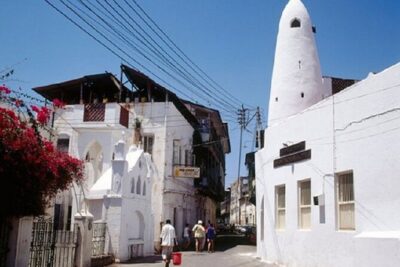
The streets are narrow and cobbled, with old residential houses, overhanging balconies, mysterious doorways, ancient mosques, and markets selling spices, fruit, and colorful fabrics. The architecture reflects Mombasa’s long connection with Africa, Arabia, Portugal, Britain, and the Indian Ocean trade.
Your guide’s job here is less about pointing at one famous building and more about helping you read the streets. A doorway, balcony, or mosque can say something about the people who shaped the town. The markets add sound, smells, and movement, but you should expect a working part of the city rather than a polished open-air museum.
The spice market is one of the more useful stops because it connects the old trading city with daily commerce. Take your time looking at the produce and fabrics, and keep your belongings secure in crowded sections. The tour also includes the city center and a Shiva Temple, adding another layer to Mombasa’s religious and cultural story.
The streets may be difficult for anyone with limited mobility. Comfortable shoes are essential, and high heels are not allowed. Loose clothing, ripped clothing, smoking indoors, alcohol, drugs, and loud behavior are also prohibited. These rules are practical in historic and religious areas, not merely formal restrictions.
Seeing the Elephant Tusks on Moi Avenue
The Elephant Tusks monuments on Moi Avenue provide a quick but worthwhile city stop. The large metal tusks form one of Mombasa’s most recognizable landmarks and mark a major route through the city center.
This is a good place to understand Mombasa as a modern city rather than only an old port. Traffic, shops, and daily business continue around the monument, so your guide can place the historic sites in the setting of present-day Mombasa.
Do not expect a long visit here. It is a photo and orientation stop, but it fits the tour’s wider purpose. You see how the old city, central streets, and newer urban areas connect.
Same departure point, a completely different day out:
- Mombasa: Tusks, Fort Jesus, Old Town, Beach and City Tour
★ 4.7 · 137 reviews - Half-Day Scenic Bike Tour
★ 5.0 · 75 reviews - 2 Days Tsavo East National Park Tour From Mombasa/Diani (1 Night)
★ 5.0 · 50 reviews - Mombasa: Guided Nature Walk Amongst Giraffes
★ 4.8 · 48 reviews
From city history to Nguuni’s wildlife
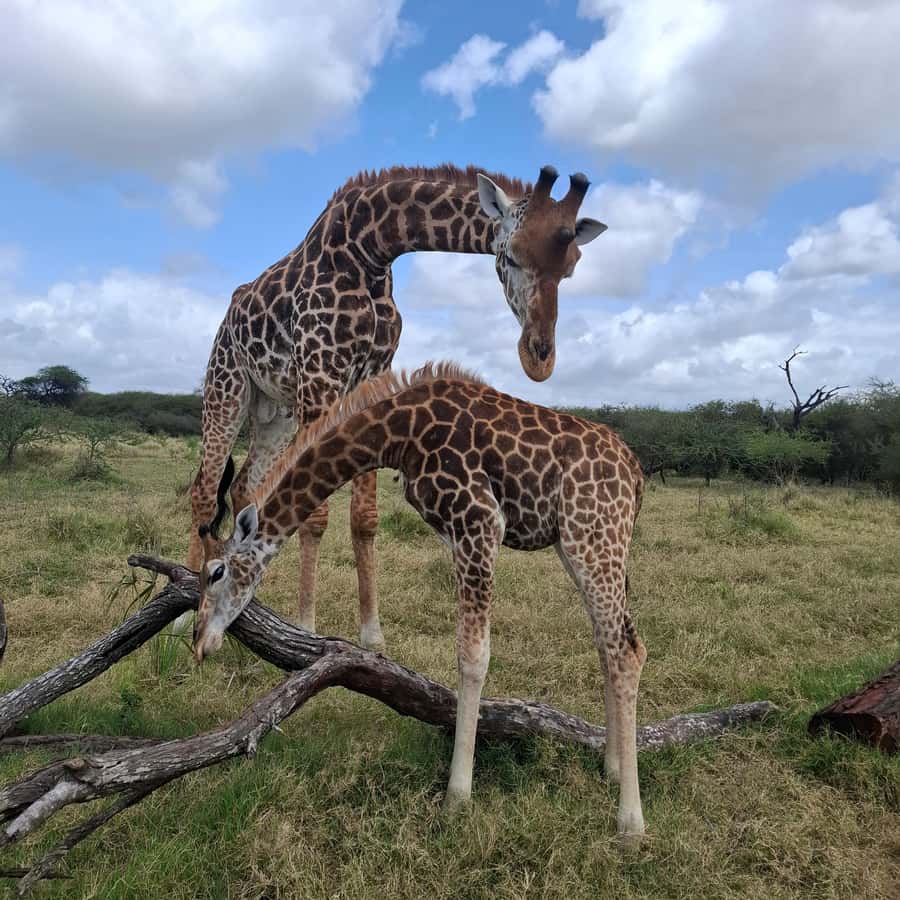
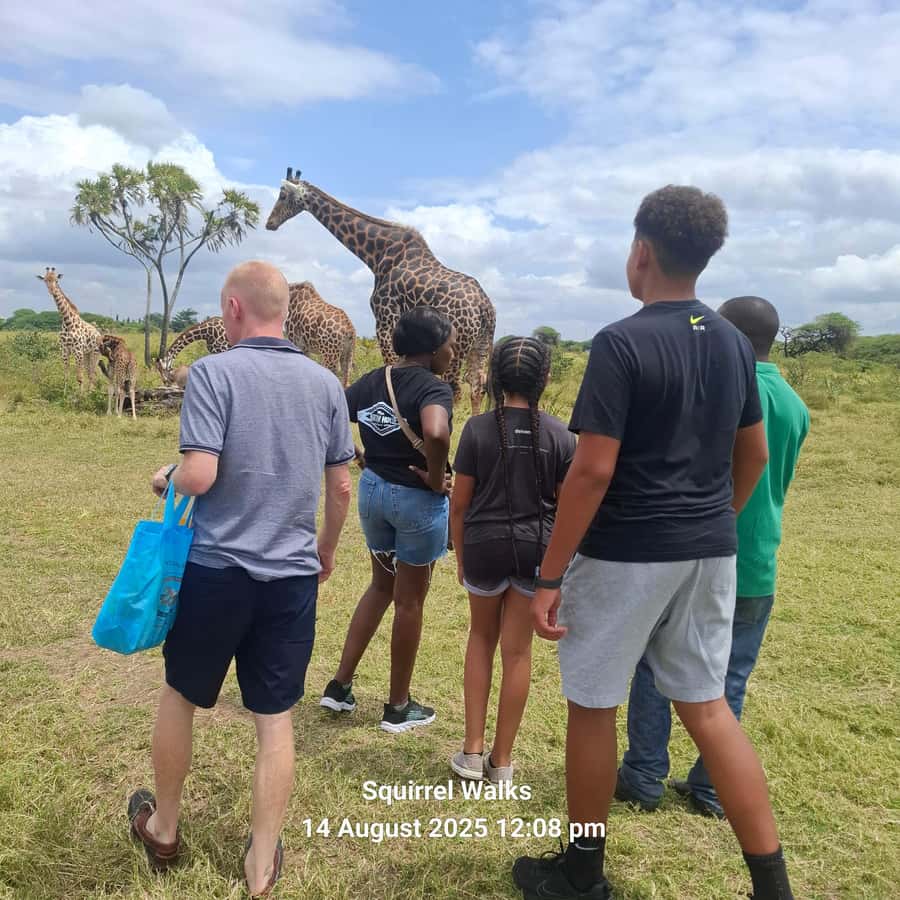
The day’s most unusual change comes when you leave the historic center for Nguuni Nature Sanctuary. Here, you walk near wildlife rather than viewing animals from a distant vehicle.
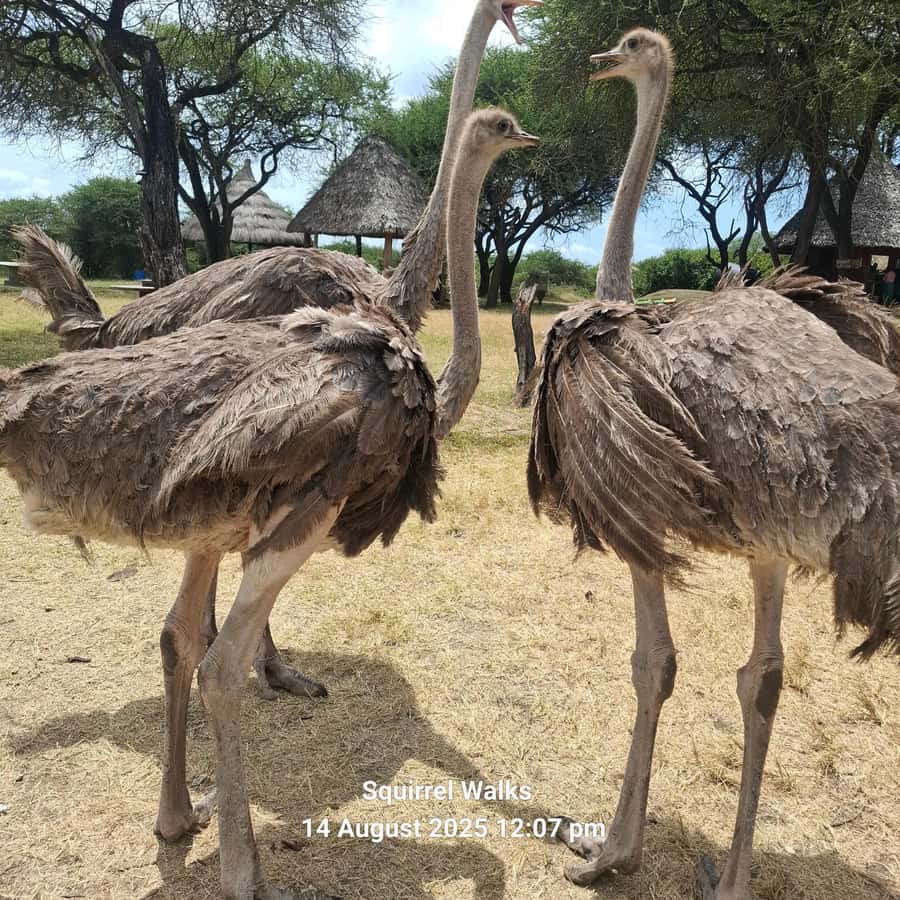
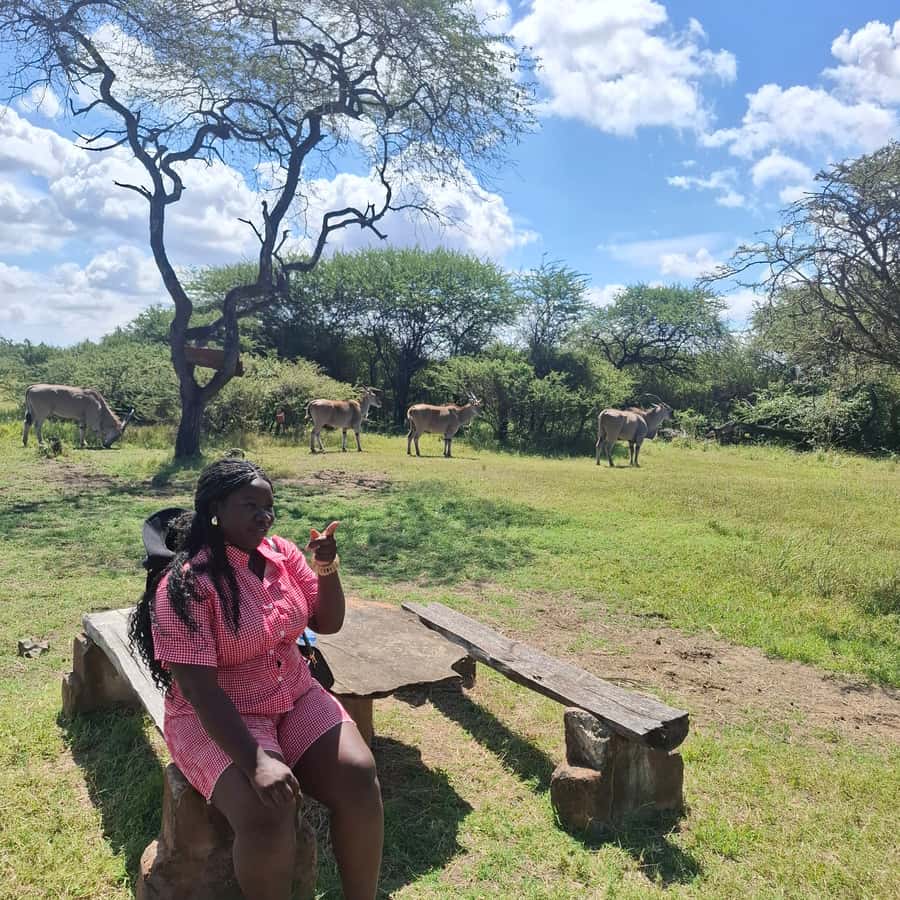
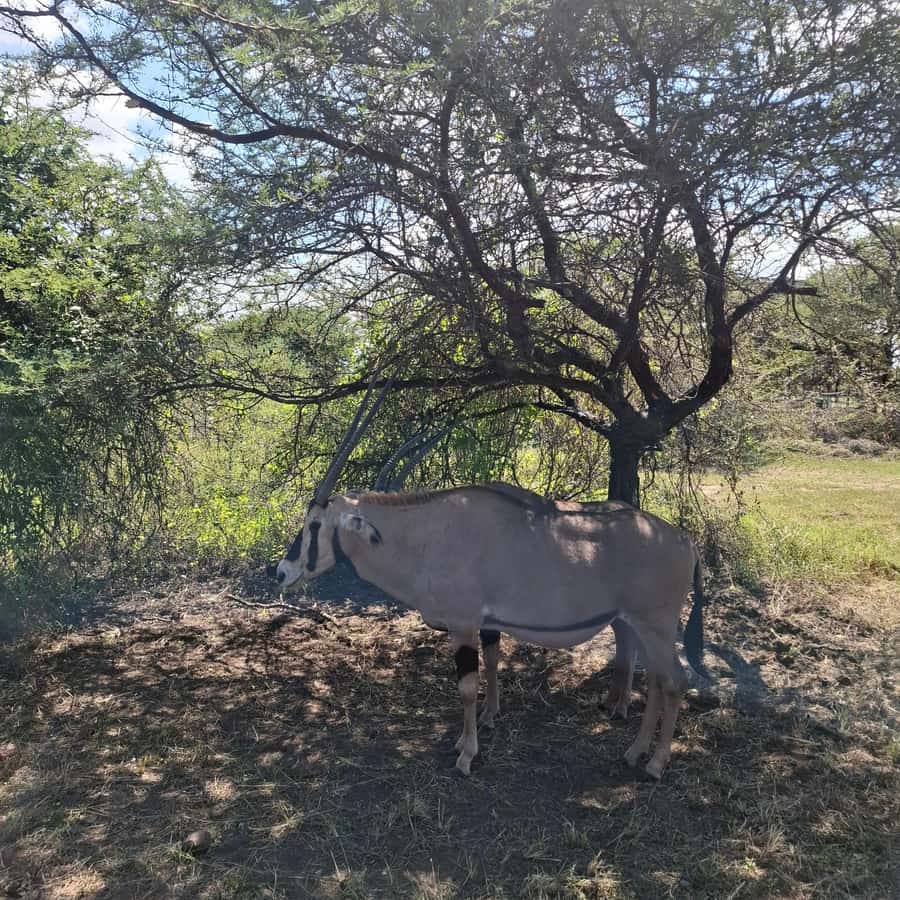
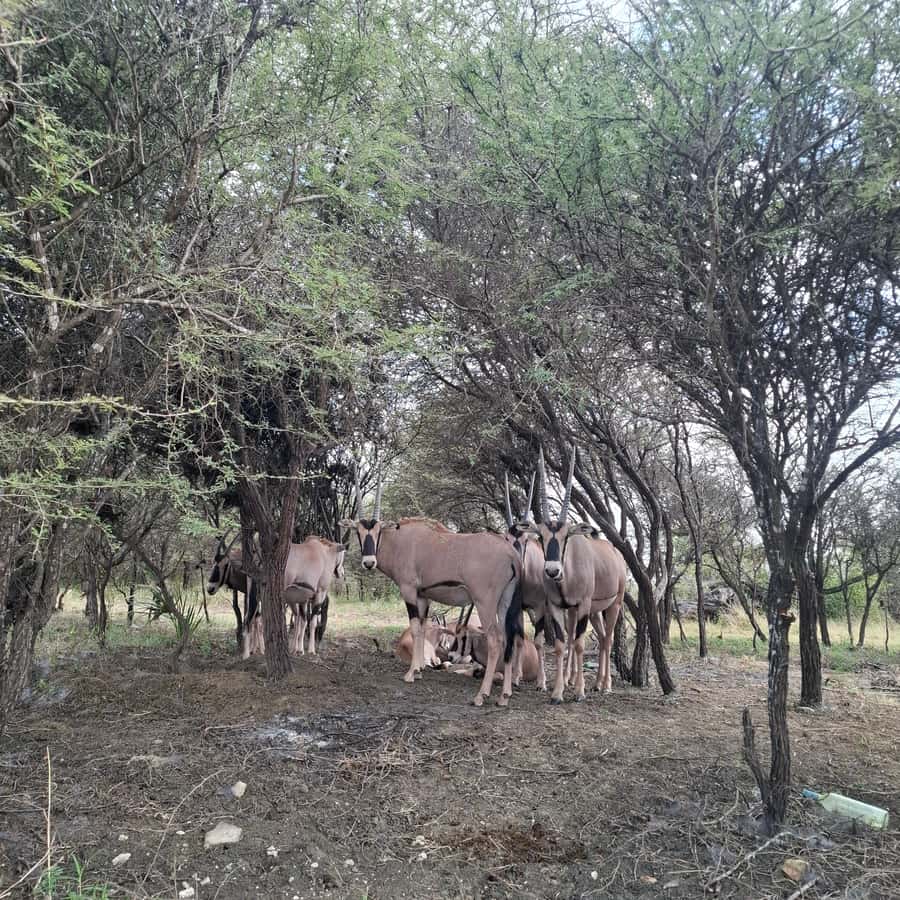
The sanctuary is home to giraffes, ostriches, antelopes, oryx, eland, buffalo, crocodiles, smaller mammals, and birds. The chance to see giraffes close by is the major draw. You might find them near the walking areas, giving you a very different experience from a standard safari drive.
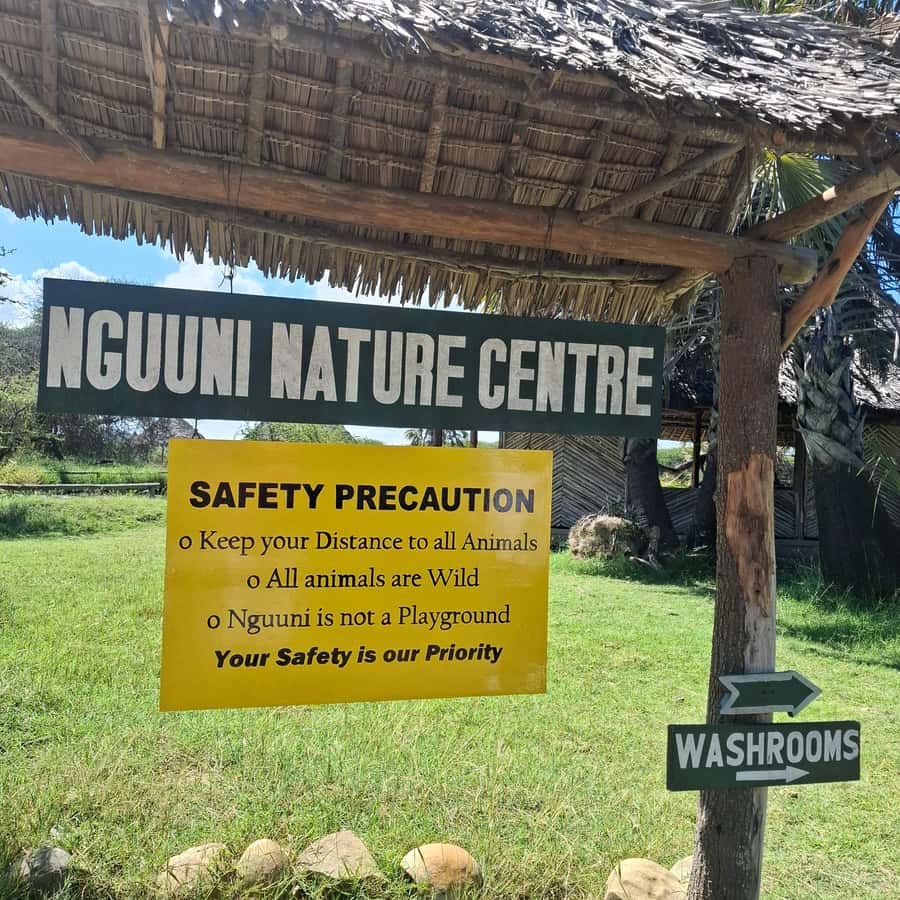
The tour information emphasizes walking near the animals, not riding them. Riding is forbidden, as is feeding or disturbing wildlife. Keep a sensible distance, follow John’s directions, and avoid sudden noise. Close does not mean careless.
The animal list is broad, but sightings are not guaranteed. Nguuni is a nature sanctuary, not a stage-managed animal show. Your experience will depend on the conditions and where the animals are during your visit. That uncertainty is part of the appeal, but it is also why you should not book this as a substitute for a full safari.
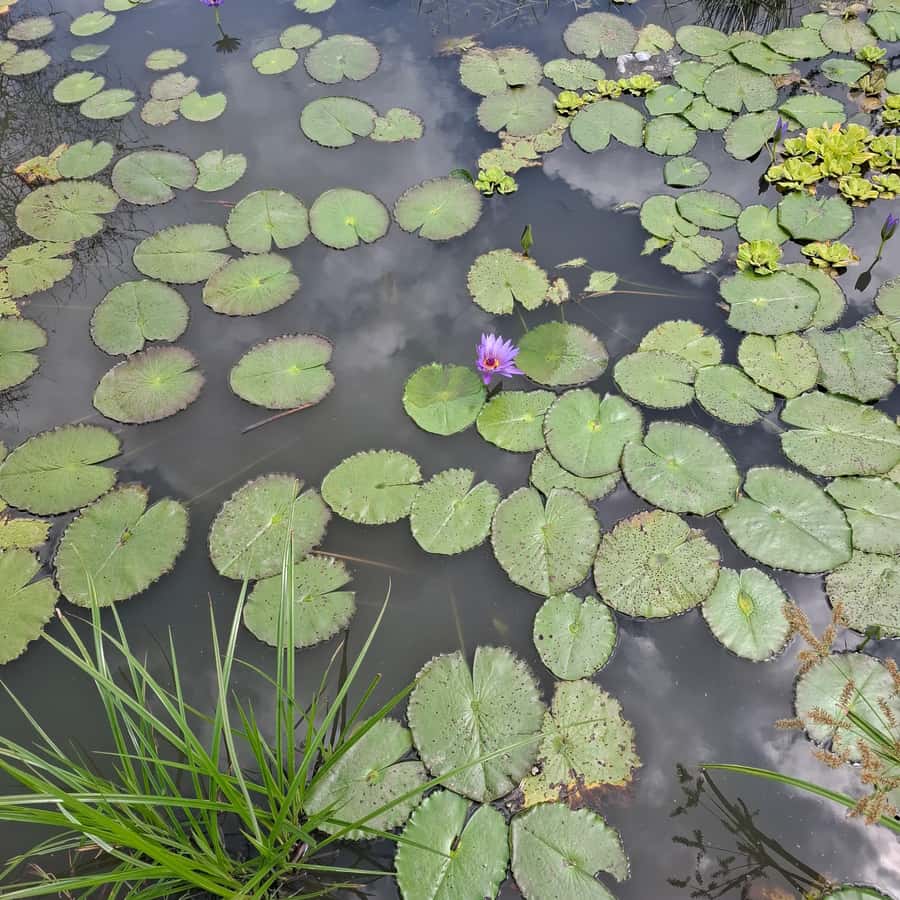
Nguuni’s setting has an interesting history of its own. The area was once a group of quarries, with exposed limestone and fierce tropical sun. The first challenge was finding plants that could survive there. Of 26 plants initially planted, only the damas, coconut palm, and casuarina survived.
Over time, wind and animals helped spread more plant species. Later planting programs added carefully selected trees, and more than 180 species of indigenous trees and bushes have since been planted. Vervet monkeys, insects, and birds help the process by eating fruit and spreading seeds in their droppings.
That detail gives the wildlife visit more substance. You are not only looking at giraffes. You are seeing how a damaged industrial site can become a functioning habitat through patient planting and natural regeneration.
Nguuni admission is not included, so add that charge to your budget. The price of the entry ticket is not provided here. This is the other cost you should confirm before booking.
What the day feels like with John as your guide
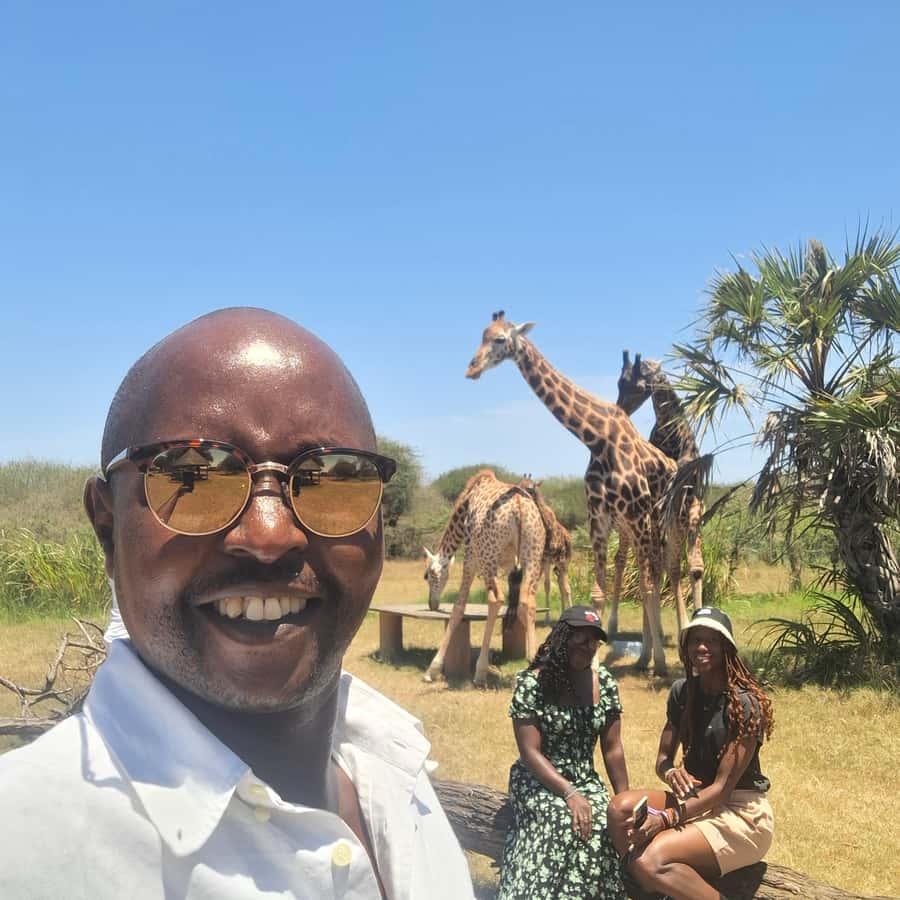
The strongest feature of this experience is the guiding. John David Mwangi Irungu leads in English and focuses on explanations rather than rushing you from one stop to the next.
That matters most in Old Town and Fort Jesus. The buildings are worth seeing, but the meaning can be easy to miss without someone connecting them to Mombasa’s changing rulers, religious communities, trade routes, and military history.
The guiding style also appears suited to private or very small groups. One person described receiving a well-integrated experience as the only participant, while another appreciated that the guide took time with explanations instead of hurrying. Group size is not specified, so you should not assume every departure is private, but the experience appears to allow for personal attention.
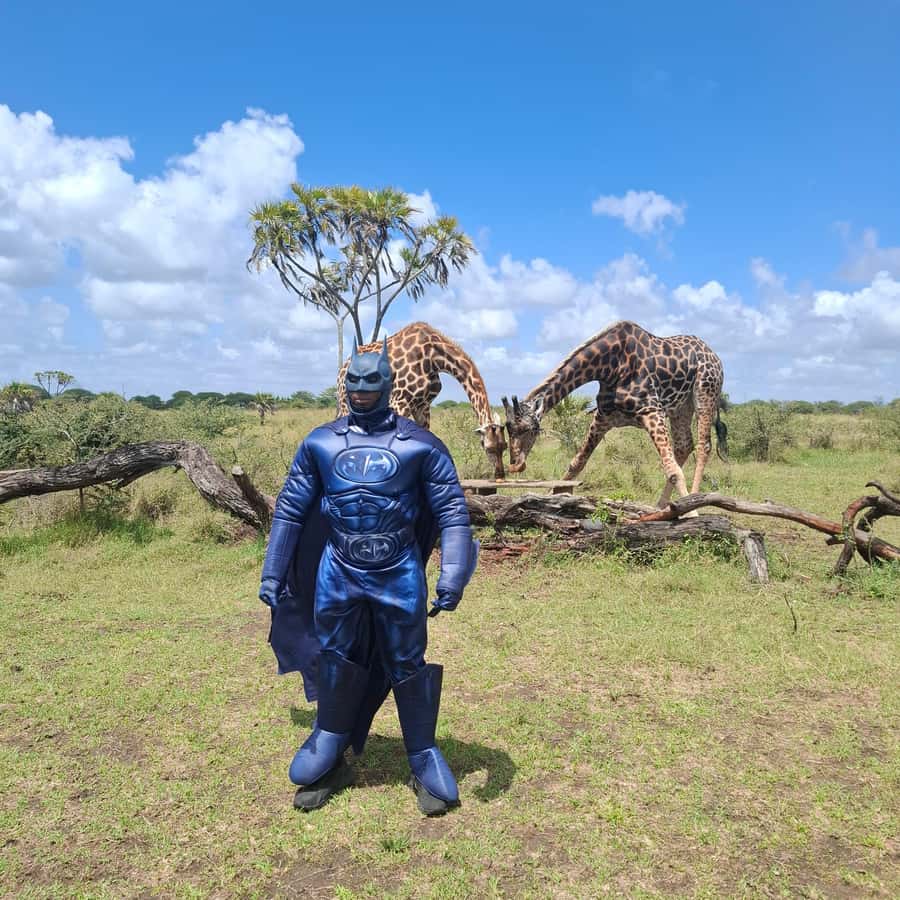
John can also help with photos and videos. That is particularly useful at Fort Jesus, along Moi Avenue, and near the giraffes, where it can be difficult to manage your camera and watch your surroundings at the same time.
Afternoon tours include Swahili coffee or Swahili chai. This is a small detail, but it adds a local touch after walking in the heat. The included refreshment is specifically noted for afternoon departures, so do not assume it comes with a morning tour.
What the $40 price really covers
At $40 per person, this tour offers a useful combination of transport to the tour sites, an English-speaking guide, Old Town sightseeing, and the Nguuni visit. It is good value if you want both Mombasa’s historic center and a wildlife stop without arranging separate outings.
The price is less attractive if you expect an all-inclusive day. You must pay for entry to Fort Jesus and Nguuni Nature Sanctuary. Return transportation to your hotel is also not included, so clarify whether you will arrange a taxi or use local transportation after the final stop.
One benefit is that the tour covers several areas in one day. Booking separate transport for Fort Jesus, Old Town, Moi Avenue, and Nguuni could take more planning. A local guide also saves you from trying to interpret the fort and old streets on your own.
I would compare the total price, not just the advertised $40. Add two site fees, water, food if needed, and the ride back. Even after doing that, the tour can make sense for a first full day in Mombasa, especially if you value a guide who takes time with history and photographs.
Who should book this experience
I would recommend this tour to you if you want a broad first look at Mombasa and prefer a day with several different settings. It suits couples, solo visitors, and anyone who wants a guide for Old Town rather than wandering without context.
It is also a good fit if giraffes are high on your list but you do not have time for a longer safari. Nguuni gives you a close wildlife encounter, along with ostriches and several antelope species, within a city-focused day.
You should think twice if you dislike walking, heat, historic streets, or extra admission charges. The day combines cobbled lanes, outdoor wildlife viewing, and time in the tropical sun. It is not designed as a slow, fully accessible sightseeing outing.
The tour is not suitable for people over 70 according to the supplied conditions. For anyone younger who has mobility concerns, ask in advance about the walking demands and transport arrangements.
Practical preparation for a hot walking day
Wear comfortable walking shoes, a hat, and sunscreen. Bring water, since both Old Town and Nguuni involve time outdoors. A camera is welcome, though flash photography may be restricted at some sites.
Dress with respect for historic and religious areas. Ripped clothing and loose clothing are not allowed, and loud behavior is discouraged. Do not smoke indoors, make fires, litter, or bring alcohol and drugs.
At Nguuni, do not attempt to ride the animals. The experience is based on observing wildlife on foot and learning about conservation. Keep your attention on the animals and your guide, especially when giraffes or other large creatures are nearby.
Cancellation is available up to 24 hours before the tour for a full refund, and you can reserve now and pay later. Those policies help if your Mombasa schedule is still changing, but they do not remove the need to confirm the extra entry fees and return transport.
Should you book the full-day tour?
Yes, if you want Mombasa’s main historic sights plus a close wildlife encounter in one day. The combination of Fort Jesus, Old Town, the spice market, Shiva Temple, Moi Avenue’s Elephant Tusks, and Nguuni gives you a much fuller picture than a short city drive.
I would choose the full-day option rather than the half-day version. There is too much ground between the fort, old streets, city center, and sanctuary, and rushing would weaken the best parts of the experience.
Book it with a clear budget for admission fees and the ride back to your hotel. If you do that, this is a practical, varied introduction to Mombasa, especially for visitors who want history in the morning and giraffes close by later in the day.
FAQ
Is Fort Jesus admission included in the $40 price?
No. Entry to Fort Jesus is not included, so you need to pay the admission fee separately.
Is entry to Nguuni Nature Sanctuary included?
No. The Nguuni Nature Sanctuary entry ticket is also excluded from the tour price.
What animals might I see at Nguuni?
Nguuni is home to giraffes, ostriches, oryx, eland, antelopes, buffalo, crocodiles, smaller mammals, and birds. Actual sightings can vary.
Is transportation back to my hotel included?
No. Pickup transportation to the tour sites is available, but transportation back to your hotel is not included.
What language is the tour conducted in?
The tour is conducted in English.
What should I bring?
Bring comfortable shoes, a hat, sunscreen, water, and a camera. Flash photography may be restricted at some sites.
Just added around Mombasa
- Tsavo East National Park: 2-Day Tour from Mombasa★ 3.9 · 5 reviews
- 4-Day Tsavo East West and Amboseli National Park from Mombasa★ 4.0 · 5 reviews
- 1-Day Tsavo East Safari From Mombasa★ 5.0 · 3 reviews
- Fort Jesus Sound and Light show Mombasa★ 4.0 · 17 reviews
- 4 Days Mount Kenya Trekking★ 5.0 · 6 reviews
- 4×4 Safari in Tsavo East National Park★ 5.0 · 4 reviews
- 2 Days Salt Lick Safari Tour★ 4.5 · 3 reviews
- Swahili Street Food Tour★ 5.0 · 7 reviews
Mombasa Tours, compared.

Kisite Park Private Cruise with Breakfast and Lunch
Read our review →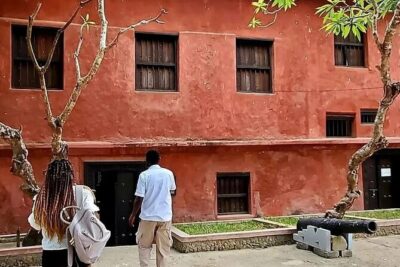
Tusks, Fort Jesus, Old Town, Beach and City Tour
Read our review →
2 Days Tsavo East National Park Tour From Mombasa/Diani (1 Night)
Read our review →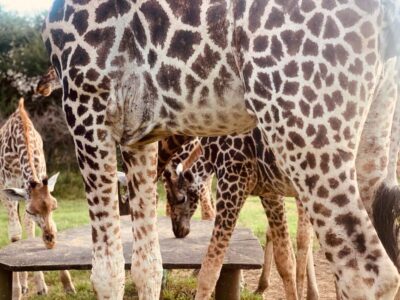
Browse the lists this tour appears in