
Reviewed · FORT JESUS TOURS
Visit to Fort Jesus and the Old Town of Mombasa
Fort Jesus is the star here, but the best part is how quickly the tour moves beyond the museum walls. You’ll connect the Portuguese fort with Swahili streets, Arab architecture, Indian influence, and British colonial landmarks in one compact morning. I like the mix of guided walking and tuk-tuk rides, and I like that Omar Juma adjusts his pace for questions, shade, drinks, and photographs. The main drawback is that Fort Jesus admission costs extra, and the tour’s walking sections can feel hot for anyone unused to Mombasa’s climate.
I also like the small group size, capped at 10 people, and the chance to see ordinary parts of Old Town rather than only polished monuments. This is a history-first outing, not a food tour or a beach activity, so you should book it for context, conversation, and a closer look at Mombasa’s past and present.
Key points at a glance
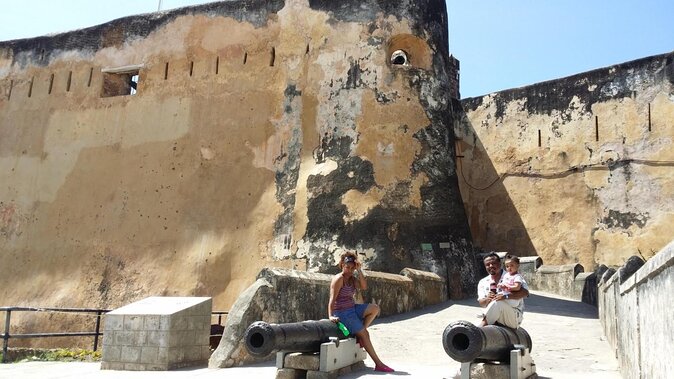
- Fort Jesus anchors the morning: See the Portuguese fort built in 1593 and classified as a UNESCO World Heritage site in 2011. Entry costs KSH 1,200 extra.
- Omar Juma leads the tour: He guides in English and French and is praised for clear explanations, patience, humor, and a gentle manner.
- Old Town is explored on foot: Narrow lanes, Swahili culture, Arab-style buildings, and the old port give the walk its strongest sense of place.
- A tuk-tuk keeps the route practical: Transport is included, useful when the heat builds or when you need to cover ground between sights.
- The route crosses several cultures: Mackinnon Market, a Hindu temple, Portuguese history, British landmarks, and Mombasa’s modern street life all appear in one outing.
- The finish is easy to recognize: The tour ends at the four elephant tusks on Moi Avenue, near Uhuru Gardens.
Why Fort Jesus gives this tour its shape
Fort Jesus was built by the Portuguese in 1593, a date that immediately places Mombasa inside the long contest for control of the Indian Ocean coast. You begin at the fort, where Omar gives a short introduction to the site and Old Town before you explore the museum area.
The supplied schedule allows about 40 minutes at Fort Jesus. That is enough for an introduction and a focused look, but it is not a full morning spent studying every display. You should think of this as a guided overview that places the fort within Mombasa’s wider story.
The separate entry fee is KSH 1,200. At the tour price of $40 per person, this matters when you set your budget. The fee covers guide services and tuk-tuk transport, but not admission, so have the extra amount ready in local currency if possible.
I like beginning here because the fort is not treated as an isolated monument. Its Portuguese origin leads naturally into a discussion of Mombasa’s later Arab, Swahili, British, and Indian connections. Omar’s role is especially useful if you want more than labels on a museum wall. His explanations cover both the site’s past and the customs and daily life of Kenya today.
More Fort Jesus and Old Town walks:
- Walking Tour Through Old Town Mombasa and Fort Jesus
★ 5.0 · 393 reviews - Mombasa: Tusks, Fort Jesus, Old Town, Beach and City Tour
★ 4.7 · 137 reviews - Fort Jesus Museum Walking Tour in Mombasa
★ 5.0 · 25 reviews
Walking Mombasa’s Old Town, one narrow street at a time
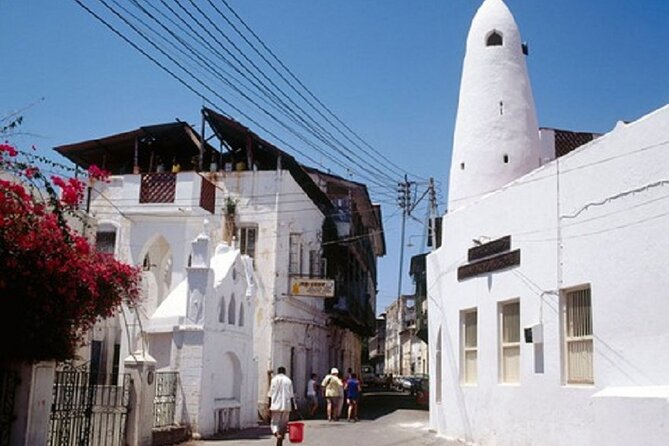
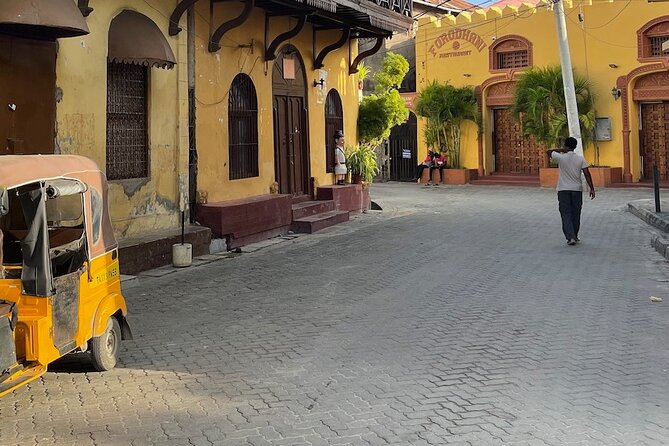
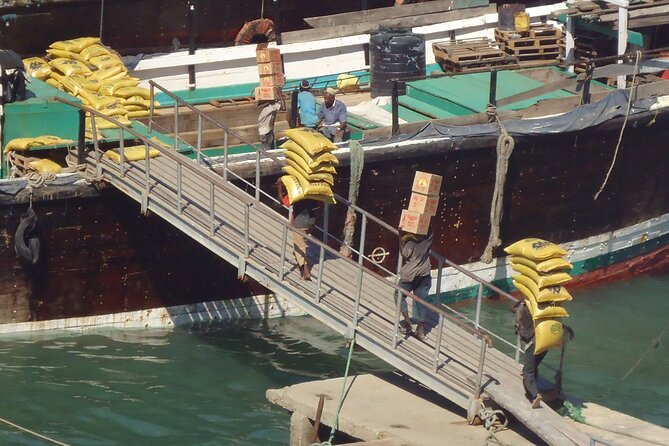
After Fort Jesus, the tour turns into a walking experience through Old Town. The route takes about 40 minutes and leads through narrow streets toward a view of the Old Port.
This is where the tour feels most personal. You are not simply moving from one large attraction to another. You are looking at doorways, street activity, old buildings, and the way people use the district now. The walk gives you a chance to appreciate Swahili culture and Arab architecture in their actual setting.
Old Town is also the section where a guide earns his fee. The lanes can be confusing, and Omar knows the passages well. His approach is conversational rather than rushed, which suits anyone who wants to stop and ask about Mombasa’s history, society, or present-day life.
The walk is not long on paper, but Mombasa can be hot. Wear light clothing, sensible shoes, and a hat. Omar has been especially attentive to shade, drinks, and the pace of the group, but you should still plan for sun and uneven walking conditions.
You may also find that the most interesting moments are not formal stops. The guide’s rapport with people in the Old Town helps the route feel connected to local life. That does not turn the tour into a staged cultural performance. It gives you a better chance to see the district as a lived-in part of Mombasa.
Mackinnon Market and the colors of everyday trade
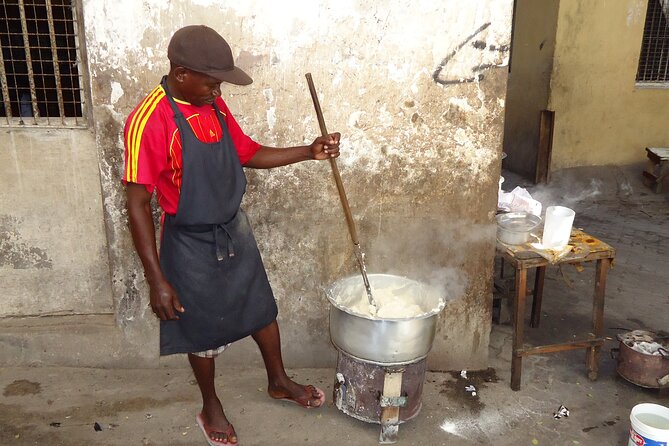
The visit to Mackinnon Market lasts about 35 minutes. The market was built by the English in 1914, and today the focus is on produce and spices, including legumes, fruits, and different seasonings.
This is a useful stop because it shifts the subject from rulers and fortifications to food and commerce. You can look at the ingredients that shape daily cooking while Omar explains the place of the market in the city. It is a short visit, so do not expect an extended cooking class or a meal.
The market may be one of the more sensory parts of the morning. You’ll see different colors and textures, and you may want to take photographs, but ask before photographing people or goods at close range. The tour information does not promise tastings or shopping time, so treat this as a guided look rather than a market-shopping excursion.
One practical advantage is that the market breaks up the historical material. After the fort and Old Town, it gives you a direct look at a working part of Mombasa. I find that kind of change helpful. It keeps the tour from becoming a string of dates and names.
A Hindu temple and Mombasa’s wider cultural picture
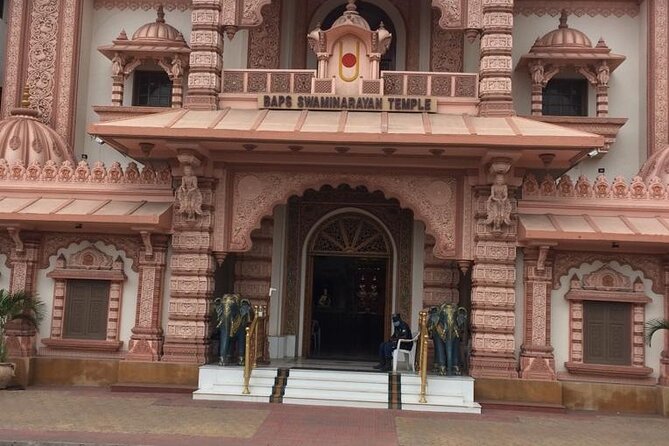
The next stop is Shri Cutch Satsang Swaminarayan Temple, with about 35 minutes set aside for a visit. This adds an important Indian religious and cultural dimension to a city often described mainly through its Portuguese, Arab, and British past.
The temple makes the route broader and more honest. Mombasa’s identity has never come from one community or one era. Including a Hindu temple alongside Fort Jesus, Old Town, the market, and colonial landmarks helps you see the city as a meeting point shaped by several traditions.
The available information does not specify rules for photography, dress, or interior access. Dress respectfully and follow instructions from the guide or temple staff. Since the tour includes a set amount of time here, Omar can explain the setting and answer questions without the stop taking over the entire morning.
This is also a good example of why a local guide matters. The value is not just entering another building. It is understanding why the site belongs in a tour of Mombasa and how it fits into the city’s social story.
A few more Mombasa days to weigh up
- Mombasa: Kisite Park Private Cruise with Breakfast and Lunch
★ 4.7 · 181 reviews - Mombasa City Tour
★ 5.0 · 170 reviews - Half-Day Scenic Bike Tour
★ 5.0 · 75 reviews - 2 Days Tsavo East National Park Tour From Mombasa/Diani (1 Night)
★ 5.0 · 50 reviews
Pembe Mbili and the four elephant tusks on Moi Avenue
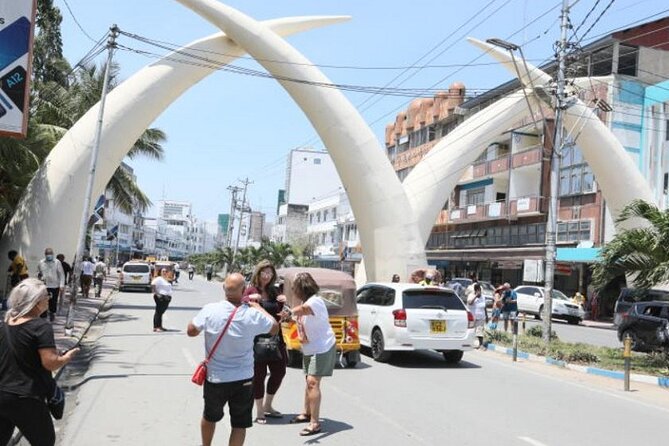
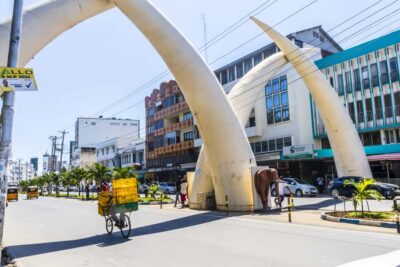
The final scheduled stop is Pembe Mbili, described as a historic landmark of Mombasa, with around 30 minutes planned. The end point is the famous four gigantic elephant tusks erected in 1952 for the arrival of the Queen of England.
The tusks are on Moi Avenue, opposite Uhuru Gardens. They are among the city’s most recognizable landmarks and make a clear finish to a route that begins at Fort Jesus. The contrast is striking: you start with a 16th-century Portuguese fort and end with a 20th-century British colonial symbol in the middle of a modern avenue.
This is a good place for photographs, and the guide has often helped with pictures during the tour. The stop also gives Omar room to connect the British period with the larger story of Kenya and Mombasa.
The route description uses both Pembe Mbili and Pembe Za Ndovu for the final landmark. When you book, check the exact meeting and end point details so you know you are heading to the elephant tusks near Uhuru Gardens, not expecting to finish back at Fort Jesus.
The British hotel and Karen Blixen connection
The experience also refers to an African Colonial Hotel built by the British in 1901, where Danish writer Karen Blixen stayed during a 1914 visit. That detail adds a literary and colonial thread to the morning.
It is worth keeping your expectations precise. The listed stops focus on Fort Jesus, Old Town, Mackinnon Market, the Hindu temple, and Pembe Mbili. The hotel is part of the historical description, but it is not given its own timed stop in the route. Ask Omar at the start if seeing it is possible on your particular outing.
That small distinction matters. If the hotel connection is a major reason you want to book, confirm how it fits into the morning rather than assuming you will enter the building. If you are mainly interested in Fort Jesus and the Old Town, the hotel reference is a useful bonus rather than the core reason to go.
What Omar Juma adds to the experience
The guide is the strongest part of this tour. Omar Juma is described as an English and French-speaking guide with a polite, calm style and a strong command of Mombasa’s history, Kenyan society, and local traditions.
His best quality is flexibility. You can ask questions without feeling that you are holding up the group, and the tour can move at your pace. That matters in Old Town, where a short stop can become much more useful when you have time to ask why a building, custom, or street matters.
Omar is also reported to speak French fluently, which can be valuable for French-speaking visitors and families. His humor helps keep the historical material light, while his patient manner suits solo visitors who want a more conversational experience.
He has also been attentive to practical needs such as shade, drinks, and photographs. Those are small touches, but they matter in a hot city where a rigid schedule can quickly become tiring.
The group limit of 10 is another advantage. A small group makes it easier to hear explanations in the fort, stay together in narrow streets, and ask questions. It does not guarantee a private tour, but it should feel more personal than a large coach excursion.
Tuk-tuk transport and the three-to-four-hour schedule
The tour starts at 9:00 a.m. at Fort Jesus Museum on Nkurumah Road and ends at the elephant tusks on Moi Avenue. Tuk-tuk transport is included, while the Old Town portion is walked.
That combination makes sense. A tuk-tuk gives you a local way to cover the distance between points without turning the whole experience into a vehicle tour. Walking then lets you slow down in the parts of Old Town where streets and buildings are the real attraction.
The total duration is about three to four hours. The timed stops add up to roughly three hours, so the final length may depend on walking time, questions, photographs, and the pace of the group. Plan the rest of your day with some breathing room rather than booking a tight connection immediately afterward.
The tour is near public transportation, and most adults can take part. It is not recommended for children, so families should consider the age guidance carefully. The route combines heat, walking, market streets, a fort, and tuk-tuk travel, which may not suit young children.
Is $40 a fair price?
At $40 per person, this is a reasonable price if you want a guide who can connect several parts of Mombasa rather than simply take you to Fort Jesus. You receive guide fees, tuk-tuk transport, and a three-to-four-hour route with several stops.
The separate KSH 1,200 Fort Jesus admission reduces the all-in value slightly, but the extra cost is clear and easy to plan for. You are paying most of the tour price for Omar’s time, local explanation, transport between areas, and the convenience of linking sites that would be harder to understand on your own.
I would see the price as good value for a first visit to Mombasa, especially if you have limited time in the city. It is less compelling if you only want a quick look at Fort Jesus or prefer to explore markets independently.
The strongest value comes from the connections. The tour covers Portuguese construction, Swahili and Arab influences, Indian religious life, British colonial history, local trade, and modern Mombasa in one morning. That range gives you a useful foundation for exploring more on your own later.
Who should book this Mombasa tour?
I would choose this experience if you want:
- A short introduction to Mombasa’s main historic districts
- A guide who speaks English or French
- Plenty of chances to ask questions
- A mix of museum time, walking, market viewing, and tuk-tuk transport
- A small group rather than a large organized excursion
- A broader cultural picture than Fort Jesus alone can provide
I would hesitate if you want a relaxed beach morning, a dedicated food experience, or a full museum study session. You should also reconsider if children are part of your group, since the activity is not recommended for them.
Solo visitors may find the format particularly comfortable because Omar’s calm manner and attention to individual needs can make the Old Town walk easier to manage. Couples and small groups will also benefit from the flexible pace and photo help.
Book at least a day ahead if you need the full refund option. Cancellation is free up to 24 hours before the 9:00 a.m. start time. Changes or cancellations inside that window are not accepted for a refund.
Should you book it?
Book this tour if you want Mombasa explained by a local guide rather than viewed through a car window. Fort Jesus gives you the major historical anchor, while Old Town, Mackinnon Market, the Hindu temple, and the elephant tusks show how different eras and communities shaped the city.
The deciding factor is Omar Juma. His English and French, patience with questions, attention to shade and pace, and ability to connect old buildings with current Kenyan life give the morning its character. Just budget separately for Fort Jesus, prepare for heat, and confirm whether the African Colonial Hotel is included as a viewing stop if that detail matters to you.
FAQ
How long does the Fort Jesus and Old Town tour last?
The experience lasts approximately 3 to 4 hours. The scheduled stops include Fort Jesus, Old Town, Mackinnon Market, Shri Cutch Satsang Swaminarayan Temple, and Pembe Mbili.
What is included in the tour price?
The $40 price per person includes tuk-tuk transportation and guide fees. Admission to Fort Jesus is not included.
How much is admission to Fort Jesus?
Fort Jesus admission costs KSH 1,200 per person, paid separately from the tour price.
Where does the tour start and finish?
The tour starts at Fort Jesus Museum on Nkurumah Road at 9:00 a.m. It ends at Pembe Za Ndovu, the four elephant tusks on Moi Avenue, opposite Uhuru Gardens.
Is the tour available in French?
Yes. The guide, Omar Juma, speaks English and French.
Can I cancel for a full refund?
Yes, if you cancel at least 24 hours before the experience start time. Cancellations or changes made less than 24 hours before the start are not refunded.
Just added around Mombasa
- Tsavo East National Park: 2-Day Tour from Mombasa★ 3.9 · 5 reviews
- 1-Day Tsavo East Safari From Mombasa★ 5.0 · 3 reviews
- 4-Day Tsavo East West and Amboseli National Park from Mombasa★ 4.0 · 5 reviews
- Fort Jesus Sound and Light show Mombasa★ 4.0 · 17 reviews
- 4 Days Mount Kenya Trekking★ 5.0 · 6 reviews
- 4×4 Safari in Tsavo East National Park★ 5.0 · 4 reviews
- 2 Days Salt Lick Safari Tour★ 4.5 · 3 reviews
- Swahili Street Food Tour★ 5.0 · 7 reviews
Fort Jesus Tours, compared.
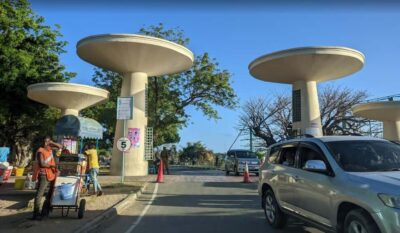
Tusks, Fort Jesus, Old Town, Beach and City Tour
Read our review →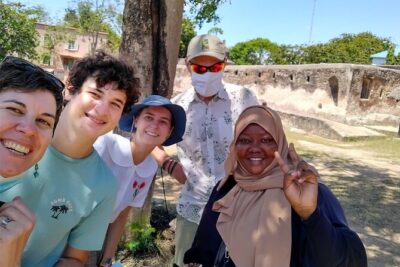
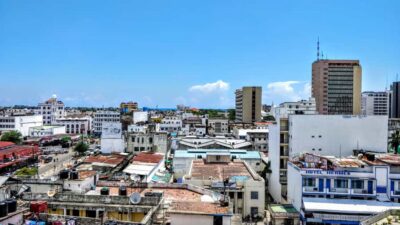
Private City Tour with Fort Jesus & Haller Park
Read our review →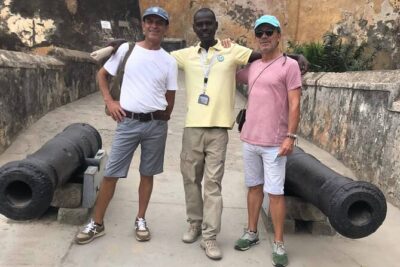
Mombasa Half-Day City Tour with Fort Jesus and Haller Park
Read our review →
Mombasa City Tour: Fort Jesus Museum, Old Town & Haller Park
Read our review →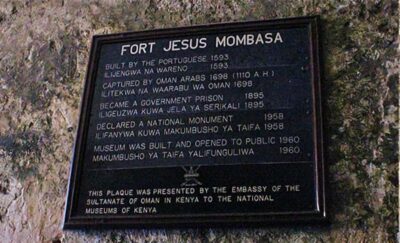
Historical Guided city tour. Old town, Fort Jesus
Read our review →Browse the lists this tour appears in