
Reviewed · MOMBASA TOURS
MOMBASA:FortJesus,OldTown,SpiceMarket, Shiva Temple DayTour.
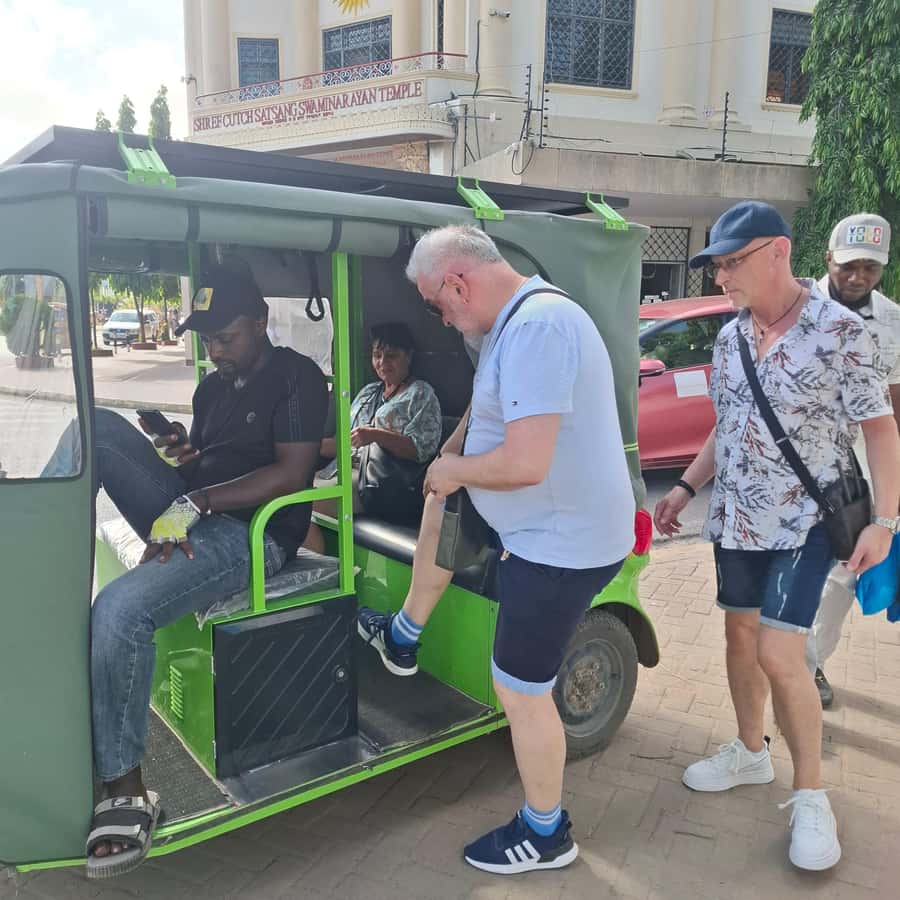
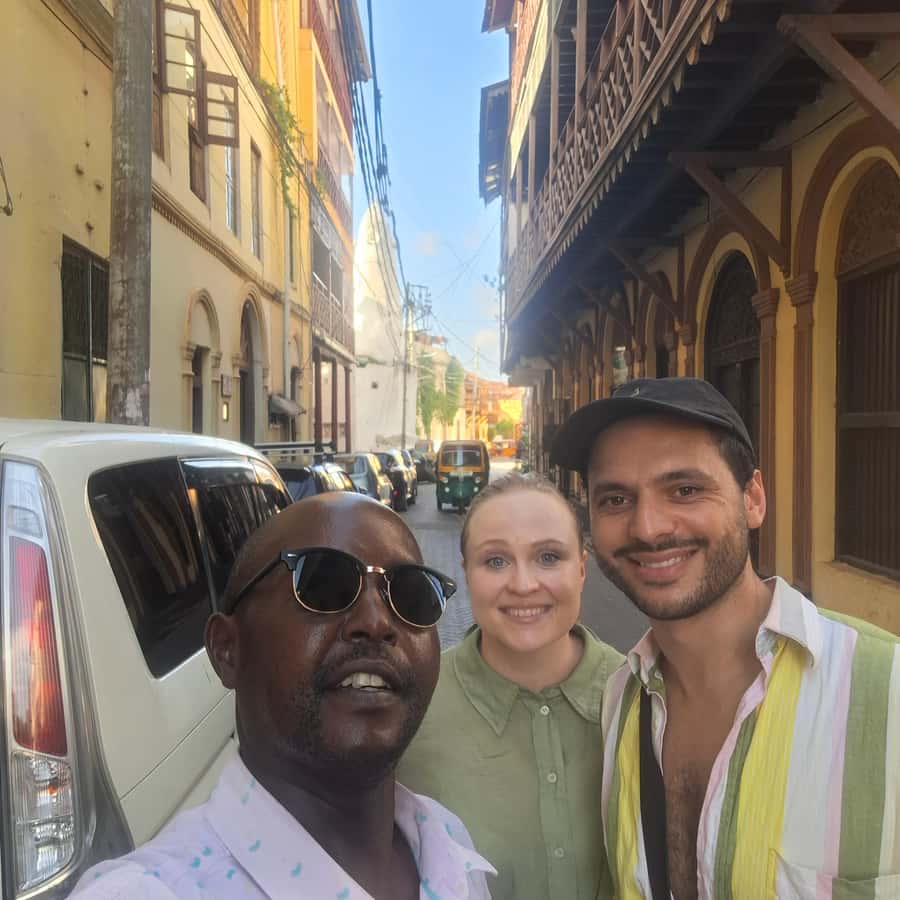
Mombasa’s story is written in its lanes. This walking tour takes you from the massive walls of Fort Jesus into Old Town’s narrow streets, then on to a spice market and Shiva Temple. Guide John David Mwangi Irungu leads the way in English, explaining how African, Arab, Indian, and Muslim communities have shared this coastal city for centuries.
I like the mix of major sights and ordinary street life. The Shiva Temple adds a useful glimpse into Mombasa’s Hindu community, while the spice market brings strong smells, bright colors, and local commerce into the day. The main drawback is that Fort Jesus entry is not included, and the walking route can feel hot, so bring water, a hat, and good shoes.
Key points to know before you book
- Fort Jesus begins the story: You meet at the fort and learn why this landmark mattered to Mombasa.
- John can tailor the route: He has adjusted start times and plans for visitors with tight schedules.
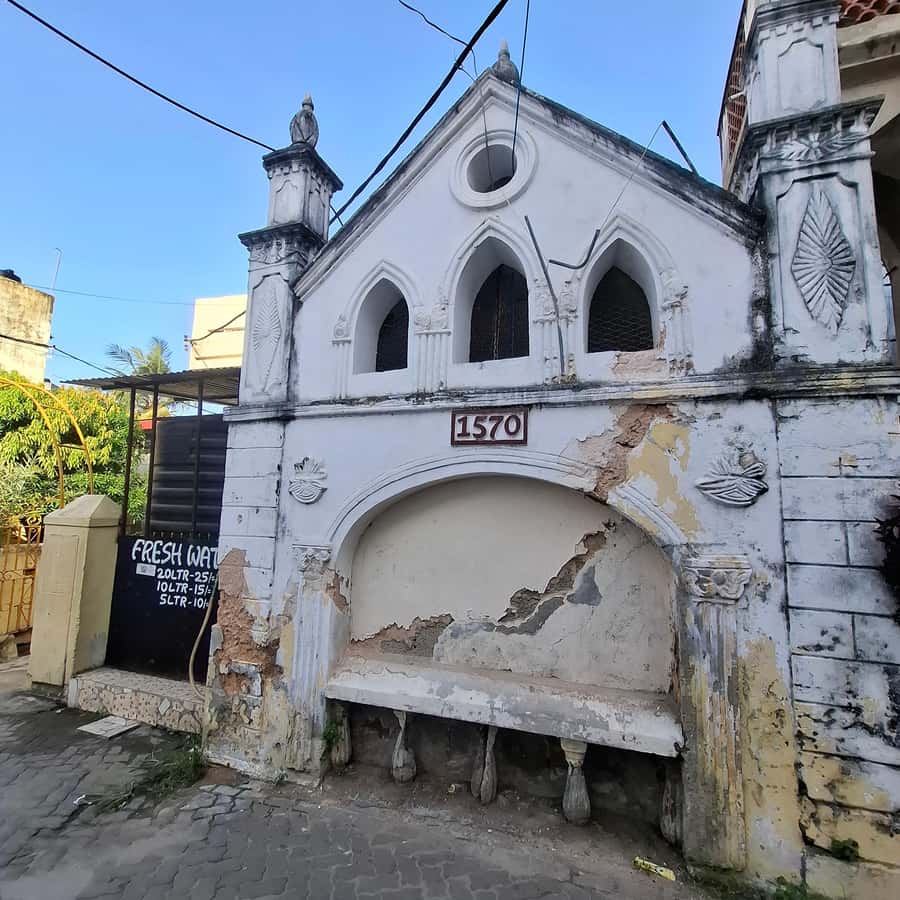
- Old Town is best seen on foot: Expect narrow lanes, old buildings, local activity, and plenty of small details.
- The Shiva Temple adds cultural range: You learn about the Hindu community and its place in Mombasa.
- The spice market engages every sense: Go ready for strong aromas, colorful displays, and a lively local stop.
- Budget for the fort ticket: The $35 tour price covers the guided walking experience, but Fort Jesus admission is extra.
A walking introduction to Mombasa’s many communities
Mombasa is not a city you understand from a coach window. Its past comes through in doorways, religious buildings, market stalls, and the way several communities have shaped the same streets. This tour gives you a local guide to connect those pieces.
John begins with a short briefing about caring for the environment and behaving responsibly during the walk. That is a small but useful start. You are entering an active part of the city, not a museum set aside for visitors, so respectful conduct matters.
The experience is conducted in English. John’s approach is flexible. He has adjusted starting times, changed the pace for practical needs, and helped visitors fit the walk around onward travel. If you have only a few hours in Mombasa, that flexibility may be as useful as the sightseeing itself.
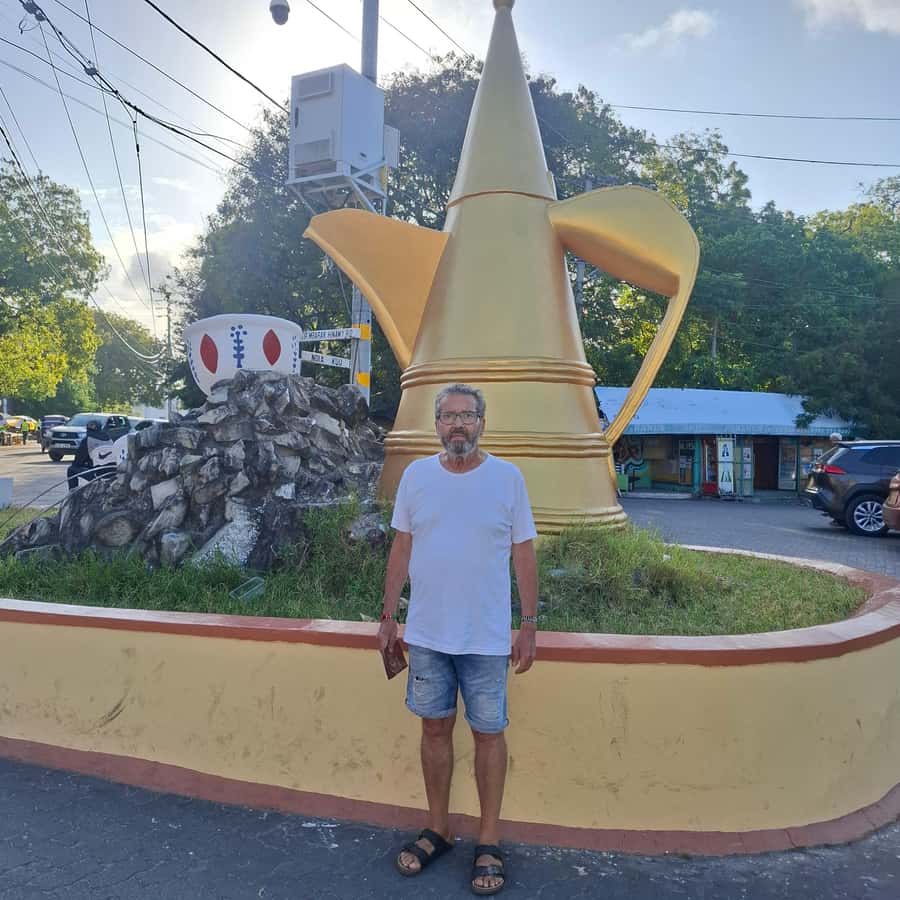
The tour starts and ends at the same meeting point near Fort Jesus. Look for the roundabout with a Coffee Pot and smaller decorated cups. That landmark is more useful than relying on a street number, but you should still allow time to find it and keep your phone charged.
A few more Mombasa days to weigh up
- Walking Tour Through Old Town Mombasa and Fort Jesus
★ 5.0 · 393 reviews - Mombasa: Kisite Park Private Cruise with Breakfast and Lunch
★ 4.7 · 181 reviews - Mombasa City Tour
★ 5.0 · 170 reviews
Fort Jesus: begin with Mombasa’s most imposing landmark
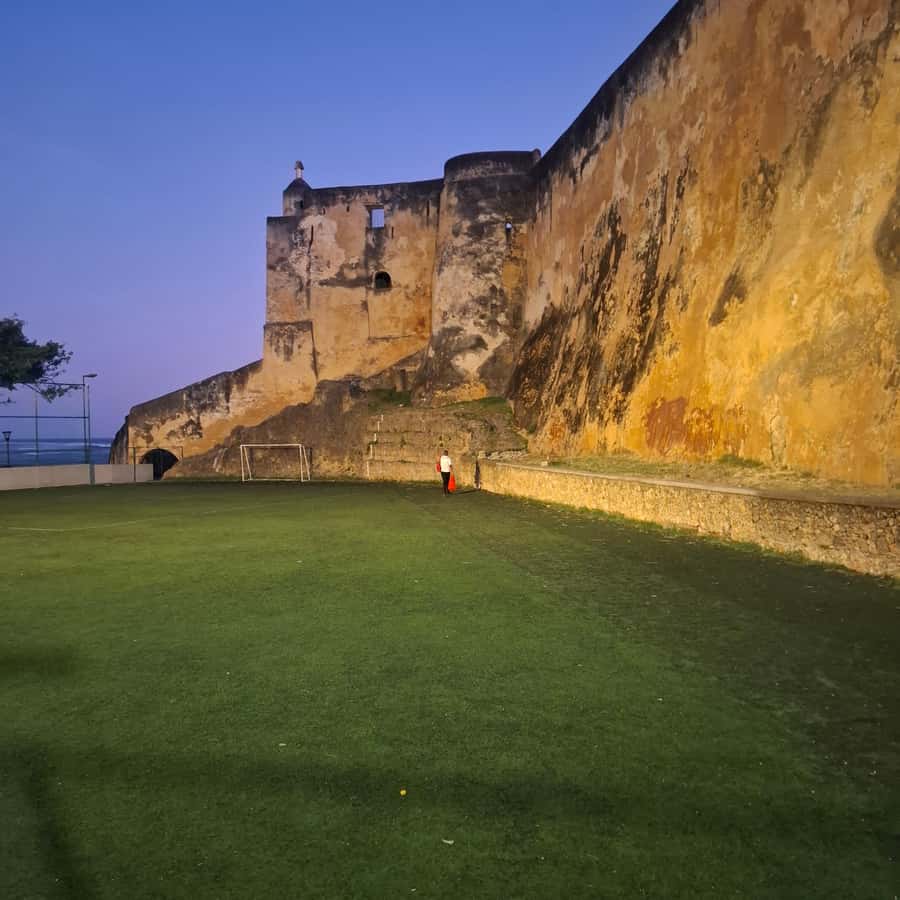
Fort Jesus gives the walk a strong opening. Its thick walls and position near the Old Town make it an obvious place to begin discussing Mombasa’s strategic importance on the coast.
Inside, the guide explains the fort’s past and its role in the area. You can enter the fort museum if you pay the admission fee yourself. The fort ticket is not part of the $35 price, so check the current charge before setting out and carry cash or a payment card.
I like starting here because the fort gives you a framework for the rest of the walk. Later, when you see Indian influences in Old Town or hear about the city’s Muslim communities, you have already begun to understand why Mombasa attracted outside powers and trading communities.
The fort visit is not simply a photo stop. Pay attention to the relationship between the old defensive structure and the streets around it. The point of a guided visit is to hear why the building mattered, not just to walk around its walls.
One practical note: the description makes clear that Fort Jesus admission is separate. If you do not want to pay for entry, clarify with John how much of the opening discussion can take place outside. The walking tour itself continues through Old Town, so the fort ticket does not determine whether you can take part in the rest of the route.
Old Town’s narrow streets and layered past
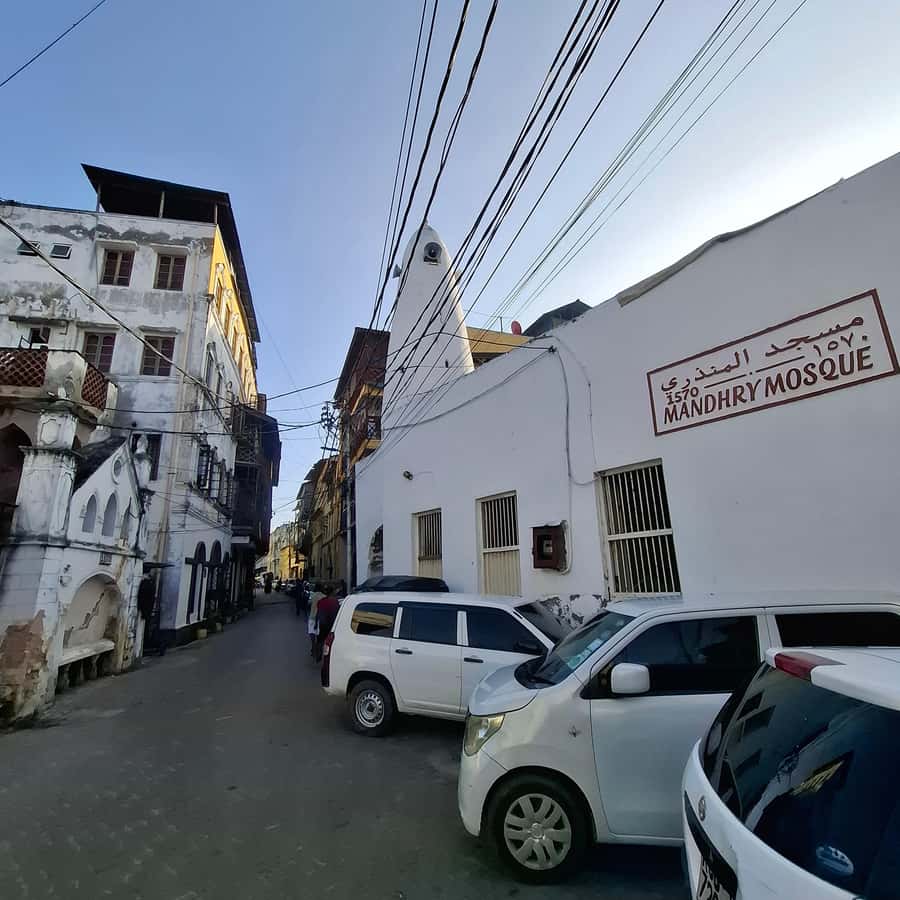
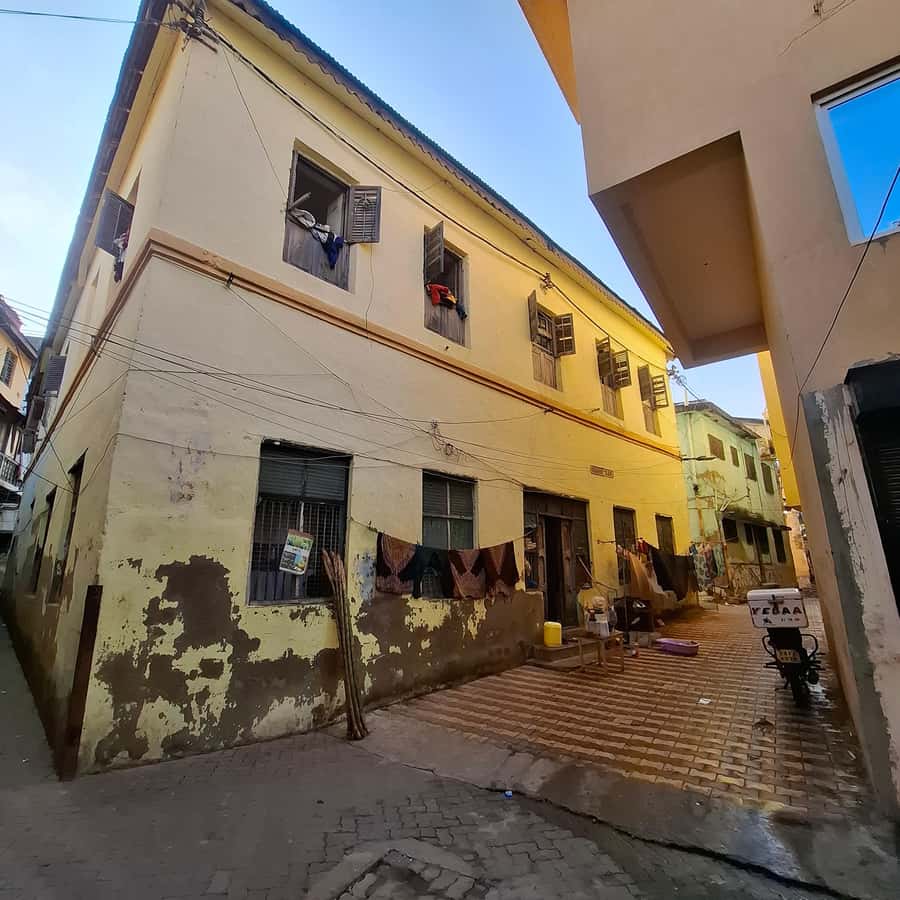
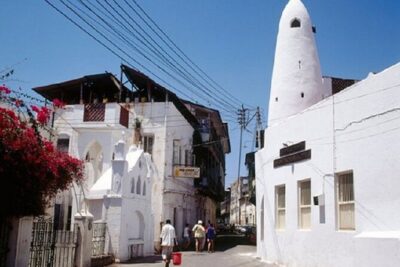
From Fort Jesus, the walk moves into Old Town. The streets are narrow, and the buildings date back as far as the 12th century. That age is best appreciated slowly. Look above eye level, notice doorways and façades, and watch how daily life continues around the old structures.
John explains the Indian influence in the area and the ways Afro-Arab communities have lived alongside Shiite Muslims for centuries. These details give the walk its real value. You are not only ticking off old buildings. You are learning how Mombasa’s cultural groups have shared space and shaped one another’s surroundings.
The route is also a chance to see normal activity at close range. You may notice shop work, household routines, religious signs, and the small marks of local life that a faster sightseeing trip would miss. John has a good opportunity here to answer questions, and the experience is strongest when you ask about what you see rather than waiting for a long lecture.
The streets may not suit everyone. Narrow lanes can feel crowded, and the route is on foot. Comfortable clothing and walking shoes are essential. A hat, biodegradable sunscreen, and water will make the day easier, especially under the coastal sun.
For photographers, Old Town offers detail rather than grand views at every turn. Bring a camera or a charged smartphone, but ask before photographing people or religious spaces. Respect is especially important around the Shiva Temple and other places of worship.
The spice market brings the city into focus
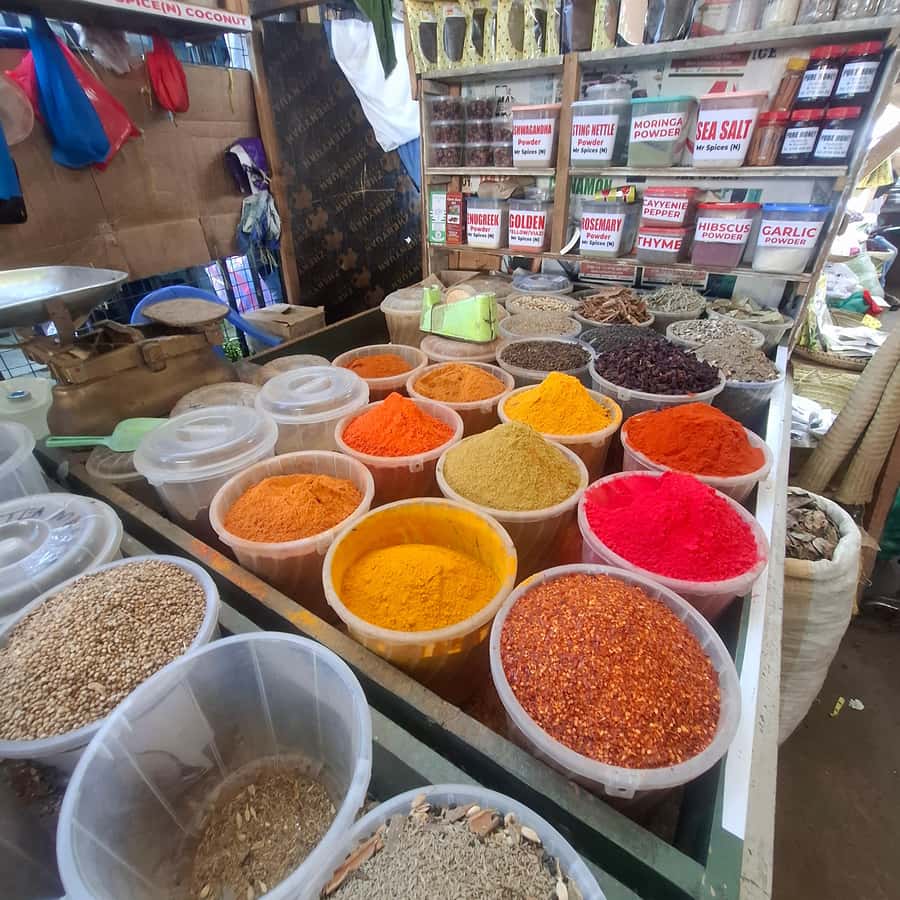
The spice market is a short, sensory stop, but it adds plenty to the route. You see local spices in bright displays and smell them before you reach the stalls. The market helps connect Mombasa’s past to the trade and food traditions that remain part of daily life.
I like this part because it breaks up the architectural sightseeing. After listening to stories about forts and old communities, you get a direct look at products people handle, sell, and use. The smells may be strong, and the market can feel busy, but that is part of its character.
This is also the place to be alert about spending. The tour includes a visit to the market, not a shopping allowance. If you want to buy spices or other items, carry cash or a card and ask John for help with local customs and sensible purchases. Do not feel pressure to buy simply because you stop there.
The market is a good reason to keep the group moving at a comfortable pace. You want enough time to look, ask questions, and take photographs without turning the visit into a rushed pass-through. Since the tour can be tailored to your wishes, you can tell John if the market is a priority for you.
Same departure point, a completely different day out:
- Mombasa: Tusks, Fort Jesus, Old Town, Beach and City Tour
★ 4.7 · 137 reviews - Half-Day Scenic Bike Tour
★ 5.0 · 75 reviews - 2 Days Tsavo East National Park Tour From Mombasa/Diani (1 Night)
★ 5.0 · 50 reviews - Mombasa: Guided Nature Walk Amongst Giraffes
★ 4.8 · 48 reviews
Shiva Temple and Mombasa’s Hindu community
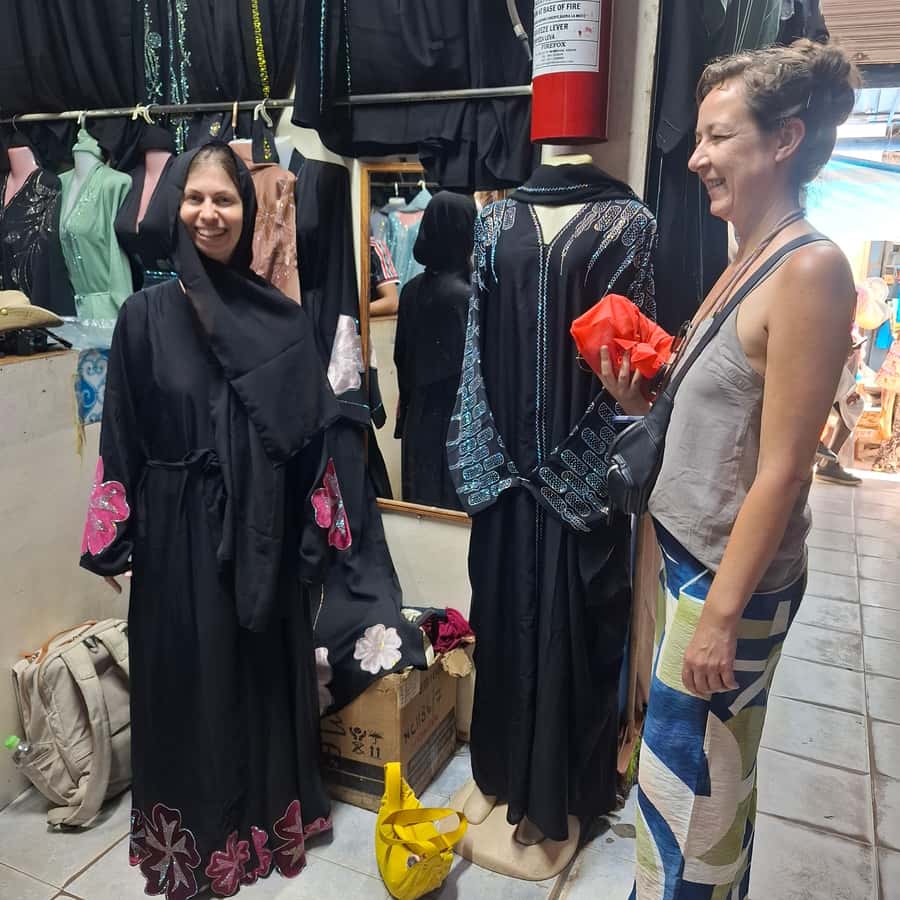
The Shiva Temple gives the tour a different focus. Here, John introduces you to Hindu religion and the role of the Hindu community in Mombasa. That stop matters because it widens the story beyond the fort and the Muslim and Afro-Arab traditions emphasized in Old Town.
You should dress respectfully and follow local customs. The tour information specifically asks you to be respectful of local traditions, and that advice is worth taking seriously at a place of worship. Avoid ripped clothing, and do not expect the temple to function like an ordinary sightseeing attraction.
The temple visit works best as a cultural explanation rather than a quick photograph. Ask John about the Indian influence he has already discussed in Old Town, then connect that conversation to the religious building in front of you. This creates a clearer sense of how migration, trade, faith, and local life meet in Mombasa.
The stop may be especially useful if you have already seen coastal Muslim communities elsewhere in Kenya and want a broader picture of the city. It also gives families and first-time visitors a simple way to compare different religious traditions without needing a separate specialist tour.
John’s flexible guiding style
John David Mwangi Irungu is the named guide for this experience. His strongest practical quality is flexibility. He has worked with changing start times, waited for late arrivals, and adapted routes to suit visitors who needed to catch a train.
That matters if you have only a short visit to Mombasa. One past itinerary was adjusted so the group could finish in time for a train to Nairobi, with John coordinating directly with the taxi driver for pickup after the walk. You should not assume every transport arrangement is included, but it shows why discussing your schedule with him before the tour is sensible.
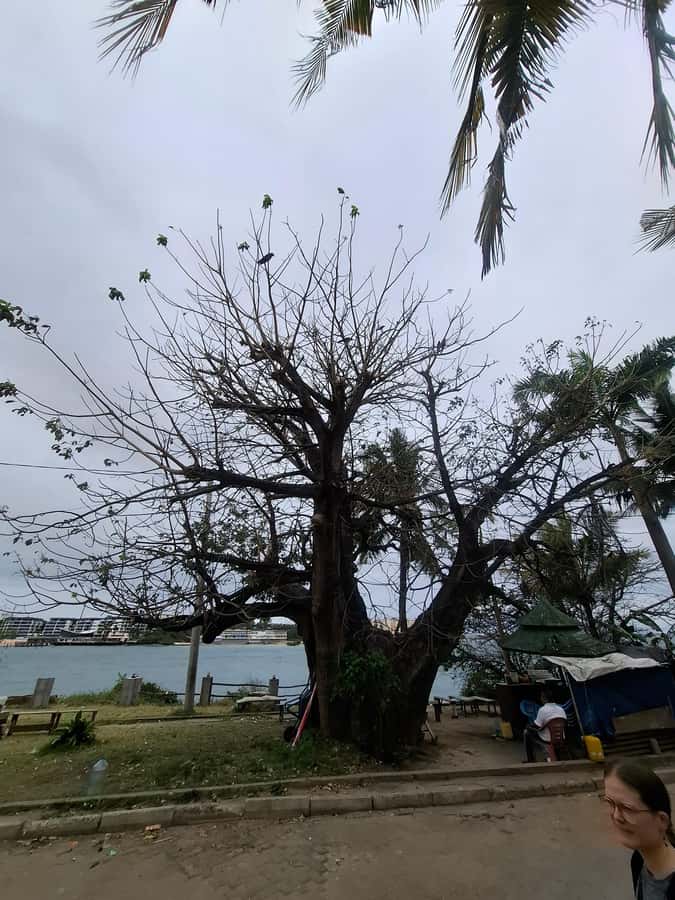
John also appears willing to shape the experience around personal interests. A visitor who wanted henna applied was able to add that to the day, followed by African tea with a view of the water among local people. Henna and tea are not listed as standard inclusions, so treat them as possible additions to arrange rather than guaranteed parts of the tour.
His historical explanations are generally the heart of the experience. One practical suggestion is to ask him to organize the stories into a clear sequence if you prefer a strong chronological account. Mombasa contains many overlapping histories, and a guide may offer plenty of individual facts without always connecting them into one simple narrative.
What the $35 price really covers
At $35 per person, the tour is priced as a guided city walk rather than an all-inclusive excursion. You are paying for John’s time, local interpretation, the Old Town route, the spice market stop, the Shiva Temple visit, and the cultural context tying them together.
Fort Jesus admission is extra. Drop-off is also not included, although pickup is available. Those exclusions are important when comparing the price with a private taxi tour or a package that includes entrance tickets.
The value is strongest for you if you want a guide who can explain Mombasa rather than simply point out buildings. The route covers several different aspects of the city in one outing, and the small-scale walking format gives you room to ask questions and adjust the focus.
The value is weaker if you want a fully prepaid day with transport, entrance tickets, and a fixed schedule. You will need to budget for the fort, arrange your own return from the ending point if necessary, and carry money for personal purchases.
The reserve-now, pay-later option can help if your plans are still changing. Cancellation is allowed up to 24 hours ahead for a full refund. Those terms make the booking relatively low-risk, but you should still check the meeting details and ticket cost before the day.
Practical advice for a comfortable walk
Wear light, comfortable clothes and shoes you can use on uneven streets. Add a hat, biodegradable sunscreen, and water. Mombasa’s sun can make a short walk feel much longer if you are not prepared.
Carry cash and a credit card, since you may want to pay for Fort Jesus or buy something at the market. Keep your phone charged for meeting directions and communication with John.
The tour is not suitable for people over 95 years old. Bikes, smoking, alcohol, drugs, intoxication, nudity, and explosive substances are not allowed. Alcoholic drinks are also not permitted in the vehicle, which matters if you use the available pickup service.
The meeting point is marked by a Coffee Pot and smaller decorated cups on a roundabout. The activity returns to this meeting point at the end. Pickup is available, but drop-off is not included, so plan your next move in advance.
Take photos thoughtfully. Ask before photographing worshippers, market sellers, or temple interiors. A respectful approach will help you see more and avoid turning local life into a backdrop.
Who will enjoy this Mombasa tour most?
I would choose this walk if you want a first look at Mombasa’s central historical and cultural sights in one outing. It suits first-time visitors, people staying near the coast, and anyone with limited time who wants more explanation than a self-guided stroll can provide.
It is also a good match for you if religious and cultural variety interests you. The route brings together a fort, old streets, an Indian-influenced area, a spice market, and a Hindu temple. That range is more useful than visiting Fort Jesus alone.
The tour may not suit you if you dislike walking in heat, narrow urban lanes, or active markets. It also may feel less convenient if you need door-to-door transport or want every cost included in advance.
If your schedule is tight, contact John about the start time before booking. His ability to adapt the route has helped people with onward trains and other commitments, but you should make your own transport plan and leave a sensible time margin.
Should you book it?
Book this tour if you want local explanation, cultural variety, and a flexible walking route at a moderate price. John’s personal attention, including schedule changes and tailored stops, is a strong reason to choose it over a rigid group outing.
Before you commit, remember the two extra costs and the physical side: Fort Jesus entry is separate, drop-off is not included, and you will be walking through sunny streets. With good shoes, water, modest clothing, and a little planning, this is a useful way to meet Mombasa through its places of worship, market life, old buildings, and layered communities.
FAQ
Where does the tour start?
The meeting point is at Fort Jesus, near a roundabout marked by a Coffee Pot and smaller decorated cups.
Where does the activity end?
The walking tour ends back at the meeting point.
Is Fort Jesus admission included?
No. The Fort Jesus entry ticket is not included in the $35 tour price and must be paid separately.
Is pickup available?
Yes, pickup is available. Drop-off is not included.
What language is the tour conducted in?
The tour is conducted in English.
What should I bring?
Bring comfortable walking shoes, a hat, water, biodegradable sunscreen, comfortable clothing, cash, a credit card, a camera, and a charged smartphone. Be respectful of local customs and traditions.
Just added around Mombasa
- Tsavo East National Park: 2-Day Tour from Mombasa★ 3.9 · 5 reviews
- 1-Day Tsavo East Safari From Mombasa★ 5.0 · 3 reviews
- 4-Day Tsavo East West and Amboseli National Park from Mombasa★ 4.0 · 5 reviews
- Fort Jesus Sound and Light show Mombasa★ 4.0 · 17 reviews
- 4 Days Mount Kenya Trekking★ 5.0 · 6 reviews
- 4×4 Safari in Tsavo East National Park★ 5.0 · 4 reviews
- Swahili Street Food Tour★ 5.0 · 7 reviews
- Private Transfer from Mombasa★ 5.0 · 6 reviews
Mombasa Tours, compared.

Kisite Park Private Cruise with Breakfast and Lunch
Read our review →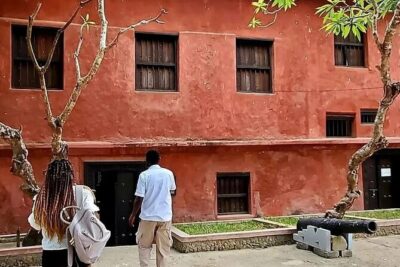
Tusks, Fort Jesus, Old Town, Beach and City Tour
Read our review →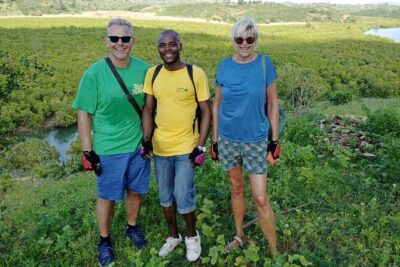
2 Days Tsavo East National Park Tour From Mombasa/Diani (1 Night)
Read our review →
Browse the lists this tour appears in