
Reviewed · CITY TOURS
Mombasa Half Day City Tour
Mombasa’s old town is easier to enjoy when someone else handles the city’s sharp turns, noisy traffic, and busy footways. This four-hour walk begins at Fort Jesus, then moves through markets, temples, old streets, and the famous tusk monument before ending at Mama Ngina Waterfront.
I like the small group limit of 10, and I like that the route mixes major sights with everyday places such as the market. The main thing to consider is the price: at $85 per person, this makes the most sense if you want a guide, a focused introduction, and help getting around rather than a quick look at the sights on your own.
Key points at a glance
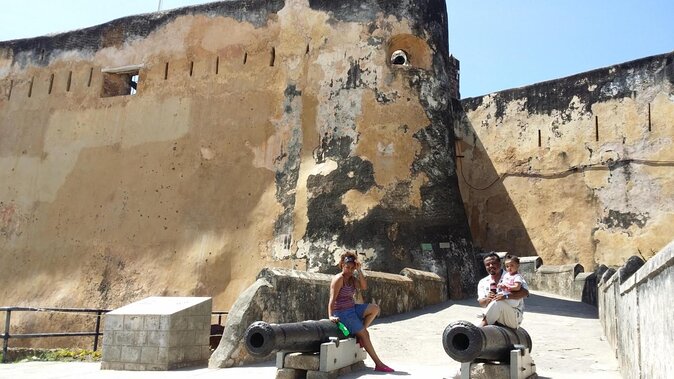
- Fort Jesus sets the scene: Begin at Mombasa’s 16th-century Portuguese fort, a UNESCO World Heritage Site.
- A market adds local flavor: Visit Macknon Market, also identified as Marikiti Market, for spices and a closer look at daily commerce.
- The group stays small: The tour accepts no more than 10 people, which gives the guide room to answer questions and adjust the pace.
- The route covers several sides of Mombasa: You see a fort, old town, Hindu temple, public monument, waterfront, and local transport culture in one morning.
- Lunch is optional: You can add a meal at a local restaurant for an extra fee.
- The finish is practical: The tour ends at Mama Ngina Waterfront near the ferry, not back at Fort Jesus.
Why this tour is a useful first look at Mombasa
Mombasa can be a hard city to read at first. Tuk-tuks dart through traffic, matatus announce themselves with noise, and the old town’s streets can feel confusing if you do not know what you are looking at. A walking tour gives you a basic map of the city while explaining how its past and present fit together.
The route is not only a list of monuments. It links Fort Jesus with the old town, a food and spice market, a Hindu temple, the elephant tusks, and the waterfront. That variety matters. In four hours, you get architecture, religion, trade, food, public space, and transport rather than four similar historic stops.
The tour is led by a certified local guide. No individual guide name is provided, so you cannot request a particular person based on the available information. You can expect the guide to explain Mombasa’s history, culture, and food while walking with you through the central sights.
The operator also allows some customization. That is useful if you care more about food, religious buildings, old town history, or the feel of the streets than about ticking off every stop. Still, ask about changes before the walk begins, since the advertised route has a clear sequence and a fixed four-hour window.
More City Tours in Mombasa
- Mombasa City Tour
★ 5.0 · 170 reviews - Mombasa: Tusks, Fort Jesus, Old Town, Beach and City Tour
★ 4.7 · 137 reviews - Mombasa: Private City Tour with Fort Jesus & Haller Park
★ 4.6 · 24 reviews
Starting at Fort Jesus at 10:00 a.m.
The meeting point is Fort Jesus, with a listed start time of 10:00 a.m. Pickup is offered, but Fort Jesus remains the stated meeting point, so check the details you receive after booking if you need transport to the start.
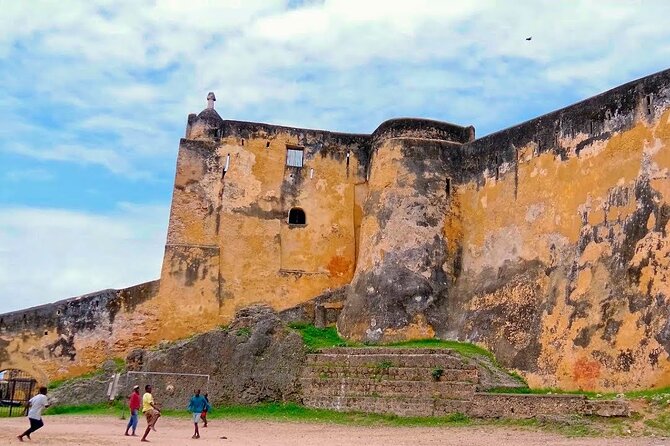
Fort Jesus was built by the Portuguese in the 16th century. It is also a UNESCO World Heritage Site, making it the strongest historical anchor on the route. Starting here gives you a clear introduction to Mombasa’s role as a trading port and strategic coastal city.
The fort is more than a photo stop. Its walls help explain why control of Mombasa mattered to outside powers, and its location provides a natural starting point for the old town walk. The guide can connect the fort to the streets and trading activity that follow.
The supplied information does not specify how much time is spent inside the fort or whether admission is included in the $85 price. Confirm those details before booking if fort access is especially important to you. If the visit is mainly an exterior introduction, you may want separate time for the museum itself.
Walking into Mombasa’s old town
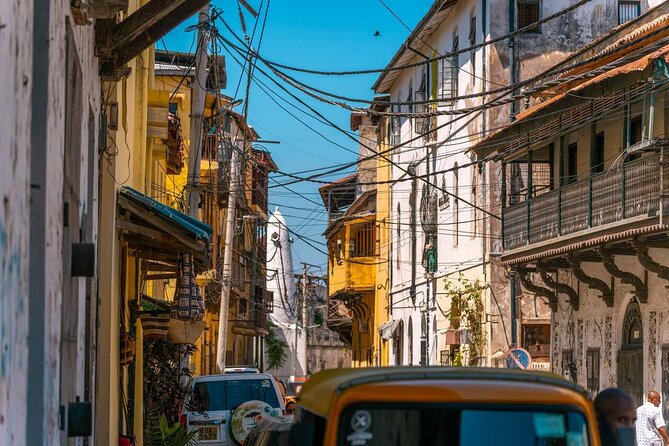
From Fort Jesus, the tour continues through the historic town. This is where the experience becomes less polished and more immediate. You are not only looking at preserved buildings. You are also moving through a working part of the city, with traffic, shops, people, and changing street scenes around you.
The guide’s role matters most here. A street can look ordinary until someone explains its use, its religious connection, or its place in Mombasa’s trading past. You will get more from the walk if you ask direct questions about food, local customs, buildings, and how the old town functions today.
The pace should suit most people who can participate in a four-hour city walk, but Mombasa’s streets can be distracting and busy. Wear sensible shoes and keep your attention on the route. The tour description specifically points to tuk-tuks and crazy matatus, so the transport experience is part of the city’s character, not just a way to get from one stop to another.
The listing notes access to public transportation and says most people can participate. It does not provide a detailed accessibility statement. If you need a step-free route or have mobility concerns, ask the provider before booking.
Macknon or Marikiti Market for spices and daily life
The market is one of the most useful stops for anyone who wants more than monuments. The tour description calls it Macknon Market, while the overview names Marikiti Market. Either way, the planned visit focuses on local spices and food culture.
Markets help you understand a city quickly. You see what people buy, how food is displayed, and which smells and ingredients shape local cooking. A guide can also help you make sense of the scene without turning it into a rushed photo stop.
This is a good place to ask about the spices you see and how they are used in Mombasa cooking. The supplied information does not promise tastings, shopping time, or specific dishes, so do not assume those are included. You will be visiting the market as part of a walking tour, not joining a dedicated cooking class.
If you prefer quiet museums and carefully arranged displays, the market may feel like the most demanding part of the morning. If you want a direct look at everyday Mombasa, it is likely one of the more valuable stops.
A few more Mombasa days to weigh up
- Walking Tour Through Old Town Mombasa and Fort Jesus
★ 5.0 · 393 reviews - Mombasa: Kisite Park Private Cruise with Breakfast and Lunch
★ 4.7 · 181 reviews - Half-Day Scenic Bike Tour
★ 5.0 · 75 reviews - 2 Days Tsavo East National Park Tour From Mombasa/Diani (1 Night)
★ 5.0 · 50 reviews
The Swaminarayan Hindu temple
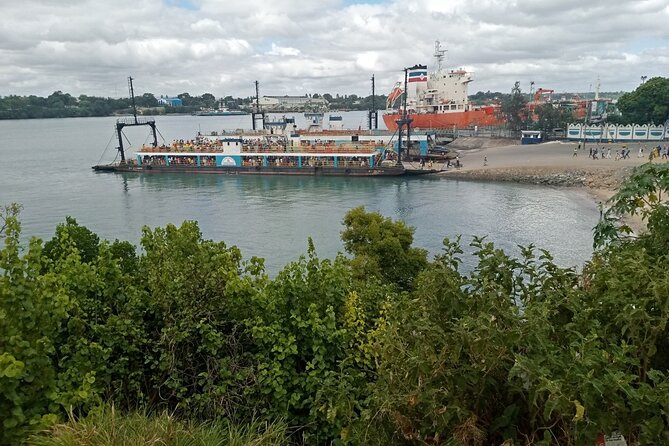
The route also visits the Shree Cutch Satsang Swaminarayan Temple, described as a Swaminarayan Hindu temple. This adds a religious and cultural layer that many short city tours leave out.
The temple helps show that Mombasa’s identity is not limited to its Portuguese fort or coastal trade. The city has long been shaped by different communities and traditions, and a Hindu temple offers a visible reminder of that mix.
The supplied details do not state whether you enter the temple, how long the stop lasts, or what dress rules apply. Treat it as a cultural visit and follow the guide’s instructions. If entry is possible, modest clothing and respectful behavior are sensible choices, but the operator should provide the exact guidance.
This stop also gives the guide a chance to explain Mombasa beyond a simple colonial story. That broader view is one reason I prefer this itinerary to a route built only around famous photographs.
The Mombasa Tusks and the city’s public spaces
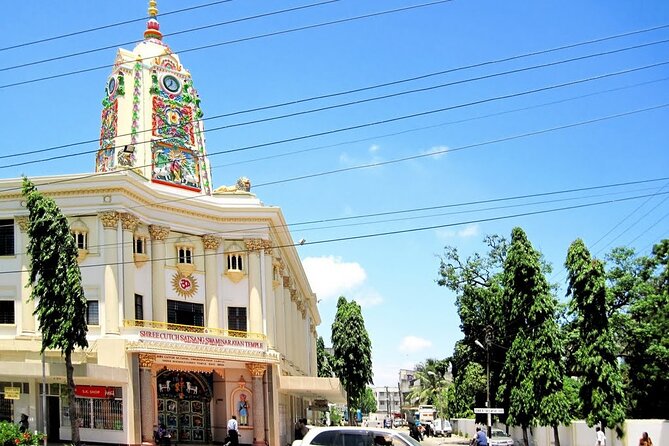
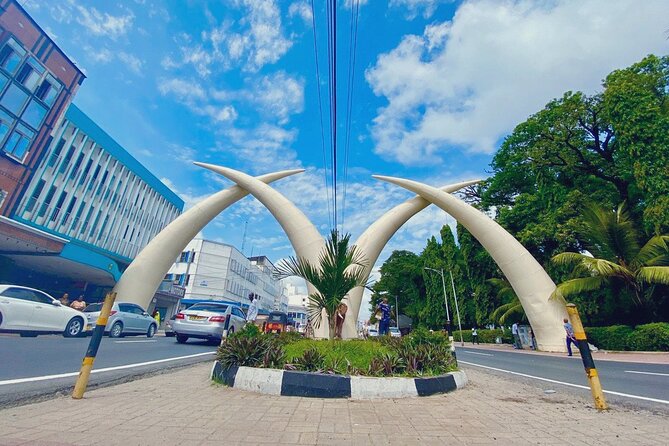
The famous Mombasa Tusks are another major stop. The monument is made up of large tusk-shaped structures and has become one of the city’s best-known public symbols.
It works well in the middle or later part of the route because it shifts your attention from the old town’s history to modern Mombasa. You get a recognizable landmark, a chance for photographs, and a point where the guide can explain the monument’s place in the city.
Do not expect a long museum visit here. The tusks are an outdoor monument, so this portion is likely brief compared with Fort Jesus and the walk through the old town. Its value comes from seeing a well-known city marker in context rather than spending a large part of the tour at the site.
Ending at Mama Ngina Waterfront near the ferry
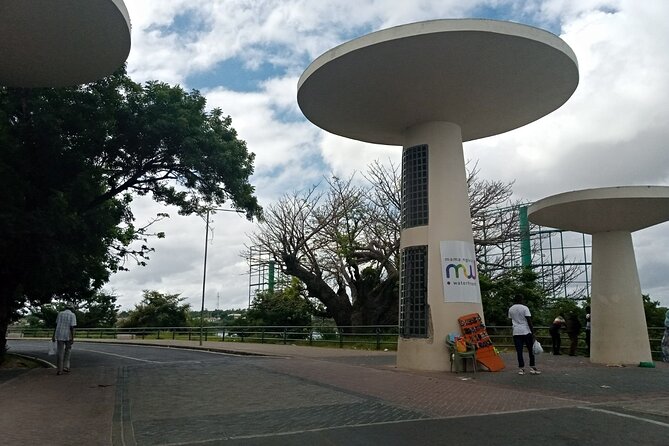
The tour ends at Mama Ngina Waterfront, close to the ferry. This is a practical finish because it places you near a transport link and gives the walk a change of mood after the tight streets of the old town.
A waterfront ending also gives you space to pause and take in the city from a broader public setting. The information provided does not promise a boat ride, ferry crossing, or extended waterfront activity, so think of this as the endpoint rather than a separate cruise or harbor excursion.
Because the tour does not return to Fort Jesus, plan your next move before you start. The end point may suit you if you want to continue toward the ferry or nearby areas. It may be less convenient if your vehicle, hotel, or cruise connection is back at the starting point.
The small group makes a real difference
The maximum group size is 10 people. That is a strong feature for a walking tour in a busy city. A guide can hear your questions, explain a detail without shouting, and make small adjustments more easily than with a large coach group.
A group of 10 is not private, so you should not expect the guide to build the whole route around one person’s interests. But it is small enough for a more personal exchange. The tour can also be customized to your interests and desires, according to the description.
The tour has a 4.6 rating from 23 reviews, with 91 percent recommending it. One detailed comment praised the operator’s flexibility and the guide’s excellent explanations. The useful takeaway is not simply the number. It is that flexibility appears to be part of the service, which matters when weather, timing, or your interests affect the morning.
Still, a small group does not guarantee a particular guide or a private pace. If you want a fully private experience, ask about that option directly.
Tuk-tuks, matatus, and the city between the stops
The experience includes the chance to encounter Mombasa’s tuk-tuks and matatus. The wording does not clearly explain if a tuk-tuk or matatu ride is included in the $85 price, so confirm this before booking.
Even without a formal ride, these vehicles help explain the city’s rhythm. Tuk-tuks are compact three-wheeled taxis, while matatus are minibuses used for local transport. Their movement and noise can be part of the fun, but they can also make street crossings and walking less relaxed.
That contrast is useful. You see Mombasa as a living city, not a quiet historic set. If you want a controlled sightseeing experience with very little traffic or street activity, this may not be your ideal tour. If you want the city’s ordinary motion included in your morning, it adds character.
Is $85 a fair price?
At $85 per person, this is not a bargain-priced walk. The value depends on what you need.
You are paying for about four hours, a certified local guide, a small group capped at 10, and a route that covers several important parts of Mombasa. You also get help making sense of traffic, markets, religious sites, and the old town. For a first visit, that structure can save time and prevent you from seeing only the most obvious monument.
The price is harder to justify if you plan to visit only Fort Jesus and the tusks, or if you are comfortable navigating Mombasa without help. The listing does not state whether entrance fees, transport, or lunch are included, so those costs may affect the final value.
Lunch can be added at a local restaurant for an extra fee. That option suits you if food is a main reason for booking and you want the guide to connect the meal with Mombasa’s local flavor. If you simply need lunch, you may prefer to choose your own restaurant after the tour.
Who should book this Mombasa walk?
I would recommend this experience to a first-time visitor who wants a clear introduction to central Mombasa in half a day. It also suits cruise passengers or anyone with limited time who wants a planned route rather than a loose wander.
The tour is a good match for you if you enjoy:
- Local markets and street scenes
- History explained while you walk
- Religious and cultural sites
- Small groups
- A mix of major landmarks and ordinary city life
- The option to add a local restaurant lunch
You may want something else if you need a private tour, a guaranteed vehicle ride, extensive museum time, or a quiet route away from traffic. The available information also does not confirm detailed accessibility arrangements, entry fees, or the exact role of tuk-tuks and matatus.
The tour requires good weather. You can cancel for a full refund up to 24 hours before the start time. Cancellations or changes made within 24 hours are not refunded or accepted, and the cut-off follows local time. If poor weather forces cancellation, you will be offered another date or a full refund.
My booking advice
Book this tour if you want someone to connect Fort Jesus, the old town, market, temple, tusks, and waterfront into one understandable story. The small group and flexible approach are its best selling points, while the market and transport scenes add more local texture than a monument-only visit.
Before paying, confirm four details: what pickup means in your case, whether Fort Jesus admission is included, whether any tuk-tuk or matatu ride is part of the price, and how much lunch costs. If those points match your plans, $85 can be reasonable for a guided first look at Mombasa. If not, you may prefer to visit Fort Jesus independently and spend the rest of your time choosing your own stops.
FAQ
Where does the Mombasa Half Day City Tour start?
The stated meeting point is Fort Jesus in Mombasa. Pickup is offered, so check your booking confirmation for the pickup details that apply to you.
What time does the tour begin?
The listed start time is 10:00 a.m.
How long does the tour last?
The experience lasts approximately four hours.
How many people can join the tour?
The group is limited to a maximum of 10 travelers.
Which main sights are included?
The route includes Fort Jesus, Mombasa’s old town, Macknon Market or Marikiti Market, the Shree Cutch Satsang Swaminarayan Temple, the Mombasa Tusks, and Mama Ngina Waterfront near the ferry.
Is lunch included?
Lunch is not included in the stated tour details. You can add lunch at a local restaurant for an additional fee.
Can the tour be customized?
Yes. The tour can be customized to your interests and desires, according to the experience details.
What is the cancellation policy?
You can cancel at least 24 hours before the start time for a full refund. Cancellations or changes made less than 24 hours before the start time are not accepted and are not refunded. If poor weather cancels the tour, you will be offered another date or a full refund.
Just added around Mombasa
- Tsavo East National Park: 2-Day Tour from Mombasa★ 3.9 · 5 reviews
- 4-Day Tsavo East West and Amboseli National Park from Mombasa★ 4.0 · 5 reviews
- 1-Day Tsavo East Safari From Mombasa★ 5.0 · 3 reviews
- Fort Jesus Sound and Light show Mombasa★ 4.0 · 17 reviews
- 4 Days Mount Kenya Trekking★ 5.0 · 6 reviews
- 4×4 Safari in Tsavo East National Park★ 5.0 · 4 reviews
- 2 Days Salt Lick Safari Tour★ 4.5 · 3 reviews
- Swahili Street Food Tour★ 5.0 · 7 reviews
City Tours, compared.
Tusks, Fort Jesus, Old Town, Beach and City Tour
Read our review →
Nairobi City Walking Tour with Traditional Kenyan Lunch
Read our review →
Nairobi Cultural and Historical City Tour with a Local
Read our review →
Private City Tour with Fort Jesus & Haller Park
Read our review →Browse the lists this tour appears in