

Reviewed · HISTORICAL TOURS
Nairobi Cultural and Historical City Tour with a Local
Nairobi’s story comes together in a single long day here, from ancient fossils and colonial-era objects to a rooftop city view, women-run beadmaking, and traditional dances from Kenya’s many communities. The tour works best as a first look at the capital, especially if you have only one or two days before heading on safari.
I like the wide range of stops and the fact that private transport connects places that are spread across Nairobi. I also like the human side of Kobe Tough, where women who lost work during the pandemic built a new pottery and bead business. The main drawback is pace: eight hours is a lot to pack in, and some stops can feel hurried, especially Bomas of Kenya and the craft shops.
Key points to know before booking
- See Nairobi from above: The KICC rooftop gives you a 360-degree view over the city center and surrounding horizons.
- Begin with national history: The Nairobi National Museum covers art, culture, wildlife, fossils, and Kenya’s many communities.
- Support local makers: Kobe Tough demonstrates bead and pottery production while employing single mothers from a poorer Nairobi neighborhood.
- Expect a cultural show: Bomas of Kenya presents traditional dances and homesteads linked to more than 30 ethnic communities.
- Allow time for shopping: Utamaduni Craft Centre has 18 shops selling African crafts, antiques, and art, with packing and shipping help available.
- Know what costs extra: Lunch, tips, and admission to the August 7th Memorial Park are not included.
Why this tour gives you a useful first look at Nairobi
Nairobi can be hard to understand from a car window. Its central business district, memorial sites, green suburbs, craft workshops, museums, and cultural centers sit in different parts of the city. This tour links them in a logical east-to-west sweep, giving you both an introduction to the capital and a sense of how Kenya presents its own story.
The experience is private, so only your group participates. That matters on a full day. You can ask your guide to explain a display, pause for a photograph, or adjust the rhythm when traffic and opening schedules allow. Guides named in the feedback include Kelvin, Denish or Dennis, and Faith. Kelvin received especially strong praise for being prompt, personable, and able to explain both Nairobi and Kenyan customs clearly.
The $95 price is fair if you value a private vehicle, hotel or residence pickup, bottled water, and admission to the National Museum, KICC, and Bomas of Kenya. It is less attractive if you want long, quiet museum time or dislike shopping stops. Lunch is extra, as are tips and the optional August 7th Memorial Park entry.
More City Tours in Nairobi
- Nairobi Historical Walking City Tour
★ 5.0 · 258 reviews - Nairobi City Walking Tour with Traditional Kenyan Lunch
★ 5.0 · 106 reviews - Nairobi: City Site-Seeing Bus Tour
★ 4.5 · 35 reviews
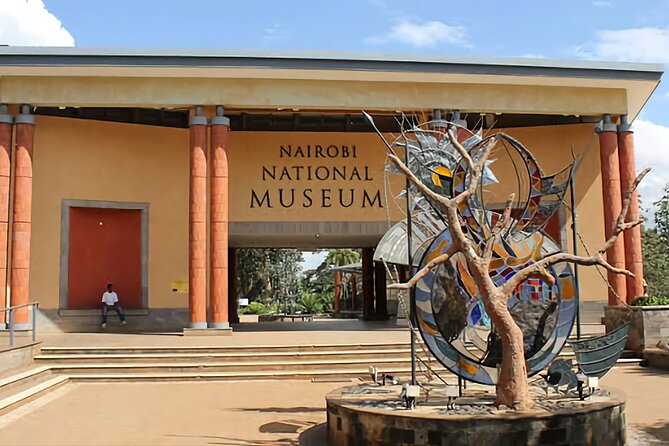
Nairobi National Museum: begin with Kenya’s many stories
The National Museum, on Museum Hill near the city center, is the strongest opening stop. Plan on about two hours. It gives you a useful base before the rest of the day moves into living culture and present-day Nairobi.
The collections cover Kenya’s cultural and natural heritage. You may see displays on the country’s different communities, archaeological material, wildlife, and human evolution. The museum is not only about national politics or colonial events. It also shows how people, animals, landscapes, and everyday objects have shaped Kenya.
One memorable object is Ahmed, the huge elephant protected around the clock by order of President Jomo Kenyatta during the poaching crisis of the 1980s. His preserved body gives the conservation story a personal scale. You can also find a Kalenjin cloak made from Sykes monkey skins and a map of Kenya assembled from butterfly wings. These unusual pieces make the museum more than a quick stop for photographs.
The quality of interpretation may depend on the person assigned to your group. A volunteer guide can add useful context, but you should not assume every museum guide will provide a full personal tour. One practical approach is to tell your main guide what interests you most before entering, then ask for help focusing your time.
KICC rooftop and the city center in 30 minutes
The Kenyatta International Conference Centre is one of Nairobi’s best viewpoints. The 28-storey building rises along Harambee Avenue in the City Square area, and its rooftop offers a broad view of the central business district and the city beyond.
This is a short stop, about 30 minutes, but it can be one of the day’s most rewarding moments. From above, Nairobi’s roads, office blocks, parks, and expanding edges make more sense. The view also helps you place the sites your guide points out during the drive and later walk through the central district.
The tour also includes Uhuru Park, where you can hear about its place in Kenya’s national story. From there, the route continues through the CBD and along streets connected with pre-independence Nairobi. This part is less about entering buildings and more about listening as your guide connects names, roads, government offices, and public spaces.
Keep your expectations realistic. Thirty minutes is enough for the rooftop and a short orientation, not a detailed walking tour of every central landmark. Traffic can also affect how much time you spend outside the vehicle. Still, the KICC view gives the city tour a clear visual anchor.
August 7th Memorial Park and a difficult chapter
The August 7th Memorial Park is listed as an optional stop and takes about 30 minutes. It occupies the former site of the United States Embassy, where the bombing on August 7, 1998, killed many people and affected countless others.
The memorial includes a museum honoring those who died and telling the stories of survivors. This is a solemn visit, not a light sightseeing break. It adds modern political and human context to a day otherwise focused on museums, crafts, architecture, and performance.
Admission is not included, so confirm the extra cost before choosing to enter. If your priority is traditional culture and local crafts, you may prefer to use the time elsewhere. If you want a fuller picture of Nairobi’s recent past, this optional stop adds weight and purpose to the day.
A few more Nairobi days to weigh up
- Nairobi National Park Half-Day Tour; Free Wi-Fi connection
★ 5.0 · 878 reviews - Nairobi: National Park & Optional Elephants & Giraffe Center
★ 4.8 · 874 reviews - NAI NAMI: Nairobi Storytelling Tour with Street Children
★ 5.0 · 792 reviews - Nairobi National Park Half-Day Game Drive
★ 4.5 · 738 reviews
Kobe Tough: watch beads take shape
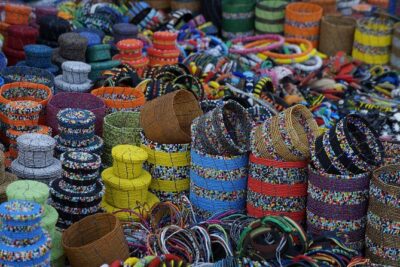
The visit to Kobe Tough beads and leather offers one of the most personal parts of the tour. You are shown the production process from its early stages through the finished bead or ceramic item. That hands-on look helps you understand the work behind the colorful objects sold in Nairobi’s shops.
The company was started by women who had previously worked at Kazuri Beads after that factory shut down during the pandemic. Kobe Tough gave them a way to keep earning and supporting their families. The center employs single mothers from a poorer neighborhood, so a purchase can connect directly to local livelihoods.
This stop lasts about 30 minutes and admission is free. It is not simply a retail stop. You see skills, labor, and small-business resilience. The pottery process was a particular highlight for one visitor, who found the way ceramic balls become finished objects especially interesting.
You should still treat the visit as a shopping opportunity as well as a demonstration. If you are not planning to buy anything, say so politely and focus on the making process. If you do want souvenirs, this is a good place to compare handmade pieces with the larger selection later at Utamaduni.
Utamaduni Craft Centre in Karen and Langata
Utamaduni Craft Centre occupies a converted Kikuyu house in Nairobi’s green Karen and Langata area. The building contains 18 shops, making it a compact place to browse African crafts, antiques, and art.
The setting changes the mood of the day. After the traffic and office towers in central Nairobi, you have time to walk through a garden setting and stop for refreshments at the restaurant. The staff can help pack or ship purchases, which is useful if you find something too large or fragile to carry through the rest of your trip.
The scheduled stop lasts about an hour. That is enough for a focused browse and a break, though not enough to inspect every object in detail. Prices and quality can vary from shop to shop, so take your time and ask questions before buying. You may also want to compare similar items with what you saw at Kobe Tough.
The center sits near several well-known Karen and Langata attractions, including the former farm of writer Karen Blixen. This tour does not include a visit to that house, so do not assume you will see it inside. The craft center is the actual destination here.
Bomas of Kenya: an energetic final stop
Bomas of Kenya takes about three hours and is the longest stop of the day. It is designed to preserve and present the cultural traditions of Kenya’s 53 ethnic communities through homesteads, folklore, and dance.
The performance program includes more than 30 traditional dances. Samburu and Maasai warrior performances are among the most striking, with movement, music, costumes, and group formations that make the presentation easy to follow even if you know little about Kenyan culture.
You also visit reconstructed homesteads that show different forms of traditional domestic life. This gives the performances a physical setting and helps you connect dance and music with the communities being presented. For a first visit to Kenya, Bomas offers a broad introduction in a short time.
There is a tradeoff. A staged cultural show is not the same as meeting people in their homes or attending a community celebration. Bomas presents selected traditions for an audience, so you should see it as an educational performance rather than an unfiltered slice of daily life.
The schedule can also feel tight. One person found the homestead portion rushed, and the company acknowledged the concern. If this stop matters most to you, tell your guide early that you want enough time for both the show and the village area. Lunch is optional and available for purchase before continuing to Bomas.
How the day feels on the road
Pickup and drop-off at your hotel or residence are included, along with private transport and bottled water. That makes the day easier than arranging separate taxis between Museum Hill, the CBD, the craft centers, and Langata.
The tour lasts about eight hours, but Nairobi traffic can shape the experience. You may spend part of the day moving between sites rather than walking from one attraction to the next. This is useful for covering ground, but it also means you should wear comfortable shoes for museum paths, the KICC visit, craft browsing, and the Bomas grounds.
The tour is private, yet some individual sites may provide their own guide or orientation. At the museum, for example, you might be paired with a local volunteer. Your main driver-guide remains important because that person can explain the city between stops, point out landmarks, and help manage the day.
Kelvin, Denish, Dennis, and Faith are the guide names connected with the experience. The strongest descriptions emphasize punctual pickups, kindness, clear explanations, and flexibility. One particularly useful detail is that Kelvin introduced Kenyan food and beer at a local lunch stop. Lunch itself is not included, so ask your guide for a recommendation if you want a local meal.
What the $95 cost really buys
At $95 per person, the value depends heavily on group size and your Nairobi plans. For a private group, the cost covers transport, hotel pickup and return, water, and three main admissions. You also receive a full day of city orientation without having to negotiate several separate rides.
The included entry fees are important. The National Museum provides the strongest historical foundation, KICC supplies the city view, and Bomas delivers the main cultural performance. Kobe Tough and Utamaduni are free to enter, though both can tempt you to spend more on crafts.
The price does not cover lunch, tips, or the August 7th Memorial Park. Carry room in your budget for food and purchases. If you want a low-cost museum day with lots of independent time, this is not the cheapest option. If you have limited time and want a driver, a local interpreter, and several different sides of Nairobi in one day, the price makes more sense.
Who should book this Nairobi day tour
I would choose this tour for a first day in Nairobi, a short stop before safari, or a private family outing where convenience matters. It suits you if you want a mixture of history, views, crafts, conservation, and performance instead of spending the entire day in one museum.
It is also a good fit if you want direct contact with local makers. The Kobe Tough visit offers more social context than a standard souvenir shop, while Utamaduni gives you a wider range of objects and a comfortable place to pause.
I would hesitate if you prefer slow travel. Eight hours can feel packed, and Bomas in particular may not leave as much time as you want for every homestead. The optional memorial is serious and may not suit anyone looking for a purely cheerful introduction to the city.
Book at least a day ahead if plans change easily, since cancellations are free up to 24 hours before the start time. Poor weather can lead to a new date or full refund, and the experience requires suitable weather.
Should you book it?
Yes, if you want an efficient and friendly introduction to Nairobi with the comfort of private transport. The best parts are the National Museum, the KICC rooftop, and the Kobe Tough workshop, while Bomas gives you the biggest cultural payoff in the afternoon.
Go in with the right expectations: this is a broad sampler, not a slow scholarly tour. Ask for more explanation at the museum, protect enough time at Bomas, and decide in advance how much shopping you want. With those points in mind, the tour offers a useful first chapter in your Kenyan trip.
FAQ
How long does the Nairobi cultural and historical tour last?
The experience lasts approximately eight hours.
Is hotel pickup included?
Yes. Pickup and drop-off at your hotel or residence are included.
Is this a private tour?
Yes. Only your group participates in the private activity.
Which admissions are included?
Admission to Bomas of Kenya, the Nairobi National Museum, and the Kenyatta International Conference Centre is included.
Is lunch included?
No. Lunch is available for purchase and is not included in the tour price.
Is the August 7th Memorial Park included?
The memorial park visit is optional, and its admission ticket is not included.
Can I cancel for a full refund?
Yes. You can cancel at least 24 hours before the experience start time for a full refund. Cancellations or changes made less than 24 hours before the start time are not accepted for a refund.
More Historic Sites near Nairobi
- Nairobi: Historic and Modern Highlights Walking Tour
★ 4.8 · 703 reviews - Full Day Nairobi Cultural and Historical Tour
★ 5.0 · 153 reviews - Nairobi souvenir Shopping and Historical Half day Tour
★ 5.0 · 61 reviews - Nairobi History and Modern Culture 3 Hours Tour
★ 4.5 · 31 reviews
Just added around Nairobi
- Visit kibera Slum the chocolate city★ 4.8 · 3 reviews
- 4 Days Safari to Lake Nakuru N/P and Maasai Mara N/R★ 5.0 · 18 reviews
- Maasai Mara Day Trip★ 5.0 · 15 reviews
- 3 days maasai mara migration safari★ 4.5 · 7 reviews
- 4 Days Tour Landcruiser in Masai Mara and Lake Nakuru★ 5.0 · 10 reviews
- Kibera Slum Tour with a Local★ 5.0 · 15 reviews
- Wildebeest Migration in Masai Mara and Sightseeing 4 Days Tour★ 4.5 · 6 reviews
- Day Tour to Nairobi national park, Elephants, and Giraffe Center★ 3.5 · 8 reviews
Historical Tours, compared.


Nairobi souvenir Shopping and Historical Half day Tour
Read our review →

Half-Day Cultural Tour to Bomas of Kenya in Nairobi
Read our review →

Nairobi City: Walking tour with Lifestyle and History.
Read our review →Browse the lists this tour appears in