
Reviewed · MUSEUMS
Half Day – Nairobi City Walking/Bus Tour Museums, Monuments & Rooftop City View
Nairobi comes into sharper focus when you leave the tour vehicle behind and ride a matatu, Kenya’s shared minibus, through the city. This experience links local transport with the National Archives, Railway Museum, downtown monuments, and a 360-degree view from the Kenyatta International Conference Center.
I like the small group of seven or fewer, which should make it easier to ask questions and keep the walk personal. I also like the mix of formal museums and ordinary city movement. The main consideration is stamina: five to seven hours of walking, public transport, and sightseeing calls for a moderate level of fitness, and the three attraction tickets cost an extra $11.
Key points about this Nairobi tour
- Ride Nairobi’s colorful matatus: Travel on shared minibuses decorated with musicians, athletes, political figures, religious themes, and pop culture images.
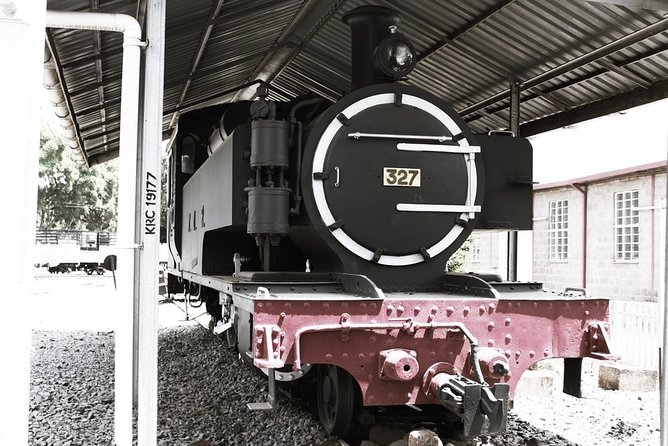
- See two compact museums: The National Archives covers art, cultural objects, and independence, while the Railway Museum explains how railways shaped Kenya.
- Reach the KICC rooftop: Look across central Nairobi from a rooftop that also serves as a helipad.
- Keep the group personal: A maximum of seven people gives the guide room to tailor the walk and answer questions.
- Budget for added admissions: The $61 tour price does not include $3 for the National Archives, $3 for the Railway Museum, or $5 for the KICC.
- Start and finish centrally: Meet at the National Archives on Moi Avenue at 8:30 AM and return to the same meeting point.
Why this tour gives you a better first look at Nairobi
Nairobi can be hard to read at street level. Government buildings, shops, traffic, office towers, museums, and public transport all crowd into the same central area. A guided walk helps you connect those pieces instead of seeing them as separate stops.
This tour also avoids the usual pattern of sitting in a private vehicle for hours. You walk through central Nairobi, then ride the same kind of shared minibus used by local residents. That makes the day feel closer to daily city life, even though the route still includes major sights.
The guide is an important part of the experience. A published account describes the guide as a pleasant young man with a strong grasp of the area, especially on a walk through parts of central Nairobi away from the standard sightseeing circuit. No guide name is provided, so you should not expect a named specialist when booking. You can expect a guide-led introduction rather than a self-guided museum visit.
The group limit matters here. With no more than seven people, you should have a fair chance to hear the explanations, ask about buildings you pass, and stay together during the matatu rides. It is a better setup for conversation than a large coach tour.
More City Tours in Nairobi
- Nairobi Historical Walking City Tour
★ 5.0 · 258 reviews - Nairobi City Walking Tour with Traditional Kenyan Lunch
★ 5.0 · 106 reviews - Nairobi Cultural and Historical City Tour with a Local
★ 5.0 · 67 reviews
Starting at the National Archives on Moi Avenue
The day begins at 8:30 AM outside the National Archives, at 30 Moi Avenue. This is both the meeting point and the first attraction, so you do not need to travel to a separate departure terminal.
The National Archives is a useful opening stop because it gives you cultural and political context before you move around the city. Inside, you can expect paintings and photographs from across Africa, along with tribal weapons, musical instruments, masks, and other objects.
The museum also covers Nairobi’s development and Kenya’s struggle for independence. Those exhibits help explain why the capital looks and feels the way it does today. I would allow your attention to move between the objects and the historical displays rather than treating this as a quick photo stop.
The planned visit lasts about one hour. Admission is not included, and the listed cost is $3. That is a modest extra charge, but it is worth remembering that the advertised price is not the full cost of the day.
The National Archives is described as little visited, which may appeal to you if you prefer quieter museums over heavily promoted attractions. It may also feel less polished than a major national museum. That is part of the point: you are getting a focused look at material tied to Kenya and Africa rather than a broad, highly packaged sightseeing experience.
Riding Nairobi’s matatus to Kasarani
After the Archives, the tour shifts from museum displays to city life. You take a two-way ride on a matatu, Kenya’s familiar shared minibus. The scheduled portion lasts about two hours, making it the longest single part of the experience.
Matatus are not plain commuter vans. Their designs can feature hip-hop artists, international pop stars, athletes, political figures, and religious images. The description compares them to rolling local radio stations, a good way to understand their visual character. You will see how public transport can also express taste, identity, and popular culture.
The matatu ride is the most distinctive feature of this tour. Many city sightseeing programs show you Nairobi from behind glass. This one asks you to use the city’s public transport and pay attention to how the capital moves.
The practical side deserves equal attention. A matatu ride is shared transport, not a private transfer. You may need to board and leave the vehicle with reasonable ease, remain alert to the group’s movements, and accept that the ride may feel less controlled than a dedicated tour van. The itinerary lists the ticket as free, but it does not explain the exact route or the specific departure and return points within the ride.
Kasarani is listed as the stop connected with this section, but no separate attraction or admission charge is given there. Think of this part as a transport and street-level culture experience rather than a museum visit. It gives your guide a chance to explain Nairobi as you move through it, while you see the city from a local vehicle.
Reading Kenya’s railway story at the Railway Museum
The Nairobi Railway Museum follows the matatu ride and lasts about 45 minutes. It is a short visit, but the subject is central to Kenya’s growth.
The museum presents the development of Kenya Railways and explains how the railway helped shape the country and Nairobi itself. That makes this more than a collection of old transport objects. It gives you a way to understand why Nairobi developed as a major center and how rail connections influenced the country’s expansion.
The visit should suit you if you enjoy seeing the machinery and infrastructure behind a country’s story. It is also a useful contrast with the National Archives. The Archives focuses more on culture, art, political change, and independence. The Railway Museum focuses on transport and national development.
Admission is separate and listed at $3. The planned 45 minutes means you will receive an introduction rather than an exhaustive examination of every exhibit. If rail history is your main interest, you may wish you had longer. If you want a compact city tour with several themes, the limited time keeps the day moving.
More Walking Tours in Nairobi
- Nairobi: Historic and Modern Highlights Walking Tour
★ 4.8 · 703 reviews - Nairobi Downtown Walking Tour
★ 4.7 · 208 reviews - Nairobi Walking Tour: Downtown & City Tour
★ 4.8 · 32 reviews - Day tour to Hells Gate, Lake Naivasha and Crescent Island Walk
★ 5.0 · 26 reviews
Looking across Nairobi from the KICC rooftop
The final stop is the rooftop of the Kenyatta International Conference Center. The viewing area also functions as a helipad, giving you a high position above central Nairobi.
The listed visit lasts about 30 minutes. From there, you can see the central business district in all directions, including major buildings such as the Office of the President and Kenya’s Parliament. This is the clearest visual payoff of the tour. After spending the day at street level, you get a broad view that helps you understand the shape of downtown.
The $5 entry fee is not included. It is another small charge, but together the separate admissions add up:
- National Archives: $3
- Nairobi Railway Museum: $3
- KICC rooftop: $5
- Total additional entry fees: $11
At $61 per person, the realistic tour cost is about $72 before any other personal spending. That price is reasonable if you value a guide, a small group, several admissions, and the matatu experience. It is less attractive if you mainly want a quick city drive or a single viewpoint.
The rooftop visit is weather dependent in a practical sense, since clear conditions make the view more useful. The supplied details do not promise a specific level of visibility, so treat the KICC stop as a planned viewing opportunity rather than a guarantee of perfect photos.
How the timing works across five to seven hours
The listed stops add up to roughly four hours and 15 minutes:
- National Archives: one hour
- Matatu ride and Kasarani section: two hours
- Railway Museum: 45 minutes
- KICC rooftop: 30 minutes
The full experience lasts about five to seven hours. The difference comes from movement between stops, boarding public transport, walking, and the pace of the group. You should keep the morning and early afternoon open rather than scheduling a tight follow-up activity.
Starting at 8:30 AM gives you an early beginning in central Nairobi. The tour ends back at the National Archives meeting point, which is useful if you need to return to a nearby hotel or continue exploring downtown on your own.
This is not a sit-back-and-watch activity. You will walk, ride public transport, enter museums, and move between different parts of the city. Wear practical shoes and bring water. The official requirement is a moderate level of physical fitness, which is a fair warning for anyone who finds extended walking or getting on and off shared minibuses difficult.
What the $61 price really covers
The price includes the guiding fee, but not admission to the three main paid attractions. That distinction is easy to miss when comparing tours.
For $61, you are paying mainly for the guide’s time, the planned route, the small-group format, and the local transport component. The additional $11 brings the known total to $72 per person. Group discounts are available, though no discount amount is specified.
I see the strongest value in the combination of experiences. A museum-only visit would give you objects and displays. A viewpoint-only visit would give you photographs. A standard city drive would give you a quick overview. This tour ties together cultural history, public transport, rail development, city landmarks, and a rooftop view.
The value is weaker for someone who prefers private transport, a slow museum visit, or a tightly scheduled half-day. The two-hour matatu section takes up a large share of the day, so you should book this because that sounds interesting, not because you want to avoid public transport.
Who will get the most from this city walk
I would recommend this experience to a first-time visitor who wants a guided introduction to central Nairobi and does not mind walking. It should also suit repeat visitors who have already seen the standard sights and want a closer look at transport, museums, and city streets.
It is a good fit for you if:
- You want to understand Nairobi through both history and everyday movement.
- You prefer a group capped at seven people.
- You enjoy public transport and do not need a private vehicle.
- You want several different stops in one outing.
- You have moderate fitness and can handle a five-to-seven-hour program.
- You like guides who explain the city as you walk, not just point out buildings from a bus.
It may not suit you if you need a private, quiet, or highly flexible day. The itinerary does not promise hotel pickup, and the meeting point is at the National Archives on Moi Avenue. It also does not include lunch, personal purchases, or the three attraction tickets.
The tour is near public transportation, which makes reaching the start point easier, but the details do not state that transport to the meeting point is included. Plan to arrive before 8:30 AM.
Booking, cancellation, and small practical details
Confirmation is provided when you book. The experience accepts mobile tickets, and group discounts are offered.
You can cancel for a full refund up to 24 hours before the scheduled start time. Cancellations made less than 24 hours before the start are not refunded, and changes within that period are not accepted. The cutoff follows local Nairobi time.
The operator is Expedition Happy Hour. Since the experience ends where it begins, you can make a simple plan around the National Archives rather than arranging a separate end point.
Should you book this Nairobi experience?
Book it if you want Nairobi explained at street level, with a real matatu ride, two small museums, and a rooftop view in one day. The small group and the guide’s personal approach are the strongest reasons to choose it, while the city walk away from the usual sightseeing route gives the experience a more local feel.
Skip it if you want a private vehicle, minimal walking, or a quick two-hour overview. Also remember to add $11 for admissions, bringing the known total to about $72. For an active introduction to Nairobi that combines history, transport, and city views, this is a useful and fairly priced choice.
FAQ
Where does the Nairobi tour start?
The tour starts at the Nairobi National Archives, located at 30 Moi Avenue in Nairobi.
What time does the tour begin?
The start time is 8:30 AM.
Where does the tour end?
The activity ends back at the National Archives meeting point.
How large is the tour group?
The group has a maximum of seven people.
Are attraction admission fees included?
No. The National Archives costs $3, the Nairobi Railway Museum costs $3, and the Kenyatta International Conference Center costs $5. These fees are paid separately.
Can I cancel for a full refund?
Yes. You can cancel at least 24 hours before the experience start time for a full refund. Cancellations or changes made less than 24 hours before the start are not accepted, and the amount paid is not refunded.
More Guided Walks
- Nairobi: From Nairobi-Karura Forest Guided Walking Tour
★ 5.0 · 21 reviews - Nairobi: Hidden Gems and Local Secret Guided Walking Tour
★ 4.9 · 20 reviews - Historical City Walk Tour in Nairobi
★ 5.0 · 19 reviews - Nairobi City: Walking tour with Lifestyle and History.
★ 4.9 · 17 reviews
More Museums in Nairobi
- Day tour to Giraffe Center and Karen Blixen Museum
★ 4.5 · 168 reviews - Nairobi National Park,Giraffe Centre, Karen Blixen Museum.
★ 5.0 · 127 reviews - Giraffe Center and Karen Blixen Museum Tour from Nairobi
★ 4.6 · 43 reviews - Nairobi National Park, Giraffe Center & Karen Blixen Museum
★ 4.5 · 42 reviews
Just added around Nairobi
- Visit kibera Slum the chocolate city★ 4.8 · 3 reviews
- 4 Days Safari to Lake Nakuru N/P and Maasai Mara N/R★ 5.0 · 18 reviews
- Maasai Mara Day Trip★ 5.0 · 15 reviews
- 3 days maasai mara migration safari★ 4.5 · 7 reviews
- 4 Days Tour Landcruiser in Masai Mara and Lake Nakuru★ 5.0 · 10 reviews
- Kibera Slum Tour with a Local★ 5.0 · 15 reviews
- Wildebeest Migration in Masai Mara and Sightseeing 4 Days Tour★ 4.5 · 6 reviews
- Day Tour to Nairobi national park, Elephants, and Giraffe Center★ 3.5 · 8 reviews
Museums, compared.

Day tour to Giraffe Center and Karen Blixen Museum
Read our review →
Nairobi National Park,Giraffe Centre, Karen Blixen Museum.
Read our review →
Giraffe Center and Karen Blixen Museum Tour from Nairobi
Read our review →
Nairobi National Park, Giraffe Center & Karen Blixen Museum
Read our review →

Karen Blixen Museum & Giraffe Centre Half day tour
Read our review →

Mombasa City Tour: Fort Jesus Museum, Old Town & Haller Park
Read our review →Browse the lists this tour appears in