
Reviewed · HISTORICAL TOURS
Go Granny Go – An Amazing Cultural Tour in Kenya
The heart of this Nairobi day trip is not a monument or wildlife sighting. It is a face-to-face visit with Kikuyu grandmothers who lead their families and communities, raise grandchildren, and earn money through pig farming. You get time to talk, help with simple chores if you wish, and share a meal.
I like the small group limit of nine, which gives this meeting a more personal feel than a large bus excursion. I also like that lunch and tea are part of the visit, since sitting down together leaves room for the unhurried talk that makes cultural trips worthwhile.
The main consideration is the price: $265 per person is a serious sum for six and a half hours. You are paying for private round-trip transport, a small group, food, and support for a community program, but this is not the right choice if you want a low-cost sightseeing tour or a full day of major Nairobi landmarks.
Key points to know before booking
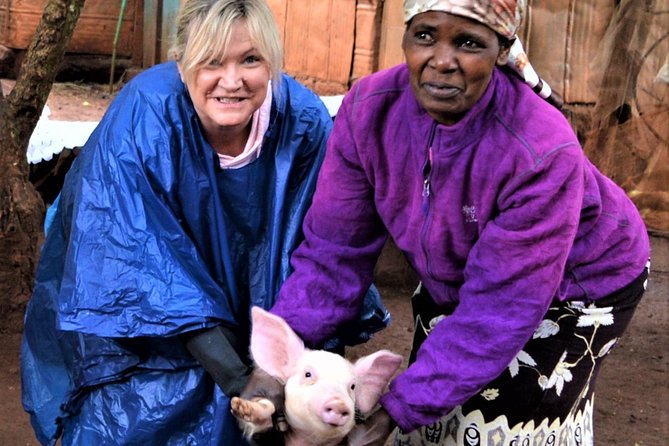
- Meet Kikuyu grandmothers near Nairobi: Hear directly about family care, community leadership, and daily life.
- See a working pig-farming project: The program gives grandmothers a way to earn income to support their families.
- Join in, but only if you want: You may help with farm chores and take part in singing.
- Share lunch and tea together: The meal creates time for conversation rather than a quick photo stop.
- Keep the group intimate: A maximum of nine people makes it easier to ask questions and build rapport.
- Plan for a 9:30 a.m. start: Hotel pickup and drop-off are offered, with the full outing lasting about six and a half hours.
Why this village visit matters
This experience puts family life at the center. In many Kikuyu families, grandmothers may raise grandchildren when the parents can no longer do so. The demands can be severe. As many as 20 relatives may live in a grandmother’s one-room corrugated iron home, while money for food and household needs remains tight.
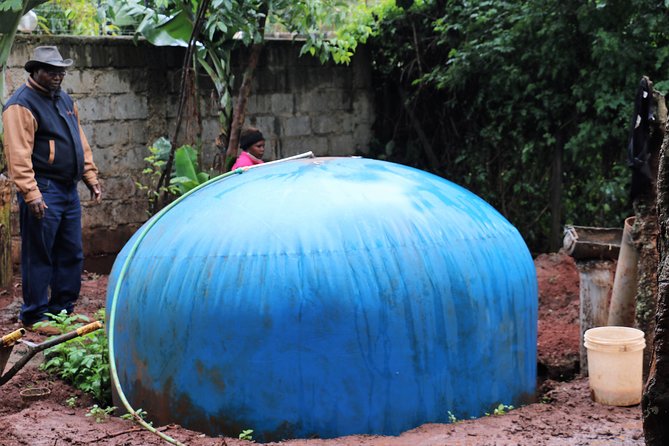
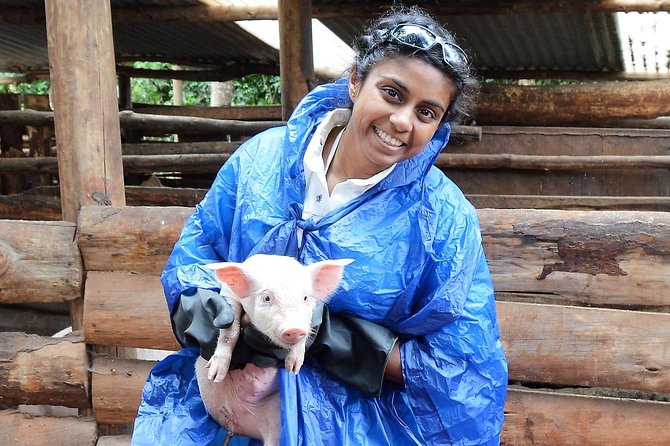
That context changes how you see the farm visit. The pigs are not a staged attraction added for tourists. They are part of a small-business program supported by One Horizon, designed to give women a steadier source of income through pig husbandry. You will see the practical side of that work, not just hear an abstract talk about development.
I appreciate this direct connection between the visit and the community program. Your fee does not simply buy a performance or a meal. It helps support an activity intended to help grandmothers feed their families and reduce financial pressure. Still, it is wise to arrive with respect. You are entering a working community, not a theme park.
The most meaningful moments may come in ordinary conversation. You can ask about caring for grandchildren, the responsibilities of extended families, and how the pig project fits into daily life. The information provided does not name the individual guides, but the visit is led through the local community and includes a manager and assistant who help organize the program.
A few more Nairobi days to weigh up
- Nairobi National Park Half-Day Tour; Free Wi-Fi connection
★ 5.0 · 878 reviews - Nairobi: National Park & Optional Elephants & Giraffe Center
★ 4.8 · 874 reviews - NAI NAMI: Nairobi Storytelling Tour with Street Children
★ 5.0 · 792 reviews
From Nairobi to the Ngong Hills area
The outing begins at 9:30 a.m., with pickup offered from your hotel. The precise pickup window and route are not specified, so confirm those details when booking and leave a little flexibility in your morning. Round-trip transfer is included, which is useful in Nairobi, where arranging transport for a village visit can otherwise add cost and hassle.
The experience is associated with Ngong Hills, but the main activity described is a Kikuyu village near Nairobi. Do not book this expecting a dedicated hike or a long sightseeing stop on the hills. The important destination is the community and its farm program.
The total duration is about six hours and 30 minutes. One part of the visit is listed as four hours, so much of the day is set aside for time with the grandmothers rather than a rushed sequence of stops. That is a strength if you want conversation. It may feel slow if you prefer constant movement.
A mobile ticket is available, and confirmation is received at booking. Most people can participate, and service animals are allowed. The maximum group size is nine, a useful detail to check if you dislike large organized outings.
Meeting the grandmothers in their community
The welcome is the main event. You meet grandmothers who are family carers, community leaders, and participants in the pig-farming project. The focus is on their lives and responsibilities, so you should expect personal stories and conversation rather than a formal lecture packed with dates and names.
The family details give the visit its weight. A grandmother supporting children and grandchildren may have to stretch limited resources across a large household. Learning about that reality from the women involved is far more useful than seeing poverty presented from a distance.
You may hear how the community works, how family duties are shared, and how the women have faced hard circumstances. One account describes the program as helping women who have endured a great deal and are trying to break a cycle of poverty for themselves and their families. That is a powerful aim, but it also means some stories may be difficult to hear.
Go gently with questions. Ask about the women’s work, the farm, and family life rather than pressing for painful personal details. Let the conversation set the pace. The best cultural exchange is a two-way meeting, not an interview where you collect dramatic stories.
The welcome also includes singing. Joining in is optional, so you can participate if it feels natural or simply listen. Either approach is fine. A little willingness to sing, laugh, and help can make the meeting warmer, but you are not required to perform.
Seeing the pig farm and trying the chores
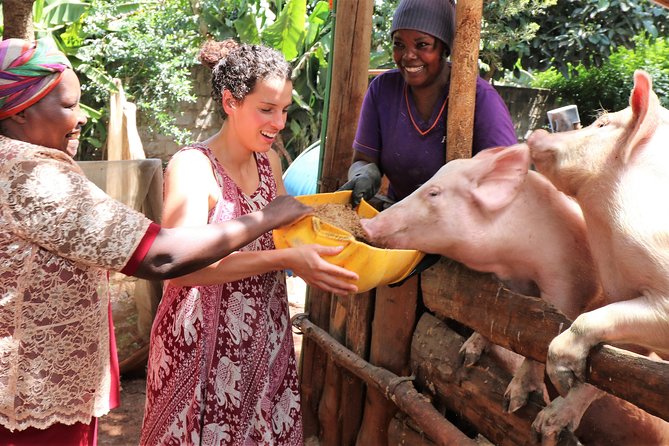
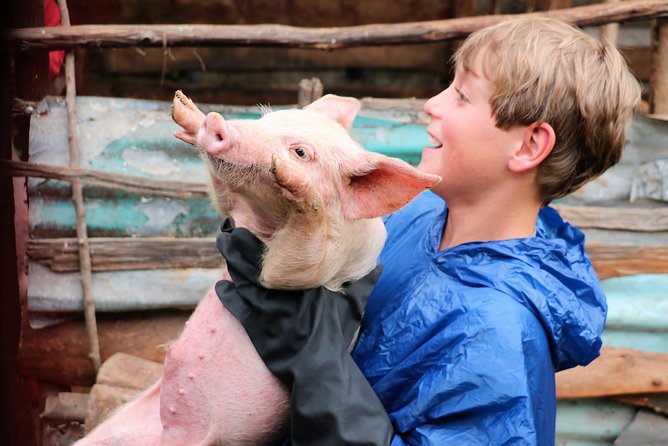
The pig farm gives the visit a clear, practical focus. You are shown around the operation and may pitch in with chores if you like. Since the pigs support a small-business program, the farm is a place to understand how income is generated, not merely an animal stop.
Hands-on work can be rewarding because it helps you see the effort behind the project. You may gain a better sense of the daily tasks involved in pig husbandry and why a reliable source of income matters to a large household. The supplied information does not list the exact chores, so do not expect a fixed demonstration or a detailed farming lesson.
Participation is optional. That matters for anyone who is uncomfortable around farm animals, has limited mobility, or simply prefers conversation. You can still take part in the visit without handling tools or animals.
This is also where practical clothing helps. The tour details do not specify a dress code, but a community farm is not the place for delicate shoes or clothing you cannot get dirty. Wear something comfortable for a rural visit and choose footwear you can manage for several hours. That is common-sense preparation rather than a special requirement.
More historic sites near Nairobi:
- Nairobi: Historic and Modern Highlights Walking Tour
★ 4.8 · 703 reviews - Nairobi Historical Walking City Tour
★ 5.0 · 258 reviews - Full Day Nairobi Cultural and Historical Tour
★ 5.0 · 153 reviews - Nairobi Cultural and Historical City Tour with a Local
★ 5.0 · 67 reviews
Lunch, tea, and the value of lingering
Lunch and tea are included, and they are more than convenient extras. A shared meal gives you time to sit with the grandmothers after seeing the farm. Conversation often feels easier over food than during a formal introduction.
I like this part of the design because it avoids the quick in-and-out pattern common on cultural outings. You can continue asking questions, reflect on what you have heard, and spend time with the people who welcomed you. The meal also gives the day a natural pause before the return to Nairobi.
The menu is not specified, so contact the provider if you need information about particular dietary needs. Do not assume that every preference can be accommodated unless One Horizon Africa confirms it. Tea is included, but the details of other drinks are not given.
The lunch setting may be simple. That is part of the point. This is a community visit built around people and conversation, not a restaurant meal with polished service. If you need a formal dining experience, this will not be the selling point. If you value time at the table, it is one of the strongest features.
How the small group changes the experience
With no more than nine people, you should have a better chance to speak directly with the grandmothers and ask follow-up questions. A small group also makes optional singing and farm chores less awkward. You can join in without feeling as if you are performing for a crowd.
The group size does not guarantee a private tour. Other participants will be present, and the mood will depend partly on how willing everyone is to listen and participate. Still, nine is far more manageable than a coachload, especially when the main activity is conversation.
A small group can also make sensitive subjects easier to handle. The women’s stories concern family pressure, poverty, and responsibility. A quieter setting gives you room to listen without the constant noise and movement of a large excursion.
If you are traveling alone, this format offers a simple way to meet other people while still having a focused cultural experience. Couples and families may also appreciate the relaxed pace. Children are not specifically discussed in the tour information, so families should confirm age suitability before booking.
What the $265 price includes in practical terms
At $265 per person, this is not a bargain in the ordinary sightseeing sense. The fee makes more sense when you count the elements together: hotel pickup and drop-off, roughly six and a half hours of time, a maximum group of nine, lunch, tea, and access to a community-led visit that supports a pig-farming income program.
You are also paying for an experience that is difficult to arrange independently. Finding a village program, arranging safe transport, identifying the right local contacts, and organizing a respectful meeting would take time and may not produce the same access. The provider, One Horizon Africa, handles that structure.
Value depends on what you want from Nairobi. If your priority is seeing many attractions in one day, $265 will feel high because this outing focuses on one community. If you want personal contact and a closer look at how a local income project works, the price is easier to defend.
I would compare it with the cost of a private Nairobi excursion rather than with the price of a museum ticket. The included transfer and meal add real convenience, while the small group keeps the visit from feeling mass-produced. Even so, you should book because the human connection and community support matter to you, not because you expect a long list of sights.
Who will get the most from this day
This tour suits you if you want cultural contact that is based on conversation and participation. It is a good match for people who enjoy listening, asking thoughtful questions, and seeing how a modest business project fits into family life.
It may also suit you if wildlife is already part of your Kenya plans. One account describes meeting the women and their families as a highlight alongside seeing wildlife for the first time. That comparison is useful: the experience offers a different kind of connection, one based on people rather than animals or scenery.
You may want to choose another outing if you need a packed schedule, a formal historical tour, or a major landmark at every stop. The main rewards here are personal stories, shared food, farm work, and time spent with the community.
The tour is also a reasonable choice for visitors who want hotel pickup. Nairobi transport can take planning, and round-trip service removes one of the day’s practical chores. The exact pickup area is not stated, so confirm that your hotel is covered before paying.
A respectful way to prepare
Come ready to listen more than you speak. The grandmothers are sharing their community and their time, and the strongest exchange will be built on courtesy. Ask open questions, avoid treating hardship as a spectacle, and accept that some subjects may be personal.
Bring a phone or camera only if photography is appropriate and welcomed. The supplied details do not state a photo policy, so ask before taking pictures of people, homes, children, or farm activities. A polite request is especially important in a close community visit.
Keep your expectations clear. You will learn about Kikuyu culture from community leaders, see the pig-farming work, and have time for lunch and tea. You are not promised a full cultural history course, a named celebrity guide, a wildlife sighting, or a hike through Ngong Hills.
The tour is confirmed at booking, and a mobile ticket is available. You can cancel for a full refund if you do so at least 24 hours before the 9:30 a.m. start. Changes or cancellations made within 24 hours are not accepted for a refund, with cut-off times based on local time.
Should you book Go Granny Go?
Book it if you want a small, people-focused day near Nairobi and you are willing to pay for time, access, transport, and community support. The combination of grandmothers’ stories, a working pig project, optional chores, singing, lunch, and tea gives the outing a clear purpose.
Skip it if you are mainly looking for low-cost sightseeing or a full Ngong Hills excursion. The $265 price is substantial, and the day’s value comes from the quality of the meeting rather than the number of attractions.
For the right person, this can be one of the most affecting additions to a Kenya itinerary. You leave with a better view of how family care, women’s work, and small business connect in one Kikuyu community. That is a strong reason to make room for it.
FAQ
Where does the Go Granny Go tour take place?
The tour visits a Kikuyu village near Nairobi and is associated with the Ngong Hills area.
What time does the tour start?
The stated start time is 9:30 a.m.
How long does the experience last?
The full experience lasts approximately six hours and 30 minutes.
Is hotel pickup included?
Yes. Hotel pickup and drop-off are offered as part of the experience.
How many people can join the tour?
The maximum group size is nine people.
What is included with the visit?
The experience includes round-trip transfer, lunch, and tea. You also meet Kikuyu grandmothers, visit a pig farm, and may join optional chores and singing.
Is the pig-farming activity optional?
Yes. You may pitch in with farm chores if you wish, but participation is not required.
Are guide names provided?
No individual guide names are provided. The program is operated by One Horizon Africa, with a manager and assistant involved in organizing the visit.
Can service animals join the tour?
Yes. Service animals are allowed.
What is the cancellation policy?
You can cancel at least 24 hours before the local start time for a full refund. Cancellations or changes made less than 24 hours before the start are not accepted for a refund.
Just added around Nairobi
- Visit kibera Slum the chocolate city★ 4.8 · 3 reviews
- 4 Days Safari to Lake Nakuru N/P and Maasai Mara N/R★ 5.0 · 18 reviews
- Maasai Mara Day Trip★ 5.0 · 15 reviews
- 4 Days Tour Landcruiser in Masai Mara and Lake Nakuru★ 5.0 · 10 reviews
- 3 days maasai mara migration safari★ 4.5 · 7 reviews
- Kibera Slum Tour with a Local★ 5.0 · 15 reviews
- Wildebeest Migration in Masai Mara and Sightseeing 4 Days Tour★ 4.5 · 6 reviews
- Day Tour to Nairobi national park, Elephants, and Giraffe Center★ 3.5 · 8 reviews
Historical Tours, compared.

Nairobi Cultural and Historical City Tour with a Local
Read our review →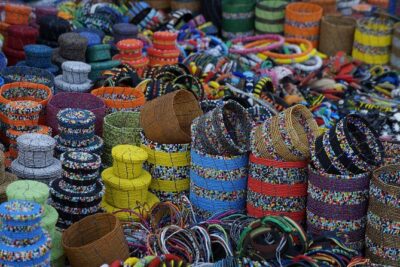
Nairobi souvenir Shopping and Historical Half day Tour
Read our review →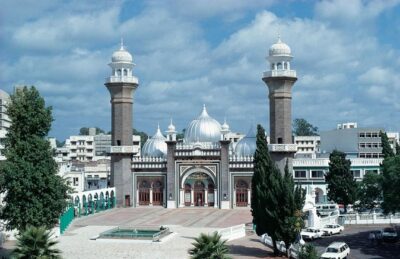
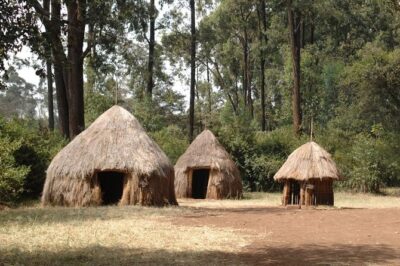
Half-Day Cultural Tour to Bomas of Kenya in Nairobi
Read our review →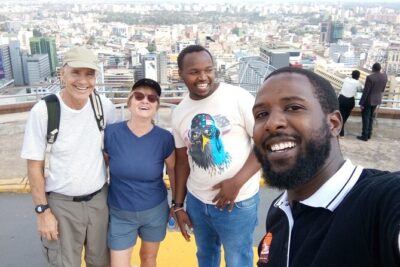
Browse the lists this tour appears in