
Reviewed · COOKING CLASSES
Private Kenyan Cooking Class in Nairobi with a Local
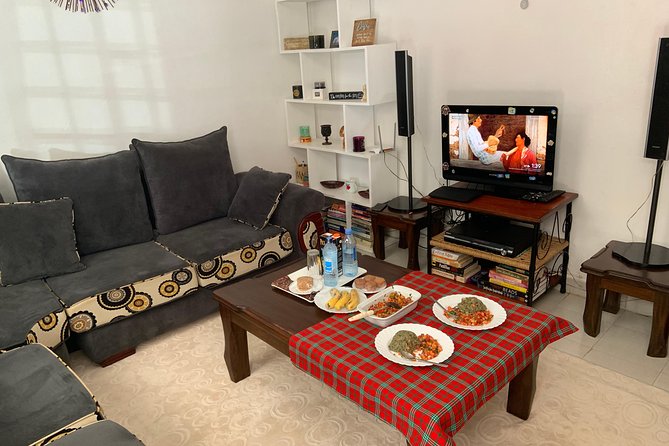
The best part of this Nairobi experience is not a polished cooking studio. It is Grace’s home kitchen, where Kenyan food comes with family stories, practical tips, and a seat at the table. You learn how everyday dishes such as mukimo, ugali, pilau, and local vegetables fit into home life.
I like the chance to eat with a local family after the cooking, and I like that the recipes use familiar pantry basics you can try back home. The main thing to consider is the small kitchen: this is partly a cooking demonstration, not a full class where you control every step.
Key points
- Grace’s Nairobi home: Meet your host in a real household rather than a restaurant or formal school.
- Kenyan comfort food: Learn about mukimo, ugali, pilau, and local vegetables.
- Small-group setting: This is a private activity for only your own party.
- A meal at the end: Sit down together and eat what has been prepared.
- Mostly demonstration-based: Kitchen space is limited, though you can help when possible.
- Three-hour experience: The cooking portion is described as about one hour within an activity lasting roughly three hours.
A Kenyan meal begins in Grace’s kitchen
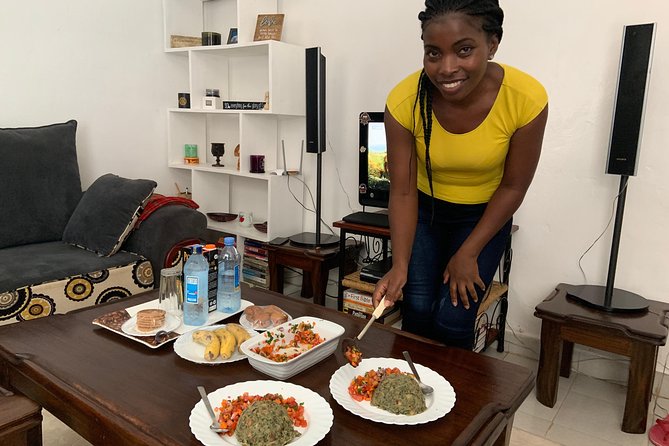
This experience gives you a close look at home cooking in Nairobi without putting you behind the glass of a restaurant kitchen. You meet Grace, enter her modestly sized kitchen, and watch her prepare a traditional meal while explaining the food, methods, and family customs behind it.
That setting matters. Kenyan cooking is not only about ingredient lists and cooking times. It is also about the dishes families make for one another, the ways recipes change from household to household, and the memories tied to food. Grace’s stories about her grandmother, who is more than 100 years old, add a personal thread to the meal.
You should arrive ready for conversation, questions, and a slower kind of sightseeing. This is not a city tour with a long list of stops. The focus stays on one home, one host, and the food being prepared in front of you.
The booking is private, so only your own group participates. That makes it easier to ask about ingredients, family traditions, and the differences between Kenyan dishes without having to compete with a large class.
A few more Nairobi days to weigh up
- Nairobi National Park Half-Day Tour; Free Wi-Fi connection
★ 5.0 · 878 reviews - Nairobi: National Park & Optional Elephants & Giraffe Center
★ 4.8 · 874 reviews - NAI NAMI: Nairobi Storytelling Tour with Street Children
★ 5.0 · 792 reviews
What happens during the roughly three-hour visit
The experience starts at 11:00 a.m. in Nairobi and ends back at the meeting point. The full activity lasts about three hours, while the cooking demonstration itself is described as lasting about one hour.
The timing leaves room for more than simply watching food go into a pot. You should expect time at the home, conversation with Grace, preparation of the dishes, and a shared meal afterward. The exact flow may depend on the menu and the pace of the household, but the central pattern is clear: meet, cook, talk, and eat together.
The food is prepared from scratch. That is useful if you want to understand how the dishes come together rather than simply taste a finished plate. It also lets you see the texture and consistency of foods that may be unfamiliar if your experience of Kenyan cuisine has been limited to restaurant menus.
The meal may include several traditional choices. You might learn about mukimo, ugali, pilau, or local vegetables, with the final combination shaped by the cooking session. If one dish matters most to you, ask Grace about it early.
Mukimo, ugali, and pilau on the menu
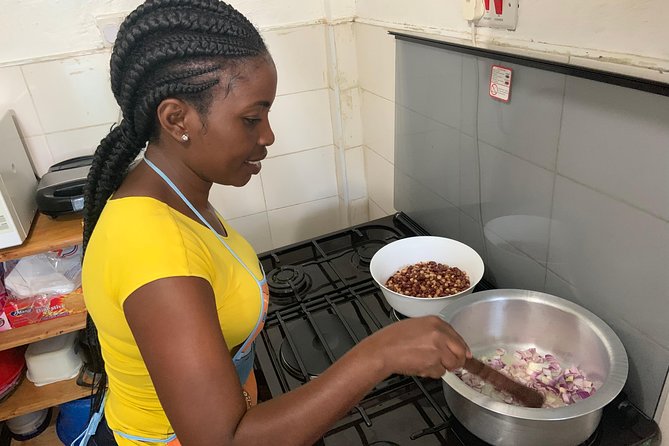
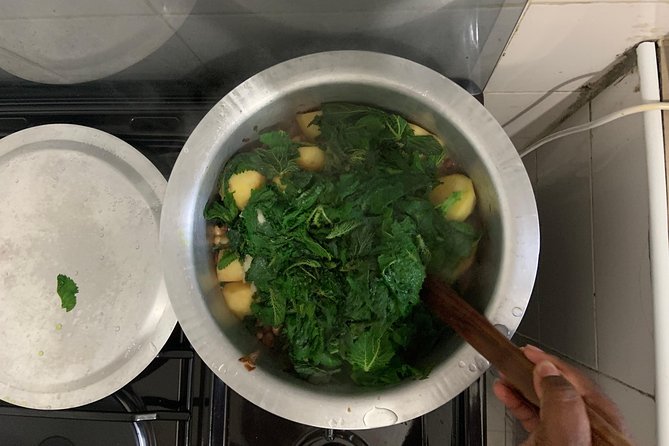
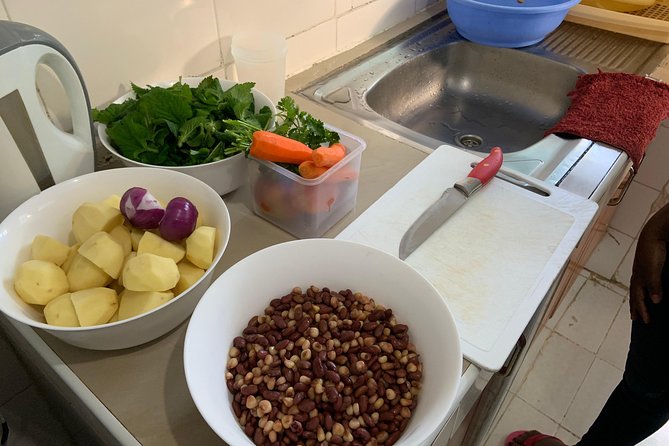
Mukimo is a mashed dish made with potatoes and greens. It is hearty, simple, and closely tied to home cooking. Grace explains different ways to prepare it, including variations using ingredients you may already keep in your pantry.
That practical angle is one of the strongest reasons to book. You are not just tasting something that depends on a hard-to-find local ingredient. You are learning a method you may be able to repeat at home, then adjust to suit what you have available.
Ugali is made from corn flour mixed with water. It is a staple food, and seeing its preparation gives you a better sense of its texture and role at the table than a short description on a menu can provide.
Pilau, a spiced rice dish, brings a different flavor profile to the meal. You may also help prepare local vegetables, which gives the session a useful everyday quality. The cooking is not built around rare or showy ingredients. It is about the food people actually prepare and eat.
A particularly helpful lesson concerns seasoning. The vegetables are said to be so tasty that it may be hard to believe they were seasoned with little more than salt and onions. That is a good reminder to pay attention to method, timing, and ingredient quality instead of assuming a long spice list is required.
A cooking class with an important limitation
You should understand the kitchen setup before you book. Grace’s kitchen is very small, so she will do most of the cooking while you watch. She invites you to help when space allows, and one description of the experience presents it as a hands-on opportunity, but the clearest expectation is a demonstration with some participation.
That distinction can shape your decision. If you want to chop every vegetable, stir every pot, and prepare a dish from start to finish, this may feel limited. You will not have the same workspace or control that you might find in a commercial cooking school.
If you prefer to watch a local cook at work, ask questions, and join in at selected points, the compact kitchen can feel more personal. You are close to the action, and Grace can explain what she is doing without shouting across a large room.
I would treat this as a home cooking demonstration with participation, not a formal lesson. That description keeps expectations sensible and lets you appreciate what the experience does well: personal contact, cultural context, and a meal prepared in an ordinary household.
More Kenyan cooking classes in Nairobi:
- Traditional Kenyan Cooking Class & Local Market Tour
★ 5.0 · 129 reviews - Authentic Kenyan Cooking Class & Market Tour in Nairobi
★ 5.0 · 12 reviews - Private Traditional Kenyan Cooking Class with Lunch in Nairobi
★ 5.0 · 10 reviews - Market Tour and Traditional Kenyan Cooking Class in Nairobi
★ 4.8 · 6 reviews
The stories behind the food
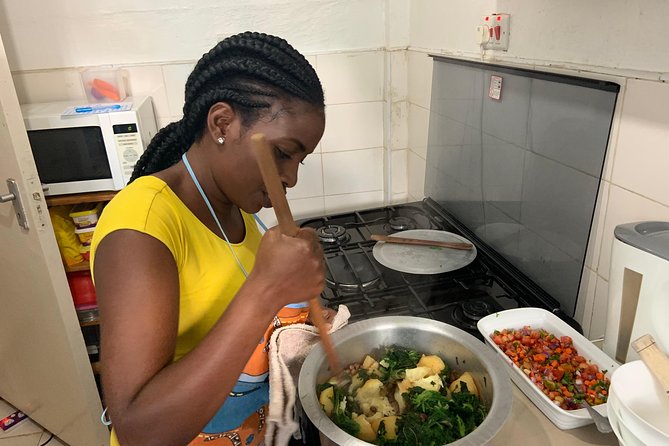
Grace’s family stories add a layer that a standard recipe class often misses. Her memories of her grandmother making mukimo connect the dish to several generations of Kenyan home life.
You may also hear about different versions of the same food and ways to change a recipe with basic ingredients. That is especially useful for home cooks, since it shows that traditional cooking is not always fixed to one strict formula.
Food stories can also help you understand why a dish matters. Mukimo is not simply mashed potatoes with greens. Ugali is not only corn flour and water. Pilau is more than spiced rice. Each dish sits within a wider pattern of family meals and local habits.
The setting keeps this information grounded. You are hearing it while the food is being prepared, not in a detached lecture. If you enjoy asking about family customs, ingredients, and substitutions, plan to make the most of the conversation.
Sharing the finished meal
After the preparation, you sit down and eat together. This shared meal is a key part of the experience, not an afterthought.
The value here is social as much as culinary. You get to taste the food at the table where it has been prepared and talk with Grace while eating it. That makes the meal feel connected to the cooking rather than like a separate restaurant stop.
The food has received especially warm praise for its flavor, with vegetables that show how much can be done with modest seasoning. You may find that the most memorable lesson is not a complicated recipe but the balance of salt, onions, vegetables, and careful cooking.
Because this is a private activity, the meal should feel more relaxed than a large group class. Your party can talk at its own pace and focus on the dishes that interest you most.
Is $76 a fair price?

At $76 per person, this is not the cheapest way to eat in Nairobi. You could certainly find a less expensive meal elsewhere. The question is what you are paying for.
The price covers a private visit, a personal host, a cooking session, cultural conversation, and the meal you prepare together. It also buys a type of access that is hard to arrange on your own: entering a local home and learning how familiar Kenyan foods are made there.
For a private experience, the price becomes easier to justify if you are traveling as a couple, family, or small group that values personal contact. Group discounts may improve the cost for larger parties, though the activity remains private rather than combining you with strangers.
I would consider it good value for someone who sees food as a way to understand a place. It is less appealing if your main goal is maximum hands-on cooking time or a broad culinary tour with several restaurants and markets.
Who will enjoy this Nairobi food experience?

This suits curious eaters, home cooks, and anyone who wants a quieter cultural activity between Nairobi’s larger attractions. It is also a good choice for a private group that prefers conversation over a fixed sightseeing script.
Families may appreciate the simple dishes and informal setting, although the supplied details do not specify child pricing or a minimum age. Ask about that before booking if you are traveling with children.
The experience can work well for visitors who have never tried Kenyan food. Grace can explain the dishes as they are made, and the recipes are familiar enough in structure to help you follow along.
It may be less satisfying for an advanced cook seeking technical instruction. The small kitchen means you will not spend the whole session actively preparing food. You are there to watch, help when possible, listen, and share the result.
Service animals are allowed, and the meeting point is near public transportation. The activity begins and ends at the meeting point, but specific pickup details are not provided, so confirm the exact location before setting out.
Practical details before you book
The start time is 11:00 a.m., and the activity lasts approximately three hours. Since the cooking demonstration is described as about one hour, the rest of the visit includes time around the home, conversation, and the shared meal.
Confirmation is sent within 48 hours of booking, subject to availability. This experience is often booked about 18 days ahead, so planning early is sensible if your Nairobi dates are fixed.
You can cancel for a full refund if you do so at least 24 hours before the local start time. Changes or cancellations made less than 24 hours before the start are not accepted for a refund.
The experience has a mobile ticket and may offer group discounts. Since the kitchen is small, a private booking does not mean a large cooking workspace. It means your own party shares the visit without other participants joining.
Should you book Cooking with Grace?
Book it if you want a personal home meal and a close look at Kenyan food traditions, especially if you enjoy stories as much as recipes. Grace’s welcoming approach, family memories, tasty vegetables, and private setting give the experience a clear sense of place.
Skip it if you need a fully hands-on cooking course with plenty of counter space. The honest expectation is a demonstration with chances to help, followed by a shared meal.
For most visitors who want to get beyond standard sightseeing in Nairobi, $76 buys a meaningful few hours with a local host and food you can remember and recreate. Just arrive ready to watch as much as cook.
FAQ
Where does the cooking experience take place?
It takes place in Grace’s home in Nairobi, in her modestly sized kitchen.
What time does the activity start?
The experience starts at 11:00 a.m.
How long does the experience last?
The full activity lasts approximately three hours. The cooking demonstration itself is described as lasting about one hour.
Is this a private activity?
Yes. Only your own group participates.
What Kenyan dishes might I learn about?
The session may cover mukimo, ugali, pilau, and local vegetables. Mukimo uses mashed potatoes and greens, ugali uses corn flour and water, and pilau is spiced rice.
Is the cooking fully hands-on?
Not entirely. Because Grace’s kitchen is very small, she does most of the cooking while you watch. She provides opportunities to help when space allows.
Can I cancel for a full refund?
Yes. You must cancel at least 24 hours before the experience start time for a full refund. Cancellations or changes made less than 24 hours in advance are not accepted for a refund.
More Workshops in Nairobi
- Local Market Tour and Traditional Meal Cooking Class
★ 5.0 · 4 reviews - Agro-Tourism Tea Workshop in Nandi Hills
★ 5.0 · 3 reviews - Beginner Swahili Woodcarving Classes with Woman Woodcarver
★ 5.0 · 3 reviews - Malindi : Kenyan Cooking Class with Campfire Meal
★ 5.0 · 3 reviews
Just added around Nairobi
- Visit kibera Slum the chocolate city★ 4.8 · 3 reviews
- Maasai Mara Day Trip★ 5.0 · 15 reviews
- 4 Days Safari to Lake Nakuru N/P and Maasai Mara N/R★ 5.0 · 18 reviews
- 4 Days Tour Landcruiser in Masai Mara and Lake Nakuru★ 5.0 · 10 reviews
- 3 days maasai mara migration safari★ 4.5 · 7 reviews
- Kibera Slum Tour with a Local★ 5.0 · 15 reviews
- Wildebeest Migration in Masai Mara and Sightseeing 4 Days Tour★ 4.5 · 6 reviews
- Day Tour to Nairobi national park, Elephants, and Giraffe Center★ 3.5 · 8 reviews
Cooking Classes, compared.
Traditional Kenyan Cooking Class & Local Market Tour
Read our review →
Authentic Kenyan Cooking Class & Market Tour in Nairobi
Read our review →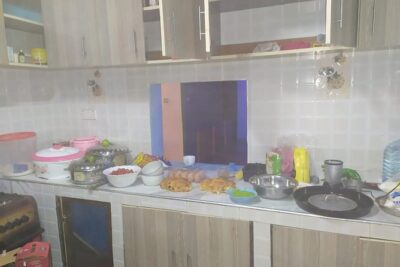
Private Traditional Kenyan Cooking Class with Lunch in Nairobi
Read our review →
Market Tour and Traditional Kenyan Cooking Class in Nairobi
Read our review →
Local Market Tour and Traditional Meal Cooking Class
Read our review →
Browse the lists this tour appears in