
Reviewed · MARKETS
Explore local Market matatu ride & Make Kenyan Cuisines with a home cook
A matatu ride to a Nairobi market is the most memorable part of this experience. You shop for fresh produce with Josephine Rukaria, then take the ingredients to her home and turn them into a five-course Kenyan and Indian meal. This is a cooking class with a real local rhythm, not just a demonstration in a tourist kitchen.
I like the private format, since Josephine can give your group her full attention. I also like the way the market trip and cooking lesson connect: you see the ingredients first, then learn how they are used in family recipes. The main drawback is practical: hotel pickup is not included, and you need to confirm the exact meeting point because the details refer both to Westlands and to a Nairobi postal address.
Key points about this Nairobi food experience
- A matatu ride is part of the lesson: You use local public transport to reach the market and interact with vendors.
- Josephine Rukaria teaches in her own home: The setting gives the meal a personal, everyday feel.
- You cook five courses: The food includes Kenyan and Indian influences, with dishes such as curries and ugali.
- Your group stays private: The class is limited to your own party, with one-to-one guidance.
- The ingredients are provided: You do not need to bring equipment or shopping supplies.
- Budget about four hours: Market shopping, transport, cooking, and lunch all fit into one half-day outing.
Starting in Westlands and getting settled
The experience is described as beginning at a mall in Westlands, with the published start address listed as P.O. Box 66283, Nairobi. Since a postal address is not the same as a clear street meeting point, I would confirm the exact place and time with Josephine before setting out. This matters more in Nairobi than it might in a small town, especially when you are trying to meet a guide before taking public transport.
Hotel pickup and drop-off are not included. You need to make your own way to the start, and the tour ends on David Osieli Road in Nairobi. The activity is near public transportation, but your booking confirmation should still be checked carefully for the precise meeting instructions.
Once you meet Josephine, the tone is personal from the start. This is a private activity, so you will not be folded into a large cooking class. Your group can ask questions, move at its own pace, and spend more time on a cooking method or ingredient if that is what interests you.
A few more Nairobi days to weigh up
- Nairobi National Park Half-Day Tour; Free Wi-Fi connection
★ 5.0 · 878 reviews - Nairobi: National Park & Optional Elephants & Giraffe Center
★ 4.8 · 874 reviews - NAI NAMI: Nairobi Storytelling Tour with Street Children
★ 5.0 · 792 reviews
Riding a matatu through Nairobi
The matatu ride is more than a way to get from one stop to another. These minibuses are part of daily transport in Kenya, and using one gives you a direct look at ordinary city life. You will ride to the market with Josephine, then return by matatu to her home after shopping.
If you have never used a matatu, expect a livelier ride than a private car. You will need to stay aware of the group and listen to Josephine’s directions. That small bit of uncertainty is part of the point, but it may not suit someone who wants a quiet, tightly controlled excursion.
The transport is included, which keeps the price simple. You are not paying for a private vehicle, and that is worth understanding before booking. The value here comes from the local experience and the cooking instruction, not from a polished transfer service.
The ride also gives Josephine room to explain how people get around and how the market fits into daily shopping. The supplied details do not promise a guided city tour, so you should not book this expecting a long list of Nairobi landmarks. Think of the matatu as a useful cultural bridge between the meeting point, the market, and the home kitchen.
Shopping for fresh ingredients at a local market
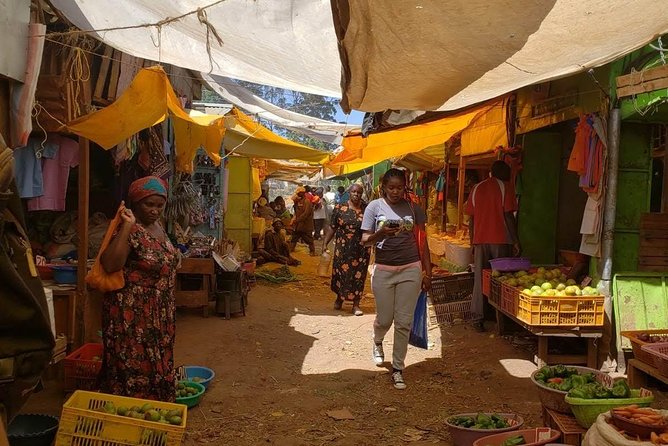
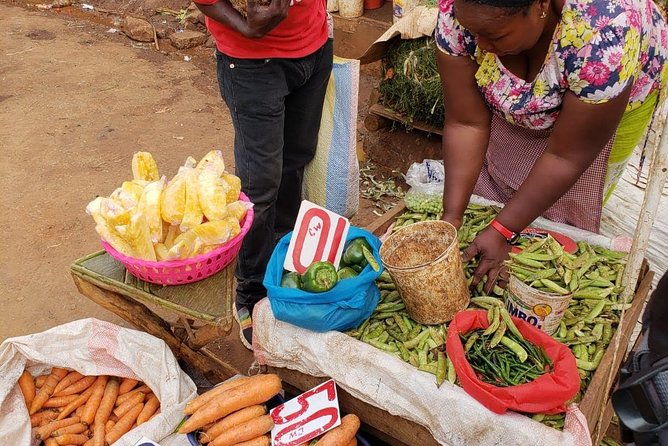
At the market, you help source the produce for the meal. This makes the shopping practical rather than decorative. You see the ingredients before they reach the cooking pot, and you can interact with local vendors along the way.
The market stop is especially useful if you want to understand Kenyan food beyond restaurant menus. Ingredients can look familiar in a shop or market but work differently in a home kitchen. Josephine can connect what you see at the stalls with what you later chop, season, simmer, or serve.
The experience includes fruits and fresh produce, as well as the ingredients for the five-course meal. You do not have to arrive with a shopping list, cooking tools, or supplies. Josephine handles the planning, while you take part in choosing and learning.
There is also a social side to the market. You can speak with vendors through the structure of the tour, rather than simply walking past stalls with a camera. The details do not identify a specific market or guarantee particular dishes based on that day’s produce, so keep an open mind about the exact menu.
Cooking in Josephine’s Nairobi home
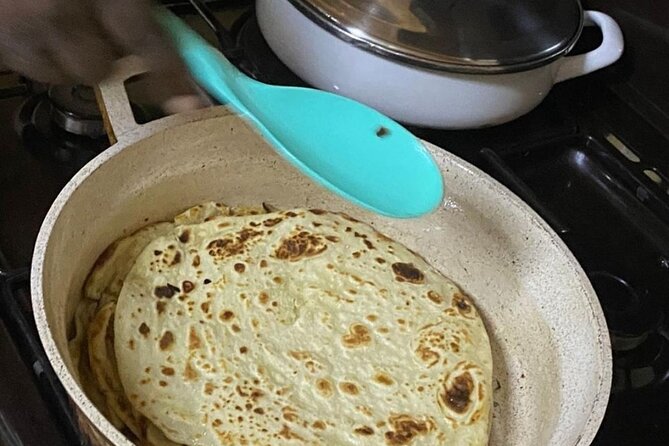
After the market, you head to Josephine’s home. The cooking lesson takes place in an actual Kenyan home, where she prepares and serves food as she does for family and friends. That setting is the heart of the activity.
Josephine Rukaria is described as patient, funny, and attentive, and she has experience working with children. One useful detail for families is that she has welcomed children into the activity and handled the cooking experience with them in mind. Still, children should be supervised by their own adults, particularly while food is being prepared.
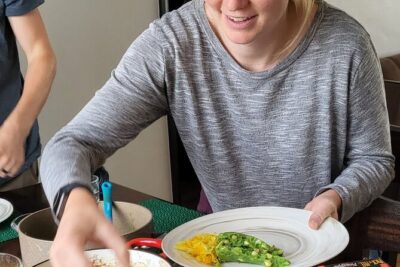
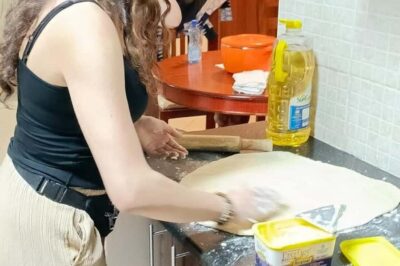
You should expect to get involved. Josephine shows you each step, from handling ingredients to using spices and building the final dishes. This is not simply a meal where you sit back and watch someone cook. The point is to learn by doing, so wear clothes you do not mind getting a little messy.
The home setting also changes the feel of the meal. You are not in a classroom designed for large groups, and there is no need to compete for the teacher’s attention. Your group can learn privately, then sit down together in a peaceful home environment.
Same departure point, a completely different day out:
- Nairobi National Park Half-Day Game Drive
★ 4.5 · 738 reviews - Nairobi: Historic and Modern Highlights Walking Tour
★ 4.8 · 703 reviews - Safari Tour; Nairobi National Park
★ 4.5 · 594 reviews - 3 Days Masai Mara Group Joining
★ 5.0 · 486 reviews
Understanding the Kenyan and Indian menu
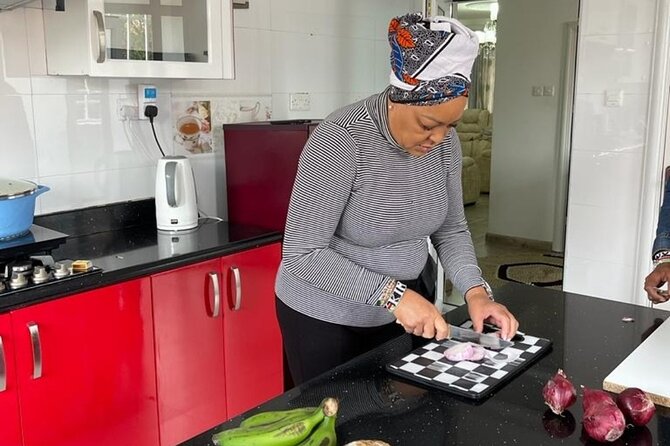
The meal combines Kenyan and Indian influences. That pairing reflects the way food traditions meet in Kenya, particularly through the use of spices, curries, and familiar staple foods. The menu is described as five courses, with examples including curry and ugali.
Ugali is a firm cornmeal staple commonly served as part of a meal. Here, you do not just taste it as a finished side dish. You learn how it fits with the rest of the food and how a home cook prepares it.
The Indian influence appears in the curries and spice work. Josephine focuses on techniques and seasoning, giving you a chance to understand how the dishes are built rather than merely copying a recipe card. If you enjoy cooking, this part may be more useful than a standard tasting tour because you can take the methods home.
The exact five-course menu can vary with the available produce and any dietary needs you report. You should tell Josephine about food intolerances before the experience. The supplied information does not promise vegetarian, vegan, gluten-free, or other specific substitutions, so ask before booking if your diet requires careful planning.
Sitting down for the meal
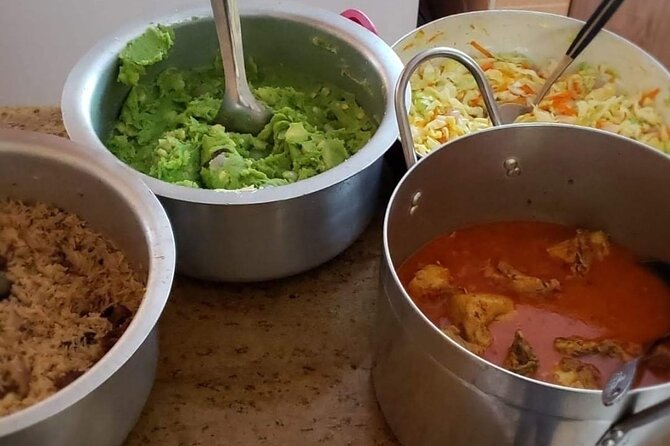
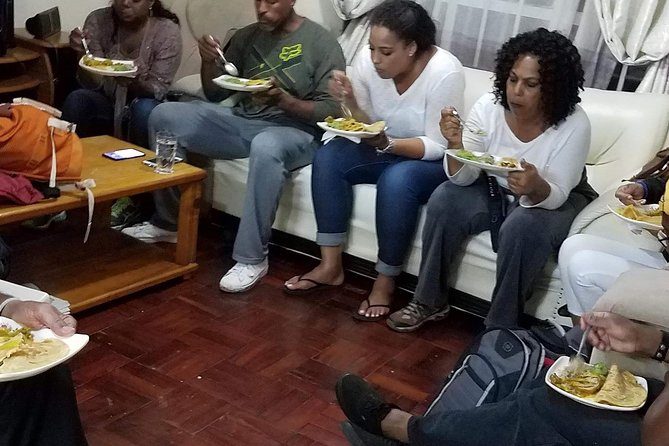
Once the cooking is complete, you eat the food you helped prepare. Lunch is included, along with fruit, water, coffee, and tea. This gives the experience a clear finish: shopping leads to cooking, and cooking leads to a shared meal.
The meal is private for your party. That works well if you are traveling with family or friends and want time to talk without a larger group around you. It also lets Josephine keep the focus on your questions and your cooking results.
I would think of this as a generous home meal rather than a formal restaurant service. The pleasure comes from knowing where the ingredients came from and having a hand in preparing them. If you are looking for a quick tasting with several restaurant stops, this is not the right format. You spend much of the four hours participating.
Tea and coffee are included, which makes the ending feel relaxed. Bottled water and additional water are listed as included too. You do not need to bring cooking equipment or basic refreshments, though you may want your own water bottle for the transport portion.
What the four-hour timing really means
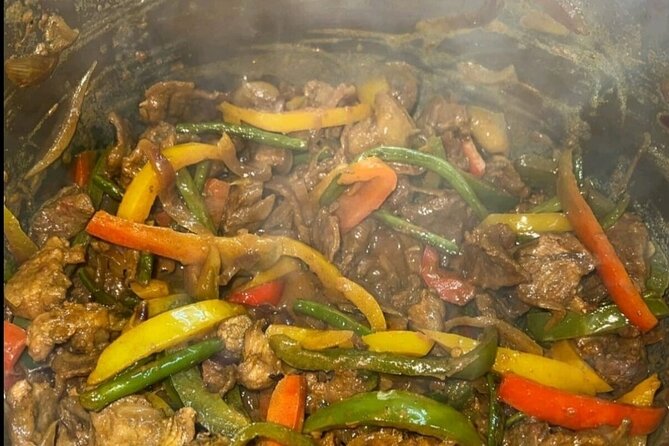
Four hours is enough time for the main parts of the experience, but it is not an all-day food tour. You should expect the schedule to include the meeting, matatu rides, market shopping, cooking instruction, and lunch. The exact balance will depend on transport and the pace of your group.
The private format gives you some flexibility, but it does not remove the realities of Nairobi traffic or public transport. If you have an important appointment soon afterward, leave a generous buffer. The experience is best placed on a morning or afternoon when you can enjoy it without watching the clock.
It is booked, on average, 18 days in advance. That is a useful planning clue, particularly if you have fixed Nairobi dates. Booking early is sensible, though confirmation is provided at the time of booking.
The activity carries a five-star rating from eight published ratings. That is a small sample, so I would treat it as encouraging rather than final proof. The consistent themes are more useful: Josephine’s personal teaching, the matatu ride, the market visit, and the home-cooked meal.
Is the $60 price good value?
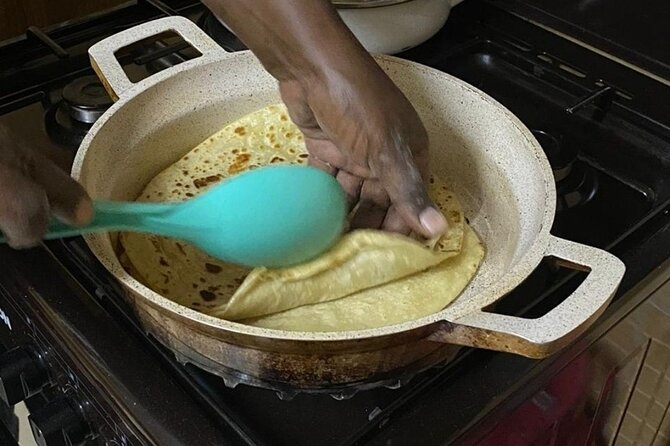
At $60 per person, the price covers a lot for a four-hour private experience. You receive transport to and from the market, cooking equipment, ingredients, fruit, water, coffee or tea, a five-course Kenyan and Indian meal, and lunch. You are also paying for Josephine’s time and personal instruction.
The private format is the key value point. A large class might offer a lower price, but you would not get the same level of direct help. If your group includes children, first-time cooks, or people with lots of food questions, the one-to-one structure can justify the cost.
The price does not cover transport from your hotel to the meeting point or from the endpoint back to your hotel. You should add those costs when comparing this with a hotel-based cooking class. The included matatu rides cover the market portion, not a private transfer across Nairobi.
You should also compare the experience by what you want from a food activity. If you want to eat quickly and move on, $60 may feel high for four hours. If you want a market visit, local transport, hands-on instruction, and a full meal in a Kenyan home, the package is stronger.
Who should book this experience?
I would recommend it to you if you enjoy meeting people through food and prefer participation to sightseeing from a vehicle. It is a good match for couples, families, and small groups of friends who want a private half-day activity.
Families should note that Josephine has experience with children, including her own child, and has been described as patient with young participants. The cooking format still calls for normal care around kitchen equipment and ingredients.
This also suits anyone curious about Kenyan and Indian food together. You will learn about spices, curries, ugali, fresh produce, and home cooking in one sitting. It is less suitable if you need a fixed menu, a formal professional kitchen, or a fully private vehicle.
Food allergies and intolerances need advance notice. The activity specifically asks you to provide that information, but the available details do not state which alternatives can be supplied. Ask clear questions before you commit.
Practical details before you book
The ticket is mobile, and confirmation is received at booking. Bring your phone with the booking details, and confirm the exact starting location because the description refers to Westlands while the listed address is a Nairobi postal address.
The activity ends on David Osieli Road. Since hotel return transport is not included, plan your onward route before the class begins. The experience is near public transportation, but you should still allow time to find the endpoint and arrange your next ride.
Most people can participate, and no special cooking equipment is required. Wear comfortable clothing suitable for a hands-on kitchen session, and tell Josephine about food intolerances in advance.
Free cancellation is available if you cancel at least 24 hours before the start time. Cancellations inside that window are not refunded, and changes made within 24 hours are not accepted. The cut-off uses Nairobi local time.
Should you book it?
Book this if you want real contact with everyday Kenyan food culture rather than a short demonstration. The matatu ride, market shopping, private instruction, and meal in Josephine’s home form one connected experience, and the personal scale is its strongest feature.
I would skip it only if you dislike public transport, need hotel pickup, or require a guaranteed menu that has not been confirmed in advance. For everyone else, $60 is a fair price for a private four-hour food lesson that leaves you with a full meal, new cooking skills, and a much clearer sense of how Kenyan hospitality works at home.
FAQ
How long does the experience last?
The activity lasts approximately four hours, including the market visit, matatu transport, cooking lesson, and meal.
Is this a private activity?
Yes. Only your group participates, and Josephine provides private guidance during the experience.
What food will I learn to cook?
You will prepare a five-course meal with Kenyan and Indian influences. The examples provided include curries and ugali, though the exact menu is not specified.
Are ingredients and cooking equipment included?
Yes. Cooking equipment, ingredients, fruits, water, coffee or tea, and the five-course meal are included.
Is hotel pickup and drop-off included?
No. Hotel pickup and drop-off are not included. The experience begins at the stated Nairobi meeting point and ends on David Osieli Road.
Can I cancel for a full refund?
Yes, if you cancel at least 24 hours before the experience start time. Cancellations made less than 24 hours in advance are not refunded.
More Shopping Tours in Nairobi
- Traditional Kenyan Cooking Class & Local Market Tour
★ 5.0 · 129 reviews - Nairobi souvenir Shopping and Historical Half day Tour
★ 5.0 · 61 reviews - Memorable Daily KIBERA Slums/Toi Market Tour with Locals (2 hours)
★ 5.0 · 29 reviews - Nairobi Cultural Shopping Experience
★ 5.0 · 21 reviews
Just added around Nairobi
- Visit kibera Slum the chocolate city★ 4.8 · 3 reviews
- 4 Days Safari to Lake Nakuru N/P and Maasai Mara N/R★ 5.0 · 18 reviews
- Maasai Mara Day Trip★ 5.0 · 15 reviews
- 3 days maasai mara migration safari★ 4.5 · 7 reviews
- 4 Days Tour Landcruiser in Masai Mara and Lake Nakuru★ 5.0 · 10 reviews
- Kibera Slum Tour with a Local★ 5.0 · 15 reviews
- Wildebeest Migration in Masai Mara and Sightseeing 4 Days Tour★ 4.5 · 6 reviews
- Day Tour to Nairobi national park, Elephants, and Giraffe Center★ 3.5 · 8 reviews
Markets, compared.
Traditional Kenyan Cooking Class & Local Market Tour
Read our review →
Memorable Daily KIBERA Slums/Toi Market Tour with Locals (2 hours)
Read our review →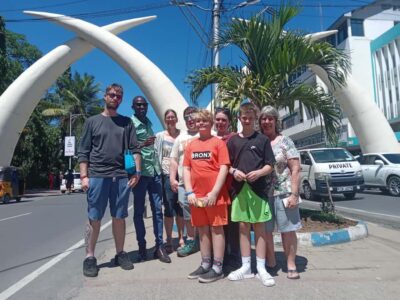
Mombasa City Tour,Fortjesus,Oldtown,Tusks and Spice Market.
Read our review →
Half-Day Nairobi National Park and Maasai Market with Pick up
Read our review →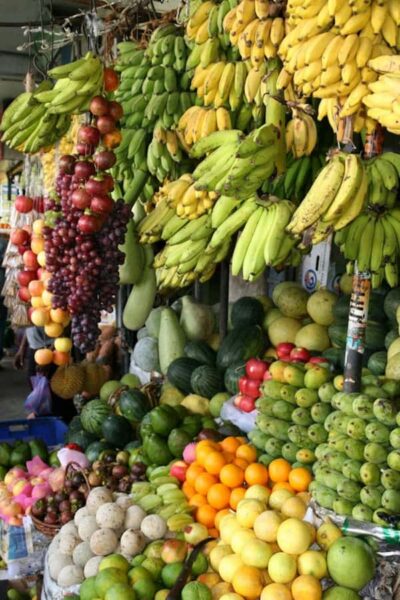
Authentic Kenyan Cooking Class & Market Tour in Nairobi
Read our review →
Hop on Hop off and Maasai market Collections Visit
Read our review →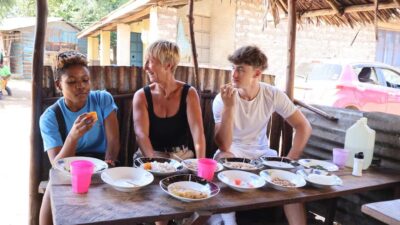
Market Tour and Traditional Kenyan Cooking Class in Nairobi
Read our review →Browse the lists this tour appears in