
Reviewed · WORKSHOPS
Agro-Tourism Tea Workshop in Nandi Hills
The most unusual part of this day is that you do not simply visit a tea plantation and pose for a few photos. You follow the crop from hand plucking to weighing, transport, factory processing, and tasting. In Kenya’s Highlands, that makes this a rare working tea workshop, not just a scenic stop.
I like the close look at the tea pluckers, whose speed and skill give real meaning to each cup. I also like the balance between farm life and factory machinery, with lunch at a cottage breaking up the day. The main consideration is the length: at about 10 hours, this is a full outing, and the early start from Iten will not suit anyone hoping for a slow morning.
Key points
- Tea from leaf to cup: Follow harvesting, weighing, transport, processing, and tasting in one day.
- A working agricultural visit: Meet tea pluckers and see the repetitive, skilled work behind the crop.
- Nandi County factory access: Visit one of the county’s 19 tea factories and watch leaves become a finished product.
- Private day trip from Iten: Transportation is private, and the tour returns to The Swiss Side ItenFriends Bar.
- Good value for a full day: The $137.46 price includes transport, lunch, farm access, factory entry, taxes, and fees.
- A weather-dependent outing: Poor weather or an unmet minimum group size can lead to a new date or full refund.
Why this Nandi Hills tea day is different
Many farm visits stop at a field and a cup of tea. This one gives you the complete chain of production. You begin with the work in the fields, then see how harvested leaves are measured, moved, processed, and prepared for drinking.
That order matters. It helps you understand that tea is not simply picked and dried. The final drink depends on timing, handling, machinery, and the workers who keep each stage moving. I find that this kind of visit gives a more useful picture of agriculture than a short plantation walk alone.
The setting adds another layer. Nandi Hills is a distinct tea-growing area in Kenya’s Rift Valley Province, with a calm rural feel that contrasts with the machinery inside a factory. You get both the open farm and the industrial side of the crop in one day.
The activity is presented as the only tea-production workshop in the Highlands. That makes it a particularly strong choice for anyone who wants a focused tea experience rather than a general countryside excursion.
A few more Kenya days to weigh up
- Traditional Kenyan Cooking Class & Local Market Tour
★ 5.0 · 129 reviews - Authentic Kenyan Cooking Class & Market Tour in Nairobi
★ 5.0 · 12 reviews - Private Traditional Kenyan Cooking Class with Lunch in Nairobi
★ 5.0 · 10 reviews
Starting before the day gets busy in Iten
The meeting point is The Swiss Side ItenFriends Bar in Iten, Kenya. The available start window is from 5:00 AM to 9:00 AM, and the activity lasts about 10 hours. Your exact departure time should be confirmed at booking, but you should plan for an early beginning.
That early window is useful for a practical reason: the tea harvest is a working routine, not a staged show. Starting in the morning gives you a better chance to see the day’s agricultural work as it happens. It also leaves enough time for the farm, lunch, factory visit, and tasting without turning the outing into a rushed series of stops.
Private transportation is included, and the day ends back at the same meeting point. This is helpful if you are staying in Iten for a running camp or using the town as a base for other trips. You do not need to arrange separate transport between the farm and factory.
The activity is private, so only your group participates. That gives the day a more personal shape than a large coach outing, though the price is also set per person rather than as a low-cost shared excursion.
Meeting the tea pluckers in the fields
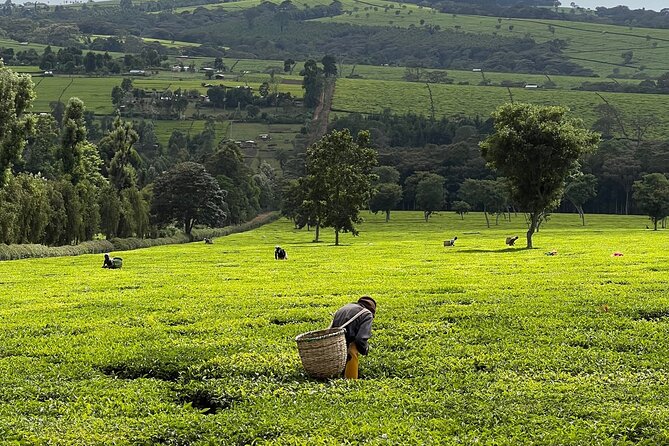
The first main part of the day explains how harvesting is done. You then meet the tea pluckers and watch them work among the plants.
This is one of the strongest parts of the day because it turns an ordinary-looking cup of tea into a human story. Plucking tea is repetitive work, but doing it well requires speed, care, and endurance. You get to see the practical skill involved rather than hearing only a general explanation of farm life.
The people working in the fields are central to the process. Their labor determines how much usable leaf reaches the factory, and their pace helps explain why harvesting is such an important part of tea production. I would pay close attention here, since the encounter with the pluckers may be more memorable than the later machinery.
The information provided does not name the individual guide or the tea workers. If personal introductions matter to you, ask at booking who will lead the day and how much time is planned in the fields. The tour does promise a meeting with the pluckers, but it does not give a detailed schedule for that stop.
You should also expect a working farm rather than a polished attraction. Conditions may be simple, and the weather can affect the visit. That is part of the appeal, but it is worth keeping in mind if you prefer highly structured sightseeing.
Seeing the modern weighing stage
After the harvest, you watch the tea being weighed. This step has recently been modernized, giving you a chance to see a traditional agricultural routine alongside newer equipment or methods.
Weighing may sound less exciting than walking through the tea fields, but it is an important link between labor and payment, production, and transport. It records what has been gathered and creates a clear measure before the leaves leave the farm.
For me, this is where the workshop becomes more than a photo stop. You see how the crop is counted and controlled before it reaches the factory. The modern changes also show that tea production is not frozen in the past. The work still begins by hand, but some of the systems around it are being updated.
The available details do not explain exactly what the modernization involves. You should expect an explanation and a demonstration of the weighing stage, but not assume that a particular machine or digital system will be shown.
Same departure point, a completely different day out:
- Nairobi National Park Half-Day Tour; Free Wi-Fi connection
★ 5.0 · 878 reviews - Nairobi: National Park & Optional Elephants & Giraffe Center
★ 4.8 · 874 reviews - NAI NAMI: Nairobi Storytelling Tour with Street Children
★ 5.0 · 792 reviews - Nairobi National Park Half-Day Game Drive
★ 4.5 · 738 reviews
Lunch at the cottage between farm and factory
Back at the cottage, lunch gives you a pause before the factory visit. Lunch is included in the price, along with private transportation, farm access, tea factory entry, all taxes, and fees.
This break is well placed. A 10-hour agricultural outing needs a proper pause, and returning to the cottage helps divide the day into two clear parts. The first focuses on harvesting and farm work. The second moves into processing and tasting.
The setting may appeal to you if you prefer a quiet meal connected to the place you are visiting. The activity information does not specify the menu, dietary options, or dining style, so ask ahead if you have food restrictions or need a particular meal.
Personal expenses are not included. Bring some money for anything beyond the listed inclusions, though the main costs of the day are already covered. Since lunch is included, the price is easier to judge than it would be for a tour where meals and entry charges appear one by one.
Inside one of Nandi County’s 19 tea factories
After lunch, you visit one of the 19 tea factories in Nandi County. This is the industrial heart of the workshop, where the leaves are changed into a finished product.
The exact factory is not named in the information provided, so you should not expect to choose a particular facility. The value comes from seeing the production stage after observing the field work. You can connect the fresh harvest with the machinery, handling, and steps that prepare it for sale and drinking.
This part will suit you if you enjoy seeing how everyday goods are made. Tea is familiar, but its production usually happens out of sight. The factory visit lets you follow the crop past the farm gate and understand why quick transport and careful processing matter.
The factory may feel more functional than scenic. That is not a weakness, but it is a useful expectation. You are visiting a working production site, so the focus is on process rather than entertainment or elaborate displays.
The activity description says you discover how tea leaves become a finished product. It does not provide a step-by-step list of every machine or production stage, so the depth of explanation may depend on the factory access and the guide leading your private group. If factory operations are your main reason for booking, ask how much of the production floor you will be able to see.
Ending with a Kenyan tea tasting
The day ends with a tea tasting. After seeing the crop picked, weighed, moved, and processed, the tasting gives you a clear finish and a chance to connect the whole process with the drink in your cup.
This is especially appealing if you already enjoy chai or Kenyan tea. One participant described the tea portion as the best part of a wider Kenya trip, and that makes sense: the tasting is not isolated from the rest of the day. You have just watched the work behind the product.
Do not expect a formal wine-style tasting unless the provider confirms one. The information only promises tea tasting, not a set number of teas, tasting notes, or a take-home package. Still, the basic idea is strong. The final cup has context, and you can appreciate it with a better sense of what went into making it.
The tasting also keeps the workshop focused. You do not leave with only facts about agriculture. You finish by using your senses and considering how the final product differs from the raw leaf seen earlier.
What the $137.46 price really covers
At $137.46 per person, this is not a cheap short tour. It is a private, full-day activity lasting about 10 hours, so the price needs to be compared with what is included rather than with the cost of a simple plantation walk.
Your fee covers:
- Private transportation
- All fees and taxes
- A farm visit
- Lunch
- A tea factory visit
That package gives the price reasonable value if you are starting in Iten and want a full day arranged for you. Transport alone can be a major concern in rural areas, and the private format saves you from working out how to connect the farm and factory yourself.
The value is strongest for people who want depth and convenience. You are paying for access to several stages of production, a private vehicle, a meal, and a full day with one provider. The value is weaker if you only want a quick scenic stop, dislike agricultural tours, or would rather spend the day on several unrelated sights.
Personal expenses are extra, and the food details are not specified. I would ask about dietary needs before booking, especially if lunch is important to your plans.
Who should book this private tea workshop
This activity is a good fit for tea drinkers, food-minded visitors, photographers interested in rural work, and anyone who likes to see how familiar products are made. It also works well for people based in Iten who want a cultural day away from running, hiking, or other outdoor plans.
The private format is useful for couples, families, and small groups who want to ask questions at their own pace. Since only your group participates, you can focus more closely on the field work or factory process than you might on a large shared outing.
It is also a smart add-on to a wider Kenya trip. The provider has arranged combinations involving safari areas such as Lake Nakuru and Lake Baringo, along with Nandi Hills visits and running stays in Iten. If your itinerary already includes wildlife, this day gives you a different view of the country through food, work, and local production.
I would think twice if you have limited time in Kenya and this is your only possible day trip. Ten hours is a serious commitment, and a tea workshop will not replace a safari or major natural attraction if those are your priorities. It is best chosen because you genuinely want to understand tea, not simply because you have an open day.
Practical points before you reserve
The activity is available daily during the stated operating period, from October 4, 2023 through June 18, 2026. The listed operating window is 5:00 AM to 9:00 AM for starts, so confirm your pickup time rather than assuming a late departure.
Booking confirmation is normally sent at once. If you book within four hours of the start, confirmation comes as soon as possible and depends on availability.
You can cancel for a full refund if you do so at least 24 hours before the local start time. Cancellations or changes made inside that 24-hour window are not accepted for a refund.
Good weather is required. If weather forces cancellation, you can choose another date or receive a full refund. The activity also requires a minimum number of participants, despite being private for your group. If that minimum is not met, you will be offered another date or activity, or a full refund.
Public transportation is available nearby, but private transportation for the tour itself is included. The experience ends at the starting point, The Swiss Side ItenFriends Bar.
Should you book the Nandi Hills tea experience?
Book it if you want a full, focused day that explains Kenyan tea from field to cup. The tea pluckers, modern weighing stage, factory visit, and tasting create a clear story, while lunch and private transport make the long day easier to manage.
Skip it if you are looking for a short stop, a luxury food tasting, or a broad tour of many Nandi Hills sights. The factory details and meal menu are not fully specified, so ask questions before paying if those points matter most to you.
For tea lovers and curious eaters staying in Iten, this is a strong choice. It offers something many Kenya itineraries miss: a close look at ordinary work, local production, and the people behind a drink you may already enjoy every day.
FAQ
Where does the tea workshop start?
The activity starts at The Swiss Side ItenFriends Bar in Iten, Kenya.
Where does the activity end?
It ends back at the meeting point, The Swiss Side ItenFriends Bar.
How long does the experience last?
The activity lasts about 10 hours.
What is included in the price?
The price includes private transportation, all fees and taxes, a farm visit, lunch, and a visit to a tea factory.
Is the tour private?
Yes. Only your group participates in the activity.
What happens during the tea workshop?
You learn how tea is harvested, meet tea pluckers, see the tea being weighed, visit a tea factory, learn how leaves become a finished product, and finish with a tea tasting.
Can I cancel for a full refund?
Yes. You can cancel at least 24 hours before the local start time for a full refund. Cancellations or changes made less than 24 hours before the start are not refunded.
Just added around Kenya
- Watamu: Sunset Mangrove Canoe Tour with Coconut Drink★ 3.6 · 8 reviews
- Tsavo East and Tsavo West Sanctuary Safari★ 5.0 · 3 reviews
- Tsavo East National Park: 2-Day Tour from Mombasa★ 3.9 · 5 reviews
- Visit kibera Slum the chocolate city★ 4.8 · 3 reviews
- Lake Nakuru NP Half-Day Safari★ 4.0 · 4 reviews
- 3 days Maasai Mara safari from Nairobi★ 5.0 · 3 reviews
- Lake Nakuru Day Trip Safari – & Optional Lake Naivasha Boat★ 5.0 · 5 reviews
- Kilimanjaro Wanderlust Day Hike★ 5.0 · 8 reviews
Workshops, compared.

Traditional Kenyan Cooking Class & Local Market Tour
Read our review →
Authentic Kenyan Cooking Class & Market Tour in Nairobi
Read our review →
Private Traditional Kenyan Cooking Class with Lunch in Nairobi
Read our review →
Market Tour and Traditional Kenyan Cooking Class in Nairobi
Read our review →
Local Market Tour and Traditional Meal Cooking Class
Read our review →
Beginner Swahili Woodcarving Classes with Woman Woodcarver
Read our review →
Private Kenyan Cooking Class in Nairobi with a Local
Read our review →Browse the lists this tour appears in