

Reviewed · KIBERA SLUM TOURS
Ismael’s Kibera Slum Tour
Kibera is best understood with someone who knows its streets, people, and daily pressures. On this private tour, Ismael guides you through the community where he was born and raised, taking you beyond a passing drive-by view of Nairobi’s largest informal settlement.
I like the personal scale, since only your group takes part, and the chance to see practical local work at an African bone workshop. I also like that Ismael may invite you into his own home, an experience that gives the visit a human face rather than turning Kibera into a photo stop.
The main consideration is that this is a serious, sometimes emotionally difficult outing. Home visits and a children’s rescue center call for respect, modest clothing, and a willingness to listen more than photograph.
Key points to know before you book

- Ismael leads the tour himself: He is the company owner, an accredited guide, and was born and raised in Kibera.
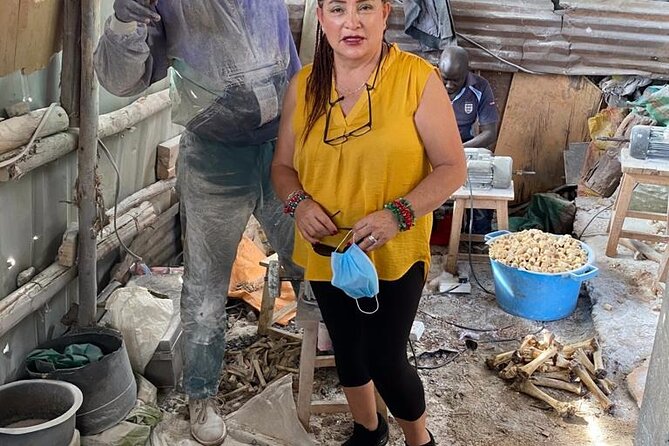
- The African bone workshop is a special stop: Local artisans turn domestic animal bones into jewelry, bottle openers, rings, bracelets, necklaces, and other crafts.
- A home visit offers unusual personal context: You may see how homes are arranged and spend time with Ismael’s family.
- The tour includes a children’s rescue center: The center helps rescued street children and children orphaned during Kenya’s 2007 to 2008 post-election violence.
- Private transport simplifies the day: Free pickup and drop-off are offered within Nairobi.
- The $65 price buys personal attention: For a private 3 to 4-hour tour, the value is strongest if you want direct conversation and local context rather than a quick sightseeing loop.
Meeting Ismael at Kibera’s edge

Your visit begins in Nairobi, with pickup and drop-off available at no extra charge within the city. That matters here. You do not need to work out a complicated route to an unfamiliar part of town, and Ismael handles both the driving arrangements and the guiding himself.
The tour lasts about three to four hours. The published schedule gives three hours to the Kibera visit, with an additional hour listed for Nairobi-area sightseeing. Since the wider Nairobi portion is described only in broad terms, I would confirm the exact plan before booking if you want to visit a particular site.
Ismael’s background shapes the experience. He is not simply giving a general explanation of poverty in Nairobi. He grew up in Kibera and presents the community from personal experience. That can help you understand the area as a place where people live, work, raise children, and build small businesses, not just as a symbol of hardship.
I would still keep expectations realistic. Kibera is a large informal settlement, and a three-hour visit can offer only a small window into it. The value comes from focused access and conversation, not from seeing every part of the community.
More guided Kibera walks:
- Nairobi: Explore Kibera Slum with Local Guides
★ 4.9 · 365 reviews - Kevins Kibera Slum Tours
★ 5.0 · 213 reviews - Nairobi: Kibera Slum storytelling tour with a Local
★ 5.0 · 185 reviews
Seeing daily work at the African bone workshop
One of the tour’s clearest highlights is the African bone workshop. Here, a group of Kibera residents uses bones from domestic animals to make useful and decorative goods.
You may see bottle openers, wristbands, finger rings, wooden crafts, brass crafts, and necklaces. The work shows how people create income from materials that might otherwise be discarded. It also gives you something concrete to look at while Ismael explains how local enterprise works.
I like this stop because it changes the tone of the visit. Kibera is often presented only through its problems. The workshop adds a view of skill, design, and resourcefulness. It also gives you a chance to buy a locally made item, if purchases are available during your visit, though the supplied tour details do not promise specific prices or sales arrangements.
The setting may be basic, and the work is handmade rather than polished for a large tourist market. That is part of the point, but it also means you should not expect a formal gallery or a long product demonstration. Ask Ismael questions, look closely, and let the artisans explain their work when appropriate.
Photography deserves care here. Always ask before photographing people, workspaces, or individual pieces. A workshop visit should support dignity and conversation, not turn local residents into scenery.
Entering a real Kibera home
The home visit is perhaps the most personal part of the outing. Ismael may take you to see how houses are arranged in Kibera, and one particularly personal account describes time spent with Ismael’s wife in their home.
This is not a staged cultural show. The point is to understand ordinary domestic life in a community where space and resources can be limited. A home visit can help you connect larger subjects, such as housing, family life, and self-reliance, to one household’s daily reality.
At the same time, this is where visitor behavior matters most. You are entering someone’s private space, so follow Ismael’s lead, ask permission before taking pictures, and do not treat the visit as an opportunity to inspect people’s belongings. A simple thank-you and a respectful conversation go a long way.
The personal element can be powerful, but it may not suit every person. If you prefer a strictly sightseeing-based tour, this experience could feel too intimate. If you want to understand how people live rather than merely look at the area from a vehicle, it is one of the tour’s strongest features.
Visiting the children’s home and rescue center

The itinerary also includes a children’s home and rescue center. It supports children rescued from the streets and children orphaned during the violence that followed Kenya’s 2007 to 2008 election.
This stop adds important social context. It helps explain some of the pressures facing children and families in Nairobi, while showing the work done to provide safety and care. Ismael can connect the center to the wider story of Kibera and Kenya without reducing the community to one event or one problem.
This is also the point where you should approach the visit with the most care. Children should not be treated as a photo opportunity, and your presence should never disrupt their routines. Ask in advance about photography, gifts, donations, and appropriate conduct. The supplied details confirm the center is part of the itinerary, but they do not specify a donation policy or exactly what activities take place there.
I would also prepare yourself emotionally. A visit involving rescued and orphaned children can be sobering. The tour is most worthwhile when you are ready to listen to Ismael and the people connected with the center, rather than expecting cheerful entertainment.
A few more Nairobi days to weigh up
- Nairobi National Park Half-Day Tour; Free Wi-Fi connection
★ 5.0 · 878 reviews - Nairobi: National Park & Optional Elephants & Giraffe Center
★ 4.8 · 874 reviews - NAI NAMI: Nairobi Storytelling Tour with Street Children
★ 5.0 · 792 reviews - Nairobi National Park Half-Day Game Drive
★ 4.5 · 738 reviews
Understanding Kibera through a local guide
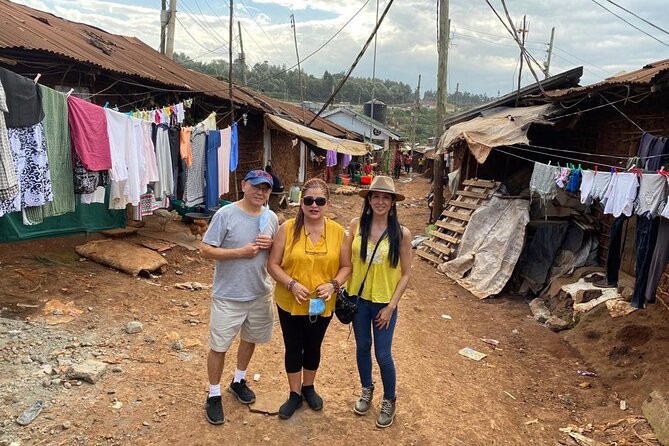
The chief reason to choose this tour is Ismael’s connection to the community. He owns the company, guides the tour personally, and grew up in Kibera. That combination gives you a direct point of contact instead of a rotating guide whose relationship with the area may be limited.
The experience is private, so Ismael can adapt the pace and emphasis to your group. You may spend more time at the workshop, ask extra questions about housing, or focus on community projects. A larger group would make those conversations harder.
The personal approach also means the outing may feel less scripted than a standard city tour. Some people will appreciate that. Others may want a tightly timed route with a fixed list of sights. This tour appears better suited to open conversation and first-hand explanation than to checking off major attractions.
The high rating and full recommendation record support the idea that the personal contact is a major strength. One especially warm account describes the community as self-sustaining and strongly connected, after time spent with Ismael and his wife. That is useful context for booking: the most praised part is not a famous monument, but the feeling of meeting people on their own terms.
What the Nairobi portion may add

The itinerary includes a second Nairobi-area portion lasting about one hour. It mentions places such as a Maasai cultural village market and Nairobi attractions including Mamba Village, but the information does not make clear which of these are included on your specific booking.
Do not assume every named place is part of the $65 tour. Ask Ismael what the extra hour covers, how much time is allocated to each stop, and if any entrance fees apply. The booking information says admission is free for the listed stops, but a precise route is still worth confirming.
This matters because the Kibera portion already fills most of the outing. If you are choosing the tour for community access, the additional Nairobi time may be a useful extra. If you are mainly interested in markets, wildlife, or formal attractions, you may need a separate tour designed around those sites.
I like the possibility of adding another local stop, but the Kibera visit is the clear center of the experience. Treat the Nairobi section as a bonus until you have confirmed the details.
Is $65 a fair price?
At $65 per person, the tour costs more than a basic shared walk, but it includes several things that affect the value. You get a private experience, a guide who handles the tour personally, and free pickup and drop-off within Nairobi.
For a group of two or more, the price is easier to justify because you are paying for dedicated time rather than joining a large crowd. The value is strongest if you care about context, conversation, and access to places such as the workshop and home. It is less attractive if you only want a quick overview or a few photographs.
The tour is also commonly reserved well ahead of the date, with an average booking lead time of about 54 days. That suggests planning early is sensible, particularly if your Nairobi schedule is tight.
I would compare the price with the cost of arranging transport and a local guide separately. Since pickup and drop-off within Nairobi are included, the package may save you time and uncertainty. Confirm the exact pickup area, since the free transport is stated for Nairobi, not for locations outside the city.
Who will get the most from this visit?

I recommend this tour to you if you want a personal introduction to Kibera and are comfortable with a direct look at difficult social issues. It suits adults, families with mature children, students, photographers who follow strict permission rules, and anyone interested in community enterprise.
It is also a good choice if you prefer a private pace. You can ask questions without worrying about a large group, and Ismael can adjust the discussion to your interests.
I would think twice if you want a polished attraction with clear staging, extensive facilities, or a predictable sightseeing script. I would also avoid booking it casually between other major activities. The tour covers sensitive subjects and deserves your full attention.
Wear practical clothing and comfortable shoes, although the supplied details do not specify a dress code or walking conditions. Modest clothing is the respectful choice for homes and community facilities. Keep your phone and camera use discreet, and ask before photographing anyone.
Free cancellation is available until 24 hours before the start time. Changes or cancellations made later are not accepted for a refund, and poor weather can lead to a different date or a full refund.
Should you book Ismael’s Kibera Slum Tour?
Book it if you want to meet a local guide who can connect Kibera’s challenges with its work, homes, families, and community projects. The bone workshop and home visit give the outing texture, while the rescue center adds serious social context.
I would choose it over a generic drive through Kibera because Ismael’s personal connection is the main asset. Just confirm the details of the Nairobi-area hour, follow strict photography etiquette, and approach the visit as a chance to listen.
If you want a private, human-scale introduction to Kibera and can handle an honest look at hardship without treating it as spectacle, $65 is a reasonable price. If you want a conventional sightseeing tour, spend that money elsewhere.
FAQ
Where does Ismael’s Kibera Slum Tour take place?
The tour takes place in Kibera, Nairobi, Kenya, with an additional Nairobi-area portion listed in the itinerary.
How long does the tour last?
The experience lasts approximately three to four hours.
Is hotel pickup included?
Yes. Free pickup and drop-off are offered within Nairobi.
Is this a private tour?
Yes. Only your group participates in the activity.
Who guides the tour?
Ismael guides the tour himself. He is the owner of the company, an accredited guide, and was born and raised in Kibera.
What can I see at the African bone workshop?
The workshop makes items from domestic animal bones, including bottle openers, wristbands, finger rings, necklaces, wooden crafts, and brass crafts.
Does the tour include a home visit?
Yes. The itinerary includes visits to local homes so you can see how houses in Kibera look in real life.
Does the tour visit a children’s home?
Yes. The tour visits a children’s home and rescue center for rescued street children and children orphaned during Kenya’s 2007 to 2008 post-election violence.
What is the price?
The price is $65 per person.
Can I cancel for a refund?
Yes. You can cancel at least 24 hours before the experience starts for a full refund. Cancellations made less than 24 hours before the start time are not refunded.
Just added around Nairobi
- Visit kibera Slum the chocolate city★ 4.8 · 3 reviews
- 4 Days Safari to Lake Nakuru N/P and Maasai Mara N/R★ 5.0 · 18 reviews
- Maasai Mara Day Trip★ 5.0 · 15 reviews
- 3 days maasai mara migration safari★ 4.5 · 7 reviews
- 4 Days Tour Landcruiser in Masai Mara and Lake Nakuru★ 5.0 · 10 reviews
- Kibera Slum Tour with a Local★ 5.0 · 15 reviews
- Wildebeest Migration in Masai Mara and Sightseeing 4 Days Tour★ 4.5 · 6 reviews
- Day Tour to Nairobi national park, Elephants, and Giraffe Center★ 3.5 · 8 reviews
Kibera Slum Tours, compared.





Kibera Slum Tour with Local Social Entrepreneurs
Read our review →


Browse the lists this tour appears in