

Reviewed · KIBERA SLUM TOURS
Kibera Slum Tour with Lucas
Kibera is not a sightseeing backdrop. It is a living Nairobi community, and this private walking tour puts you on its narrow, unmarked paths with a local guide who can explain what you are seeing. Lucas is the named guide for this experience, though some departures have been led by Elijah.
I like the local access and the human scale. You may enter a family home, meet people at Toi Market, and visit Hope and Shine Kibera Centre rather than simply viewing the area from a vehicle. I also like that the tour presents Kibera through its problems and its practical solutions, including education and small community projects.
The main consideration is simple: this is a visit to a poor settlement, not a polished attraction. Uneven, muddy ground, close quarters, curious children, and the ethics of photographing poverty may make parts of the walk uncomfortable. You need to approach it with respect, patience, and sensible expectations.
Key points to know before you book

- Lucas leads a private walk through his own community, with a personal feel that a large group tour cannot match.
- Toi Market brings the tour into daily working life, with local buying, selling, and small businesses along the route.
- Hope and Shine Kibera Centre connects sightseeing with education, and donations may be invited.
- A home visit offers unusual personal context, but you should ask before taking photographs.
- The route takes about three to four hours, and sturdy shoes matter because tracks can be uneven, muddy, or slippery.
- The $35 price is reasonable for a private experience, though transport and donations may cost extra.
Why this Kibera walk feels different from a city tour
Many Nairobi sightseeing tours keep you in familiar visitor districts. This one takes you into Kibera, one of East Africa’s largest informal settlements, where ordinary life unfolds along paths that are not marked for outsiders.
That difference is the point. You are not just hearing general facts about housing, work, education, and poverty. You are walking through the area, stopping at places connected to local people, and listening to explanations from someone who knows the community personally.
Lucas is praised for being welcoming, compassionate, and attentive to safety. One particularly useful detail is his willingness to adjust the pace. He helped a 75-year-old participant across uneven ground, which tells you something important about the tone of the tour: this is a slow walking experience, not a physical challenge built around covering distance.
The name City of Hope is more than a cheerful slogan here. The tour draws attention to the ways residents use skill and initiative to make daily life work, as well as to projects that support children and education. You will still see difficult living conditions, but the focus is not only on hardship.
More guided Kibera walks:
- Nairobi: Explore Kibera Slum with Local Guides
★ 4.9 · 365 reviews - Kevins Kibera Slum Tours
★ 5.0 · 213 reviews - Nairobi: Kibera Slum storytelling tour with a Local
★ 5.0 · 185 reviews
Starting at Greenhouse Mall in Kilimani

The stated meeting point is Greenhouse Mall in Kilimani, at Ngong. The walk ends at Equity Bank in Kibera, so this is not a loop that brings you back to your starting point.
That matters when planning the rest of your day. Arrange your next journey from the Kibera end point rather than assuming you will finish near your hotel. Public transport is nearby, and some people arrange their own Uber or local taxi.
Hotel pickup may be available in some arrangements, but it is worth confirming exactly what is included before paying extra. One account described a pickup by boda, or motorcycle, with a small delay. Another found a quoted $25 pickup and drop-off charge higher than an Uber. The $35 tour price should therefore be treated as the walking experience itself unless your booking clearly says otherwise.
Because the activity is private, only your group takes part. That gives you room to ask questions and set a comfortable pace. It also makes the tour more personal than a large group moving through the area with a fixed script.
Walking through Kibera’s narrow paths
The first part of the walk is the broadest introduction to Kibera. You move through narrow lanes and unmarked streets while your guide explains the area and points out how residents live and work.
Do not expect formal sidewalks. The ground may be uneven, muddy, or slippery, especially after rain. Hiking boots or sturdy closed shoes are the practical choice. Flip-flops and smooth-soled shoes are poor companions here.
The route is described as slow-paced and easy by one participant, lasting roughly two to three hours on the ground, while the overall experience is advertised at three to four hours. Allow the longer time so you are not rushing to a flight, appointment, or meal afterward.
This is also where the guide’s role matters most. Without someone who knows the paths and local customs, the area could be confusing and intrusive to visit. Lucas is described as keeping people safe and explaining the setting in a calm way. Elijah has also led departures and received similar praise for his careful handling of the walk.
You may see children along the route. One past participant suggested bringing several bags of sweets, but I would not treat that as a requirement. Ask your guide how to interact appropriately, and avoid turning children into photo subjects or handing out food without guidance.
Toi Market and the working side of Kibera
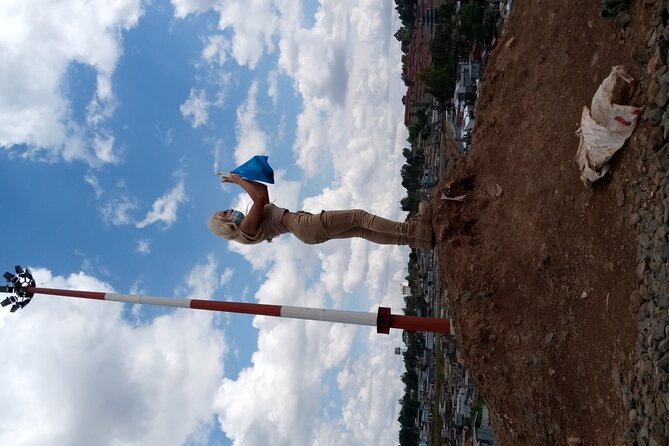
Toi Market is one of the clearest reasons to choose this tour over a simple viewpoint visit. The market shows Kibera as a place where people earn, trade, and solve practical problems, not only as a place defined by housing conditions.
You can expect a chance to see local commerce at close range. Some departures also include a local workshop or a modest opportunity to buy souvenirs, with no pressure reported. If you want to support the area, buying something directly from a local maker can be more useful and respectful than giving random handouts.
Keep your attention on the guide and your belongings as you walk through market areas. The tour information does not promise specific shopping items or a set market demonstration, so think of Toi Market as part of the neighborhood walk rather than a dedicated shopping stop.
The value here is context. A market makes it easier to understand how residents manage everyday needs and income. It also helps balance the tour, showing activity and enterprise instead of presenting Kibera only through images of poverty.
A few more Nairobi days to weigh up
- Nairobi National Park Half-Day Tour; Free Wi-Fi connection
★ 5.0 · 878 reviews - Nairobi: National Park & Optional Elephants & Giraffe Center
★ 4.8 · 874 reviews - NAI NAMI: Nairobi Storytelling Tour with Street Children
★ 5.0 · 792 reviews - Nairobi National Park Half-Day Game Drive
★ 4.5 · 738 reviews
Hope and Shine Kibera Centre

The tour includes a visit to Hope and Shine Kibera Centre. Education is a major part of the experience, and proceeds or donations connected with the visit support the center and its work with children.
Some departures have included school-related visits, including a Kibera school project and a private primary school referred to as Kibera Artist. Another community project mentioned is Power Women. The exact stops may depend on the guide and the day, so confirm which programs Lucas plans to include.
You may be invited to sign a guest book and make a donation. That is not the same as saying a donation is included in the $35 price. Bring a little extra money only if you want to contribute, and ask where it goes before giving. The strongest part of this stop is that it gives you a chance to connect the walk with a concrete local effort rather than leaving with only photographs.
If children are present, follow the center’s rules. Ask before taking pictures. A school visit should be treated as a community setting, not a staged performance for visitors.
The home visit: personal, memorable, and sensitive
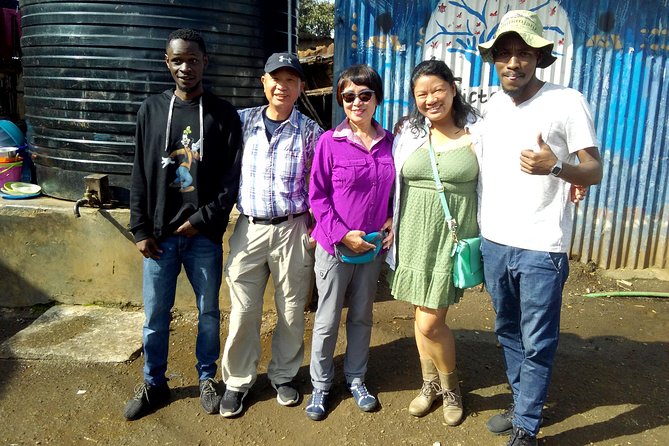
One of the most unusual features is the chance to enter a local home. Lucas has hosted people at his mother’s place, and another part of the experience is described as seeing life inside a slum home.
This can be the most affecting stop because it moves the discussion from statistics to daily routines. A home visit may help you understand how space is used and how families create a sense of normality in difficult conditions.
It also needs the most care. You are entering someone’s private space. Keep your questions polite, accept any limits, and ask clearly before using your camera or phone. Do not assume that paying for the tour gives you permission to photograph residents or their belongings.
The home visit is a good example of why a private tour can be worth more than a cheaper group outing. You have more opportunity to listen and less pressure to move on quickly. At the same time, personal access should never become an excuse for voyeurism.
What the guide adds to the experience

The guide is the central reason to book this particular walk. Lucas is repeatedly described as friendly, caring, well informed, and reassuring. He shares local stories, introduces people, and explains both the hard realities and the resourcefulness of residents.
The guide name is worth checking at booking. The experience is titled with Lucas, but several recorded departures were led by Elijah. Elijah was also praised for being respected in the community, explaining the area clearly, and connecting the tour with Hope and Shine Kibera Centre.
That does not necessarily make one guide better than the other. It does mean you should confirm who will lead your date if Lucas is important to you. The strongest reports focus less on polished commentary and more on feeling safe, welcomed, and able to understand the area.
A good guide also helps you behave well. Listen when you are told where to walk, how to greet people, and when photography is not suitable. In a place like Kibera, cultural judgment is part of the service.
Is $35 a fair price for a private Kibera tour?
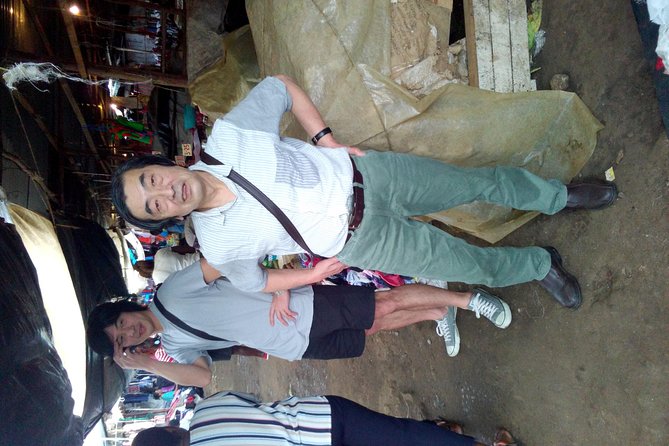
At $35 per person, this is fairly priced if you want a private, three to four hour walk with local access. You are paying for a guide, introductions, interpretation, and a route that would be difficult to arrange responsibly on your own.
The value rises if you care about meeting community members, visiting a home, and seeing an education project. It is less compelling if you only want a quick panoramic look at Kibera or a conventional Nairobi attraction.
Budget for possible extras. Transport is not always included in the basic price, and a donation at the school or community center is optional rather than clearly built into the fee. You may also want to buy something from a local workshop or market.
The free cancellation window is useful: cancel at least 24 hours before the start time for a full refund. Cancellations or changes inside 24 hours are not refundable, and poor weather may lead to a new date or a full refund. Since the route is outdoors and the ground can become slippery, avoid scheduling it too tightly around other plans.
Safety, comfort, and respectful behavior
Safety is the most highly praised practical feature of the experience. People describe feeling completely safe with Lucas or Elijah, and the guides know the community well.
That does not mean you should switch off common sense. Carry only what you need, keep valuables secure, and follow your guide’s instructions. Stay with your group, especially where lanes branch or become crowded.
Wear sturdy shoes and clothing suitable for a walking tour. The route is not presented as wheelchair friendly, and uneven ground may be difficult for anyone with limited mobility. The guide can adjust the pace, but ask about your needs before booking.
Photography deserves special attention. The tour allows you to take pictures, but permission still matters. Ask before photographing homes, adults, children, schools, or workshops. A respectful picture is one made with consent, not simply because a scene looks unfamiliar.
Approach the visit as an exchange. Buy from local sellers if you genuinely want what they offer. Donate only after you understand the project. Do not hand sweets to children automatically, and do not treat poverty as entertainment.
Who should book this experience?
I would recommend it to you if you want a direct, local view of Nairobi and are willing to listen more than you photograph. It suits people interested in community projects, education, local enterprise, and the realities behind a city’s tourist image.
It can also work well during a long airport connection. One person with only a half-day in Nairobi found the experience more worthwhile than staying at the airport, though you should leave generous time for traffic and the tour’s three to four hour length.
It is a good choice for solo visitors because the private format gives you a guide and a safer way to navigate unfamiliar paths. It also suits families with older children who can understand the need for respectful behavior.
I would hesitate to recommend it if you want polished facilities, a predictable transport package, or a simple photo stop. It is also not ideal if muddy tracks, close quarters, or discussions of poverty will make you uncomfortable.
Should you book Lucas’s Kibera Slum Tour?
Book it if you want an honest, personal look at Kibera that includes people, work, education, and community effort. The private format, local guide, home visit, Toi Market, and Hope and Shine Kibera Centre give the experience more substance than a drive-by view.
Before you pay, confirm whether Lucas will lead, what transport costs extra, and which school or community projects are included that day. Bring sturdy shoes, a little extra money only if you may donate, and a camera you are prepared to keep in your pocket.
This tour will not make Kibera comfortable or tidy. Its value is that it asks you to see the area as a real community, with serious challenges and capable people working through them. If that is the kind of experience you want in Nairobi, $35 is a reasonable price.
FAQ
How long does the Kibera Slum Tour with Lucas last?
The experience lasts approximately three to four hours. The walking portion may be closer to two or three hours depending on the pace and stops.
Where does the tour begin?
The stated meeting point is Greenhouse Mall in Kilimani, at Ngong, Kenya.
Where does the tour end?
The tour ends at Equity Bank in Kibera, Nairobi.
Is this a private tour?
Yes. Only your group participates in the private activity.
What places are included during the walk?
The planned stops include Kibera, Toi Market, and Hope and Shine Kibera Centre. The experience also includes pictures and a chance to see life inside a local home.
Does the tour include hotel pickup?
The stated meeting points do not include standard hotel pickup. Some arrangements may offer pickup for an additional fee, so confirm the transport details before booking.
What happens if I cancel?
You receive a full refund if you cancel at least 24 hours before the experience begins. Cancellations or changes made less than 24 hours before the start time are not refunded. If poor weather causes the tour to be canceled, you are offered another date or a full refund.
Just added around Nairobi
- Visit kibera Slum the chocolate city★ 4.8 · 3 reviews
- 4 Days Safari to Lake Nakuru N/P and Maasai Mara N/R★ 5.0 · 18 reviews
- Maasai Mara Day Trip★ 5.0 · 15 reviews
- 3 days maasai mara migration safari★ 4.5 · 7 reviews
- 4 Days Tour Landcruiser in Masai Mara and Lake Nakuru★ 5.0 · 10 reviews
- Kibera Slum Tour with a Local★ 5.0 · 15 reviews
- Wildebeest Migration in Masai Mara and Sightseeing 4 Days Tour★ 4.5 · 6 reviews
- Day Tour to Nairobi national park, Elephants, and Giraffe Center★ 3.5 · 8 reviews
Kibera Slum Tours, compared.




Kibera Slum Tour with Local Social Entrepreneurs
Read our review →



Browse the lists this tour appears in