

Reviewed · KIBERA SLUM TOURS
Tembea Kibera
Kibera is not a sightseeing backdrop. It is a living Nairobi neighborhood where people work, cook, create, raise families, and solve daily problems with limited resources. This private tour puts you in the company of a local guide, such as Luca or Lucas, who can explain the area from personal experience and help you meet residents respectfully.
I like the small private format, which allows your guide to adjust the pace and answer real questions. I also like the chance to share food, learn how a traditional Kenyan dish is prepared, and see community-led projects rather than simply walking past homes.
The main consideration is that this can be an emotionally demanding visit. Poverty, crowded conditions, and limited services may be difficult to see, and the experience depends on your willingness to listen, ask permission, and treat the neighborhood as a home rather than an attraction.
Key points to know before you go

- Your guide may be Luca or Lucas, a guide from Kibera who can explain local transport, customs, and daily life from direct experience.
- The private group setup matters, since only you and your companions take part in the activity.
- A matatu ride may be part of the experience, offering a practical introduction to Nairobi’s shared transport culture.
- Food is central to the visit, with a lesson in preparing and eating traditional Kenyan food.
- The route can include a local home and community organizations, giving you more than a passing view of the neighborhood.
- Pickup and drop-off are offered along Ngong Road, but not from every address in Nairobi.
What this Kibera tour is really about
This experience is built around contact, not sightseeing. You spend several hours walking through Kibera with a local guide and meeting people from different backgrounds and communities. The aim is to understand how residents live and work, and how local groups respond to the practical challenges around them.
That difference matters. A quick drive past Kibera can leave you with an image of corrugated roofs and crowded lanes, but little sense of the people who live there. A guided walk can add context: how people reach work, how food is prepared, how small businesses function, and how residents organize projects to improve daily life.
I would approach this as a cultural exchange, not a poverty tour. The best moments are likely to come through conversation and shared activity. You may learn as much from preparing food with a local family as from anything your guide points out on the walk.
The tour lasts about three to four hours, with the main itinerary described as roughly four hours. That is enough time to see several parts of the neighborhood without turning the visit into an exhausting full-day commitment.
More guided Kibera walks:
- Nairobi: Explore Kibera Slum with Local Guides
★ 4.9 · 365 reviews - Kevins Kibera Slum Tours
★ 5.0 · 213 reviews - Nairobi: Kibera Slum storytelling tour with a Local
★ 5.0 · 185 reviews
Meeting a guide who knows Kibera personally
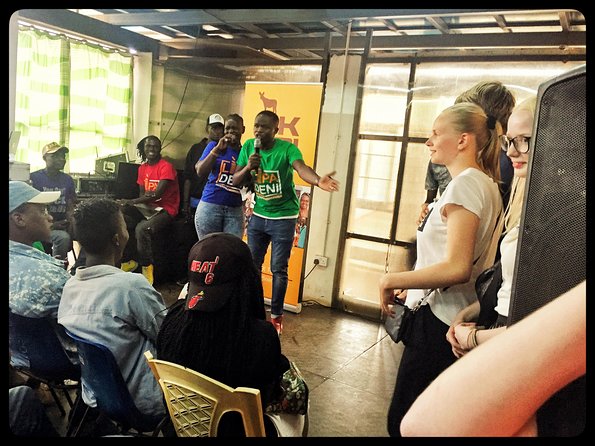
The guide is one of the most important parts of this experience. The available information names Luca, also written as Lucas in one account, as a guide from Kibera. That local connection gives the tour a personal angle that a guide simply arriving from another part of Nairobi may not offer.
You can expect explanations about the transport system, local customs, and the way people manage daily life. One route began with a pickup at a residence and continued to Kibera by matatu, Nairobi’s shared minibus transport. If your itinerary includes this, it gives you a useful introduction to a normal part of city life rather than moving only in a private vehicle.
The private format helps here. You do not have to compete with a large group to ask questions, and the guide can respond to your interests. If you want to understand community projects, food, transport, or street art, say so early.
Still, a local guide does not make every part of the visit easy. You are entering a residential area, and the guide’s role is to help you behave properly, not to turn every encounter into a photo opportunity. Listen closely when you are told where to walk, when to ask permission, and how to interact with residents.
Walking through Nairobi’s largest informal settlement
Kibera is described as Africa’s largest urban informal settlement. The tour gives you a ground-level look at its streets, homes, workplaces, and social networks. You will not be seeing a polished tourist district, and that is precisely why the visit can be so revealing.
The physical conditions may be confronting. A person accustomed to developed-country infrastructure could find the surroundings shocking. At the same time, reducing Kibera to hardship would give you only half the picture. The visit also shows resourcefulness, work, humor, hospitality, and the many ways people support themselves and one another.
Your guide can help connect what you see with the wider story. A narrow path, a small home, or a busy food area is not just a visual impression. It is part of a neighborhood where residents have routines, relationships, and ambitions.
You should dress and act with discretion. The supplied details do not set out a formal clothing code, so I would keep your clothing practical and respectful, avoid drawing attention to yourself, and follow your guide’s advice about photography. Ask before taking pictures of people or homes.
Sharing food instead of only observing

Food gives this tour a welcome hands-on element. You are not limited to watching daily life from the edge. You can learn how traditional Kenyan food is prepared and then eat it.
That activity creates a natural way to talk. Cooking offers a shared task, and it can lead to questions about household routines, ingredients, work, and local customs without forcing a formal interview. For many visitors, this may be the most comfortable way to begin a cross-cultural exchange.
The exact dish is not specified, so do not book this expecting a particular recipe or menu. The value is in the lesson and the personal contact. If you have dietary restrictions, ask about them when booking or before the food activity begins, since no special dietary arrangements are described.
There is also a practical point here. Food preparation takes time, so the route may not feel like a tightly timed checklist. That is a strength if you prefer conversation and participation. It may feel less satisfying if you want to cover a large number of sights in a short period.
A few more Nairobi days to weigh up
- Nairobi National Park Half-Day Tour; Free Wi-Fi connection
★ 5.0 · 878 reviews - Nairobi: National Park & Optional Elephants & Giraffe Center
★ 4.8 · 874 reviews - NAI NAMI: Nairobi Storytelling Tour with Street Children
★ 5.0 · 792 reviews - Nairobi National Park Half-Day Game Drive
★ 4.5 · 738 reviews
Street art and local creativity

Street art is another part of the route. In a neighborhood often described only through poverty, public art offers a different view of local expression and identity.
The art can help you see how residents use shared spaces to communicate ideas, brighten their surroundings, and show pride in their community. Your guide’s explanation is likely to be more useful than simply spotting painted walls, since the meaning and local context may not be obvious to an outsider.
Do not expect a formal gallery visit or a fixed art exhibition. The details provided describe street art projects as part of the walk, not a separate museum-style stop. The location and amount of time devoted to the art may vary with the day’s route.
I like this part because it keeps the experience from becoming a narrow lesson in deprivation. Kibera is also a place where people make, organize, teach, and create.
Homes, families, and community projects

The route can include a visit to a typical Kibera home, where you may speak with the family who lives there and learn about habits, difficulties, and daily routines. This can be one of the most personal parts of the tour, so it also requires the most care.
A home visit should never be treated as a display. Your guide can help set the tone, but you should remain polite, keep questions considerate, and ask before taking photographs. The setting may be modest, but the people welcoming you are offering access to private space.
The itinerary can also include visits to three organizations working on local improvement projects. The exact organizations are not named, and the program may change, but the idea is valuable: you get to see how residents and local groups respond to community needs rather than assuming outside help is the only force at work.
These visits add substance to the walk. You may leave with a better sense of both the problems and the solutions. The tour can show you how people work toward better conditions while dealing with limited resources.
How much value do you get for $40.90?

At $40.90 per person, the tour is reasonably priced for a private experience lasting about half a day. The price includes admission to the Kibera visit, and pickup and drop-off are available from a hotel or commercial address along Ngong Road.
The value is strongest when you have two or more people sharing the experience and want a personal guide rather than a large scheduled group. You are paying for time, local access, explanations, and a private format. You are not paying for a long list of monuments or a luxury vehicle.
Transport details affect the value. Pickup is not stated as available throughout Nairobi, only along Ngong Road. If you are staying elsewhere, you may need to reach the meeting point yourself. The area is near public transportation, but the exact meeting arrangements should be confirmed before you set out.
The tour is often reserved well ahead of time, with an average booking lead time of 71 days. That suggests you should not leave it until the last minute if it is important to your Nairobi plans. At the same time, confirmation is provided at booking, and free cancellation is available until 24 hours before the start time.
Who will enjoy this experience most?

I would recommend this tour to you if you want a human, local view of Nairobi and are prepared for serious subject matter. It suits curious visitors who enjoy conversation, shared food, walking, and learning how communities function beyond the usual tourist route.
It is also a good choice if you prefer a private outing. Families, couples, and small groups can ask questions freely and spend more time on the parts that matter to them. Most people can participate, according to the activity details, and the tour is near public transportation.
You may want to choose another activity if you are looking for easy sightseeing, polished facilities, or a strictly predictable schedule. The walk takes place in a real residential neighborhood, and conditions may be uncomfortable. The experience is not designed to hide that reality.
Children and teenagers may find it meaningful, but adults should decide whether they are ready for the subject. The information provided says most participants can take part, but it does not give a specific minimum age or detailed accessibility guidance.
Timing, weather, and practical planning
The experience operates Monday through Sunday from 7:00 AM to 6:00 PM within the stated operating period. Your booking will have a set start time, and the activity itself takes roughly three to four hours.
Good weather is required. If poor weather causes a cancellation, you will be offered another date or a full refund. This makes sense for a walking tour through outdoor streets, but it means you should leave some flexibility in your Nairobi schedule if possible.
Plan around the pickup area. Hotel or commercial-address pickup and drop-off are offered along Ngong Road. If your accommodation is outside that corridor, check the meeting point rather than assuming a citywide transfer.
Bring a phone with your mobile ticket available. Confirmation is sent at booking. Since the route includes walking, local interaction, and possibly a matatu ride, I would keep your belongings secure and easy to manage, though the supplied details do not specify a luggage policy.
My take on the cultural exchange
The strongest part of this experience is its directness. You can meet people, share food, learn about local work, see creative projects, and hear explanations from someone connected to Kibera. That combination gives the visit more depth than a short drive-by view.
The best approach is simple: come with respect, curiosity, and patience. Do not expect residents to perform poverty for you. Ask questions, listen to the answers, and let the guide explain what is appropriate.
The experience has earned a five-star rating from 14 submitted ratings, with 100 percent recommending it. Those numbers suggest a consistent level of satisfaction, but they do not remove the need for thoughtful preparation. A highly personal tour can be memorable precisely because it asks you to confront difficult realities.
Should you book Tembea Kibera?
Book it if you want to meet Nairobi residents, understand Kibera through local eyes, and take part in a private cultural exchange rather than collect standard city sights. The $40.90 price is fair for a three- to four-hour private visit with local guiding, food preparation, community contacts, and possible transport by matatu.
Skip it if you want a light, comfortable outing or feel uneasy entering a low-income residential area. This is a serious experience, but it is not without warmth, creativity, or hospitality. For the right visitor, it can become one of the most meaningful parts of a Nairobi stay.
FAQ
How long does the Tembea Kibera tour last?
The experience lasts approximately three to four hours. The main itinerary describes the Kibera visit as about four hours.
How much does the tour cost?
The listed price is $40.90 per person.
Is this a private tour?
Yes. Only your group and your companions participate in the private activity.
Is hotel pickup available?
Pickup and drop-off are offered from hotels or commercial addresses along Ngong Road. The information does not state that pickup is available from every location in Nairobi.
What can I do during the Kibera visit?
You can walk through Kibera, meet people from different communities, learn to prepare and eat local food, see street art, and visit community projects. A local home visit may also be part of the route.
Will I use public transportation?
A matatu ride was included in one described route, along with an explanation of Nairobi’s transport system and matatu culture. The exact transport plan for every booking is not specified.
Can most people participate?
The activity information says most people can participate and notes that the tour is near public transportation. Detailed accessibility information is not provided.
What is the cancellation policy?
You can cancel at least 24 hours before the start time for a full refund. Cancellations or changes made less than 24 hours before the start time are not refunded or accepted. If poor weather causes cancellation, you will be offered another date or a full refund.
Just added around Nairobi
- Visit kibera Slum the chocolate city★ 4.8 · 3 reviews
- 4 Days Safari to Lake Nakuru N/P and Maasai Mara N/R★ 5.0 · 18 reviews
- Maasai Mara Day Trip★ 5.0 · 15 reviews
- 4 Days Tour Landcruiser in Masai Mara and Lake Nakuru★ 5.0 · 10 reviews
- 3 days maasai mara migration safari★ 4.5 · 7 reviews
- Kibera Slum Tour with a Local★ 5.0 · 15 reviews
- Wildebeest Migration in Masai Mara and Sightseeing 4 Days Tour★ 4.5 · 6 reviews
- Day Tour to Nairobi national park, Elephants, and Giraffe Center★ 3.5 · 8 reviews
Kibera Slum Tours, compared.





Kibera Slum Tour with Local Social Entrepreneurs
Read our review →


Browse the lists this tour appears in