

Reviewed · KIBERA SLUM TOURS
Kibera Slum Tour with a Local
Kibera is best understood with someone who lives there. This three-hour visit is led by local guides born and raised in the community, including Erick and Sammy, who explain daily life with direct experience rather than a distant outside view. Half of the booking fee pays school fees for children in need.
I like the clear social purpose and the chance to see more than a passing roadside view. I also like the warm, practical setup: an office with Wi-Fi and clean washrooms, a craft stop, a home visit, and time to ask questions over a drink or local food.
The main consideration is that this is a visit to a poor community, not a polished sightseeing attraction. Meeting children and entering a local home call for respect, sensitivity, and a willingness to listen rather than simply take photographs.
Key points to know before booking

- Local guides with personal ties: The four guides were born, raised, and still live in Kibera.
- A direct community contribution: 50 percent of the booking fee helps pay school fees for needy children.
- Five varied stops: You visit the office, a recycling craft center, children, a local home, and a cafeteria.
- A small-group feel is possible: The maximum group size is 30, though smaller departures may feel more personal.
- Useful starting point: Meet at Prestige Plaza Shopping Mall on Ngong Road, with the tour ending there.
- Flexible format: The team can adjust the experience to suit your interests.
Meeting Kibera through people who live there

The strongest reason to book this experience is the guide team. OAC Kenya Tours is run by four local guides who were born, raised, and still live in Kibera. That matters because Kibera is not a place you can understand from a quick drive past its edge.
Your guides can speak about the community as home, not as an abstract problem. They explain how people earn a living, how families manage daily challenges, and how local residents work to improve their own situation. Erick and Sammy are named by the company as guides, and their role in welcoming visitors is part of what gives the experience its personal feel.
You should expect frank conversation. The aim is to learn about local life, including hardship and resilience. This is not a performance built around poverty. Still, the structure includes a home visit and a meeting with children, so you should approach both with care.
I would treat the guides as your cultural bridge. Ask questions, listen closely, and let them explain what is suitable. The best experience here is not about collecting dramatic images. It is about seeing how people live and work, and understanding the community on its own terms.
More guided Kibera walks:
- Nairobi: Explore Kibera Slum with Local Guides
★ 4.9 · 365 reviews - Kevins Kibera Slum Tours
★ 5.0 · 213 reviews - Nairobi: Kibera Slum storytelling tour with a Local
★ 5.0 · 185 reviews
The office gives you a thoughtful start
The first stop is the OAC office, where you receive introductions and a briefing. This is more useful than it may sound. You have a chance to meet your guide, understand how the visit will work, and ask any early questions before heading farther into the community.
The office has free Wi-Fi and clean washrooms. Those facilities make the starting point comfortable, especially if you are coming directly from a morning of sightseeing or need to freshen up before the tour. Bottled water or soda is provided during the experience, and all fees and taxes are included in the $25 price.
There is also a secure guest room for people interested in spending a night in Kibera at an extra cost. The information provided does not give details about the overnight arrangement, so treat that as a separate option and ask the company for current terms before making plans.
The briefing is also the right time to discuss photography, gifts, and the home visit. The tour is designed to connect you with residents, but courtesy matters more here than on a standard city walk. A small question to your guide can prevent an awkward moment later.
Recycled crafts show local enterprise
At the crafts center, you see local people turning recycled materials into jewelry and other handmade goods. This stop adds an important economic angle to the tour. Kibera is presented not only as a place facing serious needs, but also as a community where people create products, earn income, and build small enterprises.
I like this part because it gives you something concrete to look at while explaining how local work fits into daily life. The craft center is also connected to OAC Kenya Crafts, one of the social enterprises run by the same team.
You may have the chance to buy handmade items, though the supplied details do not specify prices or the exact range of products. If you are interested in shopping, ask what portion of a purchase supports the maker and what payment methods are accepted.
The center can be a good place to slow down and talk. Rather than rushing from one photo stop to the next, take time to understand how materials are reused and why craft work matters. It gives the visit a practical focus and helps you see local initiative alongside the more difficult subjects discussed elsewhere.
Meeting children requires a gentle approach

One of the five stops is a meeting with children from the community. The guides are familiar faces in Kibera, and children were described as friendly with them and happy to follow along during the visit. That local trust helps make the encounter feel less staged.
At the same time, this is the point where your conduct matters most. Children should not be treated as part of the scenery. Ask your guide before taking photographs, avoid making promises, and follow the team’s direction about conversation and gifts.
One useful tip is to ask in advance if a small item, such as a lollypop, is appropriate. A child may be delighted by a simple treat, but gifts can also create confusion if handled poorly. Your guide can tell you what works best for the group and setting.
The larger purpose is important. Half of each booking fee goes toward school fees for needy children in the community. OAC Kenya Tours also operates KCOOP Organization, a registered nonprofit established in 2022 that works in Kibera and rural parts of Kenya.
This means the children’s stop is tied to an ongoing local effort, not just a one-time encounter. You are still paying for a tour, but part of that payment supports education. Ask the guides how the program works if this is a major reason for your booking.
A few more Nairobi days to weigh up
- Nairobi National Park Half-Day Tour; Free Wi-Fi connection
★ 5.0 · 878 reviews - Nairobi: National Park & Optional Elephants & Giraffe Center
★ 4.8 · 874 reviews - NAI NAMI: Nairobi Storytelling Tour with Street Children
★ 5.0 · 792 reviews - Nairobi National Park Half-Day Game Drive
★ 4.5 · 738 reviews
A home visit makes daily life more personal

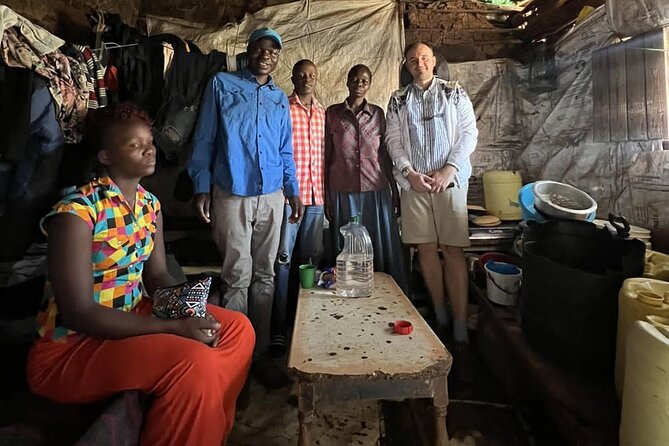
The home visit is likely to be the most intimate part of the experience. You are welcomed into one local house and given a closer look at domestic life in Kibera. The supplied details do not identify the host or describe the home, so the exact conversation will depend on the household and the guide.
That uncertainty is part of the nature of the stop. It is not a museum display with fixed labels. You enter someone’s living space, which means you should be polite, avoid touching belongings without permission, and keep photographs to a minimum unless invited.
For you, the value is the chance to replace broad assumptions with a more human view. A home visit can show how families organize their space and what daily routines look like, but it is not a complete picture of every household in Kibera. Keep that limit in mind.
I appreciate that the visit is included in a larger program rather than presented as the entire point. The craft center, cafeteria, office, and guide conversations provide context. Together, the stops help you see residents as workers, parents, students, hosts, and neighbors, not only as people facing poverty.
A cafeteria stop gives you time to talk

The final stop is a cafeteria, where you can rest with soft drinks or local food while the guides tell you more about Kibera. This pause gives the three-hour experience a natural ending. It also creates the best setting for questions that may come to mind as you move through the community.
Food details are limited, so ask what is available on the day if you have dietary needs. Bottled water or soda is provided, but the information does not say that a full meal is included. Plan on the cafeteria as a short refreshment stop, not a guaranteed restaurant lunch.
I like this format because serious subjects need breathing room. After seeing the craft work, meeting children, and visiting a home, you can sit down and discuss what you have seen. The guides can also explain more about the nonprofit, the social enterprises, and the ways booking income returns to the community.
The relaxed stop may also help if you are unsure how to process the experience. Kibera is complex. It is possible to leave with admiration for local resilience while also recognizing the hard conditions many families face.
What $25 buys you, and what it supports

The cost is $25 per person. For a three-hour experience with local guides, a planned sequence of five stops, bottled water or soda, and all fees and taxes included, that is a reasonable price. The stronger value comes from the community contribution: 50 percent of the booking fee is used to help pay school fees for needy children.
You should still view the payment in two ways. Part of it pays for guiding, organization, and the visit itself. Part of it supports OAC’s stated education work. If you want a tour where your spending has a clear social purpose, this arrangement gives you a direct reason to choose it.
The group limit is 30 people. That is not especially small, and a full departure could make the home visit or personal questions feel less intimate. The company says it can customize the experience, so contact OAC Kenya Tours if you have particular interests or want to discuss a smaller arrangement.
The tour is booked with a mobile ticket, and confirmation is received at booking. It is generally suitable for most participants, service animals are allowed, and the starting point is near public transportation. The meeting location is Prestige Plaza Shopping Mall on Ngong Road in Nairobi, and the activity ends back there.
Safety, comfort, and the right mindset

A guide familiar with the area makes a major difference in a place you may not know. The guides live in Kibera and are known by people there, and one account of the experience describes feeling safe throughout the visit. That is encouraging, but normal city awareness still applies.
Keep your belongings secure, follow the guide’s instructions, and avoid wandering away from the group. Wear practical shoes and clothing suitable for a three-hour community visit. The supplied information does not specify the walking surface or accessibility details, so ask OAC directly if mobility is a concern.
This experience is not ideal if you want a polished attraction, a scripted historical tour, or a private luxury outing. It suits you better if you are open to honest conversation and understand that the subject matter may be uncomfortable.
It can also be a good choice for visitors who want their money to do more than cover admission. OAC operates both OAC Kenya Tours and OAC Kenya Crafts, along with KCOOP Organization. The company is seeking partnerships with individuals, organizations, and businesses to expand its support for children.
Timing your booking and cancellation
The experience lasts about three hours and is often booked around 12 days ahead. That lead time suggests you should reserve before arriving in Nairobi, especially if you need a certain day.
You can cancel for a full refund up to 24 hours before the start time. Cancellations or changes made within 24 hours are not refunded or accepted. The tour depends on good weather, and if poor weather forces cancellation, you are offered another date or a full refund.
That policy is straightforward, but check the local start time carefully. A mobile confirmation should make the meeting details easy to keep on your phone.
Who should book the Kibera visit?
I would recommend this experience to you if you want a personal introduction to Kibera led by residents themselves. It is especially suitable if you care about community-led tourism, want to support school fees, and are ready to listen as much as you look.
The strongest parts are the local guide team, the social purpose, and the range of stops. Erick, Sammy, and the other guides bring personal knowledge, while the craft center and cafeteria keep the experience from focusing only on hardship.
Think twice if you are uncomfortable with home visits, meeting children, or discussing poverty directly. The visit calls for respect and emotional maturity. It is also worth asking about group size and mobility needs before booking.
At $25, the tour offers solid value, particularly because half the booking fee supports children’s education. Book it if you want a structured, community-based visit and will treat Kibera as a living neighborhood, not a spectacle.
FAQ
How long does the Kibera Slum Tour with a Local last?
The experience lasts approximately three hours.
Where does the tour start and end?
It starts at Prestige Plaza Shopping Mall on Ngong Road in Nairobi and ends back at the same meeting point.
What stops are included?
The experience includes the OAC office, a crafts center, a meeting with children, a local home visit, and a cafeteria stop.
How much does the tour cost?
The price is $25 per person. Bottled water or soda, all fees, and taxes are included.
How does the tour support the community?
Fifty percent of the booking fee helps pay school fees for needy children in Kibera. The guide team also runs KCOOP Organization, a registered nonprofit established in 2022.
Can I cancel for a refund?
Yes. You can cancel at least 24 hours before the start time for a full refund. Cancellations or changes made less than 24 hours before the start time are not refunded. If poor weather cancels the experience, you are offered another date or a full refund.
Just added around Nairobi
- Visit kibera Slum the chocolate city★ 4.8 · 3 reviews
- 4 Days Safari to Lake Nakuru N/P and Maasai Mara N/R★ 5.0 · 18 reviews
- Maasai Mara Day Trip★ 5.0 · 15 reviews
- 3 days maasai mara migration safari★ 4.5 · 7 reviews
- 4 Days Tour Landcruiser in Masai Mara and Lake Nakuru★ 5.0 · 10 reviews
- Wildebeest Migration in Masai Mara and Sightseeing 4 Days Tour★ 4.5 · 6 reviews
- Day Tour to Nairobi national park, Elephants, and Giraffe Center★ 3.5 · 8 reviews
- 3 Days Unforgettable Masai Mara Safari Tour★ 5.0 · 6 reviews
Kibera Slum Tours, compared.





Kibera Slum Tour with Local Social Entrepreneurs
Read our review →


Browse the lists this tour appears in