

Reviewed · KIBERA SLUM TOURS
Kibera slum tour with Lucas
Kibera is not a sightseeing backdrop. It is a living neighborhood, and this walking tour lets you meet it through people who were born and raised here. You move from Toi Market to a family home, a craft workshop, a railway-side viewpoint, and a school supported by the tour.
I like two things right away: the local guides, including Lucas, Effie, Peter, and Elijah, explain daily life from personal experience, and 30% of the $35 fee goes to Hope and Shine Kibera Centre, a school serving more than 40 children. The home visit also gives the tour a human touch that a simple roadside photo stop cannot match.
The trade-off is physical and emotional. Expect uneven or muddy paths, stairs and narrow routes, and difficult scenes involving poverty and basic services. Two craft-shop stops can also feel sales-focused, so go ready to browse without buying.
Key points at a glance

- Toi Market’s six acres: Walk through sections selling clothing, food, hardware, and other goods in one of Nairobi’s largest open-air markets.
- A guide’s family home: Meet the family of the guide on duty and see how a Kibera household is arranged.
- Bone and brass crafts: Visit Victorious Craft Shop, where domestic animal bones are recycled into jewelry and ornaments.
- Hope and Shine Kibera Centre: See the school supported by 30% of the tour fee and meet some of its children.
- Railway-line viewpoint: Gain a raised view over much of Kibera near the old colonial railway line.
- A people-first walk: Lucas and his team focus on safety, questions, local stories, and flexible pacing.
Starting at Greenhouse Mall on Ngong Road

The tour begins at the entrance to Greenhouse Mall, on Ngong Road. This gives you a clear, public meeting point rather than an uncertain street corner inside Kibera.
Your guide briefs you on the route, the day’s plan, and basic expectations before you set off. That short introduction matters. A visit to a neighborhood such as Kibera requires more care than a standard city walk, and your guide helps you understand when to take photographs, how to move through busy areas, and how to approach residents respectfully.
The operation is led by Visit Kibera Expeditions. Depending on the day, you may be accompanied by Lucas, Effie, Peter, or Elijah. The strongest part of the guiding team is that the guides are from Kibera themselves. They are not simply repeating facts about the area. They can explain the streets, families, markets, and challenges from a local point of view.
The listed walk lasts three hours, but the route can stretch with breaks, photography, shopping, or extra time at the school and home. One experience included roughly two more hours for walking, a photo stop, shopping, and views. Ask at the start how much time you have if your schedule is tight.
More guided Kibera walks:
- Nairobi: Explore Kibera Slum with Local Guides
★ 4.9 · 365 reviews - Kevins Kibera Slum Tours
★ 5.0 · 213 reviews - Nairobi: Kibera Slum storytelling tour with a Local
★ 5.0 · 185 reviews
Toi Market, where Kibera trades
Toi Market is one of the tour’s most active stops. It is described as Nairobi’s second-largest open-air market after Gikomba, and the route takes you through different sections rather than showing you only the edge.
You might see areas devoted to clothing, food, hardware, and other household goods. The value here is not only the shopping. The market shows how people buy, sell, repair, and earn money close to home. Your guide can help explain the work taking place around you and introduce you to traders.
For you, the market is also a useful reminder that Kibera is not defined only by hardship. It is a working community with commerce, skills, and routines. You will see poverty, but you will also see enterprise and daily activity.
Keep your belongings secure and stay close to your guide in crowded sections. Comfortable shoes matter, since this is a walking experience rather than a vehicle-based look at Kibera. If you want photographs, ask before taking close-up pictures of people. The tour includes plenty of possible photo locations, but good judgment matters more than collecting images.
Recycling bone into jewelry at Victorious Craft Shop
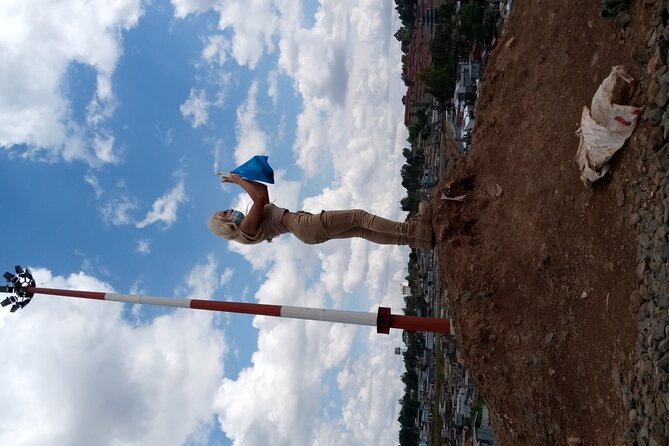
At Victorious Craft Shop, you see a more unusual side of local work. Domestic animal bones are recycled and combined with brass to make jewelry, ornaments, and other crafts.
This stop works best when you pay attention to the process. It gives you a clear example of how discarded material can become a source of income. The craft is also a useful counterpoint to the market, where goods are bought and sold in a more familiar way.
There is a second craft-related stop, described as a Power Women shop. The women there educate young girls about HIV and AIDS. This adds a social and educational purpose to the craft visits, though you should know that shopping may be part of the experience.
One practical caution comes from the structure of these stops. You may feel an expectation to buy something, especially if the shop is supporting local workers. You are free to decide, but ask for prices before choosing an item. Clear pricing makes the experience easier for everyone, and you should never feel that a purchase is required to prove respect.
Seeing Kibera from the old railway line

The route reaches a raised point near the old colonial railway line, giving you a broader view across Kibera. This is one of the few moments when the tour pauses and lets you take in the full scale of the area.
The figures associated with Kibera are enormous. It is commonly described as Africa’s largest urban slum and the world’s second largest, with the tour materials also referring to an area of about 800 acres and more than one million inhabitants. Exact population estimates vary, but the point is clear: this is not a small pocket of hardship. It is a vast urban community.
From the raised viewpoint, your guide can point out practical issues such as water and electricity supplies, washing areas, toilet systems, and the way people move through the neighborhood. These details help you understand that poverty is not an abstract idea. It affects water, sanitation, privacy, safety, and household space.
The viewpoint is also a good photo stop, but take care with what you frame. A wide view of the neighborhood can be useful. A close-up photograph of someone’s home or private life may not be.
A few more Nairobi days to weigh up
- Nairobi National Park Half-Day Tour; Free Wi-Fi connection
★ 5.0 · 878 reviews - Nairobi: National Park & Optional Elephants & Giraffe Center
★ 4.8 · 874 reviews - NAI NAMI: Nairobi Storytelling Tour with Street Children
★ 5.0 · 792 reviews - Nairobi National Park Half-Day Game Drive
★ 4.5 · 738 reviews
Entering a local home with the guide’s family
The home visit is the tour’s most personal stop. You are invited inside a Kibera house connected to one of the guides and meet the family of the guide on duty.
This is not a staged museum display. It is a chance to see the scale and arrangement of a real home, while hearing about family life from people who live in the community. Guides have included Lucas, Effie, Peter, and Elijah, and the family welcome is an important part of the visit.
You should approach this stop with humility. A home visit can feel intimate, and you are entering someone’s private space. Follow your guide’s lead, ask before taking pictures, and do not treat the visit as a poverty photo opportunity.
For many people, this becomes the point that connects the wider issues to everyday life. The market and railway viewpoint show the size of Kibera. The home visit shows what that scale means for one family.
Hope and Shine Kibera Centre and the school connection
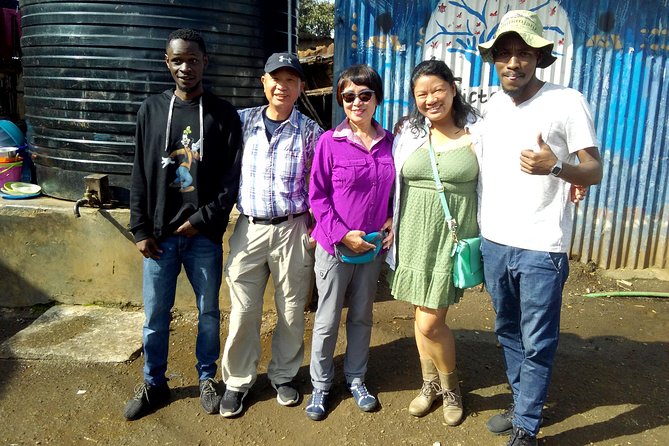
The school visit is the final major stop before departure. Hope and Shine Kibera Centre hosts more than 40 children, and 30% of the tour fee helps support it.
You can expect to meet children and see the center’s work. The school is being developed and renovated with income connected to the tours. This gives your $35 fee a clear local purpose, although you should see the donation as support for the school rather than as a complete solution to Kibera’s needs.
The school visit also gives the tour a constructive ending. You have seen difficult conditions, but you also see an effort to provide education for children who might otherwise struggle to attend school. That balance matters. A responsible community tour should not leave you with only shock or sadness.
If you want to bring something, one person was able to donate books, coloring pens, and T-shirts. The supplied information does not give a formal donation policy, so ask Visit Kibera Expeditions before packing supplies. Do not assume that every item is needed or appropriate.
After the school, the route ends near Equity Bank Kibera. From there, you return to Greenhouse Mall. One guide helped an older couple arrange an Uber safely, which is useful if you do not know the area or are traveling with mobility concerns.
What the $35 price really includes

At $35 per person, this is inexpensive compared with many private Nairobi experiences, but the value is not mainly the number of stops. You are paying for a local guide, a structured route, safety support, entry to the experience, and a direct contribution to a school.
The 30% school allocation makes the fee easier to assess. On a $35 booking, that represents $10.50 per person going toward the school, based on the stated percentage. The remaining amount covers the tour operation and guiding. This is a useful level of transparency, although you may still want to ask how school funds are used if that is important to you.
The tour also provides access that would be difficult to arrange responsibly on your own. You receive introductions, local context, and guidance through places where an outsider could easily misread the situation. That makes the price worthwhile for you if your goal is understanding rather than simply seeing a dramatic view.
It is less suitable if you want a relaxed sightseeing walk, polished attractions, or a predictable shopping-free route. The craft stops may involve buying, and the physical route is not gentle.
Walking conditions, safety, and comfort
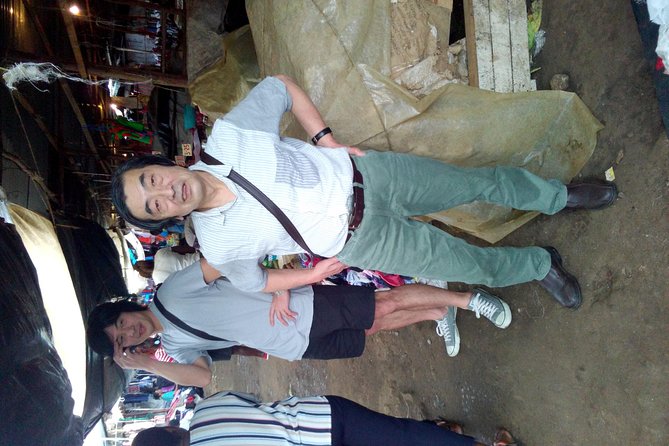
Wear sturdy, comfortable shoes. The ground can be uneven, muddy, or wet, and the route includes dirt trails, narrow paths, and climbs. Walking sticks may be useful for anyone who already relies on them.
The tour is not suitable for wheelchair users. It is also listed as unsuitable for people over 95, though age alone is not the real issue. The practical question is how well you handle several hours of walking over rough ground.
Safety is a major reason to use a local guide. Solo visitors have felt safe with the guiding team, and guides make an effort to keep people together and help with transport at the end. Still, follow normal city precautions: carry only what you need, keep valuables out of sight, and listen when your guide gives instructions.
English is the tour language. If you are not fluent, you may miss some of the explanations, but the route remains visual and hands-on. One participant with limited English still found the experience satisfying because the guide was kind and supportive.
Who will get the most from this tour
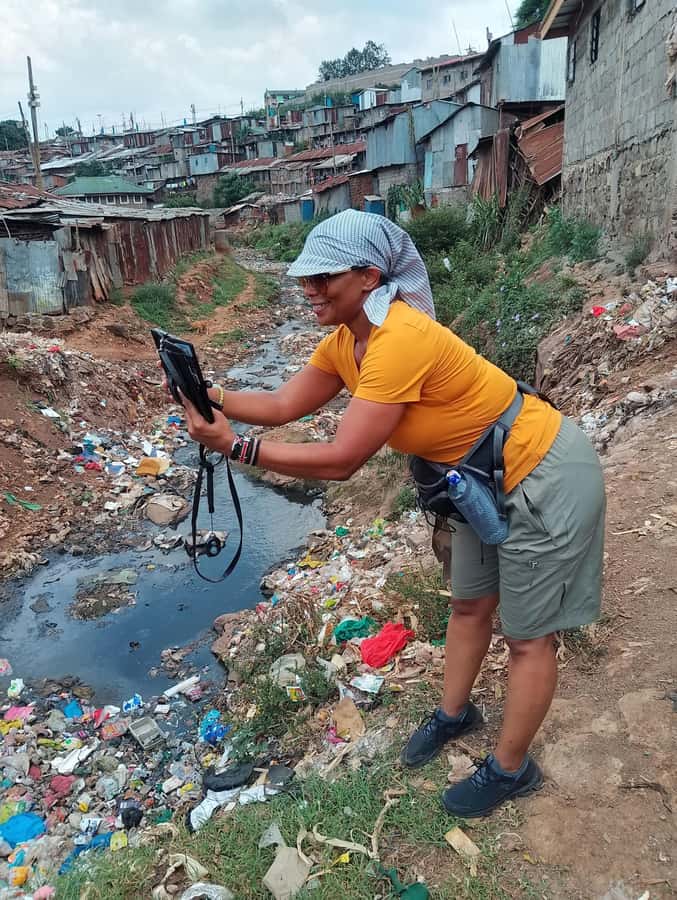
I would recommend this walk if you want to look beyond Nairobi’s standard attractions and understand how a large urban community functions. It suits solo visitors, couples, and people interested in local enterprise, education, social issues, and community-led projects.
It also works well for anyone who prefers a personal guide to a bus window. You can ask questions as they arise, and the flexible approach allows more time for photographs or discussion when the schedule permits.
Families should think carefully about the emotional side. The school may be meaningful for children, but the visible poverty and home visit can also be difficult. Adults should decide how much context younger children need before booking.
This is not the right choice for you if uneven ground is a serious problem, if you want a short and easy walk, or if you strongly dislike shopping stops. It is also not a good fit if you want to photograph people without interruption. Respect is part of the cost of entry.
Should you book the Kibera tour with Lucas?
Book it if you want a carefully guided look at Kibera that includes both hardship and community effort. The strongest reasons are the local guides, the home visit, the market walk, and the school contribution. A full 30% of the $35 fee supports Hope and Shine Kibera Centre, giving the tour a practical purpose beyond sightseeing.
Go with realistic expectations. You will walk on rough ground, encounter poverty, and may feel pressure to buy at craft shops. Ask about pacing, photography, and purchases at the start. If you can accept those conditions, this is a thoughtful way to meet Nairobi through local people and support a school at the same time.
FAQ
Where does the Kibera tour meet?
The meeting point is at the entrance of Greenhouse Mall on Ngong Road.
How long does the tour last?
The advertised guided tour lasts three hours. The route may take longer when you include breaks, photography, shopping, walking, and extra time at the school or other stops.
How much does the tour cost?
The price is $35 per person.
What language is the tour offered in?
The live tour guide speaks English.
Which places do you visit?
The route includes Toi Market, Victorious Craft Shop, the Power Women shop, a local family home, a raised viewpoint near the old colonial railway line, and Hope and Shine Kibera Centre.
Does the tour support a local school?
Yes. Thirty percent of the tour fee supports Hope and Shine Kibera Centre, which hosts more than 40 children.
Who leads the tour?
Guides include Lucas, Effie, Peter, and Elijah. The guides are born and raised in Kibera.
What should you bring?
Bring comfortable shoes and a camera. Sturdy footwear is especially useful because paths may be uneven, muddy, or wet.
Is the tour suitable for wheelchair users?
No. The tour is not suitable for wheelchair users because the route includes uneven ground and walking paths.
Just added around Nairobi
- Visit kibera Slum the chocolate city★ 4.8 · 3 reviews
- 4 Days Safari to Lake Nakuru N/P and Maasai Mara N/R★ 5.0 · 18 reviews
- Maasai Mara Day Trip★ 5.0 · 15 reviews
- 4 Days Tour Landcruiser in Masai Mara and Lake Nakuru★ 5.0 · 10 reviews
- 3 days maasai mara migration safari★ 4.5 · 7 reviews
- Kibera Slum Tour with a Local★ 5.0 · 15 reviews
- Wildebeest Migration in Masai Mara and Sightseeing 4 Days Tour★ 4.5 · 6 reviews
- Day Tour to Nairobi national park, Elephants, and Giraffe Center★ 3.5 · 8 reviews
Kibera Slum Tours, compared.





Kibera Slum Tour with Local Social Entrepreneurs
Read our review →


Browse the lists this tour appears in