
Reviewed · KIBERA SLUM TOURS
Visit Kibera The Largest Slum With a Local
Kibera is not a museum or a staged attraction. It is a living Nairobi neighborhood, and this three-hour walk with Jack, who grew up here, gives you a direct look at daily life, local work, housing, and community spirit. You’ll visit a crafts center, open-air market, home, and cafeteria rather than simply viewing the area from a vehicle.
I like the personal connection and the clear social purpose. Half of the $10 booking fee goes back into the community to help pay school fees and buy supplies for orphans and vulnerable children. I also like the chance to buy locally made crafts, bargain at the market, eat street food, and have tea with mechanics.
The main consideration is that this is a working neighborhood, not a polished sightseeing site. You should be comfortable walking through busy streets, seeing modest living conditions, and approaching the visit with respect. Transportation to Prestige Plaza is not included, and the meeting point is outside Java House.
Key points to know before you go
- Jack grew up in Kibera: His personal experience gives the visit a human focus, backed by his work as a social worker and social entrepreneur.
- Five stops give the walk structure: You visit the office, crafts center, market, home, and cafeteria.
- Half of the fee supports local children: The money helps with school fees and supplies for orphans and vulnerable children.
- Local shopping is part of the experience: You can buy recycled-material jewelry and other handmade goods, then bargain for second-hand items at the market.
- Food and conversation are included in the rhythm: You may taste street food, drink tea with mechanics, and stop for local food or a soft drink.
- The tour begins and ends at Prestige Plaza: Meet in front of Java House on Ngong Road, then return to the same shopping mall after the walk.
A different way to see Nairobi
Many Nairobi sightseeing plans focus on major attractions, wildlife, or city history. This visit takes a more immediate route: it asks you to look at how people live and earn a living in one of the city’s best-known informal settlements.
Kibera is described as the largest slum in Africa and one of the largest in the world. That label can flatten a complicated community into a single headline, so the quality of the guide matters greatly. Jack’s role is important here. He was born and raised in Kibera, lost both parents at age nine, and now works to support children facing similar hardship.
I appreciate that the stated purpose is not only to show difficult living conditions. The route also includes crafts, shopping, food, conversation, and a home visit. Those details help you see residents as workers, neighbors, parents, makers, and business owners rather than as subjects in a poverty display.
Jack works with OAC Kenya, a social enterprise connected with tours and crafts, and KCOOP, a community-based nonprofit organization. He also helps link volunteers with charity schools and orphanages. The tour therefore connects sightseeing with a practical local project, though you should still approach the experience as a visitor, not as a volunteer unless you make separate arrangements.
More guided Kibera walks:
- Nairobi: Explore Kibera Slum with Local Guides
★ 4.9 · 365 reviews - Kevins Kibera Slum Tours
★ 5.0 · 213 reviews - Nairobi: Kibera Slum storytelling tour with a Local
★ 5.0 · 185 reviews
Meeting Jack at Prestige Plaza
The meeting point is straightforward. Go to Prestige Plaza Shopping Mall on Ngong Road and find Java House inside the mall. You meet in front of the coffee shop, and the guide can be contacted by phone or WhatsApp at 0112011131.
The meeting point gives you an easy place to get oriented before entering Kibera. It also lets you use the mall as a clear reference point when planning your transport. Since transportation is not included, you need to arrange your own way to Prestige Plaza.
From there, the walking experience lasts three hours and returns to the shopping mall. That return transfer is useful, especially if you are unfamiliar with Nairobi or do not want to work out a new pickup point after the visit.
The tour is offered in English, and the listed activity is wheelchair accessible. Still, you should explain your mobility needs in advance, because the experience includes walking through a working neighborhood with several stops. The supplied information does not describe the exact ground conditions or the type of vehicle, if any, used between points.
Stop one: a briefing at the local office

Jack first welcomes you to the office for introductions and a briefing. The office is described as safe and clean, which gives you a calm place to meet the guide, ask questions, and hear how the three-hour visit will work.
This opening matters. A visit to Kibera can feel intense if you arrive without context, and the briefing gives you a chance to understand the purpose of the tour before walking farther into the neighborhood. It is also the right time to ask about photography, food, shopping, and the home visit.
The office is connected to the community work behind the experience. The money from bookings helps pay school fees and buy supplies for vulnerable children, with 50 percent of the fee going back to the community. At $10 per person, that is a modest price for a three-hour guided visit, and the social return is a key part of the value.
You should remember that your payment is not a direct donation with a detailed breakdown provided at the time of booking. The activity explains where the money goes, but it does not list specific schools, children, or supplies. If that detail matters to you, ask Jack during the briefing.
Stop two: recycled crafts and local skills

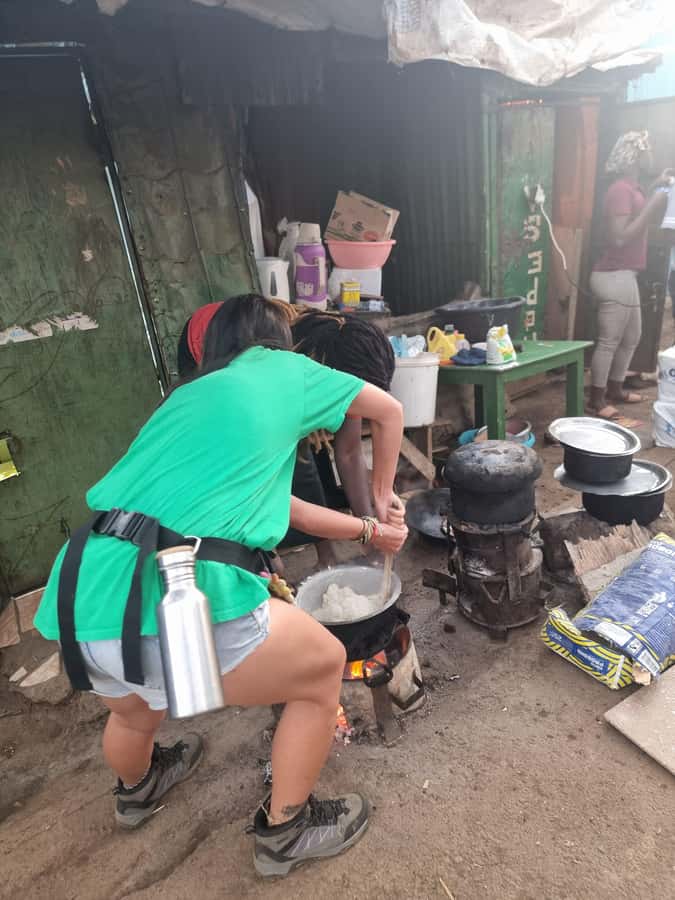
At the crafts center, you see how local makers recycle materials into jewelry and other handmade goods. This is one of the more constructive parts of the route because it focuses on skill, work, and creativity.
The stop also gives you a chance to buy something directly from local makers. A small piece of jewelry may be easier to carry than a larger souvenir, and buying from the crafts center can turn a quick viewing stop into direct support for local work.
I would treat this as a shopping opportunity, not a guaranteed formal workshop. The supplied details say you will witness how materials are recycled, but they do not promise that you will make an item yourself or receive a hands-on lesson.
If you do buy something, ask about the materials and the process. That simple conversation can tell you more than a quick look at finished goods. You can also ask which items are made locally and what the money supports.
A few more Nairobi days to weigh up
- Nairobi National Park Half-Day Tour; Free Wi-Fi connection
★ 5.0 · 878 reviews - Nairobi: National Park & Optional Elephants & Giraffe Center
★ 4.8 · 874 reviews - NAI NAMI: Nairobi Storytelling Tour with Street Children
★ 5.0 · 792 reviews - Nairobi National Park Half-Day Game Drive
★ 4.5 · 738 reviews
Stop three: the open-air market

The market shows where local residents buy second-hand goods. This is an everyday part of the visit, not a display arranged for sightseeing.
You are encouraged to bargain with the guides so you pay a local price. That advice is useful, but remember that bargaining should remain friendly and fair. The goal is to understand how buying works in the market, not to force a seller into an uncomfortable price.
The market may be one of the most revealing stops because it connects household budgets with the wider economy. Second-hand goods can be an important source of clothing and other everyday items, and the market gives you a closer look at how people shop within limited means.
Keep your purchases sensible. The tour description does not specify what goods will be available on the day, so you should not arrive expecting a particular item. Ask before taking photographs, especially if people are working or shopping nearby.
Stop four: entering a local home

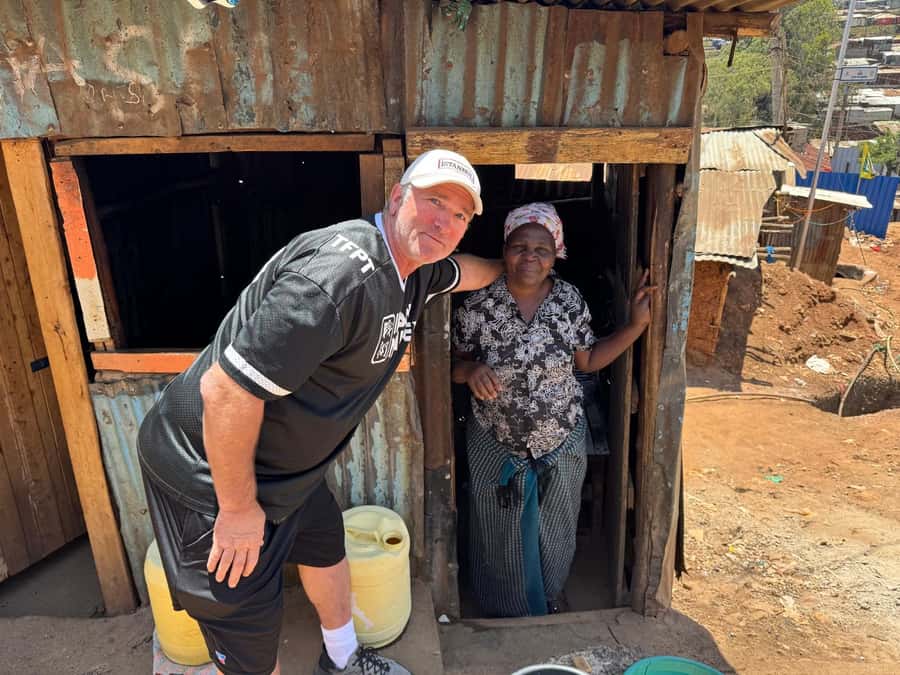
The home visit is likely to be the most personal stop. Jack welcomes you into one house so you can see the interior and learn more about local living standards.
This can help correct vague assumptions. A street view tells you little about how people organize a home, store possessions, or share limited space. At the same time, the visit calls for the most care from you. You are entering someone’s private space, so follow Jack’s lead and ask before taking photos or touching anything.
The description does not say whether the home belongs to a guide, a host family, or another community member. It also does not promise a particular type of housing or household arrangement. You should expect an honest look at one home, not a representative sample of every household in Kibera.
Children may be present during the wider walk, and they are described as joyous. That warmth is part of the human connection, but it does not give you permission to photograph or hand out money. Let Jack explain what is appropriate.
Stop five: cafeteria, street food, and tea
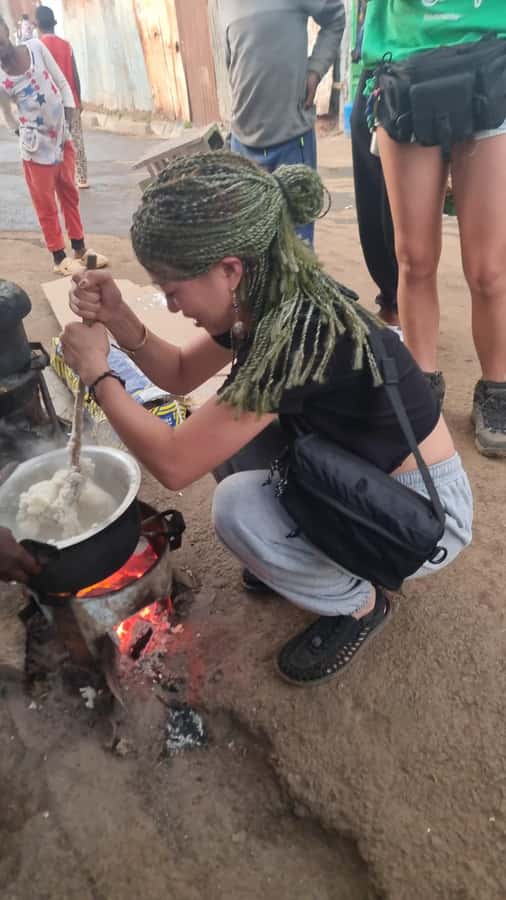
The final stop is a cafeteria for a short rest, a soft drink, or local food while Jack explains more about the community. The experience also includes street-food tasting and the chance to have tea with mechanics.
This is where the visit can shift from observation to conversation. Sitting down for food makes room for questions about work, prices, family life, and the practical details you may not notice while walking. Tea with mechanics adds another working-life angle and helps show that Kibera is also a place of trades and daily routines.
Food is an important part of the value, but the details are flexible. The activity does not specify a fixed menu, so tell Jack about allergies or dietary restrictions before eating. The description also says the experience can be customized to match your interests, so you can ask for more time on crafts, markets, food, or social issues.
Do not expect a restaurant meal included in the $10 price. The listing names soft drinks and local food at the cafeteria, but it does not clearly state that all food and drinks are covered. Carry some Kenyan shillings if you plan to buy food, tea, crafts, or market goods.
What the three hours feel like

This is a walking tour with several distinct stops, not a lecture delivered from one fixed location. The pace should allow for introductions, explanations, shopping, food, and questions, but three hours still passes quickly once you include the office briefing and return to Prestige Plaza.
Jack is with you full time and brings you back to the meeting point afterward. That is a practical benefit for anyone who wants a guided introduction rather than trying to navigate Kibera independently.
The strongest part of the experience is the guide relationship. Jack has been described as warm, polite, informative, and attentive, and he takes time to answer questions. He also works with a team of four guides, all born and raised in the slum, so another guide may lead your visit depending on the booking.
The tour has received a perfect five-star rating from 22 reviews, including especially strong praise for safety, clear explanations, affordability, and Jack’s personal welcome. One person who arrived late still received a handshake and a warm greeting. Another particularly valued the chance to see a home and meet children. These points suggest that the human tone, not just the route, is what makes the activity work.
Safety, respect, and the right attitude

The available information and recent feedback describe the experience as safe, with the guide walking alongside you and returning you to the meeting point. That does not mean you should stop using normal Nairobi precautions. Keep valuables secure, stay with the guide, and follow local advice.
Your attitude matters as much as your clothing or camera. Kibera is home to many people, and the visit works best when you show interest without treating poverty as entertainment. Ask questions, listen to answers, and let residents decide if they want to speak or appear in a photograph.
Dress for walking and keep your clothing practical. The activity does not provide a detailed dress code, so the safest approach is modest, comfortable clothing and shoes suitable for three hours on foot.
The title uses the phrase largest slum, but no single label can explain the whole community. Jack’s work, the crafts stop, the market, the mechanics, the cafeteria, and the home visit give you more useful context than the headline alone.
Is $10 a good value?
At $10 per person, this is one of the more affordable guided activities in Nairobi. You receive three hours with an English-speaking guide, a structured route, a home visit, a market stop, a crafts center, and a cafeteria break.
The strongest value comes from combining a low price with a stated community purpose. Half of the booking fee supports school fees and supplies for orphans and vulnerable children. You also have chances to spend directly with local makers and sellers.
The price does not cover transportation to Prestige Plaza, and you may want extra money for food, tea, crafts, and market purchases. Those costs are not drawbacks by themselves, but they mean the advertised price is the starting point rather than the total amount you might spend.
Compared with expensive Nairobi sightseeing options, the price makes this a practical addition to a short stay. It is especially worthwhile if you want to understand the city through local work and community life rather than only through major attractions.
Who should book this experience?
I would choose this walk if you want direct contact with a Nairobi community and prefer a guide who has personal roots in the area. It suits curious adults, socially minded visitors, photographers who can work respectfully, and anyone interested in crafts, markets, food, and urban life.
It is also a good fit if you want to support a local education project without paying for a high-priced private excursion. The option to customize the visit makes it useful for people who want to focus on crafts, social work, food, or everyday living conditions.
I would think twice if you want a quiet, polished, or conventional attraction. This is not a comfortable sightseeing shortcut, and the home visit may feel confronting. People over 95 are listed as unsuitable, while the activity itself is described as wheelchair accessible.
The free cancellation policy allows cancellation up to 24 hours ahead for a full refund, and reserve-now, pay-later booking keeps your plans flexible. Those details are helpful if your Nairobi schedule is still changing.
Should you book it?
Book this tour if you want to meet Nairobi through a local guide, support a stated education project, and spend three hours looking at ordinary work and home life. Jack’s personal story, the five-stop route, and the chance to share tea or food make it more than a quick photo stop.
Go with respect, bring a little extra cash, and keep your expectations realistic. You will not see every side of Kibera in three hours, but you will gain a grounded introduction, guided by someone who knows the community from the inside.
FAQ
Where does the Kibera experience begin?
It begins at Prestige Plaza Shopping Mall on Ngong Road. Meet in front of Java House inside the mall.
Where does the experience end?
The walk returns you to Prestige Plaza Shopping Mall, the same general meeting point used at the start.
How long does the tour last?
The experience lasts three hours.
How much does the experience cost?
The listed price is $10 per person.
Is transportation included?
No. Transportation to the meeting point is not included.
Who guides the experience?
Jack Williams leads the experience, and he works with a team of four guides who were born and raised in Kibera.
What language is the tour offered in?
The live tour guide service is offered in English.
What will I see during the tour?
You visit the local office, a crafts center, an open-air market, one local home, and a cafeteria. The experience also includes walking, sightseeing, food tasting, and an arts and crafts market visit.
Does the booking fee support the local community?
Yes. Fifty percent of the booking fee goes back to the community to help pay school fees and buy supplies for orphans and vulnerable children.
Can I cancel or pay later?
You can cancel up to 24 hours in advance for a full refund. You can also reserve your place and pay later.
Just added around Nairobi
- Visit kibera Slum the chocolate city★ 4.8 · 3 reviews
- 4 Days Safari to Lake Nakuru N/P and Maasai Mara N/R★ 5.0 · 18 reviews
- Maasai Mara Day Trip★ 5.0 · 15 reviews
- 3 days maasai mara migration safari★ 4.5 · 7 reviews
- 4 Days Tour Landcruiser in Masai Mara and Lake Nakuru★ 5.0 · 10 reviews
- Kibera Slum Tour with a Local★ 5.0 · 15 reviews
- Wildebeest Migration in Masai Mara and Sightseeing 4 Days Tour★ 4.5 · 6 reviews
- Day Tour to Nairobi national park, Elephants, and Giraffe Center★ 3.5 · 8 reviews
Kibera Slum Tours, compared.





Kibera Slum Tour with Local Social Entrepreneurs
Read our review →


Browse the lists this tour appears in