

Reviewed · KIBERA SLUM TOURS
Nairobi: Chocolate City Kibera Slum Walking Tour
Kibera is not a sightseeing backdrop. It is a living Nairobi neighborhood, and this community-led walking tour gives you a chance to meet people, hear local stories, and see how residents work, study, trade, and organize. The route includes Agape Hope Children Centre, a beadwork project, Toi Market, and a home visit.
I like two things here: your $15 ticket supports local initiatives, and guides such as Collins and Allan take personal care with the walk, including helping visitors reach their taxi afterward. The main consideration is that this is an eye-opening visit to a place facing serious hardship, not a light city outing. Go with respect, modest expectations, and a willingness to listen.
Key things to know before walking into Kibera
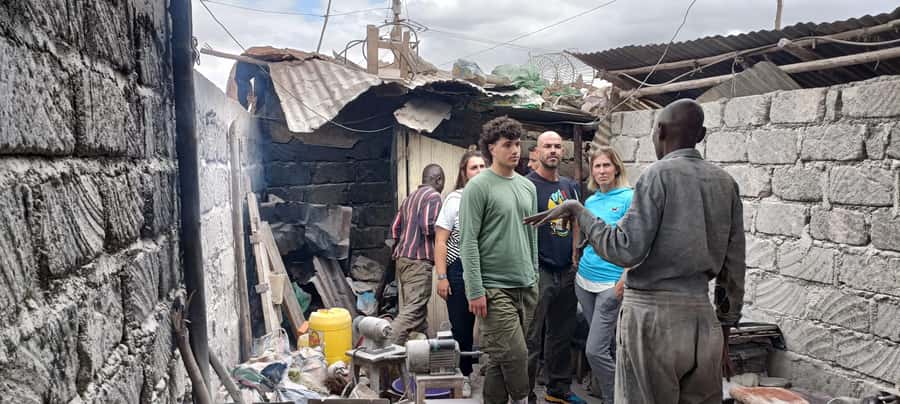
- Local guides lead the way: Collins is from Kibera, and Allan is praised for his kindness and care.
- The route includes real community projects: You visit Agape Hope Children Centre and a beadwork factory, with the chance to support local work directly.
- Toi Market adds color and daily life: Expect a busy market setting with commerce, conversation, and plenty to observe.
- Safety is taken seriously: Guides accompany you through the area and provide a safety briefing.
- The tour is short but intense: The advertised duration is two hours, while one itinerary entry lists the Kibera portion as two and a half hours.
- English may be the practical language: Several languages appear during booking, but Japanese-language bookings have resulted in English guides.
Why Kibera makes a powerful Nairobi visit

Kibera, also called Chocolate City, is Nairobi’s largest informal settlement. A walk here can challenge the polished version of Nairobi that many visitors see from hotels, shopping centers, and safari transfers.
That contrast is the point, but it should not become a spectacle. I see this tour as a chance to listen and learn, not as permission to photograph people casually or treat poverty as entertainment. The provider presents the route as a way to support education, healthcare, and economic opportunities through local initiatives.
The strongest part of the visit is its human scale. Instead of only hearing general facts about Kibera, you move through the neighborhood with someone who can explain what you are seeing. Collins, one of the named guides, comes from the community. That matters because the route is not simply an outside observer’s commentary.
You should still keep your expectations realistic. A two-hour walk cannot explain every part of Kibera or solve the larger problems facing its residents. What it can do is give you a clearer sense of daily life and connect your visit to specific local projects.
More City Tours in Nairobi
- Nairobi Historical Walking City Tour
★ 5.0 · 258 reviews - Nairobi City Walking Tour with Traditional Kenyan Lunch
★ 5.0 · 106 reviews - Nairobi Cultural and Historical City Tour with a Local
★ 5.0 · 67 reviews
Starting at Ayany Equity Bank or Prestige Plaza
You may be given one of two meeting points: Agape Hope for Kibera or Prestige Plaza Shopping Mall. Another itinerary detail identifies Ayany Equity Bank Kibera as the starting point for the walk. Since the exact meeting place depends on the option you book, check your confirmation closely before setting out.
This is practical advice, not a small technicality. Kibera is a large area, and arriving at the wrong end can waste much of a short tour. If you are using a taxi, allow time to find the guide and contact the provider if the meeting instructions are not clear.
The tour begins with a safety briefing. Your guide then leads you through the neighborhood, explaining how to move through the streets and what to expect. The safety message is especially useful for first-time visitors who may feel uncertain about entering an unfamiliar part of Nairobi.
You do not need fancy clothing. Wear comfortable, closed-toe shoes with a good grip. High heels, bare feet, weapons, sharp objects, and explosive substances are not allowed. Bottled water is included, but you should still dress for a warm walk and avoid carrying valuables you do not need.
Walking through Chocolate City with a local guide

The central part of the tour is a guided walk through Kibera. The route is described as a mix of neighborhood streets, photo stops, explanations, and visits to community sites.
I would pay close attention to the guide’s pacing and commentary. This is where the quality of the outing depends most on the person leading it. Collins is described as someone who regularly invited questions, explained photo locations, and shared information about Kibera. Allan is praised for being helpful and for waiting until his guest had safely met a taxi.
That personal attention helps in two ways. First, you can ask about what you are seeing instead of guessing. Second, you have someone focused on your safety and comfort as you move through a crowded, unfamiliar place.
Photography needs care. The itinerary includes a photo stop, but that does not mean every person or home is a photo subject. Ask before photographing residents, children, workers, or private spaces. If you want more contact with children at the Agape Centre, say so politely to your guide. One visitor felt that more interaction with children would have been possible if the request had been raised during the walk.
The walk may feel confronting. You will see living conditions that may be far removed from your own. Try to resist turning that shock into a quick judgment. The better question is what local residents are doing within difficult circumstances, and how community groups are responding.
Agape Hope Children Centre and the value of a direct contribution
The Agape Hope Children Centre is one of the most important stops. It gives the visit a clear connection to children and community support rather than leaving you with only impressions from the streets.
The center is described as a place focused on education, healthcare, and economic empowerment. Your guide can explain the initiative and show you how the organization fits into the neighborhood. The exact activities may vary, so you should listen first and avoid assuming that a visit gives you unrestricted access to children or staff.
This stop also helps explain the financial side of the tour. At $15 per person, the price is modest for a two-hour guided visit that includes an English-speaking professional guide, bottled water, the walk, the children’s center, a beadwork project, a beadwork factory, and a home visit.
The value is not found in the number of stops alone. It comes from the money flowing toward a community-based operator and its work. You should not expect the entire price to function as a charitable donation, but the tour is designed to connect your spending with local initiatives.
The visit is best approached with humility. Bring interest, not pity. Ask clear questions. If you wish to buy something or offer support, let the guide explain the proper way to do that.
More Walking Tours in Nairobi
- Nairobi: Historic and Modern Highlights Walking Tour
★ 4.8 · 703 reviews - Nairobi Downtown Walking Tour
★ 4.7 · 208 reviews - Nairobi Walking Tour: Downtown & City Tour
★ 4.8 · 32 reviews - Day tour to Hells Gate, Lake Naivasha and Crescent Island Walk
★ 5.0 · 26 reviews
Beadwork, factory work, and shopping without pressure

The beadwork portion adds a practical side to the story. You visit a community-based beadwork project and a beadwork factory, where you can see how local skills become products for sale.
This is one of the tour’s more useful stops because it moves beyond the idea that Kibera is defined only by need. You get to see work, creativity, and small-scale economic activity. Beadwork can also give you a direct way to support local makers if you choose to purchase something.
You should not feel pushed to buy. A particularly positive detail from the visit is that shopping was not forced. That makes a difference. A community project should be something you can engage with honestly, not a sales stop disguised as charity.
Ask about the items, how they are made, and where the money goes. You may find that buying a piece gives more meaning to the stop, but you are not required to purchase anything to take part in the walk.
Toi Market brings daily commerce into view
Toi Market is included as a stop on the route. Here, the focus shifts from community services and workshops to ordinary trade.
Markets are often where a neighborhood’s daily rhythm is easiest to understand. You can observe the movement of goods, the work of sellers, and the practical needs of local shoppers. The setting may feel crowded and noisy, so stay close to your guide and keep your belongings secure.
I would not rush through this part with a camera. Give yourself time to notice how people use the market and how much work goes into keeping it running. If you want to buy something, ask your guide for help with local etiquette and prices.
The market also shows why a guided walk is preferable to wandering in alone. A local guide can help you move respectfully, explain what is happening, and reduce the uncertainty that comes with unfamiliar streets.
The home visit: personal, sensitive, and not for everyone
A home visit is included, though the supplied details do not specify how long it lasts or exactly what form it takes. That uncertainty is worth noting. The nature of the visit may depend on the household, the guide, and the arrangements on the day.
For you, this can be the most personal stop. It can also be the point where respectful behavior matters most. Ask permission before taking photographs, do not inspect belongings without invitation, and listen rather than comparing the home with your own.
Some people will find this direct contact meaningful. Others may feel uncomfortable, and that is a fair reaction. You should not book this tour if you want a carefully staged, predictable sightseeing route. The home visit is part of the reason the walk feels personal, but it also asks more of you as a visitor.
Safety, comfort, and the limits of the format

The provider places strong emphasis on safety, and the guide remains with you throughout the walk. This is reassuring, particularly for anyone who has concerns about visiting Kibera for the first time. Still, no urban walk can remove every risk, so use ordinary care and follow the guide’s instructions.
The route is not suitable for wheelchair users or people with mobility impairments. It is also listed as unsuitable for pregnant women, people with epilepsy, people with motion sickness, and babies under one year. Several separate age restrictions appear in the booking details, including children under two, three, and four years, so families should confirm the exact rule before paying.
Wear closed-toe shoes. You may be walking over uneven surfaces and through busy streets. The tour is not suitable for high heels, and bare feet are prohibited.
There is also a timing detail to watch. The activity is advertised as two hours, but the itinerary describes the Kibera portion as two and a half hours. Check the available start times and allow extra room around the booking, especially if you have a flight, safari transfer, or restaurant reservation afterward.
Language and guide quality
The activity lists live guides in English, French, German, Japanese, Italian, and Spanish. In practice, the available language may not match the selection shown during booking.
Japanese-speaking visitors specifically reported receiving English despite selecting Japanese. If you need a language other than English, confirm it directly before booking. If you are comfortable in English, this issue should not prevent you from considering the tour.
The named guides give you useful expectations. Collins is described as attentive, generous with information, and good about asking if visitors had questions. Allan is praised for his kindness and for staying until a taxi arrived. Those details suggest a service style that is personal rather than rushed.
The tour’s overall rating is 4.9 from 13 reviews, with praise focused on safety, information, guide professionalism, and the sense that the visit supports local people. That is a small sample, so I would treat it as encouraging rather than conclusive.
Is $15 good value?
Yes, if you want a short, locally guided introduction to Kibera and understand what the money is connected to. The price includes the guide, bottled water, the walking tour, Agape Hope Children Centre, beadwork activities, the factory, and a home visit.
The price is especially fair when you consider the access and local connection. You are not simply paying for transport and a distant view. You are paying for a guide who helps you move through the area, interpret what you see, and connect the walk with community work.
The limitations are time and scope. Two hours is enough to leave an impression, but not enough for a full account of Kibera. The route may also feel emotionally heavy, and some stops may be brief depending on the day.
Free cancellation up to 24 hours before the start and reserve-now, pay-later booking make it easier to fit into a changing Nairobi schedule. Those options help, but they do not replace checking the meeting location, language, duration, and age rules.
Who should book this Kibera walk?
I would choose this tour if you want a direct, human look at Nairobi beyond the usual visitor route. It suits adults and older children who can walk comfortably, listen respectfully, and handle difficult scenes without turning them into entertainment.
It is also a good fit if you want your sightseeing money to connect with local work. The children’s center and beadwork project give the visit a practical purpose, while Toi Market and the home visit add everyday context.
I would skip it if you need step-free access, dislike walking through crowded areas, or want a polished, predictable attraction. I would also think carefully if you are pregnant, have epilepsy or motion sickness, or are booking for a very young child.
FAQ
How long does the Kibera walking tour last?
The activity is advertised as two hours. One itinerary entry lists the Kibera portion as two and a half hours, so check the exact timing for your selected booking.
Where does the tour begin?
Starting options include Agape Hope for Kibera and Prestige Plaza Shopping Mall. The meeting point can vary by booking, and the walk is also described as beginning near Ayany Equity Bank Kibera.
What does the tour include?
It includes a professional English-speaking guide, bottled water, the Kibera walking tour, a visit to Agape Hope Children Centre, participation in a community-based beadwork project, a beadwork factory visit, and a home visit.
Is the tour available in languages besides English?
The activity lists English, French, German, Japanese, Italian, and Spanish guides. Japanese bookings have resulted in English-language tours, so confirm your required language before booking.
What should I wear and bring?
Wear comfortable, closed-toe shoes. High heels and bare feet are not allowed. Bottled water is included.
Who should not take this tour?
The tour is not suitable for wheelchair users or people with mobility impairments. It is also listed as unsuitable for pregnant women, people with epilepsy, people with motion sickness, and babies under one year. The booking information gives several different minimum age restrictions, so confirm the rule for your group.
Should you book it?
Book this Kibera tour if you want a respectful, locally guided encounter with Nairobi’s largest informal settlement and you are ready for an honest look at difficult living conditions. The strongest reasons are the community connection, the visits to Agape Hope Children Centre and the beadwork project, and guides such as Collins and Allan who provide careful personal support.
Before booking, confirm the language, meeting point, duration, and age policy. If those details work for you, $15 buys a meaningful short visit with a clear local purpose. If you prefer a conventional city attraction or need accessible walking conditions, choose another Nairobi activity.
More Dessert Tours in Nairobi
- Kibera Chocolate City Tour
★ 5.0 · 13 reviews - A Visit To KIBERA The Chocolate City.
★ 4.9 · 12 reviews - Nairobi: Kibera Slum (The Chocolate city)Guided Walking Tour
★ 5.0 · 5 reviews - Visit kibera Slum the chocolate city
★ 4.8 · 3 reviews
More Kibera Walking Tours
- Nairobi: Explore Kibera Slum with Local Guides
★ 4.9 · 365 reviews - Kevins Kibera Slum Tours
★ 5.0 · 213 reviews - Nairobi: Kibera Slum storytelling tour with a Local
★ 5.0 · 185 reviews - Kibera Slum Tour with Lucas
★ 5.0 · 119 reviews
Just added around Nairobi
- Visit kibera Slum the chocolate city★ 4.8 · 3 reviews
- 4 Days Safari to Lake Nakuru N/P and Maasai Mara N/R★ 5.0 · 18 reviews
- Maasai Mara Day Trip★ 5.0 · 15 reviews
- 4 Days Tour Landcruiser in Masai Mara and Lake Nakuru★ 5.0 · 10 reviews
- 3 days maasai mara migration safari★ 4.5 · 7 reviews
- Kibera Slum Tour with a Local★ 5.0 · 15 reviews
- Wildebeest Migration in Masai Mara and Sightseeing 4 Days Tour★ 4.5 · 6 reviews
- Day Tour to Nairobi national park, Elephants, and Giraffe Center★ 3.5 · 8 reviews
Kibera Slum Tours, compared.





Kibera Slum Tour with Local Social Entrepreneurs
Read our review →


Browse the lists this tour appears in