

Reviewed · KIBERA SLUM TOURS
Kibera Chocolate City Tour
Kibera is not a roadside photo stop. This local-led walking tour takes you into a living Nairobi community, with time at Toi Market, Victoria Bones Craftshop, an Agape school and library, and the historic railway. The focus is daily life, local enterprise, and the people working to improve their neighborhood.
I like two things here. First, guides such as Collins, Allan, and Rama have strong ties to Kibera, which gives the walk a personal point of view. Second, the tour directs attention toward useful community work, including education, crafts, and small businesses, rather than showing hardship without context.
The main consideration is that this is still a visit to a low-income urban community. You may find some parts uncomfortable, muddy, crowded, or emotionally heavy. Go with humility, listen carefully, and treat people’s homes and routines as private.
Key points to know before you go

- Local guides lead the way: Collins, Allan, and Rama are associated with the tour, and Collins grew up in Kibera.
- Four distinct stops: The route includes Toi Market, Victoria Bones Craftshop, Agape’s school and library, and the historic railway.
- A short, focused visit: Plan on roughly two hours, with the wider booking window allowing about two to three hours.
- A community-centered approach: The tour aims to explain both hardship and the creativity, work, and mutual support found in Kibera.
- Small cost, useful purpose: At $22 per person, the price is modest for a guided Nairobi experience, especially if your money supports the school and community work.
- Simple meeting plan: You meet and finish at Kibera Town Centre, at Kamukunji Grounds.
What this Kibera walk is really about

Kibera is often reduced to a single label. That is a poor way to understand it. The community includes homes, shops, schools, markets, workshops, roads, railway tracks, children at play, and people earning a living in difficult conditions.
This experience tries to replace a quick look with a fuller picture. You learn about the challenges residents face, but you also see how people make things, teach children, trade goods, and organize support. That balance matters. Poverty is part of the story, but it is not the whole story.
I especially like the decision to use guides with a direct connection to Kibera. Collins is described as having grown up there, and that changes the feel of the visit. You are not simply following an outsider through unfamiliar streets. You are being shown around by someone who knows the area and cares about its future.
The tour also creates opportunities to speak with local people. That can be rewarding, but it calls for good manners. Ask before taking photographs, avoid treating residents as scenery, and remember that a friendly welcome does not remove the need for respect.
More City Tours in Nairobi
- Nairobi Historical Walking City Tour
★ 5.0 · 258 reviews - Nairobi City Walking Tour with Traditional Kenyan Lunch
★ 5.0 · 106 reviews - Nairobi Cultural and Historical City Tour with a Local
★ 5.0 · 67 reviews
Starting at Kibera Town Centre
The walk begins at Kibera Town Centre, Kamukunji Grounds, and returns to the same meeting point. This simple out-and-back arrangement is useful if you are fitting the tour into a busy Nairobi day.
The listed operating hours are Monday through Sunday, 8:00 a.m. to 6:00 p.m. The experience itself is shorter, usually about two hours, though you should allow two to three hours in your schedule. That extra margin helps if the group pauses to talk or moves at a relaxed pace.
You receive a mobile ticket, and confirmation is provided when you book. The group can include up to 30 people. That is not a tiny private walk, so ask about a private option if you want a quieter pace or have a particular interest in education, local business, history, or community projects.
The provider says the tour can be adjusted to suit specific interests. This is one of the more useful features for repeat visitors to Nairobi or anyone traveling with a school, family, or small organization. Contact the operator before booking if you want a private route or a particular focus.
Toi Market and Kibera’s working side

Toi Market is the first major stop. It is described as a place with many local businesses, so this is where the tour begins to show Kibera as a place of work, not simply a place of need.
Markets can be sensory and busy, and the exact feel will depend on the day. You might see the everyday rhythm of buying, selling, and moving goods through the neighborhood. Your guide helps explain what these businesses mean to residents and how people create income in a difficult economic setting.
This is also a good point to keep your camera away unless you have permission. A market may look like an interesting picture to you, but it is someone else’s workplace. Let the guide handle introductions and follow local cues.
The market stop is valuable because it gives the tour a practical base. Instead of beginning with statistics or dramatic descriptions, you start by seeing commerce in action. You get a clearer sense of how families and individuals support themselves.
Victoria Bones Craftshop and local creativity

Next comes Victoria Bones Craftshop. The name suggests a specialized craft business, and the stop adds a hands-on economic angle to the tour.
The craftshop helps show how skill and creativity can become a source of income. You may have the chance to see local work and learn how a small operation fits into the community. The exact products, demonstrations, or buying options are not specified, so I would treat this as an introduction rather than a guaranteed shopping session.
That distinction is important. Do not book this expecting a long workshop or a formal craft class. The available details support a visit and explanation, not a scheduled lesson. If you want to buy something, bring that question to the guide, but keep your purchase optional.
I like this stop because it resists the idea that Kibera is defined only by its problems. A craft business shows enterprise, skill, and pride. It also gives you a more human conversation point than a purely observational walk.
More guided Kibera walks:
- Nairobi: Explore Kibera Slum with Local Guides
★ 4.9 · 365 reviews - Kevins Kibera Slum Tours
★ 5.0 · 213 reviews - Nairobi: Kibera Slum storytelling tour with a Local
★ 5.0 · 185 reviews - Kibera Slum Tour with Lucas
★ 5.0 · 119 reviews
Agape school and library

The tour then visits a school and library connected with Agape, where children receive education and have a place to learn and play.
This is likely to be the most meaningful stop for many people. Education is a direct response to the pressures facing families, and a library offers more than books. It creates a setting for study, curiosity, and time with friends.
You should approach this part with extra care. Children are not part of a display. Ask before photographing, do not interrupt lessons or games, and let the guide explain what visitors may or may not do. A respectful visit is more valuable than a dramatic one.
The school also gives the tour a forward-looking purpose. You are not only hearing about conditions in Kibera. You are seeing one way local people are building opportunity. Several accounts of the tour connect the organization with helping children, so the $22 fee may feel more meaningful if supporting this work is part of your reason for booking.
Still, keep your expectations realistic. A two-hour walking tour cannot explain every education issue in Kibera, and it is not a substitute for a structured volunteer program. Think of the school visit as a brief window into community-led education.
Walking beside the historic railway

The final part of the route follows the historic railway. This gives you a broader view of Kibera and adds a piece of place-based history to the walk.
Railway corridors often help explain how neighborhoods developed and how people move through a city. Here, the railway is also part of the physical setting you are trying to understand. The walk lets you look back over the area rather than seeing only one market, school, or workshop.
The view may be more revealing than polished. You could notice dense housing, uneven paths, or the daily movement of people through the area. That is precisely why a local guide matters. Without context, it is easy to make quick judgments based on what you see for a few minutes.
The railway portion may also be the least comfortable for some visitors. Conditions can change with weather, and the tour requires walking through an active community rather than along a designed sightseeing route. Wear practical shoes and be ready for an uneven urban walk.
Why a local guide makes a difference

A Kibera tour depends heavily on the person leading it. Collins is repeatedly associated with this experience, and he is described as having been born and raised in the community. Allan and Rama are also named as guides connected with the organization.
That local connection can help with introductions and social boundaries. It can also give you a better sense of history, family ties, and the reasons people stay, work, and build lives in Kibera. The tour’s stated goal is to challenge stereotypes, and a guide with firsthand experience is well placed to do that.
You should still take the walk as one person’s account, not as a complete portrait of every resident. Kibera is a large and varied community. One route and one guide cannot represent every experience.
The strongest part of the guiding style appears to be the personal welcome. Collins is associated with making visitors feel at home and introducing them to people in the neighborhood. That warmth can make a difficult subject easier to discuss, but it should not turn the visit into entertainment. The best experience is one where conversation and observation replace gawking.
Is $22 a fair price?
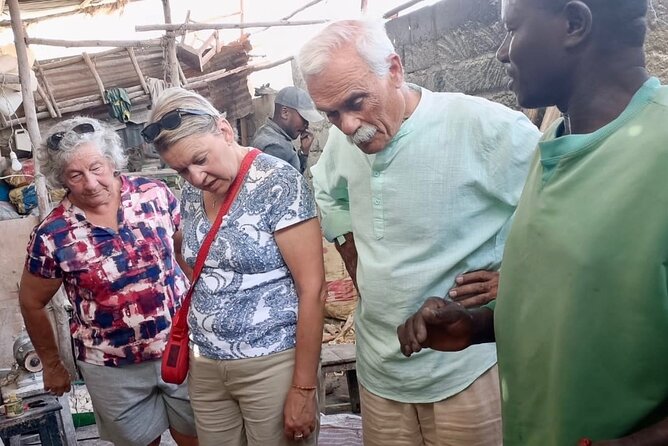
At $22 per person, this is reasonably priced for a two-hour guided experience in Nairobi. The value comes less from the number of sights and more from access, interpretation, and the chance to meet local people in a respectful setting.
You are not paying for a major monument or an elaborate vehicle excursion. You are paying for a local guide, a planned route, introductions, and explanations that would be difficult to arrange on your own. The tour also includes several types of community activity, from trade at Toi Market to education at Agape.
The price appears especially fair if supporting local work is important to you. One account connected the tour fee with helping children, though the exact allocation of money is not provided. If that detail matters to your decision, ask Agape Hope for Kibera Tours directly before booking.
A private tour may cost more, but no private price is provided. The operator says private arrangements and topic-specific visits are possible, so you will need to request details rather than assume they are included.
Who will enjoy this experience most
I would choose this tour if you want to understand Nairobi beyond its major attractions. It suits people who are willing to walk, listen, and accept a less polished setting.
It is also a good fit if you care about community-led work. The market, craftshop, school, library, and railway each show a different part of life in Kibera. Together, they create a more balanced visit than a quick drive past the area.
Families can consider it, but adults should prepare children in advance. Explain that the tour is about meeting people respectfully, not staring at homes or taking pictures of children. The provider says most people can participate, and service animals are allowed.
You might not enjoy it if you want a relaxed sightseeing outing with guaranteed comfort, formal exhibits, or a fixed script. The area is a working neighborhood, not a theme park. Weather may affect the experience, and a rainy-day cancellation is possible.
Practical advice for a respectful visit
Wear comfortable walking shoes and clothing suited to Nairobi’s weather. The tour lasts about two hours, but allow up to three hours so you are not rushed.
Keep your belongings secure and carry only what you need. The information provided does not list a specific baggage policy, so use normal city awareness and follow your guide’s advice.
Do not hand out sweets, money, or gifts directly to children unless the guide tells you how to do so responsibly. If you want to support Agape or another local project, ask about an organized way to contribute.
Use people-first language and listen to the way residents describe their own community. Kibera is home to millions of ordinary moments, not just hardship. A good visit recognizes the problems without stripping away people’s dignity.
The tour can be booked well ahead, with an average booking point of about 17 days before the visit. That is useful to know if your Nairobi schedule is fixed, though the experience also allows last-minute bookings when space is available.
Cancellation and weather details
You can cancel for a full refund up to 24 hours before the start time. Cancellations or changes made within 24 hours are not refunded or accepted.
The experience requires good weather. If poor weather causes the operator to cancel, you will be offered another date or a full refund. Because the tour is on foot, this policy is practical rather than unusual.
Should you book the Kibera Chocolate City Tour?
Book it if you want a direct, locally guided look at Nairobi life and are ready to approach Kibera with care. The route covers business, crafts, education, children’s activities, and the railway, while guides such as Collins help connect those places to real community concerns.
I would not choose it simply to collect dramatic photographs or to say you visited a famous urban settlement. You will get more from the experience if you speak with people, support local work when appropriate, and accept that some moments may be uncomfortable.
For $22, the tour offers strong value for a thoughtful visitor. Its greatest strength is the local connection. Its main weakness is the unavoidable tension of visiting a community where people live and work while you are there to learn. If you can handle that with respect, this is one of Nairobi’s more useful short excursions.
FAQ
Where does the Kibera Chocolate City Tour begin?
The tour begins at Kibera Town Centre, at Kamukunji Grounds in Nairobi, Kenya.
Where does the tour end?
The activity ends back at the same meeting point at Kibera Town Centre.
How long does the tour last?
The main tour takes about two hours. You should allow approximately two to three hours overall.
What places does the tour visit?
The route includes Toi Market, Victoria Bones Craftshop, the Agape school and library, and the historic railway.
How much does the tour cost?
The listed price is $22 per person.
How many people can join the tour?
The activity allows a maximum of 30 participants.
Can I cancel for a refund?
Yes. You can cancel at least 24 hours before the experience starts for a full refund. Cancellations within 24 hours are not refunded, and poor-weather cancellations offer either another date or a full refund.
More Dessert Tours in Nairobi
- Nairobi: Chocolate City Kibera Slum Walking Tour
★ 4.9 · 13 reviews - A Visit To KIBERA The Chocolate City.
★ 4.9 · 12 reviews - Nairobi: Kibera Slum (The Chocolate city)Guided Walking Tour
★ 5.0 · 5 reviews - Visit kibera Slum the chocolate city
★ 4.8 · 3 reviews
Just added around Nairobi
- Visit kibera Slum the chocolate city★ 4.8 · 3 reviews
- 4 Days Safari to Lake Nakuru N/P and Maasai Mara N/R★ 5.0 · 18 reviews
- Maasai Mara Day Trip★ 5.0 · 15 reviews
- 3 days maasai mara migration safari★ 4.5 · 7 reviews
- 4 Days Tour Landcruiser in Masai Mara and Lake Nakuru★ 5.0 · 10 reviews
- Kibera Slum Tour with a Local★ 5.0 · 15 reviews
- Wildebeest Migration in Masai Mara and Sightseeing 4 Days Tour★ 4.5 · 6 reviews
- Day Tour to Nairobi national park, Elephants, and Giraffe Center★ 3.5 · 8 reviews
Kibera Slum Tours, compared.





Kibera Slum Tour with Local Social Entrepreneurs
Read our review →


Browse the lists this tour appears in