
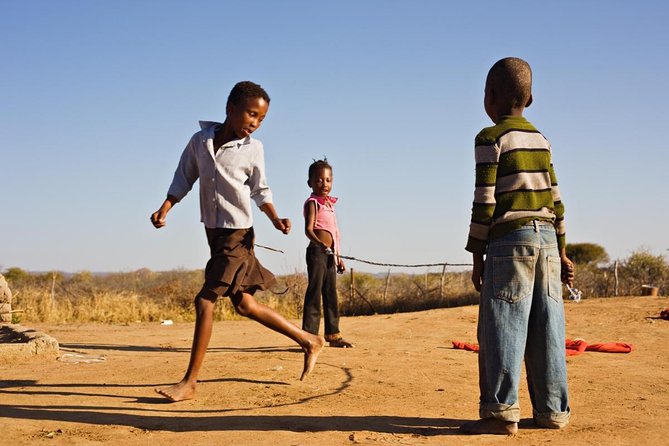
Reviewed · KIBERA SLUM TOURS
Memorable Daily KIBERA Slums/Toi Market Tour with Locals (2 hours)
Kibera is not a museum or a photo backdrop. It is home, workplace, school, and neighborhood for a huge community in Nairobi. This local-led walking tour gives you a direct look at daily life, with guides such as Bramwel and Frederick explaining the area through personal ties and lived experience.
I like two things right away: your money helps employ local young people, and part of the proceeds supports rural girls’ education through the operator’s charity. I also like the focus on housing, schools, health, and informal work, rather than treating Kibera as a collection of shocking images. The main drawback is that the experience can be emotionally heavy, and a group of up to 50 people may feel large for narrow paths and personal encounters.
Key points to know
- Local guides with personal connections: Bramwel grew up in Kibera and still plays for the Kibera football team, while Frederick is praised for his friendly, careful approach.
- A walking tour, not a drive-by view: You spend about two hours on foot, with the schedule sometimes extending to three hours.
- Olympic Primary School is the endpoint: The tour ends at a major public school with a long record of helping families move forward.
- NGO work is part of the story: You learn about projects involving housing, education, and health, including both successes and setbacks.
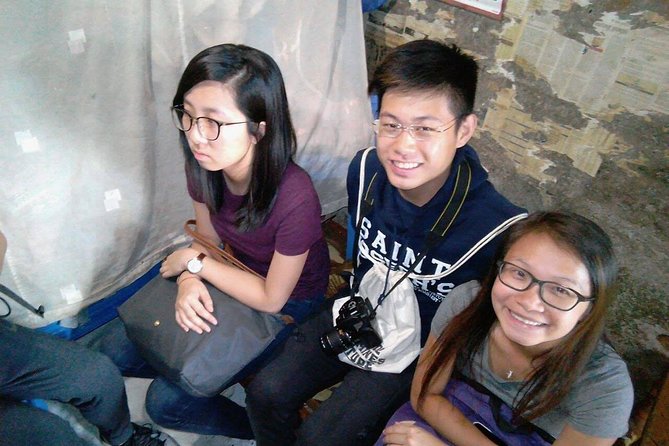
- Photography needs tact: This is a community of homes and livelihoods. Ask before taking pictures, and be ready to put your camera away.
- Good value at $25: The fee includes taxes and fees, local guiding, and round-trip movement from the designated meeting point, but not tips, food, or drinks.
What This Kibera Walking Tour Really Offers

This experience is best understood as a guided introduction to a complicated part of Nairobi, not as entertainment. Kibera is described as one of East Africa’s largest informal settlements, with an estimated population of about one million people living within roughly 2.5 square kilometers. Population figures for informal settlements are difficult to verify, so treat the number as an estimate, but the density and scale are central to what you see.
The tour is led by a local youth guide. That matters. A guide who knows residents, streets, schools, and community projects can explain more than a guide who simply memorized a few facts. Bramwel, one of the named guides, grew up in Kibera, moved out of the most crowded part, still lives nearby, and plays football with the Kibera team. That sort of connection gives the walk a personal frame.
Frederick is another guide specifically praised for his friendly manner and community involvement. The operator’s founder, Erick, also has a personal link to Kibera and lived there while trying to establish himself professionally. These details suggest that the tour is built around local relationships rather than an outside company sending visitors through with a script.
Still, I would keep your expectations realistic. A personal guide cannot make every part of the visit predictable. Streets can be muddy, conversations may depend on who is available, and the emotional effect will vary from person to person.
More guided Kibera walks:
- Nairobi: Explore Kibera Slum with Local Guides
★ 4.9 · 365 reviews - Kevins Kibera Slum Tours
★ 5.0 · 213 reviews - Nairobi: Kibera Slum storytelling tour with a Local
★ 5.0 · 185 reviews
Starting at Olympic Primary School in Nairobi
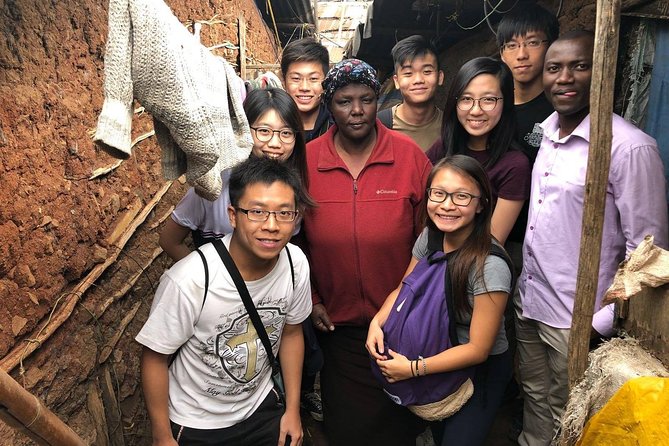
The listed meeting point is Olympic Primary School, at MQQH+3FJ in Nairobi. The tour also ends there, so you return to the place where you started. Round-trip transfers from the designated meeting point are provided, but the information does not specify hotel pickup, so confirm your exact meeting arrangement before setting out.
Olympic Primary School is more than a convenient landmark. It is presented as Kenya’s largest public primary school and was once among the country’s best-performing schools. Its story is tied to families in Kibera who used education as a way to improve their prospects.
That makes the school a useful opening or closing point for the walk. You are not looking only at poverty. You are also looking at a public institution, children’s education, and the long work of building opportunity in a crowded community.
The school visit is listed as the tour’s ending activity. Do not assume you will be able to enter every building or observe classes in session. School access can depend on local conditions, schedules, and permission. The important point is the role the school plays in the community’s story.
Walking Through Kibera With Bramwel or Frederick
The main activity lasts about two hours, though the total experience is described as two to three hours. That extra hour may reflect the school stop, transfers, conversation, or the pace of the group. If you have a tight Nairobi schedule, allow the full three hours rather than planning another appointment immediately afterward.
This is a walking tour through an active neighborhood. You may see homes, small businesses, repair work, food sellers, and other parts of the informal economy. The provided details do not promise a fixed list of businesses or workshops, so think of the route as a guided look at how people make a living, not a shopping excursion.
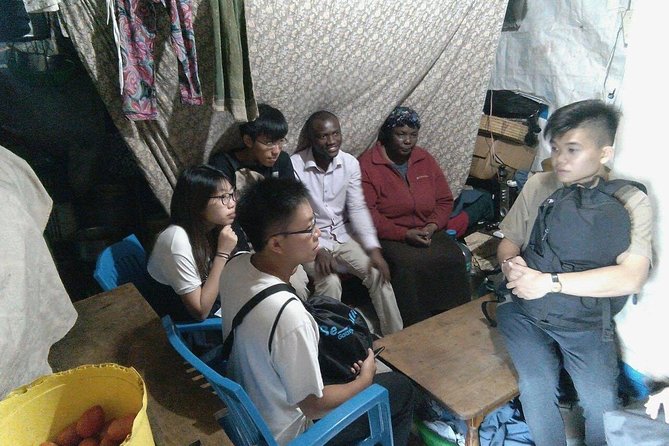
Bramwel is praised for knowing many people in the area and for showing where he grew up. In one especially personal account, a resident invited the group into his home and explained how difficult life had been for his family. Such a visit is not guaranteed, and you should never expect residents to open their homes on demand. If it happens, treat it as a private invitation, not a scheduled attraction.
That distinction is important. The most valuable moments here come from ordinary human contact, but those moments require consent and restraint. Ask before entering a home, ask before photographing anyone, and accept a no without trying to negotiate.
The route may also take you through paths that become wet or muddy. Wear sturdy shoes that you do not mind getting dirty. Comfortable walking clothes make sense, but dress with respect for a residential community and avoid clothing that draws needless attention.
Toi Market and the Informal Economy
The experience is sold as a Kibera slums and Toi Market tour, so Toi Market is part of the attraction’s identity. The detailed schedule, however, gives more space to Kibera generally and to Olympic Primary School than to a specific market stop. Ask the operator what the current route includes if Toi Market is a priority for you.
Markets are useful places to understand the informal economy because buying and selling are woven into daily life. A market visit can show you how people earn money, how goods circulate, and how residents serve one another outside formal employment. The tour’s larger goal is to explain these systems rather than simply point at them.
This is also where the experience can become uncomfortable. You are moving through a working community, not a themed attraction. Do not block narrow paths, handle merchandise without permission, or treat sellers as photographic subjects. If you want to buy something, do it because you value it, not because you feel pressured to prove that you are helping.
The tour’s local focus gives your spending a clearer purpose than a standard sightseeing stop. The company says it employs local youth, an important point in a country where youth unemployment is described as higher than 50 percent. At the same time, a $25 booking cannot solve Kibera’s problems. It is a modest contribution and a way to pay for local work, not a substitute for long-term community investment.
A few more Nairobi days to weigh up
- Nairobi National Park Half-Day Tour; Free Wi-Fi connection
★ 5.0 · 878 reviews - Nairobi: National Park & Optional Elephants & Giraffe Center
★ 4.8 · 874 reviews - NAI NAMI: Nairobi Storytelling Tour with Street Children
★ 5.0 · 792 reviews - Nairobi National Park Half-Day Game Drive
★ 4.5 · 738 reviews
NGO Projects, Housing, Health, and Education

A major part of the walk is learning about organizations working to improve housing, education, and health. This gives you a better frame for what you see. Instead of leaving with only a picture of hardship, you hear about attempts to address it.
The tour does not present every project as a success story. One account describes some NGO efforts as successful and others as weakened by corruption. That balance is valuable. Community projects often involve good intentions, uneven results, limited funding, and difficult local politics. You should expect explanation rather than a tidy story with every problem solved.
The operator also supports MAKLWETA, a charity founded to help rural girls’ education. Part of the money from bookings goes toward that work. The tour itself is in Nairobi, while the charity’s work is described as rural, so think of this as a broader social purpose attached to the business, not necessarily something you will see during the Kibera walk.
You can ask practical questions during the tour. Which projects are still active? Who runs them? How do residents participate? What happens after an NGO leaves? A good guide can help you separate local knowledge from broad claims, and this kind of conversation is more useful than collecting a list of charity names.
The Human Side, and the Ethics of Visiting Kibera
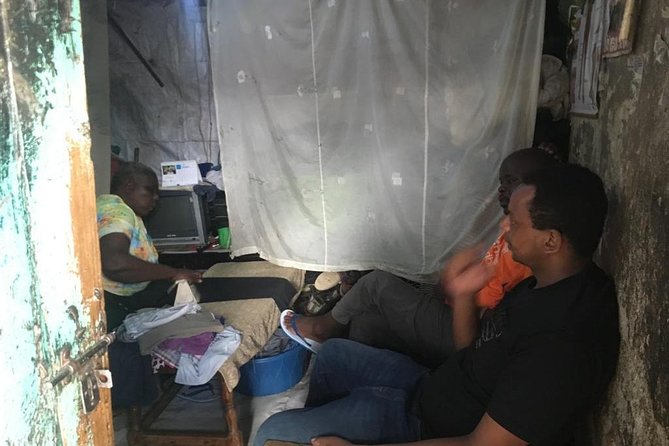
The strongest theme in the experience is human connection. Several accounts describe guides becoming friendly and familiar by the end of the walk. That warmth should not be confused with a promise that every group will have the same encounters, but it does point to the value of a local guide who knows the community.
You may meet people who are willing to talk about family, work, schooling, or the challenges of living in Kibera. Listen more than you speak. Ask open questions, but do not push for painful stories simply because they make the tour feel more dramatic.
Photography deserves special care. One of the clearest pieces of practical advice is to put your camera down because Kibera is people’s home. I would go a step further: ask permission before taking any close-up picture, especially of children, homes, school activity, or anyone who is speaking with you.
You can also avoid the common mistake of viewing the area only through lack. Kibera has hardship, but it also has work, friendship, faith, education, sport, family life, and local initiative. The tour is at its best when it helps you see both sides without turning either into a simple slogan.
Safety is addressed through the guide rather than through a list of formal safety features. The strongest accounts describe feeling safe with Bramwel or Frederick, who knew people along the route and paid attention to the group. As in any crowded urban setting, keep your valuables secure, stay with the guide, and follow instructions. The tour is not a license to wander off alone.
Is $25 Good Value for Two to Three Hours?
At $25 per person, this is reasonably priced for a guided Nairobi experience with local employment and community support built into the business model. All fees and taxes are included, and the tour returns to the starting point. Tips, lunch, and drinks are extra.
The value is not in the number of attractions checked off. You are paying for access, interpretation, local time, and a safer way to approach a place you should not explore casually without guidance. The best return comes if you are willing to listen and think, not if you are looking for a polished sightseeing product.
A group limit of 50 is the main value concern. A smaller group would usually make conversations and home visits more personal, while a group of that size could feel unwieldy on narrow paths. The actual size of your departure is not stated, so ask before booking if privacy and close conversation are especially important to you.
Food and drinks can be arranged at local restaurants at your request, but lunch is not included. This gives you flexibility, though it also means you should not assume a meal is part of the two-hour plan.
Timing, Booking, and What to Wear

The tour is often booked about 11 days ahead, but same-day arrangements have also worked when communication was clear. Confirmation is provided at booking, and the ticket is mobile, so you do not need a printed voucher.
The meeting point is Olympic Primary School. Since transportation details can vary, make sure you know where to meet and who to contact. One past booking problem involved a visitor waiting for more than an hour during a pandemic lockdown and receiving a late cancellation message. The company attributed it to a communication failure and issued a full refund, but the episode is a reminder to reconfirm the meeting time, especially if local conditions change.
Most people can take part, and service animals are allowed. The experience is near public transportation, but the tour itself is on foot. Bring sturdy shoes that can handle mud, keep your clothing practical, and leave room in your schedule for the walk to run closer to three hours.
Free cancellation is available if you cancel at least 24 hours before the local start time. Cancellations within 24 hours are not refunded, and late changes are not accepted.
Who Should Book This Kibera Tour?

I would recommend it to you if you want to understand Nairobi through local voices and are prepared for a serious, sometimes uncomfortable visit. It suits people who ask questions, respect privacy, and want context about work, education, housing, and community-led change.
It is also a good choice if you have only a short time in Nairobi. Two to three hours gives you a focused introduction without taking an entire day, and the return to Olympic Primary School keeps the plan simple.
I would hesitate if you want a light, cheerful outing, a highly polished route, or guaranteed photo opportunities. The group may be as large as 50, the schedule can vary, and the subject matter is difficult. You should also reconsider if you are likely to photograph people without asking or treat the neighborhood as a spectacle.
Should You Book It?
Book this tour if you want a local guide, a direct look at Kibera, and an honest discussion of both hardship and community effort. Bramwel and Frederick are particularly useful names to request if they are available, though the operator does not promise a specific guide.
The $25 price is fair for a short, locally run experience that includes guiding, fees, and community-oriented work. Go with sturdy shoes, a flexible schedule, and a respectful attitude. Keep your camera ready only when people agree to be photographed, and let the conversations, not the images, be the main souvenir.
FAQ
How long does the Kibera tour last?
The walking portion is described as about two hours, while the total experience is listed as approximately two to three hours. Allow the full three hours if your schedule is tight.
Where does the tour start and finish?
The tour starts and ends at Olympic Primary School, MQQH+3FJ, Nairobi, Kenya.
Is Toi Market included in the tour?
The experience is presented as a Kibera and Toi Market tour. The detailed schedule focuses on Kibera and Olympic Primary School, so confirm the current route with the operator if Toi Market is essential to your plans.
Who leads the tour?
The tour uses local youth guides. Bramwel and Frederick are named guides associated with the experience, and the operator’s founder, Erick, has personal ties to Kibera.
What is included in the $25 price?
All fees and taxes are included. Tips, lunch, and drinks are not included.
Are transfers provided?
Round-trip transfers from the designated meeting point are provided. The listed meeting point is Olympic Primary School, and hotel pickup is not specifically stated.
Can most people participate?
The activity information says most people can participate. It is a walking tour, and sturdy shoes are recommended because paths may become wet or muddy.
What is the cancellation policy?
You receive a full refund if you cancel at least 24 hours before the local start time. Cancellations made within 24 hours are not refunded, and changes within that period are not accepted.
More Shopping Tours in Nairobi
- Nairobi souvenir Shopping and Historical Half day Tour
★ 5.0 · 61 reviews - Nairobi Cultural Shopping Experience
★ 5.0 · 21 reviews - Nairobi Guided Cultural Shopping Experience Day Tour
★ 4.0 · 12 reviews - Nairobi cultural souvenir shopping tour with a local
★ 5.0 · 12 reviews
More Markets in Nairobi
- Traditional Kenyan Cooking Class & Local Market Tour
★ 5.0 · 129 reviews - Half-Day Nairobi National Park and Maasai Market with Pick up
★ 5.0 · 16 reviews - Authentic Kenyan Cooking Class & Market Tour in Nairobi
★ 5.0 · 12 reviews - Nairobi: Hop on Hop off and Maasai market Collections Visit
★ 3.5 · 10 reviews
Just added around Nairobi
- Visit kibera Slum the chocolate city★ 4.8 · 3 reviews
- 4 Days Safari to Lake Nakuru N/P and Maasai Mara N/R★ 5.0 · 18 reviews
- Maasai Mara Day Trip★ 5.0 · 15 reviews
- 3 days maasai mara migration safari★ 4.5 · 7 reviews
- 4 Days Tour Landcruiser in Masai Mara and Lake Nakuru★ 5.0 · 10 reviews
- Kibera Slum Tour with a Local★ 5.0 · 15 reviews
- Wildebeest Migration in Masai Mara and Sightseeing 4 Days Tour★ 4.5 · 6 reviews
- Day Tour to Nairobi national park, Elephants, and Giraffe Center★ 3.5 · 8 reviews
Kibera Slum Tours, compared.





Kibera Slum Tour with Local Social Entrepreneurs
Read our review →


Browse the lists this tour appears in