

Reviewed · KIBERA SLUM TOURS
Visit kibera Slum the chocolate city
Kibera is not a museum piece or a quick photo stop. This 150-minute walking tour takes you through Nairobi’s largest informal settlement while focusing on the people, projects, and daily work that shape the community. You begin at Equity Ayani, walk through Kibera, and return to the same point.
I like the chance to visit local empowerment projects, where education, skills training, and community work give the tour a useful purpose. I also like the human scale of the visit: you are not simply looking at Kibera from a vehicle, but learning through local voices, art, music, enterprise, and conversation.
The main consideration is that this is a visit to a marginalized community, not a polished sightseeing attraction. You need to come with respect, listen carefully, and follow your guide’s advice about photography and personal interaction. The $25 price covers the guide, but entrance fees and pickup are extra.
Key points to know before you book

- Start and finish at Equity Ayani: You arrange your own way to the meeting point and return there after the walk.
- A full 150-minute visit: The time allows for walking, local context, community contacts, and stops connected with empowerment work.
- Local life comes before spectacle: The focus is on residents, history, culture, social projects, and everyday enterprise.
- Daniel may be your guide: One named guide connected with the experience is Daniel. Guide language options include English, Chinese, Esperanto, German, Italian, Spanish, and French.
- The price is not all-inclusive: The $25 charge includes a tour guide, while entrance fees and pickup are not included.
- Flexible booking: You can cancel up to 24 hours before the visit for a full refund and reserve now while paying later.
Why a Kibera walking tour needs the right approach

Kibera is often described with a single label, but a guided walk can show you more than that label suggests. The experience presents Kibera as a lived-in urban community with its own social networks, businesses, cultural expression, and local initiatives.
That matters because an informal settlement is easy to misunderstand from a distance. A guide can explain how Kibera developed, why it matters within Nairobi, and how residents respond to challenges linked to urban growth and limited resources. You get context instead of a string of disconnected sights.
I would not book this tour for dramatic scenery or a checklist of famous monuments. Its value comes from conversation and explanation. You are there to learn how people live and work, and to see how local organizations support education, training, and community development.
The tone also matters. The best way to approach the visit is as a guest in someone else’s home area. Ask questions, listen more than you speak, and avoid treating people or homes as photo subjects. Responsible tourism is part of the subject, not a side note.
More City Tours in Nairobi
- Nairobi Historical Walking City Tour
★ 5.0 · 258 reviews - Nairobi City Walking Tour with Traditional Kenyan Lunch
★ 5.0 · 106 reviews - Nairobi Cultural and Historical City Tour with a Local
★ 5.0 · 67 reviews
Meeting at Equity Ayani and getting ready
The tour begins and ends at Equity Ayani, which gives the visit a clear structure. There is no pickup included, so you need to reach the meeting point independently and make your own arrangements afterward.
That setup keeps the booking price lower, but it also puts more planning on you. Check your route to Equity Ayani before the start time, allow a little margin, and confirm the meeting details when booking. The supplied information gives the meeting point but not a hotel transfer service.
At the start, your guide should set the tone for the walk. This is the time to ask about photography, appropriate behavior, and how conversations with residents will work. If Daniel is leading your group, you may be able to request him when arranging the visit, though the available information does not guarantee a particular guide.
The language choices are unusually broad for a short local tour. Guide options are listed in English, Chinese, Esperanto, German, Italian, Spanish, and French. Availability can vary, so select or confirm your preferred language before you go.
Walking through Kibera for about two hours

The central part of the experience is a 2.5-hour visit and walk through Kibera. You can expect sightseeing on foot, scenic views along the way, and stops that help explain the community rather than simply passing through it.
The exact route is not specified, so you should not expect a fixed list of named landmarks. That is both a limitation and a strength. The route can focus on the guide’s local knowledge and the community contacts available that day, but you will want to ask at the start what your group is likely to see.
The walking format lets you notice details that a drive would miss. You may see small-scale enterprise, local creative work, and signs of how residents organize daily life. The tour description specifically points to art, music, and entrepreneurial energy, so those are central themes to look for.
You should also expect the guide to discuss challenges. The tour is designed to explain social conditions connected with urbanization and inequality in Kenya, not to hide them. That can make parts of the visit serious. The benefit is a fuller picture, provided the guide presents the subject with care and you give the place the same respect.
Comfort is worth considering. The experience is on foot for 150 minutes, and the information does not state how much seating, shade, or restroom access is available. Wear practical shoes and clothing suited to walking, but avoid assuming that every comfort or facility will be provided.
Meeting residents and hearing local perspectives

Community engagement is one of the main reasons to choose this experience. The tour may connect you with local residents and community leaders who can discuss their experiences, initiatives, and the problems they face.
A good conversation here is not about collecting a dramatic story. It is about understanding how people describe their own community. You may hear about local priorities, the work of neighborhood groups, and the ways residents respond to limited opportunity or public services.
This is where having a live guide adds real value. A guide can provide introductions, explain local references, and help you avoid awkward or intrusive questions. The multilingual format can also make the exchange easier for people who are more comfortable speaking something other than English.
Keep your expectations realistic. The available information does not promise a set number of community leaders, a formal interview, or a guaranteed meeting with a particular organization. Treat those contacts as part of the planned character of the tour, not as a scripted performance with exact stops.
More guided Kibera walks:
- Nairobi: Explore Kibera Slum with Local Guides
★ 4.9 · 365 reviews - Kevins Kibera Slum Tours
★ 5.0 · 213 reviews - Nairobi: Kibera Slum storytelling tour with a Local
★ 5.0 · 185 reviews - Kibera Slum Tour with Lucas
★ 5.0 · 119 reviews
Empowerment projects and the practical side of change
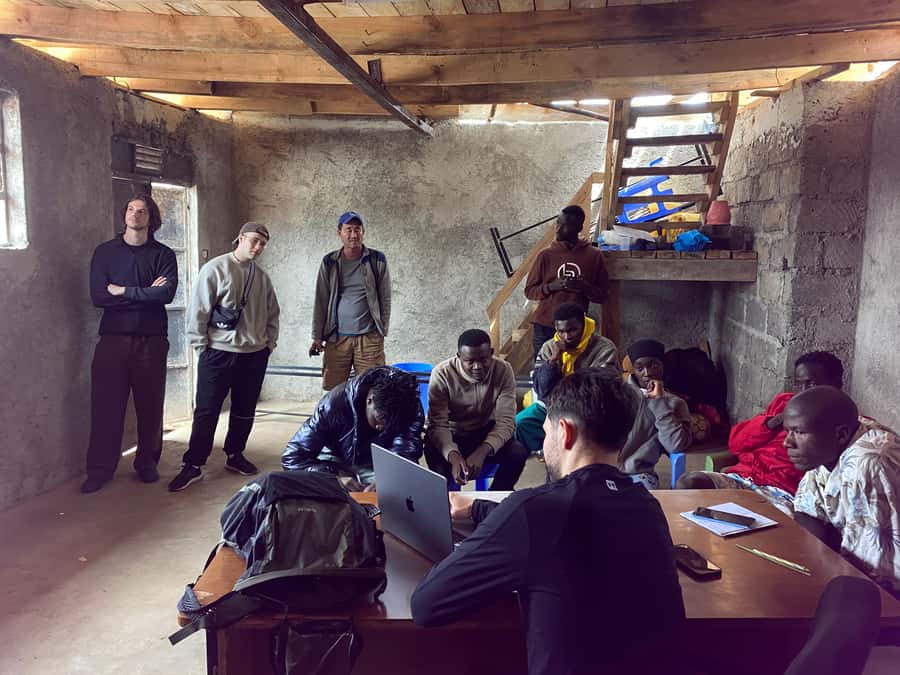
The visit includes stops at local organizations and social enterprises that support education, skills training, and community development. These projects give the tour a useful focus: you are not only hearing about problems, but also learning about local responses.
This part can help you judge the tour’s value. A short visit cannot explain every issue facing Kibera, but it can show how community groups try to create opportunity. Education programs, training projects, and small enterprises often reveal more about local priorities than a general talk about poverty.
The information does not name the organizations or describe their specific programs, so you should not expect a guaranteed school class, workshop, donation activity, or purchase opportunity. If supporting a particular project matters to you, ask the guide what is included and how visitors can help without creating pressure.
I appreciate this emphasis because it reduces the risk of a one-sided visit. Kibera is presented as a place with challenges, but also with initiative and skill. That balance helps you see residents as participants in their own future, rather than as background to a sightseeing story.
Art, music, and small-business energy
Culture is another key part of the walk. The tour points to art, music, and entrepreneurship as ways to understand Kibera’s identity and community spirit.
These elements can make the visit more personal. Art may express local concerns or pride. Music can bring people together. Small businesses show how residents earn a living and serve their neighbors. None of these subjects should be treated as decoration. They are part of how a community communicates and functions.
The supplied details do not promise a live performance, an art workshop, or a purchase stop. You might encounter cultural activity during the walk, but the experience is primarily a guided visit and not a performance package.
That distinction is useful when deciding. If you want an organized cultural show, this may not be the right choice. If you want to see how culture and enterprise appear in ordinary community life, the format should suit you better.
The value of $25, with extra costs to note
At $25 per person, the tour offers a reasonably focused way to spend 150 minutes with a local guide. You are paying for interpretation, introductions, and a structured walk through a place that would be difficult to understand through a quick independent visit.
The value is strongest if you care about context. A guide can connect history, urbanization, community work, and cultural life in a way that a self-guided walk cannot easily match. The tour also gives you a responsible framework for visiting a sensitive setting.
The price needs a careful reading. A tour guide is included, but entrance fees are not included, and there is no pickup service. The amount of any entrance fee is not stated, so ask before booking if you need to calculate the full cost.
You also pay for the time and organization rather than a long list of attractions. There is no promise of transport, meals, or shopping. For an inexpensive, discussion-led experience in Nairobi, that can be fair value. For someone expecting an all-inclusive excursion, the extras may change the calculation.
Who will appreciate this experience most

I would recommend this walk to you if you want to understand Nairobi beyond its standard attractions. It suits people interested in social history, community projects, urban development, culture, and responsible tourism.
It may also work well for students, photographers who follow strict ethical guidelines, and visitors who prefer local conversations to a polished show. The guide language selection makes it accessible to a broad audience, subject to availability.
I would think twice if you dislike walking, want a tightly fixed route, or expect a conventional sightseeing tour. The route and community contacts are not described in exact detail, so the experience has less predictability than a museum visit or scheduled city attraction.
Your attitude will shape the visit. If you arrive curious and respectful, the tour can offer a more thoughtful view of Nairobi. If you arrive hoping for sensational pictures, you are likely to miss its purpose and may make the experience uncomfortable for residents.
Practical booking advice for a respectful visit

Book with enough time to confirm the meeting point, guide language, and any entrance fee. Since pickup is not included, plan your route to Equity Ayani and your return from there before the day begins.
The booking terms are flexible. You can reserve now and pay later, and cancellation is available up to 24 hours in advance for a full refund. Starting times depend on availability, so check the date and time that suit you.
Bring only what you need for the walk. Keep valuables secure, follow the guide’s instructions, and ask before taking photographs of people, homes, or community activities. These are simple steps, but they show that you understand the visit is built around real residents rather than staged scenes.
The tour has a strong early record, with a 4.8 rating from three published bookings. Sara from Spain gave a five-star rating after a visit with Daniel on April 30, 2025. A Swiss booker also gave five stars in August 2024, specifically praising the guide’s kindness and professional manner. Those comments point to the guide relationship as a major strength, though a small sample cannot predict every departure.
Should you book the Kibera tour?
Book it if you want a guided, people-focused look at Nairobi and are ready to approach Kibera with care. The combination of local voices, community projects, history, cultural expression, and a 150-minute walking route gives the $25 fee a clear purpose.
Before paying, confirm the guide language, meeting details, and added entrance fee. Do not book it expecting hotel pickup, a fixed list of attractions, or an entertainment show.
For an open-minded visitor, this is a useful way to spend part of a Nairobi stay. It asks you to listen, walk, and think. That is precisely why it can be more meaningful than a quick drive past the neighborhood.
FAQ
Where does the tour start and finish?
The tour starts at Equity Ayani and returns to Equity Ayani after the visit.
How long does the experience last?
The experience lasts 150 minutes, or about two and a half hours.
Is pickup included?
No. Pickup is not included, so you need to arrange your own way to Equity Ayani.
Is the entrance fee included in the $25 price?
No. Entrance fees are not included. The amount of any additional entrance charge is not specified.
What does the price include?
The listed inclusion is a tour guide. The price is $25 per person.
What languages are available for the live guide?
Guide languages are listed as English, Chinese, Esperanto, German, Italian, Spanish, and French.
Can I cancel or pay later?
Yes. You can cancel up to 24 hours in advance for a full refund, and you can reserve now while paying later.
More Dessert Tours in Nairobi
- Nairobi: Chocolate City Kibera Slum Walking Tour
★ 4.9 · 13 reviews - Kibera Chocolate City Tour
★ 5.0 · 13 reviews - A Visit To KIBERA The Chocolate City.
★ 4.9 · 12 reviews - Nairobi: Kibera Slum (The Chocolate city)Guided Walking Tour
★ 5.0 · 5 reviews
Just added around Nairobi
- 4 Days Safari to Lake Nakuru N/P and Maasai Mara N/R★ 5.0 · 18 reviews
- Maasai Mara Day Trip★ 5.0 · 15 reviews
- 4 Days Tour Landcruiser in Masai Mara and Lake Nakuru★ 5.0 · 10 reviews
- 3 days maasai mara migration safari★ 4.5 · 7 reviews
- Kibera Slum Tour with a Local★ 5.0 · 15 reviews
- Wildebeest Migration in Masai Mara and Sightseeing 4 Days Tour★ 4.5 · 6 reviews
- Day Tour to Nairobi national park, Elephants, and Giraffe Center★ 3.5 · 8 reviews
- 3 Days Unforgettable Masai Mara Safari Tour★ 5.0 · 6 reviews
Kibera Slum Tours, compared.





Kibera Slum Tour with Local Social Entrepreneurs
Read our review →


Browse the lists this tour appears in